


I love how curved kitchen islands break all the rules to make kitchens safer, more social, and surprisingly space-smart. Gentle arcs soften traffic, tuck seating without sharp corners, and turn prep zones into sculptural destinations.
Warm woods, matte stone, and seamless solid surfaces keep them durable and low-maintenance. Slim profiles, hidden pull-outs, and layered lighting keep sightlines open and storage clever. Stick with me and I’ll show how to plan one that fits your flow and budget.
Why Curved Islands Are Redefining Kitchen Flow

I’ve watched straight-edged islands dominate for years, but curved islands are quietly changing how we move through the kitchen.
I love how gentle arcs ease traffic, create cozy gathering spots, and soften sightlines. Curves invite circulation, make workflows feel natural, and let seating tuck in without sharp corners.
They’re thoughtful, efficient, and unexpectedly sociable—design that moves with you.
Reimagining round kitchen islands introduces bold, unexpected forms that break every mold.
Organic Materials That Complement Curved Forms
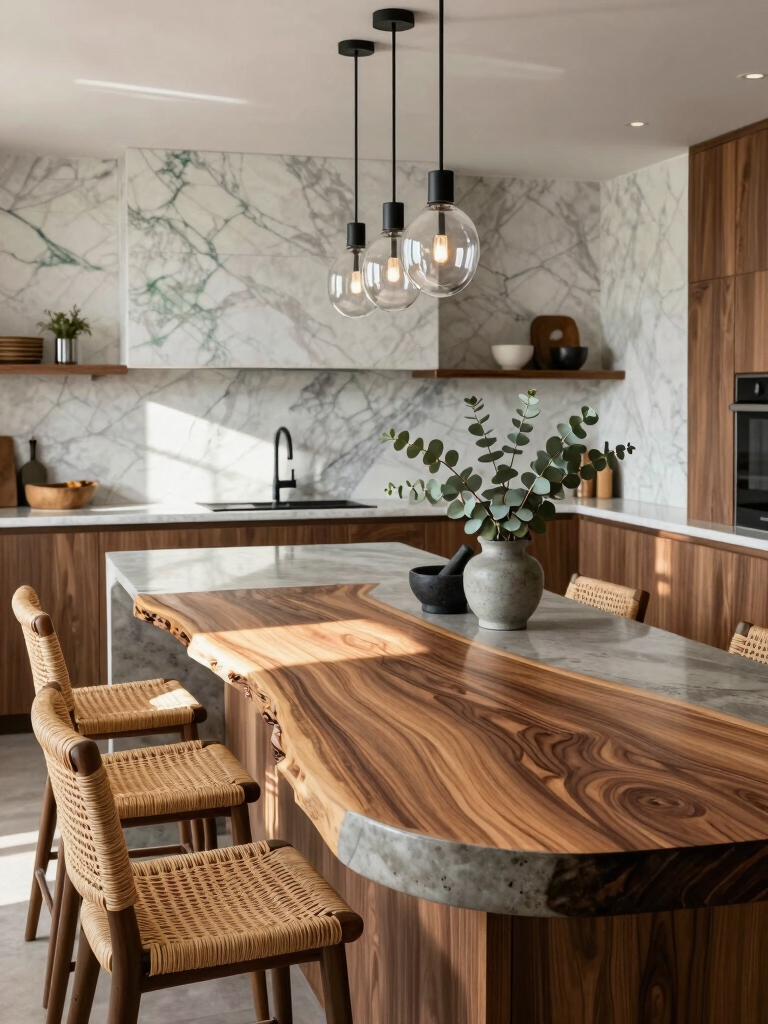
I love pairing curved islands with warm wood grains that trace the form and make the space feel cozy without being fussy.
Matte stone surfaces add a soft, tactile contrast that keeps the look grounded and modern.
Together they create an inviting, sculptural center that’s both practical and stylish.
Wooden kitchen islands in warm tones can help warm up cold spaces and create a welcoming focal point.
Warm Wood Grains
Think of warm wood grains as the quiet partner that softens every curve — I reach for oak, walnut, or rift-cut ash when I want organic texture that honors a rounded island without shouting.
I pair tones with brass accents and soft lighting to keep things modern yet cozy.
- Honeyed oak counter edge
- Smoked walnut apron
- Rift-cut ash veneer
- Curved butcher-block seating
White oak cabinets often bring a sense of warmth and timelessness to modern kitchens, making them a natural fit for curved island designs with warm wood grains.
Matte Stone Surfaces
After warming a curved island with wood, I reach for matte stone when I want a more grounded, tactile counterpoint. I love its soft, low-sheen finish that hides fingerprints and highlights curves without glare.
It reads modern but feels natural, pairing with brass or black fixtures. Practical, durable, and quietly luxe, matte stone anchors playful forms while keeping the kitchen calm and inviting.
Concrete kitchen islands have been having a major moment, celebrated for their versatility and finish options like matte stone that complement curved designs and durable surfaces concrete kitchen islands.
Space-Saving Curve Strategies for Small Kitchens

I love how rounded breakfast nooks turn tight corners into cozy gathering spots that still feel airy.
In tiny kitchens, a curved slim island gives you prep surface without the bulk of a rectangle, and a wall-hugging arc keeps traffic flowing while adding style.
Let’s look at how each option saves space and boosts function so you can pick what fits your flow.
Celebrity homes often showcase how an island can be a focal point that blends form and function, inspiring kitchen island styling in smaller spaces.
Rounded Breakfast Nooks
How can a curved breakfast nook make a small kitchen feel both cozy and clever? I tuck a rounded banquette into a corner, saving traffic flow while inviting lingering coffee moments.
Soft cushions, a slim circular table, and integrated under-seat storage keep it neat and warm.
- Plush curved bench hugging a sunlit corner
- Compact round table for two
- Hidden drawers beneath seating
- Pendant light centered over curve
Unexpected Small Kitchen Island Inspirations add playful functionality and visual interest to tight layouts by repurposing narrow footprints into usable surfaces with unexpected small kitchen island inspirations.
Curved Slim Islands
Moving my rounded banquette idea into the island, I look for slim curved islands that keep movement smooth in tight kitchens while adding a softer silhouette.
I choose narrow footprints, rounded ends, and integrated storage to maximize flow.
Lightweight materials, cantilevered overhangs for casual seating, and subtle contrasts keep the scheme chic yet practical, proving small spaces love a confident, playful curve.
Efficient layouts like space-saving islands make the most of every inch in compact kitchens.
Wall-Hugging Arcs
Because every inch counts in a small kitchen, I push curved islands up against walls to turn unused corners into smooth, walkable workstations that don’t interrupt flow.
I keep proportions modest, materials warm, and sightlines open so the arc feels like a friendly elbow rather than a bulky hurdle.
- Slim quartz ledge with rounded end
- Floating oak shelf hugging tile
- Hidden toe-kick storage
- Mini prep sink nestled in curve
Integrating Seating Into Rounded Islands

Blending form and function, I like to think of rounded islands as social magnets where seating feels intentional rather than tacked on.
I recommend varied heights, slim-back stools that tuck neatly, and a gentle overhang that invites elbows without crowding cooks.
Curves create natural conversation nooks—mix materials for contrast, keep circulation clear, and prioritize comfort so every perch feels styled and lived-in.
Curved Islands and Open-Plan Sightlines

While seating makes curved islands feel inviting, I also watch how those soft lines shape what you see and how people move through an open plan.
I steer curves to frame views, guide traffic, and create cozy conversation pockets without blocking sightlines or flow.
- A gentle crescent guiding movement between living and kitchen
- Low-profile back so sightlines stay open
- Rounded end as a visual anchor
- Flowing pathway for natural circulation
Lighting Solutions for Sculptural Islands
When I design lighting for a sculptural island, I think of fixtures as the jewelry that highlights form and invites use; they should reveal curves, set zones, and feel effortless in the space.
I choose layered light: focused task pendants that trace the silhouette, soft ambient washes to sculpt shadows, and dimming controls for mood.
Materials echo the island’s finish, keeping the look unified and modern.
Storage Innovations Unique to Curved Designs
I love how curved islands turn awkward angles into clever storage opportunities, like slim hidden pull-out drawers that keep utensils and spices within reach without breaking the sculptural line.
Curved corner shelving hugs the silhouette and creates open, accessible nooks for cookbooks or display pieces.
Let me show you how these features keep the look seamless while boosting day-to-day function.
Hidden Pull-Out Drawers
I love how hidden pull-out drawers tuck clever storage into a curved island without shouting for attention.
I slyly stash utensils, cutting boards, spices, and recyclables, keeping lines clean and flow uninterrupted.
They slide smoothly, reveal organized tiers, and respect the curve’s elegance while boosting function.
- slim utensil trays
- tiered spice racks
- curved cutting board slots
- pull-out recycling bins
Curved Corner Shelving
After stashing utensils and recycling in sleek pull-outs, I turn my attention to curved corner shelving—one of my favorite storage innovations that makes the most of every arc.
I love how rounded shelves cradle bowls, plants, and cookbooks, eliminating awkward dead space.
They’re easy to reach, visually softening the island, and prove that smart curves can be both practical and delightfully chic.
Combining Curves With Linear Cabinetry
When I pair a curved island with straight-line cabinetry, I aim to create a balanced conversation between softness and structure that still feels purposeful and livable.
I highlight contrast with material, scale, and tone, keeping sightlines clean while letting the curve invite movement.
The result feels tailored, cozy, and smart — a kitchen that welcomes and performs.
- Matte navy island hugging pale linear cabinets
- Brass bar stools tracing the curve
- Open shelves breaking vertical rhythm
- Narrow, horizontal pulls emphasizing lines
Durable Surfaces for Seamless Curved Countertops
I love how solid surface materials hug a curve without visible seams, making them a go-to for sculpted islands.
I’ll show how engineered stone brings toughness and stain resistance while keeping a luxe, consistent look.
Then we’ll touch on seamless edge techniques that make the whole countertop read as one effortless piece.
Solid Surface Options
Although it’s tempting to pick stone for the look, I often steer clients toward solid surface materials for truly seamless curved countertops because they bend, join, and repair with ease.
They feel warm, clean, and endlessly customizable.
I’ll show you colors, integrated sinks, and minimal seams that keep curves pure.
- Satin matte white flowing like cream
- Hidden integrated basin
- Gentle waterfall edge
- Soft rounded backsplash
Engineered Stone Benefits
If you love the seamless look of solid surface but want something tougher under daily wear, engineered stone makes a smart next step.
I recommend it for curved islands because it’s stain- and scratch-resistant, low-maintenance, and available in consistent patterns that read beautifully around bends.
It feels luxe yet practical, holds up to family life, and keeps a clean, modern silhouette without fuss.
Seamless Edge Techniques
Let’s talk seams: I prefer techniques that keep curved countertops feeling continuous and strong, because the edge treatment makes or breaks both the look and longevity of a curved island.
I favor bonded quartz, invisible miter joins, poured resin wraps, and precision-polished edges for durability and flow.
- glossy mitered curve
- soft bullnose wrap
- resin waterfall seam
- honed invisible join
Creating Zones: Cooking, Prep, and Socializing
When I design a curved kitchen island, I think in zones—one side for cooking, another for prep, and a soft edge for socializing—so the flow feels effortless and purposeful.
I place stovetop and vent discreetly, dedicate a roomy prep surface with integrated storage, and curve seating to invite conversation.
Lighting and durable materials define each area, keeping everything efficient, welcoming, and undeniably chic.
Custom Fabrication vs. Modular Curved Options
Because every curve has a story, I weigh custom fabrication against modular options by balancing design freedom, cost, and timeline—custom pieces let me chase a seamless, site-specific silhouette and exact materials, while modular systems speed installation and simplify future changes.
- A continuous marble crescent hugging the floor
- Interlocking plywood arcs for warmth
- Snap-fit lacquered segments in peppermint
- A brushed-steel demi-moon bar
Budgeting for a Curved Island Remodel
After weighing custom fabrication against modular choices, I start budgeting by mapping wants to real costs so the design you love actually gets built.
I break costs into shells, surfaces, appliances, and labor, allotting contingency for curves and surprises.
I prioritize visible finishes, choose smart compromises, and get multiple bids—keeping cozy style without overspending.
Curved Islands in Contemporary and Classic Styles
While I love the fluid silhouette of a curved island in a sleek loft, I also see how the same arc softly anchors a traditional kitchen—each style just leans into different materials, scale, and detailing.
I pair matte stone and thin metal for modern minimalism, or warm wood and beadboard for classic comfort.
- Linen-gray quartz, slim brass trim
- Walnut curve, turned legs
- Integrated prep sink, hidden storage
- Soft pendant trio
Universal Design Benefits of Rounded Edges
The same soft arc that grounds both sleek lofts and cozy country kitchens also makes a lot of sense for how people actually move around a room, so I like to specify rounded edges for islands that will see daily use.
They reduce bumps, guide circulation, and welcome mobility aids without sacrificing style. Rounded corners feel calmer, safer, and effortlessly chic in any kitchen.
Real-World Case Studies and Before/After Examples
Because every kitchen tells a different story, I like to show real projects so you can see how curved islands perform in lived-in spaces — from widening a narrow galley to creating a kid-friendly prep zone in a busy family home.
I walk you through transformations, materials, and habit changes so you’ll picture possibilities.
- Narrow galley becomes airy with a crescent island
- Breakfast nook folds into curved counter
- Durable laminate survives kids and spills
- Lighting sculpts the curve into a focal point
I’ve seen curved islands reshape how kitchens feel and move — they don’t just sit there, they guide you.
Imagine walking through a room where edges invite you in, where warm wood and soapstone echo the island’s swoop.
I tested the theory that soft lines calm chaos and found it true: rounded forms encourage gathering, smoother traffic, and a softer silhouette. If you want a kitchen that breathes and welcomes, a curve will do it.


