

I’ve found 13 kitchen-friendly plants that thrive near heat and steam, so your counters stay vibrant with less fuss. Think herbs like basil and thyme, low-maintenance greens, and compact succulents that tolerate oven warmth. I group plants by light and water, use breathable pots, and add a small fan for airflow. With smart placement and a simple seasonal care plan, you’ll curb stress and keep thriving greens close at hand. Want more tips to master this setup?
How to Create a Heat-Tolerant Kitchen Microclimate
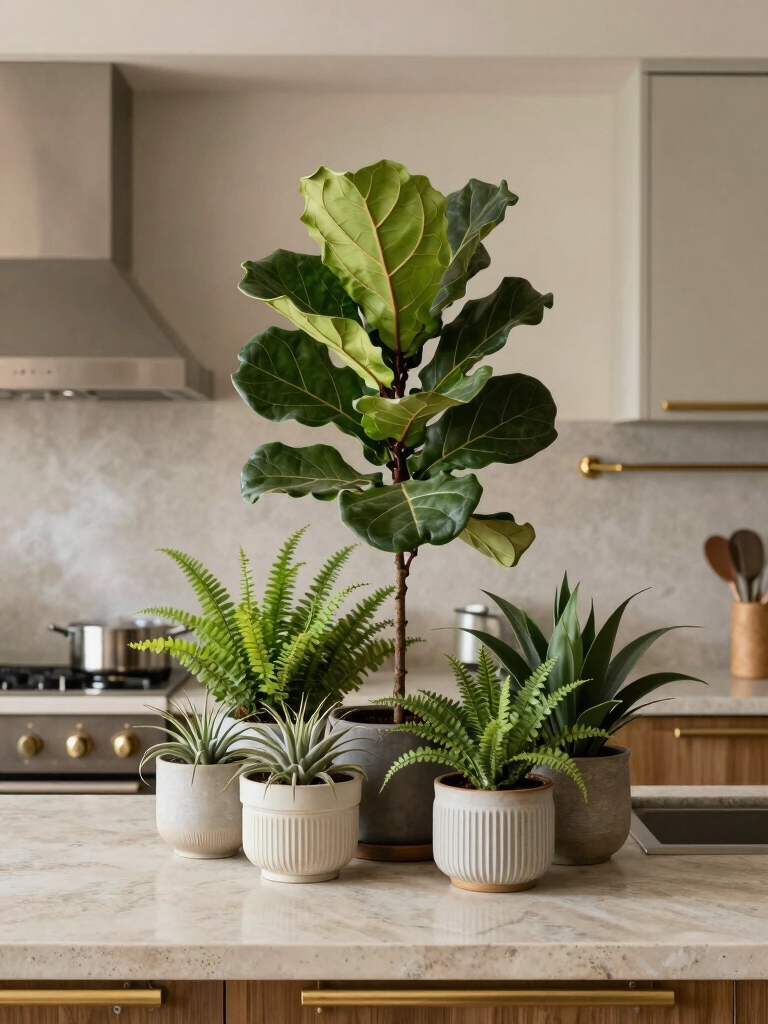
If your kitchenette runs warm, you can still grow thriving plants by shaping a simple heat-tolerant microclimate.
I start with placement: keep succulents and herbs away from direct oven steam, group heat-loving greens together, and stagger rotations to reduce stress.
I use breathable pots, a small fan, and daily misting at dawn to balance humidity without overdoing it.
Best Herbs for Steam and Sun in the Stove Area
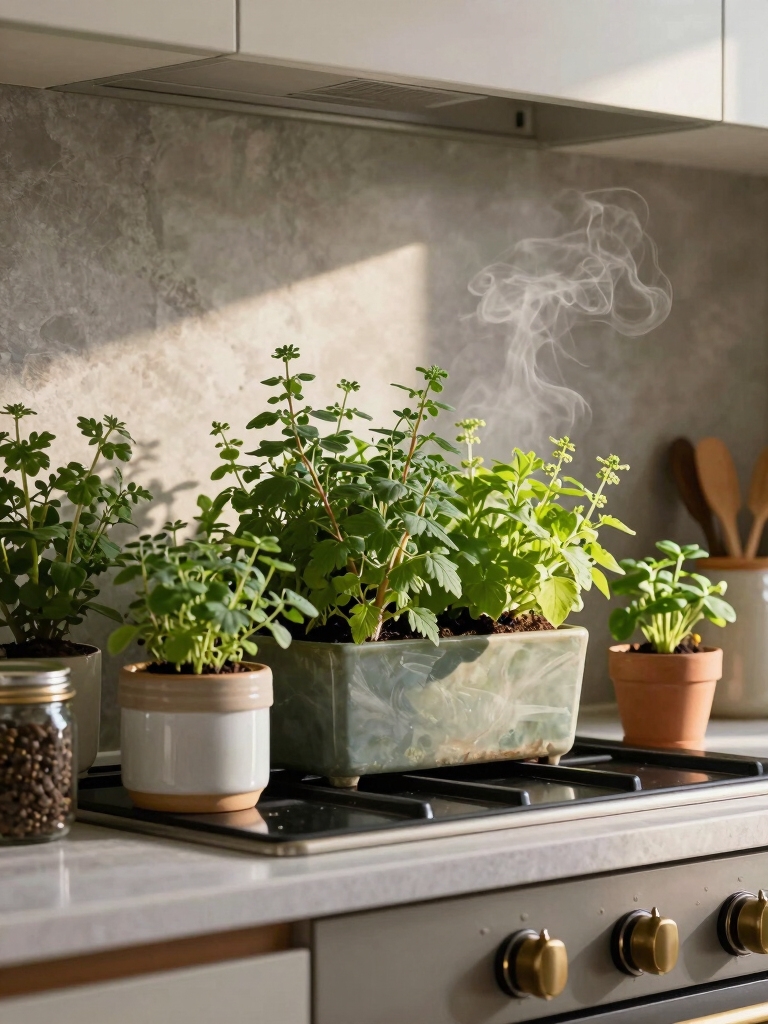
In a stove-adjacent kitchen zone, the best herbs thrive on steady light, steady warmth, and just enough airflow to dry excess steam.
I recommend basil, oregano, thyme, and chives near the range for quick seasoning without trailing damp foliage.
Choose well-draining pots, rotate weekly, and harvest leaves early to encourage vigorous growth and resilient, kitchen-friendly aroma.
Compact Foliage That Stays Vibrant in Hot Kitchens
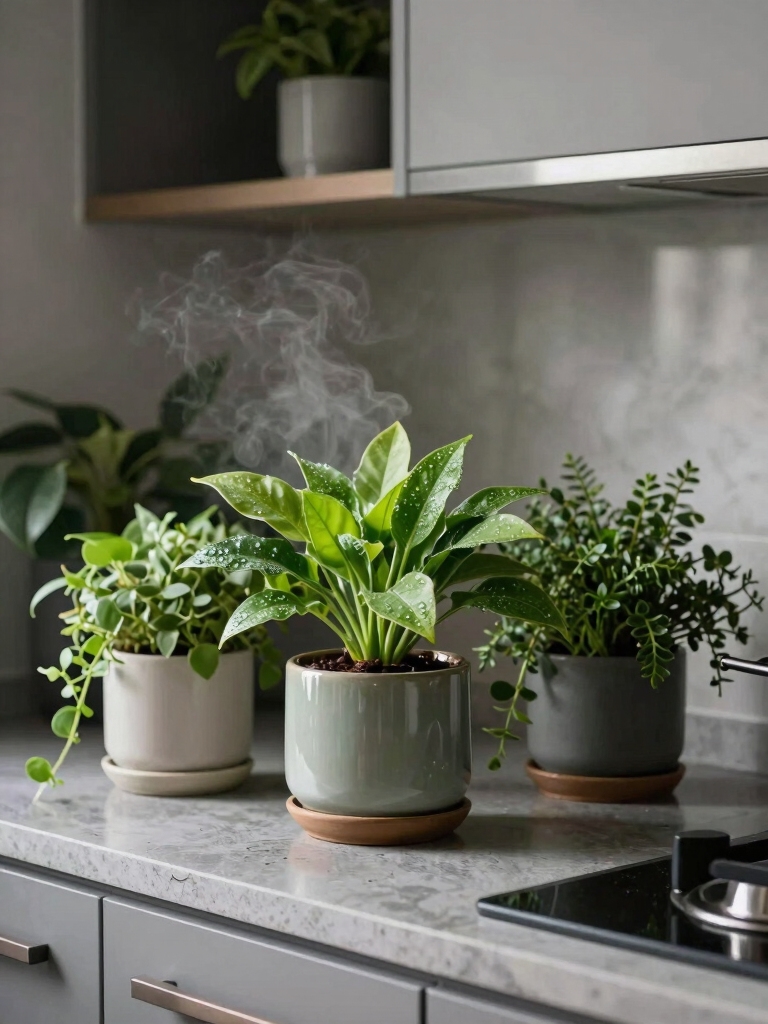
I’m sharing compact, colorful foliage that stays vibrant even in hot kitchens, so you’ll have lively greenery without crowding the counter.
I’ll point out heat-resistant leaf variants and simple care that keeps plants looking fresh with minimal effort.
Let’s explore low-wuss maintenance choices that fit tight spaces and busy family routines.
Compact Yet Colorful Foliage
Compact foliage that stays vibrant in hot kitchens is totally doable with the right picks and care.
I recommend compact varieties with colorful leaves or small flowers, like sweet potato vine, kalenchoe, or coleus, kept in bright, indirect light.
Water evenly, avoid soggy soil, and rotate plants for uniform color. Quick trims prevent legginess and sustain lively, cheerful foliage.
Heat-Resistant Leaf Variants
When selecting heat-resistant leaf variants for compact, vibrant foliage, I look for plants that handle hot kitchens without browning or stretching.
I favor compact forms, thick leaves, and steady color through steam and splashes. Varieties with sturdy stems resist droop, while consistent light helps.
Choose low-maintenance options, and water moderately to keep resilience without soggy soil.
Low-Wuss Maintenance Choices
Room-temperature resilience and simple care go hand in hand with choosing compact foliage that stays vibrant in hot kitchens.
I’ll share easy, all-ages options that survive steam and drama without fuss.
- Snake plant: bold, low water, little light needed
- pothos: trailing charm, resilient and forgiving
- ZZ plant: drought-tolerant, shines with neglect
- jade: sturdy, slow grower, thrives in heat
Succulents and Cacti That Tolerate Steam and Heat
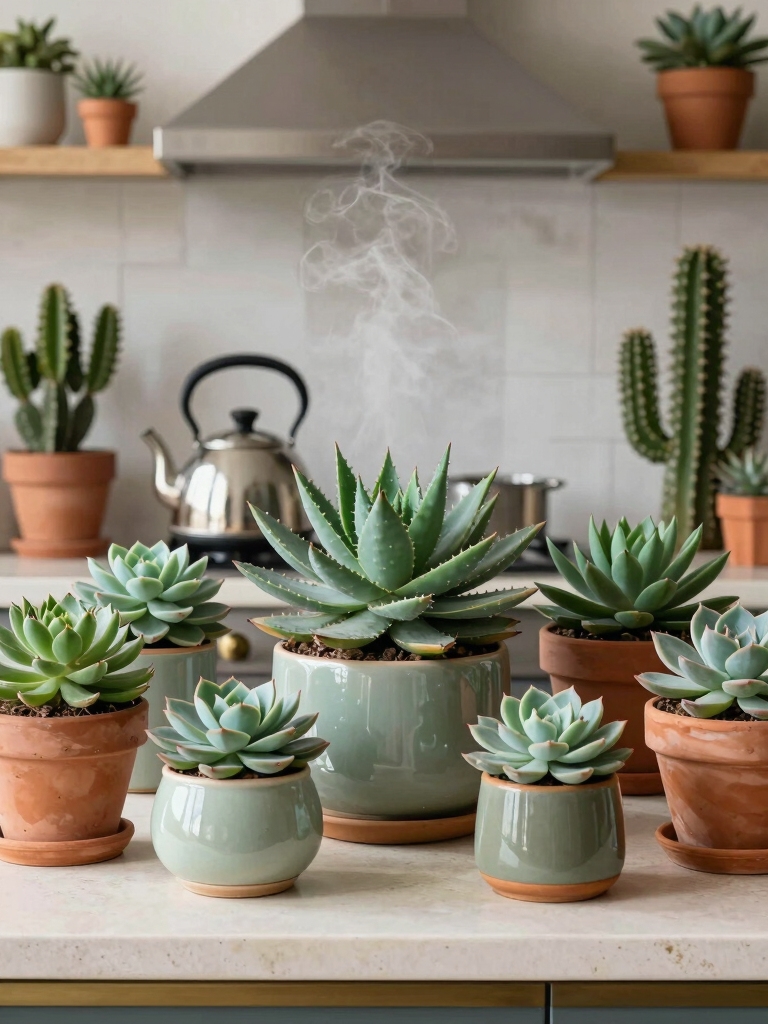
I’m sharing heat- and steam-tolerant picks like hardy succulents and steam-ready cacti that fit busy kitchens.
These plants stand up to warmer air and quick temperature shifts, so you won’t worry about sudden steam bursts or hot pots.
If you’re decorating for resilience and easy care, these options are practical, kid- and pet-friendly conversation starters.
Heat-Tolerant Succulents
Heat-tolerant succulents are a great choice for kitchens and sunny spots because they thrive where steam and warmer temperatures are common.
I’ve found these resilient picks work well with kids and chores, so you’ll stay practical and calm.
- Aloe vera
- Echeveria
- Jade plant
- Sedum
They’re low-maintenance, forgiving, and stylish enough to brighten any countertop. Additionally, incorporating these plants can enhance your kitchen’s small kitchen storage by providing a decorative yet functional element that reduces clutter.
Steam-Ready Cacti
Stepping from heat-loving houseplants, I’ve found that some cacti and succulents handle steam and higher kitchen temps just fine, making them ideal for sunny counters and stove-facing shelves.
Steam-ready varieties include small barrel cacti, prickly pear, and hardy echeverias.
Water sparingly, improve ventilation, and avoid overwatering.
Position away from direct flame, rotate occasionally, and enjoy low-maintenance greenery that thrives near heat.
Sun-Loving Plants That Survive Near Hot Ovens
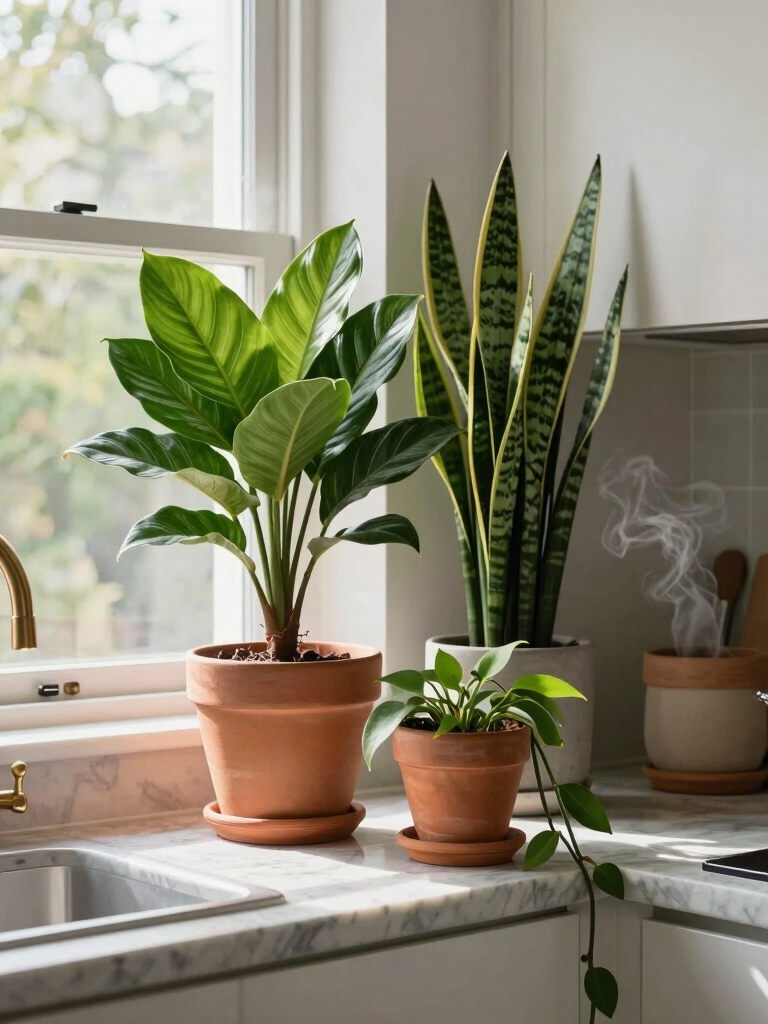
If you’ve ever decorated a sunny kitchen, you know some plants can thrive right beside a hot oven.
I choose varieties that tolerate heat, bright light, and quick turnover, so your counter stays lively, not stressed.
- Basil thrives near warmth and cooks with you
- Oregano loves sun and dries quickly
- Thyme chills in radiant spots
- Rosemary stays compact and resilient
Humidity-Loving Greens for a Steamy Kitchen
Humidity can be a challenge in a steamy kitchen, but it also opens doors to greens that thrive in moisture-rich air.
I’ll pick sturdy herbs and leafy greens that tolerate humidity, like basil, mint, and watercress, plus spinach.
Keep drainage clear, water consistently, and place near light.
I’ll prune regularly, prevent mold, and share harvests with you for tasty, quick meals. Incorporating humidity-loving plants into your cooking space not only enhances the aesthetic but also provides fresh ingredients at your fingertips.
Containers and Potting Options That Beat Kitchen Heat
Containers and potting options that beat kitchen heat demand smart choices: lightweight, breathable, and heat-tolerant setups that keep roots happy and plants producing.
I’ll guide you to practical mixes and vessels you can trust every day.
- Lightweight terracotta alternatives with drainage
- Fabric pots for aeration and root health
- Coconut coir + perlite blends for moisture balance
- self-watering planters with insulated bodies
Watering and Drainage Hacks for Hot Kitchens
I’ll share simple tips on watering smarter in hot kitchens and how to keep roots happy without overdoing it.
We’ll also cover drainage and airflow hacks so excess water can escape and air circulates around our plants.
If you’re curious, we can brainstorm a quick setup that fits busy days and keeps everyone fresco—plants included.
Watering in Hot Kitchens
When the kitchen feels like a sauna, watering plants smarter matters more than ever; I’ll share practical tricks to keep roots hydrated without overwatering.
1) Water early or late to dodge peak heat, feeding steady moisture without scorch
2) Use tepid water, not cold, to protect roots
3) Pour shallowly, let soil absorb, avoid puddles
4) Group plants with similar needs to reduce waste
Drainage and Airflow Hacks
If your kitchen stays humid and hot, good drainage and steady airflow make all the difference.
I test pots high with saucers, raise tiny crevices, and use breathable mats so water drains quickly.
I place plants away from vents, rotate weekly, and group drought-tolerant varieties together.
Quick-drying soil and airflow prevent mold, keeping cooking and greenery safe, cheerful, simple.
Lighting Strategies to Fuel Thriving Kitchen Greens
Good kitchen lighting isn’t just about visibility; it’s about giving your greens the energy they need to stay vibrant.
I’ll keep it practical and clear, guiding you without fluff.
- Use bright, full-spectrum bulbs that mimic sunlight for steady growth
- Place lights 6–12 inches above plants to maximize intensity
- Schedule 12–14 hours of gentle exposure daily
- Pair with natural light timers to avoid fluctuations
Layout Ideas: Corner Spots and Heat Zones
Corner spots and heat zones can be goldmines for kitchen greens, so I’ll teach you how to use them effectively rather than letting wasted space sit unused.
Place compact herbs on windowsills near stoves, and mount trailing greens along open walls where heat radiates softly.
Group plants by light needs, water habits, and daily use to keep chores simple and growth steady.
Seasonal Care Calendar for Year-Round Health
Seasonal care is all about staying ahead of changes, not reacting to problems after they pop up.
I guide you through a simple year-round schedule so plants stay healthy near heat and steam, without guesswork.
- Spring: refresh soil, prune lightly, rotate pots.
- Summer: monitor humidity, water deeply, shade when scorched.
- Autumn: clean leaves, reduce feeding, check for pests.
- Winter: tighten light, inspect seals, trim frost-prone tips.
Color and Texture Combos That Hide Steam Sheen
Color and texture play a big role in camouflaging steam sheen, so I’ll start with combinations that look natural and stay easy to care for.
I prefer matte-finish leaves with soft greens and muted blues paired with rough, clay-like pots.
Pair glossy accents sparingly.
Space plants to reveal foliage without crowding, and choose varieties tolerant of humidity for lasting habitability.
Troubleshooting Common Kitchen Plant Issues
Sometimes problems pop up in the kitchen, but they’re usually easy to fix with simple checks and smart tweaks.
I’ll guide you clearly, so your plants thrive despite heat and steam.
- Check drainage and soil moisture, not just appearance.
- Adjust light by rotating pots and pruning shadows.
- Improve airflow with a small fan or vents.
- Rinse leaves gently to remove residue and dust.
Additionally, consider incorporating small kitchen ideas that can enhance your plants’ environment while maximizing space.
Conclusion
I’ve learned that your kitchen can be a lively greenhouse, not a risky risk zone. With the right heat-tolerant friends, sun-loving companions, and compact greens tucked into cozy corners, your space becomes a warm, edible art piece. I’ll keep the routine simple: watch for steam whispers, rotate pots like a friendly schedule, and celebrate small blooms. Your stove-side sanctuary will thrive, not just survive, turning every recipe into a tiny, fragrant victory. Let’s grow smarter, together.


