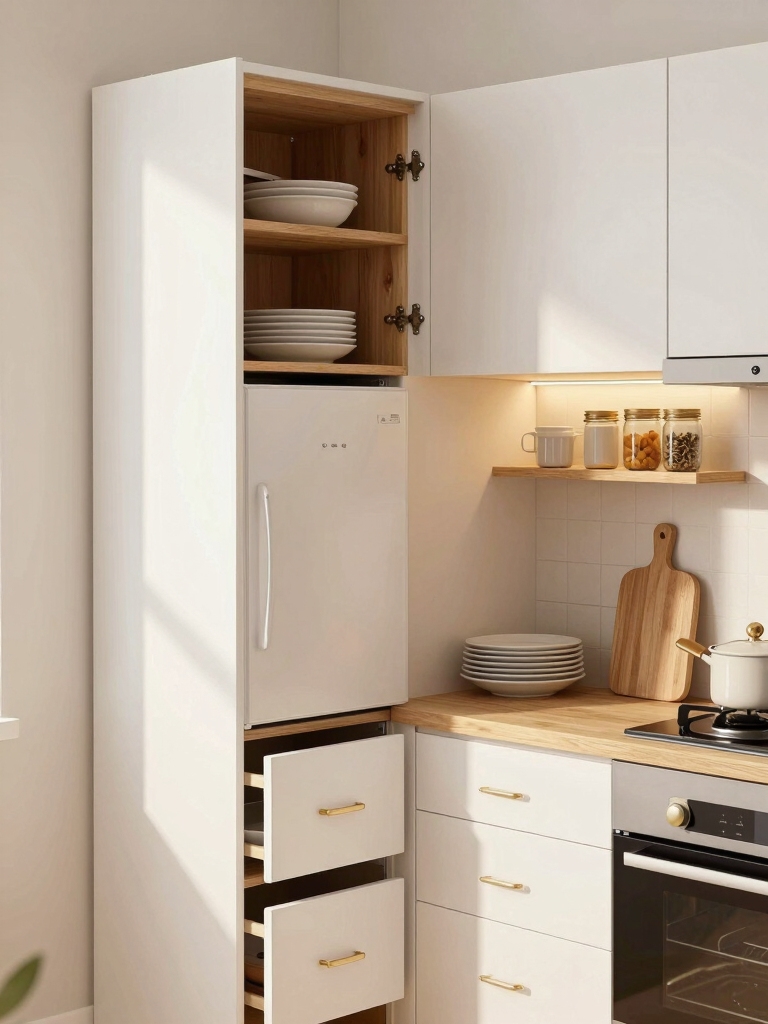

I’ll help you move beyond oak-brown basics and use cabinet stain like a design tool to set mood, show grain, and handle real life. Consider wood species first—oak, maple, and cherry take stains very differently—and pick transparent, semi-transparent, or opaque finishes to reveal or hide texture.
Try smoked, fumed, limed, or glazed layers for depth and character. Test full panels in your light, plan maintenance and topcoats, and keep options practical—if you want, I’ll explain the steps next.
Why Reimagining Cabinet Stains Matters

Because trends and lifestyles change, I believe reimagining cabinet stains matters more than ever: the stain you pick doesn’t just finish the wood, it sets the mood, highlights craftsmanship, and shapes how a space feels and functions.
I want you to see stains as design tools—subtle or bold choices that influence light, contrast, and emotion—so your kitchen reflects how you live, cook, and entertain.
Carpenters often point homeowners toward finishes favored for wooden kitchen cabinets because they balance durability and appearance.
Understanding Wood Types and How They Take Stain

When I choose a stain, I always start with the wood itself—its species, grain, and porosity determine how the color will actually look and wear over time.
Oak’s open grain soaks stain differently than maple’s tight grain; cherry deepens and amber-tones emerge with age.
I test samples, note absorption and contrast, then match stain strength to the wood’s character for a cohesive, lasting result.
Natural wood cabinets often celebrate the wood’s untouched beauty by highlighting its inherent grain and color.
Choosing Between Transparent, Semi-Transparent, and Opaque Finishes

If you’re after a specific look, I choose between transparent, semi-transparent, and opaque finishes by first deciding how much wood character I want to show — transparent keeps the grain fully visible, semi-transparent softens it while adding color, and opaque hides it for a solid painted appearance.
I consider kitchen lighting, desired modern or rustic vibe, and maintenance: transparent feels natural, semi-transparent balances texture and hue, opaque delivers bold, even color.
Kitchen cabinets are redefining modern homes with new materials and finishes that blend form and function.
Smoked and Fumed Finishes for Subtle Depth

I like smoked and fumed finishes because they bring out the wood’s grain with a richer, more sculpted look.
You’ll notice soft, smokey tones that add subtle depth without overpowering the room.
Let me show you how those enhanced grain details can change the whole cabinet feel.
Hickory is an excellent choice for this treatment because its stunning grain really stands out with smoked and fumed techniques.
Enhanced Grain Definition
I’ve come to love how smoked and fumed finishes bring out wood’s personality, subtly emphasizing the grain without shouting for attention.
I often point out how those techniques deepen contrast between rays and rings, creating tailored texture.
They let natural patterns read stronger under soft light, so cabinets feel crafted rather than painted—perfect when you want refined detail that reads as intentional, not overstated.
Cherry wood cabinets age gracefully over time, developing a warm patina that enhances the finish.
Soft, Smokey Tones
When you want cabinets that read quietly sophisticated, smoked and fumed finishes are the move I reach for—they add a soft, smokey depth that keeps wood’s character front and center without shouting for attention.
I love how subtle tonality and gentle contrast age gracefully, calming bright palettes and pairing brilliantly with brass or matte black hardware for a modern, lived-in vibe that still feels intentional.
Walnut kitchen cabinets are particularly well-suited to these finishes, offering a rich base that can anchor any design while maintaining warmth and texture.
Layered Glazes and Distressing for Vintage Character

Although glazing and distressing might seem like finishing flourishes, I use them to build real vintage character by layering meaning into each cabinet surface.
I gently add translucent glazes to deepen grain and create age, then selectively distress edges and corners for believable wear.
The result feels curated, warm, and lived-in—timeless without looking contrived, perfect for kitchens that tell a story.
I also recommend simple finishes and techniques even total beginners can tackle, like basic sanding and sealing with beginner-friendly methods.
Whitewashing, Liming, and Pickling Techniques
Exploring whitewashing, liming, and pickling opens up subtle ways to brighten wood while keeping its texture and soul—I’ll show you how each technique alters grain, tone, and mood so you can pick the right look.
I prefer simple, dimensional finishes:
- Whitewashing: translucent wash softens color.
- Liming: fills grain with pale contrast.
- Pickling: preserves warmth with a chalky veil.
- Sealing: protects subtle effects.
Bold Colors and Stained Hues Beyond Natural Wood Tones
Why not go bold? I love using saturated stains and colored washes to give cabinets personality without losing wood grain.
Deep blues, forest greens, and smoky charcoals add drama while stains let texture peek through.
I recommend sampling large boards, considering lighting, and pairing bold hues with simple hardware so the look stays sophisticated, not gimmicky.
Two-Tone Cabinets: Contrasting Stains and Colors
When I mix two tones in a kitchen—say, a warm walnut island with pale painted uppers—it brings depth and balance without overwhelming the room.
I choose contrast to define zones and add interest. Consider these tips:
- Anchor with a darker base.
- Lighten uppers for airiness.
- Repeat a trim color.
- Balance metals and countertops for cohesion.
Stain-and-Glaze Combos for Enhanced Grain Definition
If you want the wood’s character to sing without looking heavy-handed, I use a stain-and-glaze combo to deepen the grain and add subtle shadowing.
I apply stain to warm the base tone, then brush a thin glaze into recesses to accent lines and knots.
The result reads richer, more dimensional, and tailored—perfect when you want depth without masking the wood’s natural beauty.
Specialty Finishes: Shou Sugi Ban, Ceruse, and Antiquing
I love how specialty finishes can totally change a kitchen’s mood, so let’s look at two striking options.
Shou Sugi Ban uses a charred wood technique for dramatic texture and depth, while ceruse gives a whitewashed, grain-highlighted look that feels modern and lived-in.
Both approaches add character without overpowering the rest of your design.
Charred Wood Technique
Because I love finishes that bring texture and history into a kitchen, I want to introduce the charred wood technique—an umbrella for methods like shou sugi ban, ceruse, and antiquing that each give cabinets a striking, lived-in look.
I’ll walk you through essentials:
- Visual depth and contrast
- Weathered, tactile surfaces
- Durable, low-maintenance finish
- Pairs with modern or rustic styles
Whitewashed Ceruse Effect
Let’s plunge into the whitewashed ceruse effect: I’ll show you how a pale, pigment-forward wash highlights a wood’s grain and gives cabinets a soft, aged glow without making the space feel heavy.
I love using ceruse to brighten oak or ash, rubbing pigment into grain, wiping back for contrast, then sealing with matte varnish — subtle, modern, and endlessly adaptable.
Finishes That Perform: Durability, Maintenance, and Topcoats
When I pick a finish for kitchen cabinets, I focus on how it will stand up to daily life—scrubbing, grease, kids, and the occasional move—because longevity matters as much as looks.
I choose practical topcoats and easy-care surfaces. Consider:
- Hard-wearing polyurethane
- Water-based clear coats
- Oil-modified finishes
- Wax for low-traffic zones
Maintenance is straightforward: gentle cleanser and occasional touch-ups.
Lighting, Room Size, and How Stain Color Reads in Space
I always ask about the light in a kitchen first, because natural and artificial light change how a stain’s warmth and depth read on cabinets.
In a small room a dark stain can make the space feel cozy or cramped, while in a large, well-lit kitchen the same color can appear richer and more balanced.
Knowing the light source, room scale, and whether you want a warm or cool tone helps you choose a stain that actually looks like the sample once it’s installed.
Natural vs. Artificial Light
How does the same stain look so different from one kitchen to the next? I watch finishes change with light: natural sun warms tones; cool artificial bulbs flatten them.
Consider these quick checks:
- View cabinets in morning light.
- Check under your typical evening bulbs.
- Test a sample at different times.
- Note reflections from nearby surfaces.
That helps me choose a stain that reads true.
Room Scale Effects
Although light plays a big role, the room’s scale and finishes change how a stain actually reads, so I always look beyond a single swatch.
Big, airy rooms let stains breathe; small spaces intensify contrast. Glossy backsplashes, pale floors, or dark islands shift perceived depth and warmth.
I test samples on full cabinet panels in different spots before deciding.
Stain Tone Perception
Because lighting and room proportions can completely change a stain’s personality, I always view color as a moving target rather than a fixed sample.
I check stains in situ, noting scale and light. Consider these quick guidelines:
- Natural light warms tones.
- Small rooms darken deep stains.
- Cool LEDs mute warmth.
- Test large swatches at different times.
Sample Boards, Mockups, and Choosing the Right Shade
I like to start this phase by laying out sample boards and mockups so I can see how different stains play with lighting, hardware, and surrounding finishes.
I test multiple boards at different times of day, pair them with photographed hardware, and view them next to countertops and floors.
That hands-on comparison helps me choose a shade that balances mood, durability, and cohesive style.
DIY vs. Professional Application: When to Hire a Pro
I’ll walk you through how to decide whether to tackle staining your cabinets yourself or call in a pro, focusing on the skills and tools you’ll need, how much time the project will take, and the long-term durability of the finish.
If you’re comfortable with sanding, steady brushwork, and masking off a kitchen, DIY can save money on small jobs, but larger scopes or tricky wood types often benefit from professional equipment and experience.
Ultimately hiring a pro is worth it when you want a consistently durable, showroom-quality finish without the stress of doing it twice.
Skill and Tools Required
While you can tackle a basic cabinet stain yourself with patience and the right tools, I’ll walk you through when it’s smarter to call a pro.
I’ll explain required skills and tools so you can decide confidently.
- Sanding gear: random-orbit sander, abrasives.
- Stains/finish: oil, gel, polyurethane.
- Prep tools: tack cloths, masking.
- Skill: surface repair, even application, troubleshooting.
Time and Project Scope
Because time, complexity, and your comfort level matter, I’ll walk you through how to decide whether to tackle cabinet staining yourself or hire a pro.
If you’ve got modest scope, patience, and basic tools, DIY saves money and gives control.
For full kitchens, intricate finishes, tight timelines, or uneven surfaces, hiring a pro guarantees efficiency, consistent results, and less stress.
Long-Term Finish Durability
I usually tell people that the real test of a cabinet stain isn’t how it looks the week after you finish but how it holds up five or ten years down the road, and that’s where application quality matters most.
I weigh DIY vs pro by complexity and risk:
- Small touch-ups — DIY.
- Full refinish — pro recommended.
- High-traffic kitchens — pro.
- Custom stains/repairs — pro.
Budgeting, Timeline, and Long-Term Care Considerations
As you plan your stain choice, I’ll walk you through the real costs, realistic timelines, and care steps that actually matter so you don’t get surprised halfway through the project.
I’ll estimate material versus labor, show how stain type affects drying and installation time, and give simple maintenance routines—gentle cleaners, periodic resealing, and humidity control—so your cabinets stay beautiful without constant fuss.
I want your kitchen to feel like it was meant to be — not an afterthought. Did you know 72% of homeowners say updated cabinets most influence buyer impressions?
That shows how stain choices matter. Try a smoked or layered glaze on a sample board, watch it under your light, and don’t be afraid to mix opaque and transparent tones for drama.
If you’re unsure, hire a pro for tricky woods or finishes — it’s worth the peace of mind.