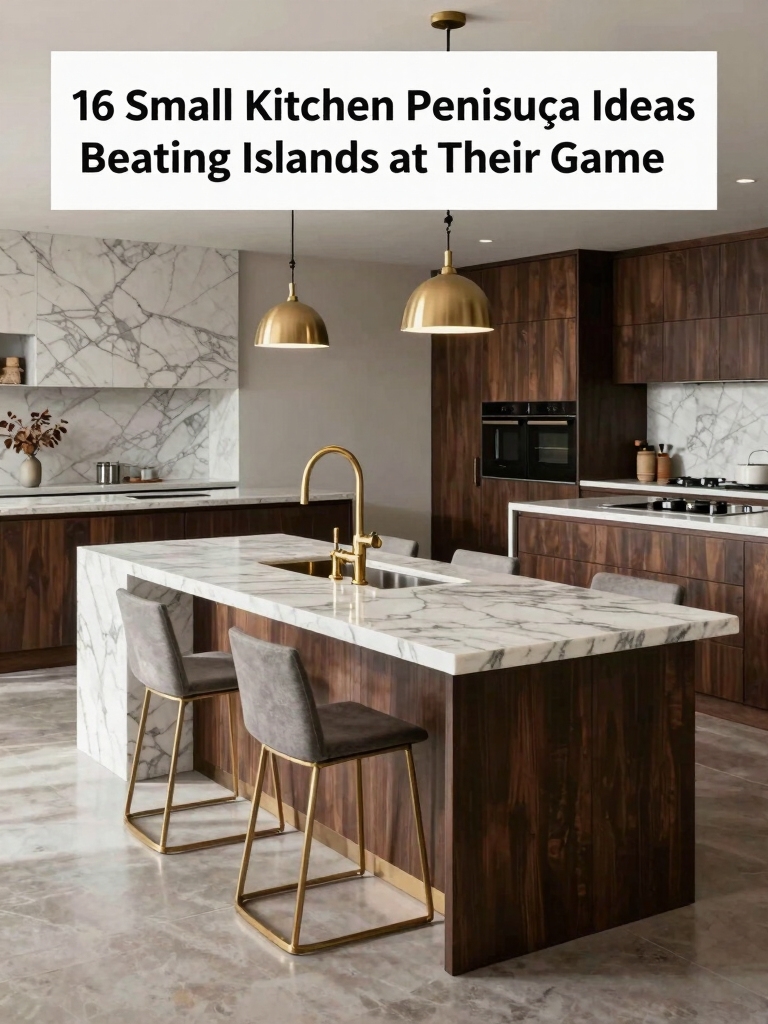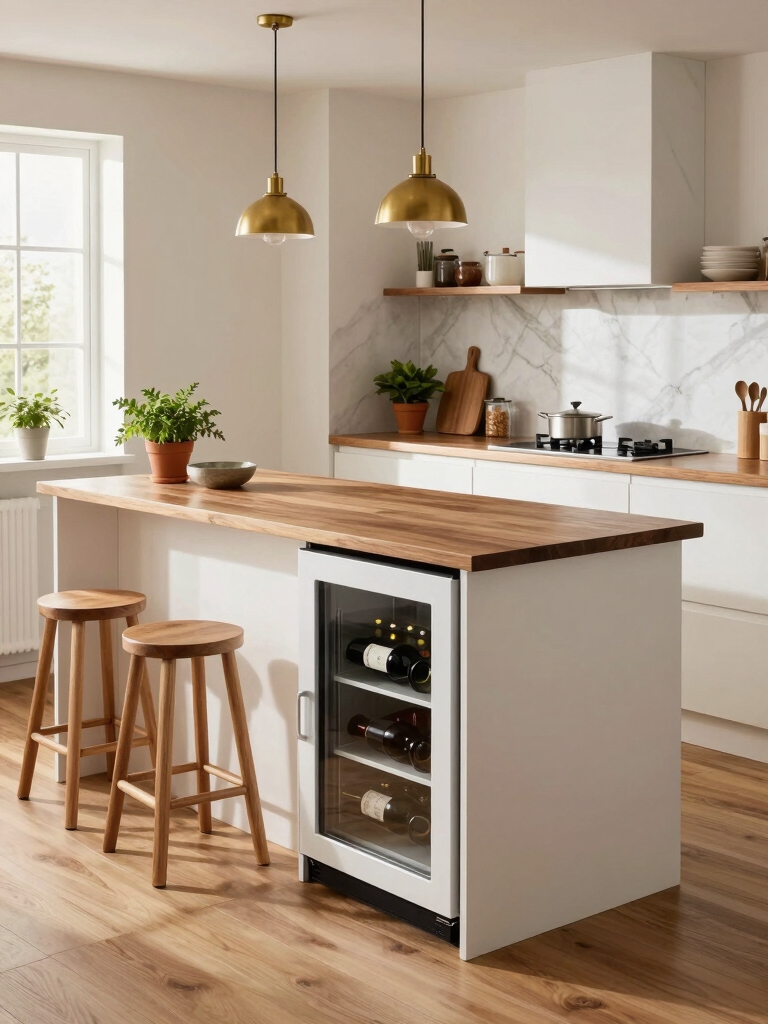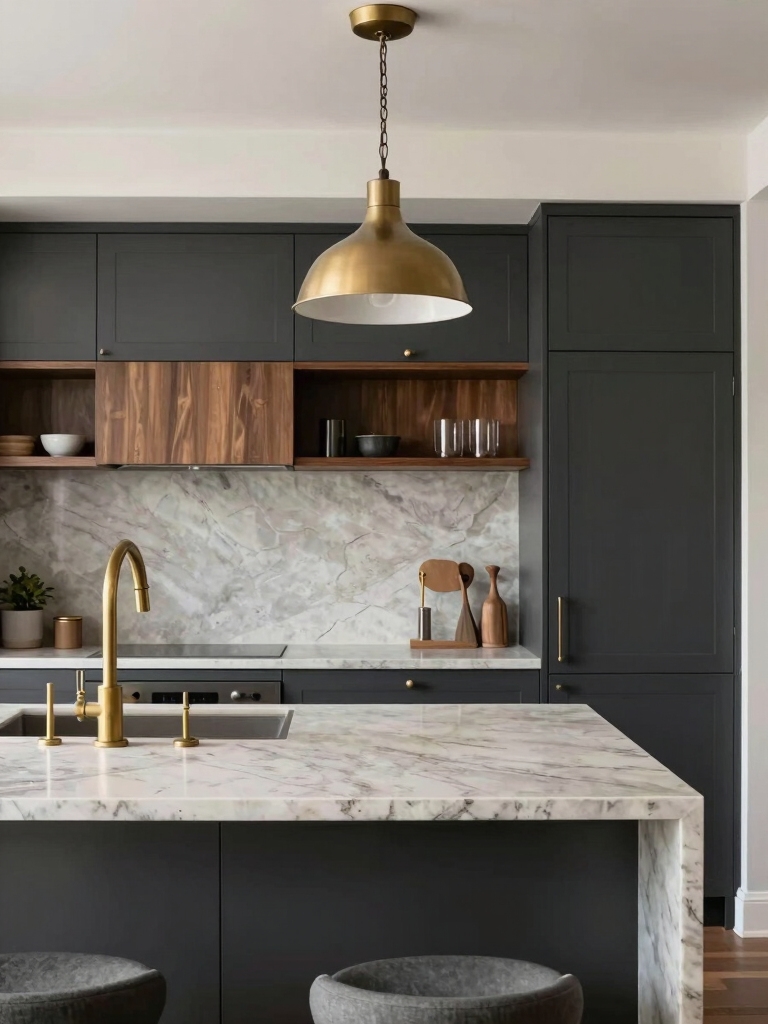

You can make a small kitchen look bigger without moving a single wall. Most of the time it is not the room that needs to change, just the way light and color move through it.
This is decor working as quiet illusion: light, color, reflection, and clean sightlines that fool the eye into seeing more room. Here are five looks I keep coming back to in my own projects, with the palette and materials behind each, and how to bring it into your kitchen. For more in this vein, our small-space illusion tricks go deeper.
The Space-Expanding Toolkit
| Trick | Why it works | Best for |
|---|---|---|
| Light tonal palette | Blurs edges so the walls recede | Almost any small kitchen |
| Glossy reflective finishes | Bounce light deeper into the room | Darker, north-facing rooms |
| Open shelving | Removes visual bulk overhead | Kitchens that feel top-heavy |
| Slimline appliances | Free up the counter and sightline | Galley and one-wall layouts |
Wrap the Room in a Light Tonal Palette

The fastest way to make a small kitchen feel airy is to wrap it in a single, light color family. When the cabinets, walls, and trim all sit within a few shades of one another, the eye stops catching on hard boundaries and the room quietly expands.
This is less about plain white and more about a tonal palette: soft greige cabinets, a warm-white wall, a pale stone counter, layered so nothing interrupts the flow, the same restraint behind a warm white kitchen.
Texture is what saves it from feeling flat: matte cabinet fronts against a subtly veined counter and a woven blind add depth without adding contrast. Pull the floor into the scheme too, since a pale wood or large-format light tile run in one direction stretches the room and removes another visual break.
It flatters almost any small kitchen and is especially kind to rentals, where a weekend of paint and a few accessories, often under a hundred dollars, do most of the work. The one honest trade-off is that pale surfaces show every mark, so reach for wipeable satin or semi-gloss finishes near the stove and sink, since chalky flat paint marks too easily there.
- Pick one undertone and commit: warm creams and oat, or cool grays and soft whites, never a mix of both
- Carry the wall color up onto the ceiling to lift the height and lose the dividing line
- Build interest through material and texture (wood, stone, linen) rather than bold blocks of color
- Keep hardware tonal so brushed brass or matte nickel blends into the cabinet line
- Lay flooring in larger planks or tiles, running them toward the longest wall to draw the eye through
- Choose one or two see-through pieces, a glass canister set or an acrylic riser, so they disappear and keep sightlines open
- If you crave color, let it live in one removable layer: a vase, a tea towel, a single styled shelf
Let In Every Bit of Natural Light

Nothing makes a small kitchen feel bigger than the light it already has, so the first job is to stop blocking it. Heavy curtains, dark valances, and fussy layered treatments steal both daylight and visual space; the fix is to keep the window as open and uninterrupted as you can, and to let the frame itself almost disappear into the wall.
Reach for sheer, light-filtering shades or a slim roller shade mounted high and wide, above the frame and beyond its edges, so the glass reads larger and the daylight pours in unbroken. In a kitchen, choose a fabric or material you can wipe down, since splatter and steam near a sink are a given. Painting the window frame the same shade as the wall is a small, ten-minute move that makes the opening feel part of the room.
If privacy allows, leaving the window almost bare with just a sill of herbs is the most space-opening choice of all. Then place something reflective — a mirror, a glossy tile, a metallic canister — on the wall opposite, and it bounces that borrowed daylight back across the room.
Where you can, swap a solid back door for a glazed one or add a glass-fronted cabinet near the window so light passes through instead of dying against a wall. A glossy floor or a high-shine splash near the window throws that incoming light further into the room still. This whole approach earns its keep most in darker, north-facing kitchens, where every scrap of natural light counts double.
“Where can we add or borrow a light source, and which window treatment keeps the most daylight while still wiping clean near the sink?”
Add Reflective and Glossy Surfaces

Light is the currency of a small kitchen, and reflective surfaces let you spend it twice. A glossy lacquered cabinet, a mirrored or glass backsplash, polished stone, or a sheet of stainless all catch daylight and throw it deeper into the room, so the space reads brighter and, in turn, larger.
On one north-facing galley I worked on, a single mirrored backsplash did more for the gloom than any extra fixture could. Restraint is everything here. One or two reflective moments feel luxe and intentional, while a whole kitchen of shine can glare and turn cold.
Think of sheen as a hierarchy: a satin wall, a semi-gloss cabinet, and a single high-gloss or mirrored accent give you graduated light without turning the room into a hall of mirrors. Treat the shiniest piece like jewelry, since one statement does more than head-to-toe sparkle and keeps the look grown-up rather than flashy. The same light-first eye shapes our small-kitchen counter styling.
- A high-gloss backsplash behind the stove or sink bounces the most light exactly where you need it
- Lacquered or semi-gloss cabinet fronts read richer than matte in a dim kitchen and wipe clean fast
- A polished quartz or marble-look counter reflects ceiling light and makes the surface feel expansive
- A mirrored backsplash in a windowless galley fakes a second window and doubles the daylight
- Metallic accents like brass handles, a copper pan, or a chrome kettle add sparkle with zero commitment
- Clear glass or acrylic bar stools and a glass pendant let light pass through where solid furniture would block it
- Skip wall-to-wall gloss in a sun-flooded room where it can glare, and ground it with one matte surface
Swap Upper Cabinets for Open Shelving

Bulky upper cabinets are often what makes a small kitchen feel like it is closing in. Swapping a run of them for open shelving, the kind we style in our open-shelf guide, lifts the weight off the walls, and the whole room seems to breathe. Visually, your eye travels to the wall behind the shelves, which makes the kitchen read deeper than it actually measures.
Open shelf or glass-front cabinet?
If the thought of dust or constant tidying puts you off, glass-fronted cabinets are the practical halfway house our open-shelving practicality guide weighs up: they keep the see-through depth that opens up a wall while protecting what is inside, and a reeded or fluted glass politely blurs a little mess.
True open shelves give the airiest result, but they ask for discipline, since they only look good curated: a few beautiful, used pieces, stacked plates, and a couple of glass jars. If your everyday dishes are mismatched, this look will fight you.
You do not have to commit to a whole wall, either. Keep closed cabinets for the clutter you would rather hide and open just one or two shelves as a styled, breathing moment.
Floating wood shelves warm up a cool palette, while slim metal ones almost disappear, which keeps a tiny kitchen feeling light. Style in odd numbers and leave space between groupings — a stack of three bowls, a lean of two boards, and one trailing plant reads far calmer than a shelf packed end to end.
Wondering whether open shelving suits your kitchen?
1Will it make my kitchen look bigger?
Usually yes — removing upper cabinet doors lets the eye reach the wall behind, which adds visual depth. The effect is strongest when you keep the shelves light and uncluttered rather than packed.
2Is it practical for everyday use?
It can be, if you are happy to edit. Daily dishes you actually like work well on display; if your cupboards are full of mismatched plastic, keep those behind closed doors and style just one shelf.
Choose Slimline Integrated Appliances

Standard appliances can eat a small kitchen alive, and slimline, integrated versions quietly hand the space back. A narrow dishwasher, a counter-depth or under-counter fridge, and an integrated extractor keep the lines of the room clean, so nothing juts out to break the sightline.
Integrated fronts that match your cabinets are the real win here — when the fridge and dishwasher vanish behind cabinetry, the eye sees one calm, continuous run instead of a row of competing boxes. Drawer dishwashers and combination microwave-ovens are worth a look too, since they fold two jobs into a single slot and can free up a whole cabinet.
The look is clean and built-in, but be honest about how you cook before you buy. Slimline does not mean tiny, yet the capacity really is smaller, so it suits singles, couples, and people who shop often; a big batch-cooking household will feel the squeeze. Measure the opening and the door swing first, because a compact unit that blocks a drawer when its door is open is no win at all.
- Choose integrated appliances with cabinet-matching fronts for an unbroken, built-in look
- A slim eighteen-inch dishwasher or a combination oven reclaims a whole cabinet of space
- Counter-depth fridges sit flush with the cabinets so nothing protrudes into the room
- Consider a drawer dishwasher or a tall, narrow fridge to save precious floor width in a galley
- An induction cooktop with a built-in downdraft can skip a bulky overhead hood altogether
- A microwave drawer tucks down under the counter and frees the counter above for prep
- Match the finish family, all integrated or all matching steel, so the look stays calm
Small Kitchen Design Questions
?What color makes a small kitchen look biggest
A light, tonal palette wins — soft whites, warm creams, or pale grays kept within one undertone so the walls and cabinets blur together. It is less about stark white and more about keeping everything in the same light family, so the eye finds no hard edge to stop at.
?Are glossy and reflective surfaces too much for a small space
Used in moderation they are ideal, since they bounce light and make the room feel larger. The key is one or two reflective moments, such as a backsplash or a counter, rather than an all-over shine that can glare and feel cold in a bright room.
?Can I try these ideas as a renter
Most of them, yes. Paint, peel-and-stick gloss tiles, open-shelf brackets, swapped window treatments, and freestanding slim appliances are all renter-friendly and reversible. Even a coat of paint and one styled open shelf can transform a rented kitchen over a single weekend, so save the built-in integrated appliances for a kitchen you actually own.
Let the Light Do the Work
What every one of these ideas shares is that it trades square footage for the impression of it — more light, fewer hard edges, an unbroken line for the eye to follow. Not one of them needs a wall knocked down.
Pick the idea that fits your kitchen’s light and your budget, start there, and layer the rest over time. Save this page to come back to as you plan, because a small kitchen rewards a slow, considered eye, and a big rushed renovation rarely pays back the same way.