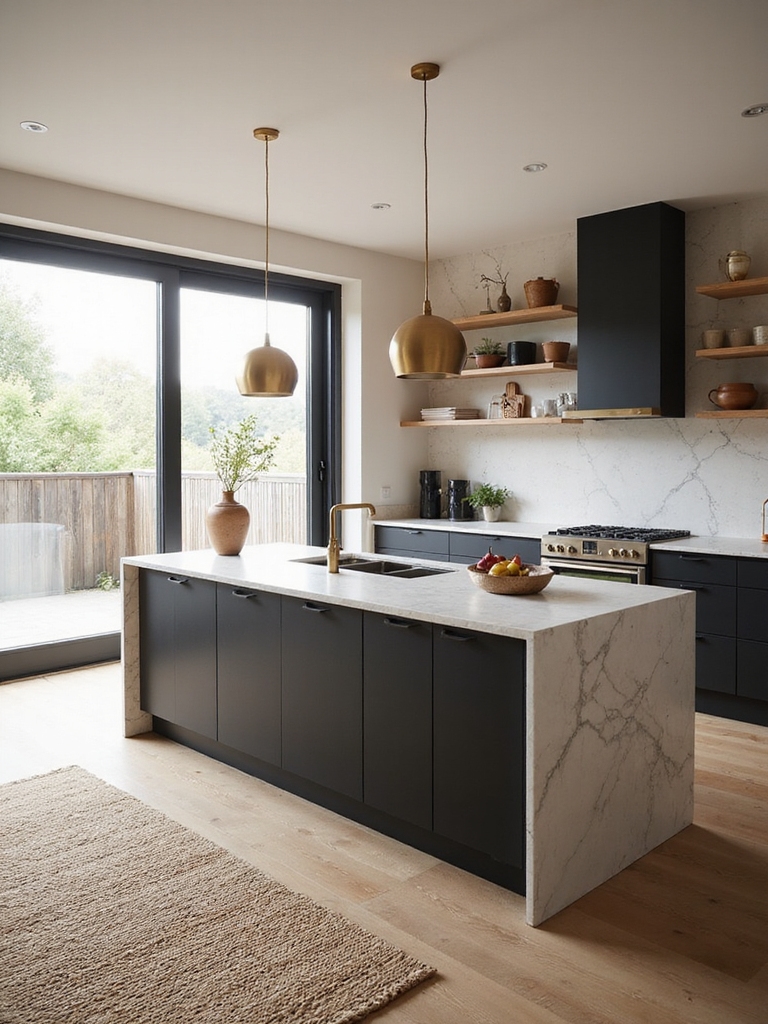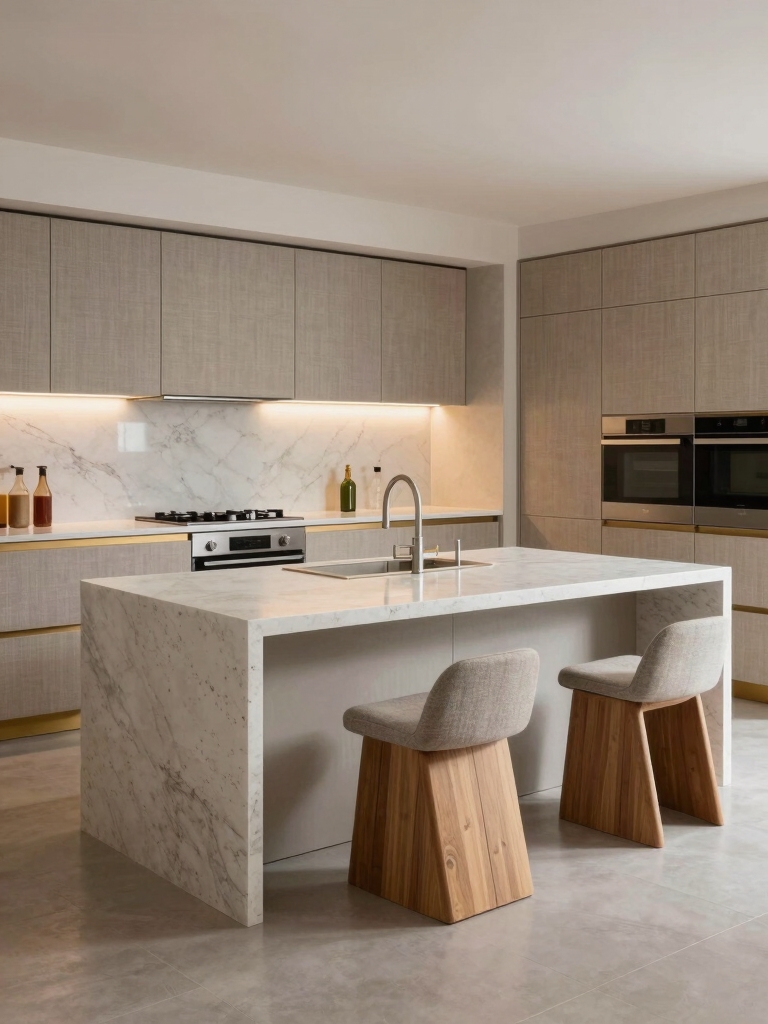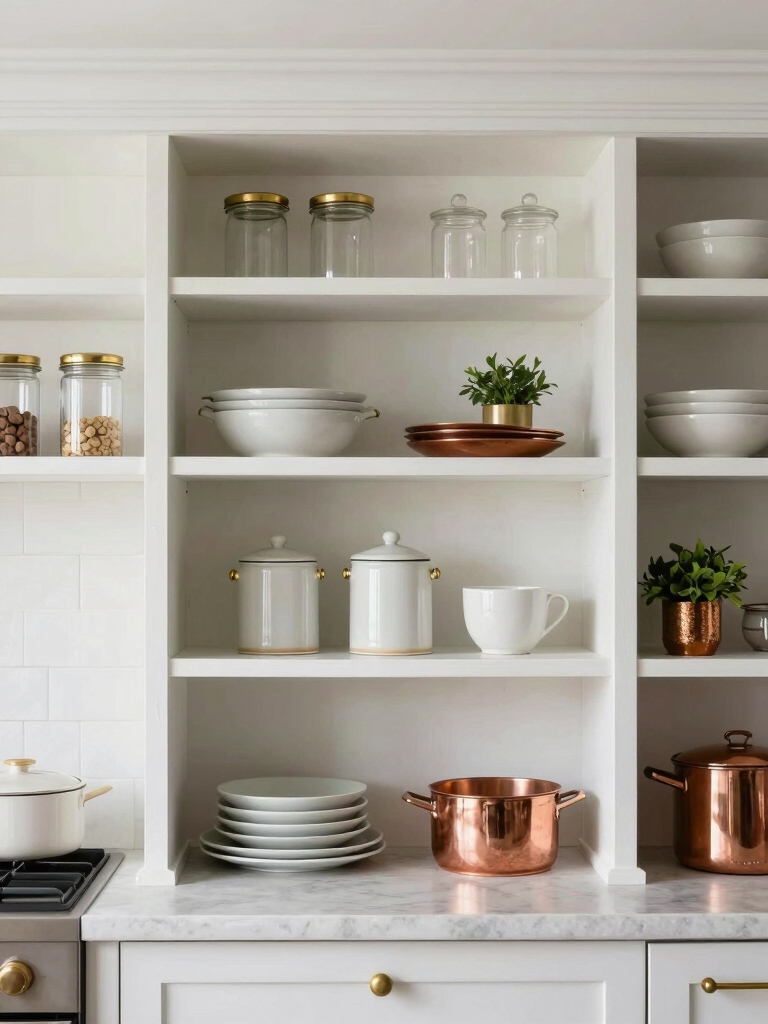

I’ve learned a few high-impact, low-cost moves that make a small kitchen feel luxe: bounce light with mirrors or glossy backsplashes, swap tired knobs for satin brass or matte black, and paint walls in warm neutrals with a slightly lighter ceiling.
Add open floating shelves for curated styling, choose realistic laminate or butcher-block counters, and pick one statement pendant or tap to elevate the room. Keep surfaces edited and you’ll get boutique polish — I’ll show you how.
Maximize Light With Reflective Surfaces
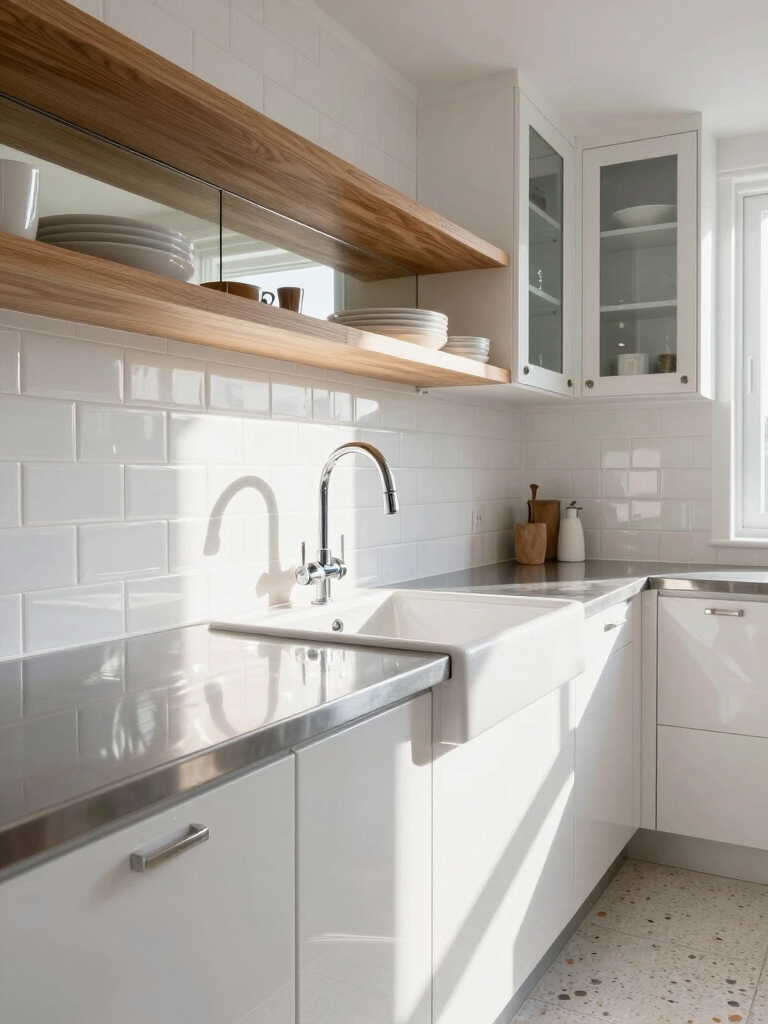
I often start small-kitchen makeovers by boosting light—mirrors, glossy backsplashes, and metallic fixtures do more than look chic; they actually increase usable light and make the room feel larger.
I choose a pale palette, position a narrow mirror opposite the window, and pick high-sheen tile grout for subtle sparkle.
Task lighting with adjustable fixtures finishes a bright, functional, luxe feel.
Using reflective surfaces like a glass backsplash also helps flood natural light into tight corners and maximize daylight.
Swap Cabinet Hardware for Big Impact
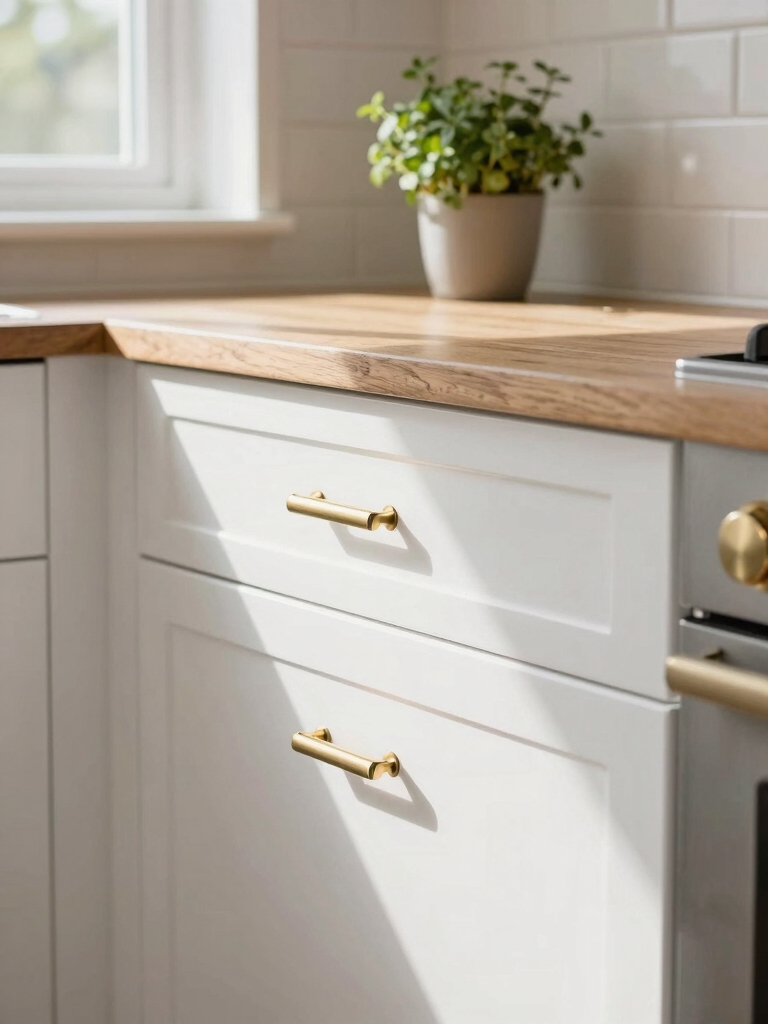
I swapped out tired knobs and pulls in my tiny kitchen and it instantly felt like a new room—choosing standout finishes like matte black or aged brass is an easy way to make a statement.
I mix handle styles—cups on drawers, slim bars on doors—to add subtle contrast without cluttering the visual plane.
I also pay attention to installation details, like consistent heights and centered placement, so the final look reads as intentional and refined.
I also explored clever small cabinet ideas like using mixed hardware styles to maximize visual impact in compact layouts.
Choose Standout Finishes
Think of cabinet hardware as jewelry for your kitchen—I swap out dull pulls and knobs to give the whole room a lift without breaking the bank.
I choose finishes that read luxe: satin brass warms white cabinets, matte black anchors light palettes, and aged nickel adds subtle sheen.
Small change, big style. Adding open shelving creates visual space and pairs well with upgraded hardware for a cohesive, high-end look with minimal cost and effort open shelving.
Mix Handle Styles
Often I mix handle styles to give a small kitchen a layered, designer look without spending much. I pair slim bar pulls on drawers with cup or knob accents on upper cabinets, keeping metal tones cohesive.
The contrast adds depth, guides the eye, and signals function. It’s an easy, high-impact swap that reads intentional and tailored without a full remodel. Clever Kitchen Solutions for Tiny Spaces you’ll love.
Update Installation Details
Swap out cabinet hardware and you’ll change the whole feel of a small kitchen without ripping anything apart.
I swapped knobs and pulls, matching finishes to lighting for cohesion, and drilled new holes carefully to avoid costly mistakes. Small details read as intentional design.
- Choose a finish that complements fixtures
- Standardize scale across cabinets
- Use template and soft-close upgrades for polish
Smart Small Kitchen Solutions for Modern Homeowners are all about maximizing function and style in tight spaces, and swapping hardware is one of those high-impact, low-cost moves that embodies space-saving strategies.
Paint Strategies That Open the Space

I’ll keep your small kitchen feeling airy by sticking to light, warm neutrals that reflect light without feeling cold.
A single strategic accent wall can add depth and personality, while glossy trim—and even a gloss-painted ceiling—bounces extra light into corners.
These modest paint moves are inexpensive but precise ways to make the space read bigger and more intentional.
Tiny kitchens can feel transformed when paint choices are used to double perceived space and optimize visual flow.
Light, Warm Neutrals
I usually reach for light, warm neutrals when I want a small kitchen to feel bigger without losing personality.
They reflect light, hide imperfections, and pair with brass or wood for instant warmth. I pick creamy whites, soft beige, or muted greige for cabinets and walls.
- Creamy white for reflective brightness
- Soft beige to add cozy depth
- Muted greige for modern warmth
Timeless small white kitchen inspirations often show how pairing neutrals with natural materials creates lasting appeal, especially when you emphasize small white kitchen details.
Strategic Accent Walls
When I want a small kitchen to feel more expansive without losing character, I use strategic accent walls to draw the eye and create implied depth.
I pick a single focal wall in a deeper, cool-toned hue or soft matte charcoal, then keep adjacent walls light.
Adding a vertical stripe or subtle mural guides sightlines, making the room read larger and curated without clutter.
Glossy Trim and Ceilings
Typically I reach for glossy trim and ceilings to bounce light around a tight kitchen—doing so instantly lifts the room without changing its footprint.
I choose high-sheen white or soft cream for reflections, pairing with matte walls for contrast.
It reads polished, not fussy.
- Use semi-gloss for trim for easy cleaning
- Paint ceiling one shade lighter than walls
- Keep sheen consistent on cabinetry edges
Use Open Shelving to Showcase Style
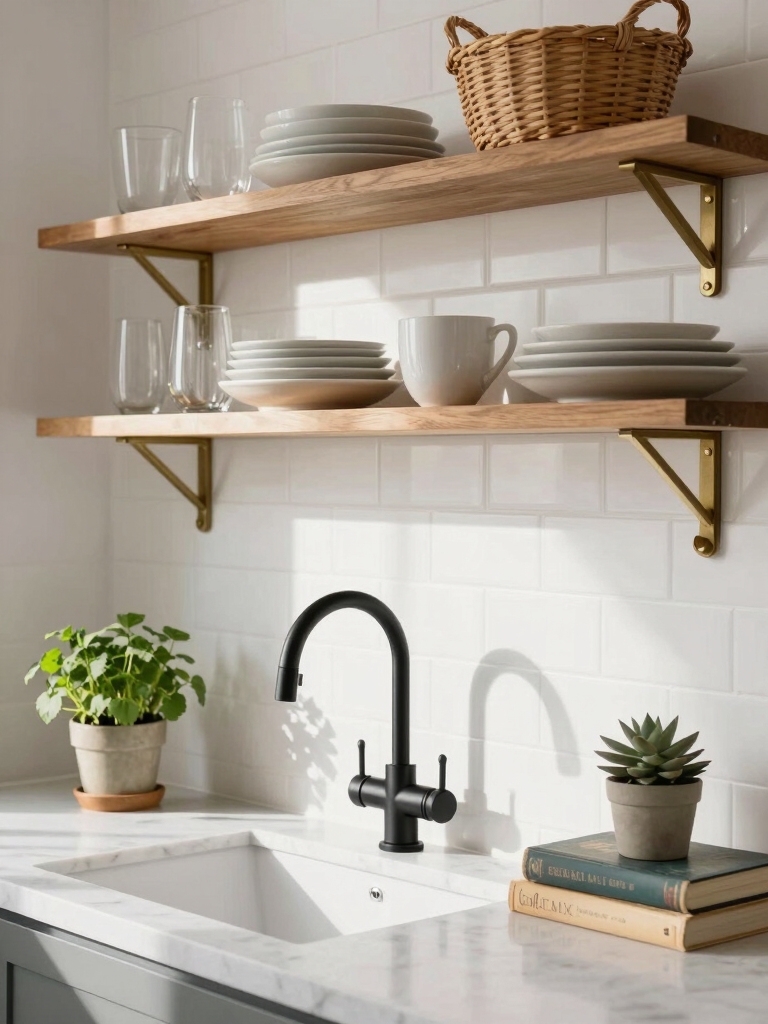
Think of open shelving as a quiet stage where I can put my favorite pieces on display and make the whole kitchen feel larger and more intentional.
I arrange ceramics, glassware, and a tiny herb pot by color and texture, mixing practical items with one or two artful objects.
Floating shelves, neat spacing, and consistent styling read expensive without costly upgrades.
Choose Cost-Effective Countertop Alternatives
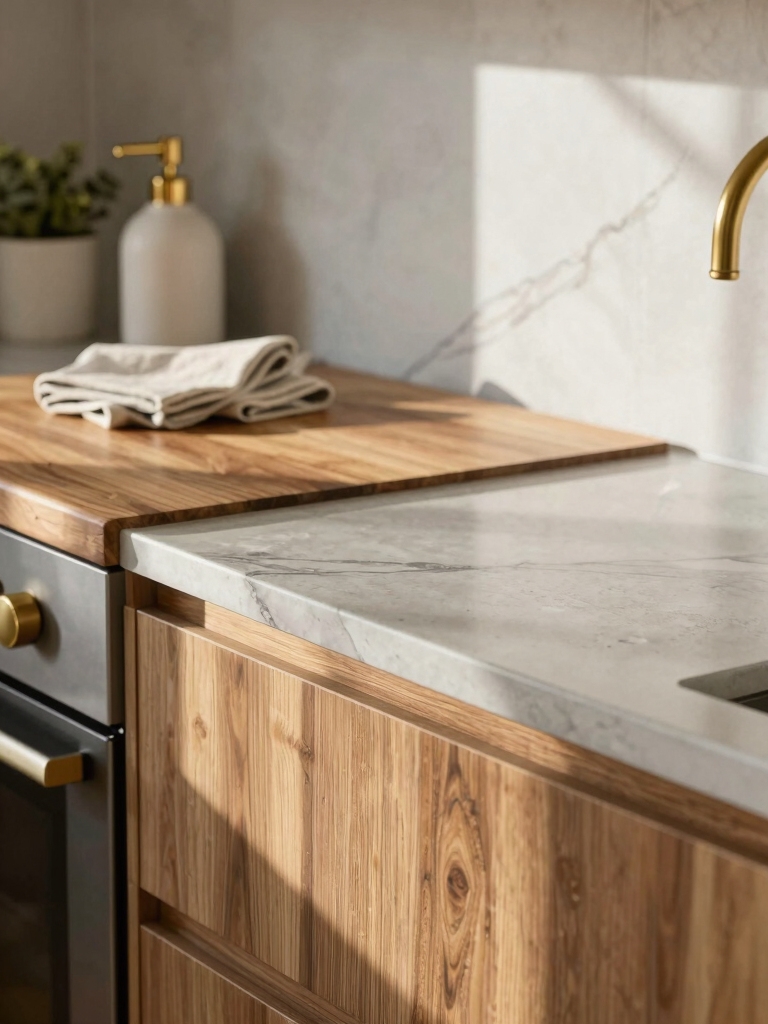
I’ll show you how affordable countertops can look high-end without blowing the budget.
Consider vinyl or laminate that mimics stone for low-maintenance realism, warm butcher block for a cozy, food-friendly prep surface, or a painted concrete finish for an industrial-chic vibe with customizable color and texture.
Each option has trade-offs in durability and upkeep, so I’ll help you match style to how you actually use the kitchen.
Laminate That Mimics Stone
I’ve leaned into laminate for small kitchens because it lets me get the stone look without the sticker shock: modern patterns now mimic marble, quartz, and soapstone with convincing veining and depth.
It’s durable, easy to install, and pairs with simple hardware to elevate the space.
- Choose honed finishes for realism
- Match backsplash tones for cohesion
- Seal edges to prevent water damage
Butcher Block Warmth
Warmth matters in a small kitchen, and I reach for butcher block when I want affordable charm that also performs.
I choose tight-grain maple or oak for durability, seal edges and joints with food-safe oil, and reserve a section as a cutting surface.
Its honey tones soften white cabinets, hide minor scratches, and let me refresh the look with sanding and re-oiling.
Painted Concrete Look
Concrete’s cool, urban edge can make a small kitchen feel custom without the custom price, so I lean into a painted concrete look when I want that modern-meets-minimal vibe on a budget.
I use thin concrete paint over laminate or plywood, seal well, and distress subtly for depth.
- Choose neutral gray tones
- Use a quality sealer
- Sand between coats
Create a Cohesive Color Palette
When I plan a small kitchen, I start by choosing a tight palette of two to three main colors and one accent so the space feels intentional rather than cluttered.
I pick finishes that read cohesive — matte cabinets, warm wood, and a cool tile or brass accent.
Limiting contrast and repeating color subtly ties surfaces, textiles, and hardware into an elegant, budget-smart whole.
Install Under-Cabinet and Accent Lighting
I add under-cabinet and accent lighting early because good light transforms a small kitchen, making surfaces pop and expanding perceived space without expensive renos.
I choose slim LEDs, warm temperature, and dimmers to layer mood and task light. Small fixtures create big impact.
- Slim LED strips for countertops
- Warm dimmable puck lights for tasks
- Accent toe-kick lighting for depth
Add Mirrored or Glossy Backsplashes
Because light and reflection multiply a small space, I lean on mirrored or high-gloss backsplashes to make my kitchen feel larger and more polished without major expense.
I pick slim, easy-to-clean panels or glossy subway tiles, matching grout for continuity.
They bounce natural and task light, disguise minor imperfections, and pair with matte counters or wood accents for a curated, high-end look on a budget.
Opt for Slim, Efficient Appliances
I like choosing slim, efficient appliances because they give you the same function without overwhelming a small footprint.
Look for space-saving profiles—narrow fridges, compact dishwashers and slimline ranges—that free up counter and walkway room.
Pair them with integrated finishes or matching panels to keep the look streamlined and intentional.
Space-Saving Profiles
Think small and smart: I choose slim, multi-function appliances that tuck neatly into narrow gaps, free up counter space, and keep the room looking polished.
I prioritize scale, easy access, and purposeful features to make a compact kitchen feel intentional.
- Narrow fridge and drawer microwave
- Slimline dishwasher with cutlery tray
- Vertical toaster and stacked appliance storage
Integrated Design Finishes
Moving from cleverly scaled appliances to finishes, I look for ways slim, efficient units can blend into the room so the kitchen reads as one calm, purposeful surface.
I choose panel-ready fridges, low-profile ventilation, and undercounter dishwashers that tuck behind cabinetry.
Matte hardware and continuous stone or laminate tops hide seams, keeping lines clean and the space feeling curated without a big budget.
Utilize Vertical Storage and Tall Cabinets
Although the floor space is limited, I’ve found that going up transforms a cramped kitchen into a functional, stylish room; tall cabinets and smart vertical storage let me stash seldom-used appliances, organize pantry staples, and keep everyday items within easy reach without cluttering countertops.
I use clever fittings and consistent finishes to keep the eye moving upward.
- Pull-down shelves for high spaces
- Slim vertical spice racks
- Ceiling-mounted pot rails
Incorporate Luxe-Looking Textiles and Rugs
I often rely on textiles to give a small kitchen a quietly luxurious feel without spending a lot: a plush runner underfoot, tailored linen tea towels, and a statement cushion on a breakfast nook instantly warm the space and add texture that reads expensive.
I pick low-pile, stain-resistant rugs, muted palettes, and subtle metallic threads in cushions to elevate without clutter.
Create a Focal Point With Statement Fixtures
Soft textiles set the mood, but a single striking fixture can give the whole room a personality — and it won’t cost a fortune.
I choose one standout piece—pendant, faucet, or hardware—and let finishes coordinate subtly. It becomes my focal point, drawing the eye and elevating simple surfaces without clutter.
- Matte black pendant for contrast
- Brushed brass faucet for warmth
- Sculptural cabinet pulls for detail
Smart Small-Island and Breakfast Bar Solutions
Think small but think smart: I favor compact islands and breakfast bars that do double duty—prep station, casual dining spot, and extra storage—so every inch earns its keep.
I choose slim silhouettes with open shelving, integrated drawers, and overhangs for stools.
Mixed materials—wood top, painted base—add warmth and polish. Add casters for flexibility and hooks for utensils to maximize usefulness.
Declutter and Edit for a Designer Look
Although less is often more, editing down your kitchen is where the designer look really begins — I start by removing anything that doesn’t earn its place daily, then group like items so countertop clutter disappears and visual rhythm appears.
I keep surfaces calm, display only a few curated pieces, and store the rest for a serene, edited feel.
- Clear counters: one function, one item
- Match containers for harmony
- Rotate décor seasonally
Affordable Customization With Peel-And-Stick Options
Once you’ve pared surfaces back and chosen a few curated pieces, you can give the room a fresh personality without a full remodel by using peel-and-stick options.
I swap cabinet faces, backsplash tiles, and countertop trims with affordable vinyl or magnetic panels.
They install fast, mask wear, and let me experiment with color, marble, or wood looks—small changes that read custom and elevate the whole space.