

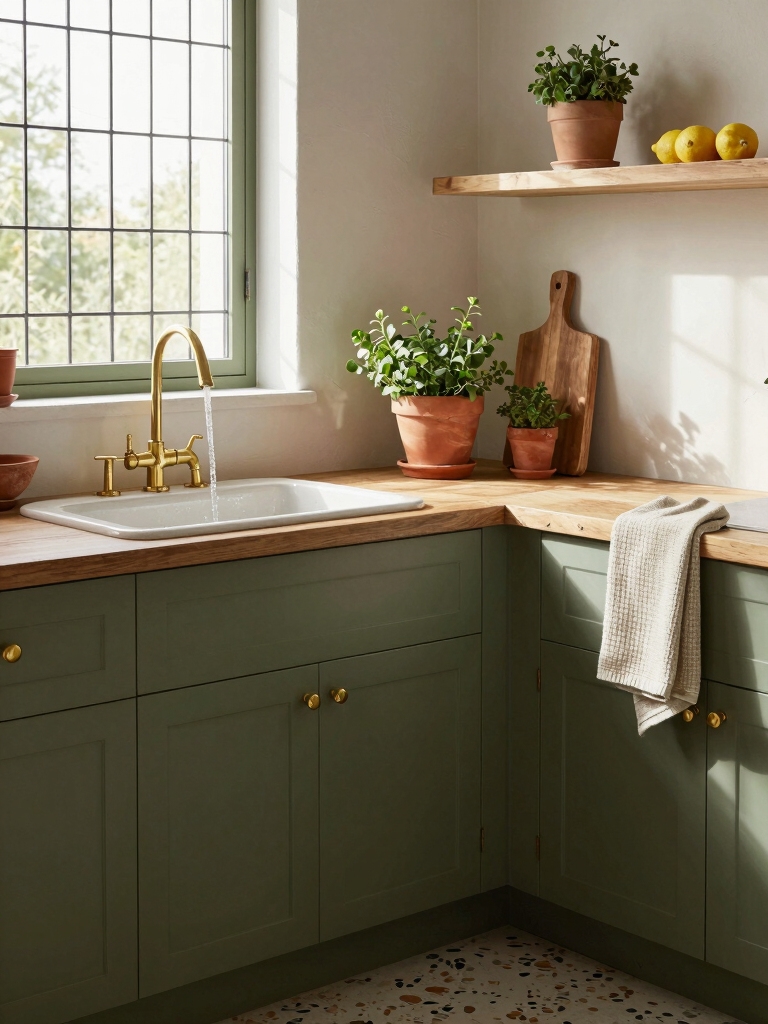
I love olive-green cabinets for an organic kitchen because they ground natural materials, hide everyday wear, and feel modern yet lived‑in. I recommend matte finishes for a tactile, relaxed vibe or gloss if you want livelier reflection.
Pair olive with warm white quartz or butcher block, brass hardware, and oak floors to keep things balanced. In small galley layouts I use slim pulls, pale counters, and layered lighting. Keep going and you’ll find shade, material, and styling tips to suit your home.
Why Olive Green Works in Kitchen Design

Because I love kitchens that feel both lived-in and thoughtfully edited, olive green appeals to me as a color that balances warmth and restraint.
I notice how it grounds natural materials, complements brass hardware, and conceals everyday wear.
It reads modern yet timeless, pairing with wood tones and white tile.
Olive also moderates light, creating a calm, curated backdrop for meals and conversation.
Sage green cabinets can similarly make a space feel instantly calm and zen, offering a related approach to creating a soothing kitchen color palette.
Choosing the Right Olive Shade for Your Space

When you pick an olive shade, think about the room’s light and the mood you want to set: I tend to choose deeper, gray-leaning olives for north-facing kitchens to add warmth, and brighter, yellow-tinged olives for sunlit spaces to keep things fresh.
I test samples at different times, noting undertones and finish.
- Test swatches on walls
- View in morning and evening
- Match finish to style
- Consider adjacent colors
Sage and olive tones both work well to bring nature indoors and create a calming, organic feel in the kitchen.
Pairing Olive Cabinets With Countertop Materials

On countertops, olive cabinets ask for materials that either ground their earthy depth or lift their green warmth, so I look for surfaces that balance color and texture.
I favor warm white quartz for brightness, honed black granite for contrast, and butcher block for organic warmth.
Marble veining can echo olive tones, while concrete adds a modern, tactile counterpoint without competing visually.
Magazine-worthy green cabinets often pair with timeless finishes that read as both modern and classic, like green cabinet kitchen styles that blend earthy and polished elements.
Best Flooring Options to Complement Olive Cabinets

For floors, I look for tones and textures that either anchor olive cabinets or let their green glow take center stage.
I prefer durable, tactile surfaces that balance warmth and modernity.
Here are four reliable options I recommend:
- Warm oak planks for soft contrast and grain.
- Honey travertine for subtle warmth.
- Charcoal porcelain for drama and easy care.
- Natural cork for comfort and eco-charm.
Wood kitchen cabinets are making a comeback this year, bringing natural warmth back into modern kitchens.
Hardware and Fixtures That Elevate Olive Green

I love pairing olive green cabinets with warm metallic finishes like brass or aged gold to bring a subtle glow and a modern-curated feel.
I also lean into natural materials—leather pulls, wooden knobs, and stone or matte ceramic fixtures—to soften the metal and add tactile contrast.
Together those choices elevate the green while keeping the palette grounded and intentional.
Moody dark greens can help achieve a more luxurious kitchen vibe with depth and drama, especially when balanced with warm accents and texture moody dark green cabinets.
Warm Metallic Finishes
When I pair olive green cabinets with warm metallics, the whole kitchen gains a quietly luxurious glow that feels intentional rather than flashy.
I choose finishes that enhance depth and warmth, balancing sheen with restraint.
- Aged brass pulls for vintage warmth
- Satin gold faucets for subtle shimmer
- Antique copper pendants for focused light
- Brushed bronze knobs for everyday elegance
Designers often recommend pairing earthy tones with complementary neutrals to maintain balance and cohesion across the space.
Natural Materials Pairing
Alongside olive green cabinets, I lean into natural materials that ground the color and add tactile richness—think leather-wrapped pulls, matte stone soapstone sinks, and hand-forged iron hinges.
I pair warm walnut open shelving, honed marble counters with soft veining, and woven rattan barstools.
These choices layer texture, contrast finishes, and keep the palette calm, lived-in, and effortlessly refined.
The result brings a fresh, lively feel that echoes trends for green kitchen cabinets while remaining timeless.
Balancing Olive Cabinets With Wall Colors
Because olive cabinets carry both warmth and depth, I like to think of wall color as the stage that either lifts them forward or lets them breathe, and choosing the right backdrop makes all the difference.
I favor subtle contrasts and light neutrals to keep rooms calm while highlighting cabinetry.
- Soft warm white for clarity
- Muted taupe for gentle contrast
- Pale clay for warmth without overwhelm
- Cool gray-beige to modernize without coldness
Incorporating Natural Wood Elements
I often pair olive-green cabinets with warm wood tones to bring an inviting, layered feel to the kitchen.
Choosing pieces with pronounced, textured grain creates a pleasing contrast that highlights both the cabinetry and the wood.
Let me show you how subtle shifts in hue and grain direction can make the whole scheme sing.
Warm Wood Tones
Bring in warm wood tones to balance olive green cabinets and you’ll instantly add depth and a natural feel to the space. I choose mid-toned oak or walnut accents to create contrast without overpowering the palette.
Consider subtle finishes that age gracefully and keep lines clean for a modern-curated look.
- open shelving
- butcher block counters
- hood trim
- barstools
Textured Grain Contrasts
Layer textured wood grains against olive green cabinets to create a tactile counterpoint that grounds the room. I pair open shelving in reclaimed oak, a butcher block island, and rift-cut veneer to highlight varied patterns.
The contrast adds depth without fuss, and I balance finishes—matte cabinets, satin wood—to keep the scheme modern, warm, and intentionally layered for everyday living.
Lighting Strategies for Olive-Toned Kitchens
With a few deliberate lighting choices, I’ll help you make olive-toned cabinets feel brighter, warmer, and more dimensional without losing their cozy, sophisticated vibe.
I balance layered lighting to highlight finish and depth while keeping warmth natural.
- Warm LED undercabinet for task clarity and color fidelity
- Dimmable recessed for overall mood control
- Pendant cluster over islands for focal drama
- Accent spots to reveal grain and hardware contrast
Open Shelving and Olive Cabinet Styling
I love using open shelves to balance the richness of olive cabinets, so I keep styling simple and intentional.
I’ll group ceramics, glassware, and woven baskets by color and scale to create calm, modern vignettes. Then I add natural accents—potted herbs, linen napkins, or a wooden bowl—to bring texture and life without clutter.
Styling Open Shelves
When I style open shelves around olive green cabinets, I aim for a balance of contrast and cohesion that feels collected, not cluttered.
I mix textures, limit palette echoes, and leave breathing space so each piece reads intentional.
I highlight practical beauty and rotate items seasonally to keep the display fresh.
- neutral ceramics
- wooden bowls
- glassware groupings
- a framed recipe card
Curating Natural Accents
Curating natural accents around olive green cabinets means leaning into materials and shapes that echo the kitchen’s grounded, grown-up vibe; I choose pieces that feel lived-in rather than decorative-only.
I layer open shelves with hand-thrown ceramics, woven baskets, warm wood boards, and glass jars of dry goods.
I keep colors muted, textures varied, and spacing intentional so each object reads as both useful and beautiful.
Matte Versus Gloss Finishes for Olive Cabinets
I usually recommend starting with how you want the room to feel: matte finishes soften olive’s earthy depth and read as relaxed and lived-in, while gloss finishes amplify color and reflect light for a livelier, more modern vibe.
I weigh durability, maintenance, light, and scale to match your lifestyle.
- Matte hides imperfections
- Gloss boosts brightness
- Matte feels tactile
- Gloss is easy to wipe clean
Creating Contrast With Backsplashes
I love pairing olive green cabinets with light, bright tile to lift the whole room and keep the palette fresh.
A crisp subway or airy hex tile creates a clean backdrop that lets the cabinetry sing. For sharper definition, I often use a dramatic dark grout to outline the pattern and add deliberate contrast.
Light, Bright Tile Options
Looking to brighten olive green cabinets without washing them out? I pick light, warm tiles that lift the palette—creamy subway, soft matte hex, pale terrazzo, or glass mosaics.
Each adds texture and reflectivity while keeping organic warmth. Consider subtle veining and varied finishes to maintain depth and avoid flatness.
- Creamy subway tile
- Soft matte hexagon
- Pale terrazzo
- Glass mosaic tiles
Dramatic Dark Grouts
Often I reach for a dark grout when I want the backsplash to read like punctuation against olive green cabinets.
I love how charcoal or deep brown sharpens tile edges, highlights pattern, and tames inevitable stains.
It adds deliberate contrast without shouting, grounding the palette. For a modern-curated kitchen, choose grout that balances warmth and structure, then refine with consistent joint width and careful sealing.
Eco-Friendly Paints and Finishes for Olive Cabinets
Usually I start by saying green finishes should do more than look good — they should protect your cabinets and the planet — and with olive green that’s especially true.
I choose low‑VOC paints, plant‑based sealers, and durable waterborne polyurethanes to keep tones rich without offgassing.
Consider finishes that enhance texture and are easy to touch up.
- Low‑VOC acrylic latex
- Plant‑based oil
- Waterborne polyurethane
- Mineral‑based sealer
Designing for Small Kitchens With Olive Cabinets
Because small kitchens demand deliberate choices, I lean into olive cabinets as a way to add depth without crowding the space. I pair slim hardware, open shelving, and pale quartz to keep sightlines airy.
Matte finishes minimize reflections, while vertical grain and narrow cabinet runs elongate the room. Thoughtful lighting and uncluttered surfaces guarantee the olive feels intentional, not heavy.
Seasonal Decor Ideas to Enhance Olive Tones
Having settled on olive cabinets to widen a small kitchen, I like to shift the focus to how seasonal decor can amplify their warmth and depth.
I swap textiles, scents, and small accents to echo each season, keeping the palette cohesive and intentionally layered.
- Spring: linen napkins, fresh herbs, pastel ceramics
- Summer: citrus bowls, woven placemats, light sheers
- Autumn: amber vases, plaid throws, dried foliage
- Winter: brass accents, evergreen sprigs, candlelight
Mixing Modern and Rustic Styles With Olive Cabinets
When I pair olive cabinets with modern lines and rustic textures, I aim for a balanced contrast that feels intentional rather than cluttered.
I combine sleek hardware and matte finishes with reclaimed wood shelving, linen textiles, and matte black accents.
I keep palettes restrained, highlight tactile details, and let olive act as the bridge between clean geometry and warm, lived-in materials for cohesive, curated warmth.
I’ve shown how olive green can root a kitchen in calm, like an ode to the Mediterranean table where family gathers.
Choose the right shade, pair it with warm stone and matte brass, and you’ll get a space that feels both modern and lived-in.
Even in a small kitchen, olive sings with thoughtful finishes and sustainable paints. Trust the tone—your kitchen can be earthy, elegant, and endlessly inviting, a quiet masterpiece in daily life.


