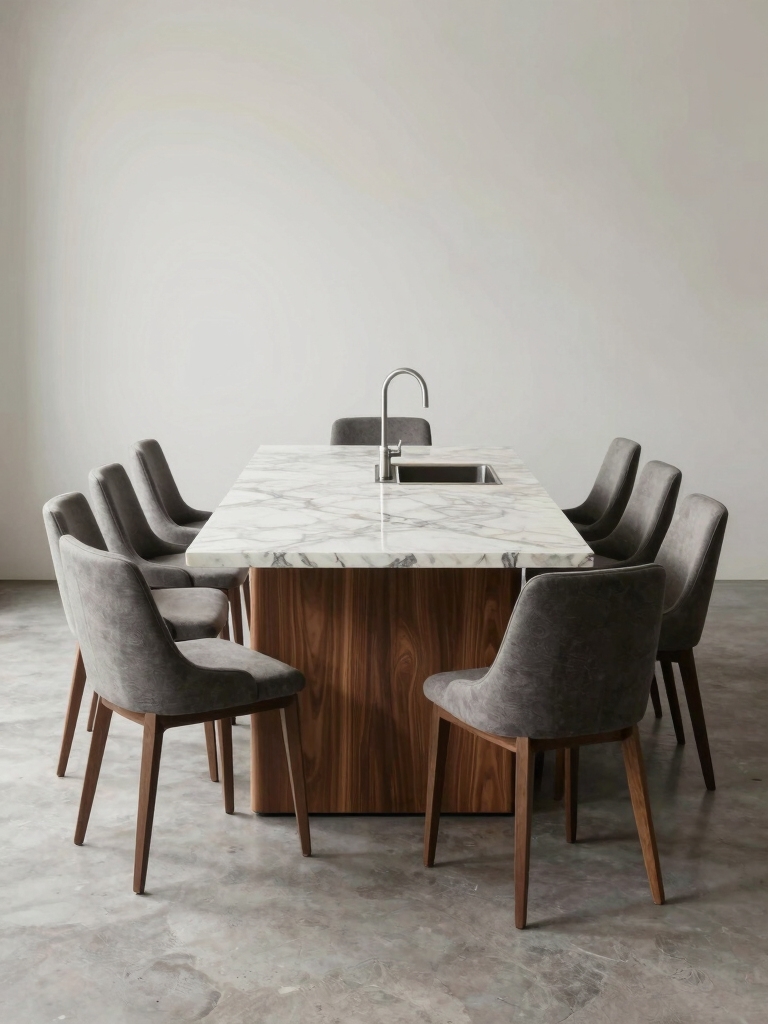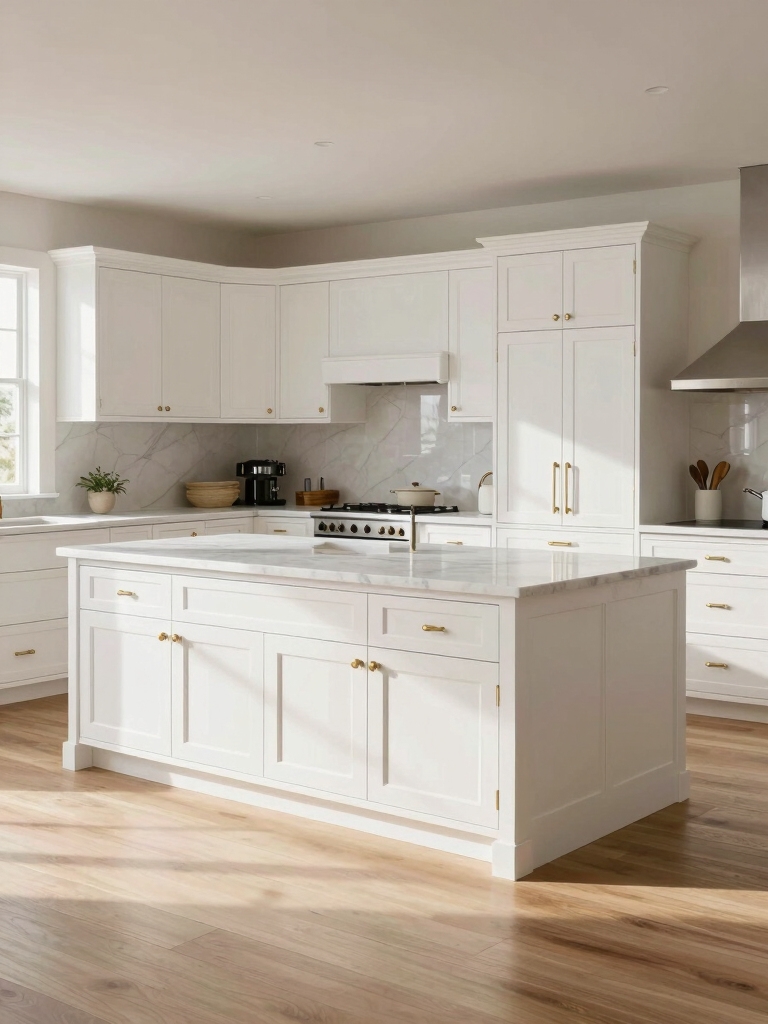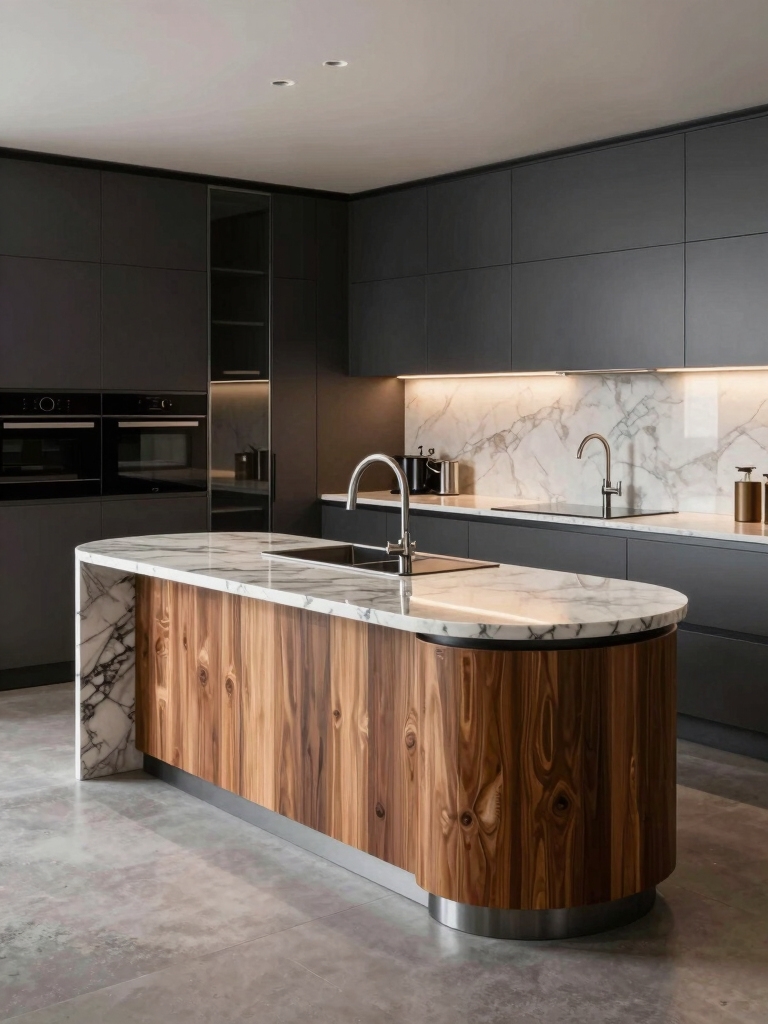

I’ll help you plan a kitchen island with seating that feels effortless and family-ready: pick an island that preserves 36–48 inches of circulation, choose counter (24–26″) or bar (28–30″) heights to match who uses it, and allow about 12″ knee clearance so everyone sits comfortably.
I favor durable quartz or sealed wood tops, cushioned stools with washable covers, and built-in storage or pop-up outlets for homework and snacks. Keep going and you’ll find practical layouts, lighting, and flexible seating ideas.
Choosing the Right Island Size for Your Space

When I size an island, I start by measuring the clearances around it — you want at least 36–42 inches for walkways and 42–48 inches if there are appliances or heavy traffic — because tight spaces kill comfort and flow.
I then consider seating depth, traffic patterns, and sightlines, aiming for proportionate length and usable countertop overhang so seating feels natural, not cramped.
Smaller layouts can still be highly functional with thoughtful planning and compact island solutions that maximize storage and seating.
Counter-Height vs. Bar-Height Seating Explained

Although both counter-height and bar-height stools can look great, I usually start by thinking about how people will use the island.
Counter-height (around 24–26 inches seat) suits casual meals and homework, offering relaxed posture and easier conversation.
Bar-height (28–30 inches) feels more formal, good for entertaining or visual separation.
I weigh function first, then match proportions to countertop overhang and room scale.
A spacious island also allows for comfortable family seating that encourages gatherings and multitasking.
Integrating Comfortable Stools and Chairs

When I choose stools and chairs for an island, I always match seat height precisely to the counter so knees and backs feel natural.
I also pick durable cushion materials like high-density foam wrapped in performance fabrics that stand up to spills and daily wear.
With the right heights and long-lasting cushions, your seating will be comfortable and low-maintenance.
Stylish kitchen islands can be adapted for any home style with the right seating choices and layout, including options that incorporate seating for any home style to complement your kitchen’s design.
Seat Height Matching
Because comfort hinges on a few precise measurements, I always start by matching stool or chair seat height to the underside of the island countertop so people can sit and move naturally without bumping knees or stretching.
I recommend:
- Measure underside to floor.
- Allow 9–13″ knee clearance.
- Test with a stool before buying.
- Balance height with backrest and footrest.
Small islands can still provide usable seating when planned correctly, especially when you consider space-saving layouts that fit an island into compact kitchens.
Durable Cushion Materials
I prioritize durable cushion materials because they’re the foundation of long-term comfort and style at your island—soft enough for lingering breakfasts, tough enough to withstand kids, pets, and daily use.
I recommend performance fabrics like Sunbrella or easy-clean leathers, high-density foam for resilience, and removable covers for washing.
Choose neutral tones and thoughtful texture to blend practicality with a polished, welcoming look.
Stools for Kitchen Island That Won’t Destroy Your Budget can help you find affordable, stylish options with stylish kitchen stools to suit any family.
Designing a Family-Friendly Breakfast Bar

When I plan a family-friendly breakfast bar, I start by matching stool height to counter height so kids and adults sit comfortably without awkward leg cramps.
I pick durable frames and fabrics that stand up to rough mornings, spills, and sticky fingers. For surfaces I choose easy-clean options—think sealed wood, quartz, or wipeable finishes—so maintenance stays quick and stress-free.
I also consider compact layouts and multifunctional designs that work well in tiny floorplans to maximize space and utility.
Comfortable Seating Height
I usually start by thinking about how the whole family will use the breakfast bar, because comfortable seating height makes or breaks everyday use.
I pick heights that suit kids and adults, test with stools, and plan clear legroom.
Consider these practical cues:
- Standard counter: 36″ height, 24″ seat depth.
- Bar height: 42″ surface, 30″ seat.
- Measure knee clearance: ~12″.
- Adjustable stools for flexibility.
Small kitchen islands can be surprisingly versatile when planned right, offering unexpected storage and seating solutions like a compact island layout that maximizes function.
Durable, Easy-Clean Surfaces
Think about surfaces that stand up to spills, sticky fingers, and daily traffic so your breakfast bar stays usable and good-looking without constant worry.
I prefer quartz or sealed concrete for durability and low maintenance, and a matte finish hides smudges. Choose rounded edges, heat-resistant spots for plates, and wipe-friendly seating materials.
Little details make daily life calmer and cleaning quicker.
Built-In Bench Seating and Banquettes

Although space can be tight, I love how built-in benches and banquettes turn an island into a cozy, multiuse hub that feels both custom and effortless.
They create intimate dining, a homework spot, and casual lounging without fuss. Consider these benefits:
- Defines a family zone
- Maximizes seating flow
- Encourages lingering and conversation
- Blends style with comfort
Incorporating Storage Under Seating
Tucking storage under seating turns every inch of an island into purposeful space, and I’ve found it makes kitchens feel both neater and more intentional.
I recommend deep drawers for pots, pull-out bins for recyclables, and hidden cubbies for placemats and games.
Choose soft-close hardware and durable finishes so everyday access stays smooth and the storage truly earns its place.
Creating Cozy Nooks for Morning Coffee
When I carve out a compact breakfast bar at the island, it becomes the perfect spot for my morning ritual.
I choose soft, layered lighting—a dimmable pendant or under-counter strip—to keep the space gentle but functional.
Paired with a supportive, cushioned stool at the right height, it’s an inviting nook I actually want to sit in every day.
Compact Breakfast Bar
Carving out a compact breakfast bar turns your kitchen island into a morning ritual spot where I can grab coffee, read the news, and start the day without spreading out the whole counter.
I keep it efficient, stylish, and welcoming.
- Slim stools to save space
- Durable surface for quick meals
- Under-counter storage for mugs
- Clear sightlines to the rest of the kitchen
Soft Lighting Choices
I often start my mornings by dimming the main lights and letting softer illumination shape a cozy nook at the island where I sip coffee and plan the day.
I choose layered lighting—pendants on low, under-cabinet strips, and a small table lamp—to create warm pools without glare. Soft bulbs, warm color temperature, and adjustable controls keep the mood flexible and inviting.
Comfortable Stool Options
Comfort guides my choice of stools as much as style does; for those slow mornings at the island I look for seating that invites lingering without sacrificing posture.
I pick pieces that feel welcoming, support my back, and fit the room’s rhythm.
- Cushioned height-adjustable stool
- Curved-back swivel stool
- Footrest-forward counter stool
- Lightweight woven stool
Multi-Use Islands for Homework and Projects
Designing a kitchen island that doubles as a homework and project zone means I think beyond seating—it’s about making a focused, flexible workspace that still feels part of the room.
I add durable surfaces, task lighting, charging stations, and storage for supplies. I choose comfy seating at appropriate height, clear sightlines for supervision, and easy-clean materials so projects stay fun, not chaotic.
Optimizing Traffic Flow Around the Island
Because the island sits at the room’s crossroads, I plan seating and circulation so people move naturally without bumping into chairs or each other.
I balance clear walkways, seat depth, and appliance access to keep traffic smooth and welcoming.
- Maintain 36–48 inches clearance.
- Use backless stools for tight zones.
- Orient seats away from main paths.
- Zone prep, dining, and transit.
Durable Materials for Kid-Proof Surfaces
When I’m planning a kid-proof kitchen island, I start by choosing scratch-resistant countertops like quartz or solid surface that will stand up to toys and lunchboxes.
I pair those with stainproof seating fabrics—performance textiles or treated leathers—that make quick cleanups effortless.
And I always specify rounded, impact-resistant edges so bumps and tumbles don’t mean broken finishes or bruised knees.
Scratch-Resistant Countertops
A sturdy countertop is one of the smartest investments you can make for a family kitchen, and I always steer clients toward materials that shrug off scratches and everyday roughhousing.
I recommend finishes that age gracefully, clean easily, and keep kids’ messes manageable.
- Quartz for resilience
- Honed granite for character
- Solid surface for repairability
- Stainless steel for durability
Stainproof Seating Fabrics
I usually tell clients that choosing stainproof seating fabrics is one of the smartest, most practical moves you can make for a family kitchen — it keeps spills from becoming disasters and saves you time on cleanup.
I recommend performance woven textiles, treated leathers, or Crypton-like finishes: they resist stains, wipe clean easily, and still feel inviting. Pick neutral tones and simple weaves for longevity.
Rounded, Impact-Resistant Edges
Because kids are always in motion, I specify rounded, impact-resistant edges for islands so bumps and tumbles end with a bruise to pride, not a trip to the ER.
I choose materials that withstand knocks, clean easily, and look chic. Here’s what I focus on:
- Soft-radius countertop profiles
- Rubberized trim options
- Durable solid-surface finishes
- Reinforced corner construction
Lighting That Enhances Seating Areas
Often I lean on layered lighting to make island seating feel intentional and inviting; good light does more than brighten—it defines purpose.
I pick pendant clusters for task and mood, add dimmable recessed cans for even wash, and under-counter strips for subtle glow.
I aim for warmth, adjustable intensity, and scale that complements stools so conversation and cooking both feel effortless and cozy.
Electrical and USB Outlets for Modern Needs
Good lighting sets the mood, but power is what keeps our devices charged and our prep humming—so I plan outlets with as much care as pendants.
I place pop-up outlets, USB-C ports, and GFCI protection where stools sit, keeping cords tidy and surfaces usable.
Practical placement makes the island multifunctional and future-ready.
- Pop-up outlets
- USB-C ports
- GFCI safety
- Cord management
Mixing Materials and Textures for Warmth
I usually start by layering surfaces and finishes the way I’d build a playlist—balancing rhythm and contrast so the island feels inviting, not busy.
I mix warm wood tones with matte stone, add a soft leather stool or woven seat, and introduce metal accents for structure.
The goal is tactile variety that reads cohesive, comfortable, and intentionally curated for everyday life.
Flexible Seating: Pull-Outs and Folding Solutions
Usually I reach for pull-outs and folding solutions when an island needs to do more with less: they give you extra seats without sacrificing circulation or sightlines.
I recommend smart, sturdy mechanisms that hide easily and deploy smoothly. Consider these benefits:
- Space-saving for tight kitchens
- Flexible guest seating
- Easy maintenance and durability
- Clean lines that preserve flow
Styling and Accessories to Make Seating Inviting
Let’s layer in touches that make island seating feel deliberately welcoming: I lean on a mix of cushions, textured throws, and well-chosen lighting to turn stools into spots people want to linger.
I add low trays for condiments, small plants for life, and a few artful baskets for throws. Consistent color accents and durable fabrics keep it cozy, practical, and effortlessly inviting.
So you’ve read all this and now I’m telling you the secret: there isn’t one perfect island — only the one that fits your chaos.
Pick the right size, the seat height that doesn’t elbow your teen, stash outlets where devices disappear, and mix textures so spills forgive themselves.
Do that, and your island becomes less countertop and more command center. You’ll host, homework will happen, and everyone will still want the end seat.