


I’ve fitted fold-away table extensions into islands to add seating and prep space without stealing floor area. I’ll tell you to measure 36–42 in. aisles, confirm appliance swings, and pick sturdy hardware — flip-up brackets, drop-leaf hinges or concealed slides — sized for live loads.
Choose stable materials like engineered tops or hardwood with eased edges, allow 10–12 in. knee space, and plan under-counter storage and lighting. Keep going and you’ll get practical layout, hardware and budget tips.
Benefits of Fold-Away Table Extensions for Kitchen Islands
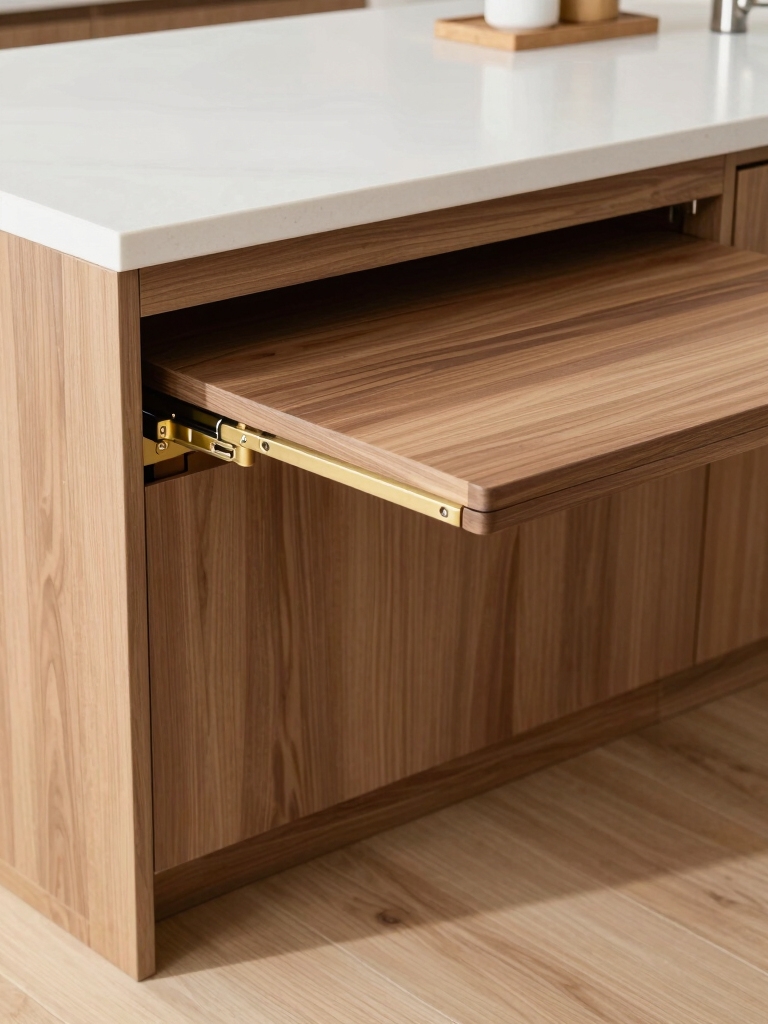
When I’m planning a kitchen that has to do more with less, a fold-away table extension on an island becomes my go-to solution — it gives you extra surface and seating only when you need it, then tucks away to restore a clean, open workspace.
I appreciate the flexibility: casual dining, meal prep overflow, homework spot, and visitor seating, all without permanent bulk.
Compact, practical, stylish. A well-designed island can also include table extensions that fold away to provide effortless guest seating and extra surface area when required.
Planning Your Layout: Measuring Space and Clearance
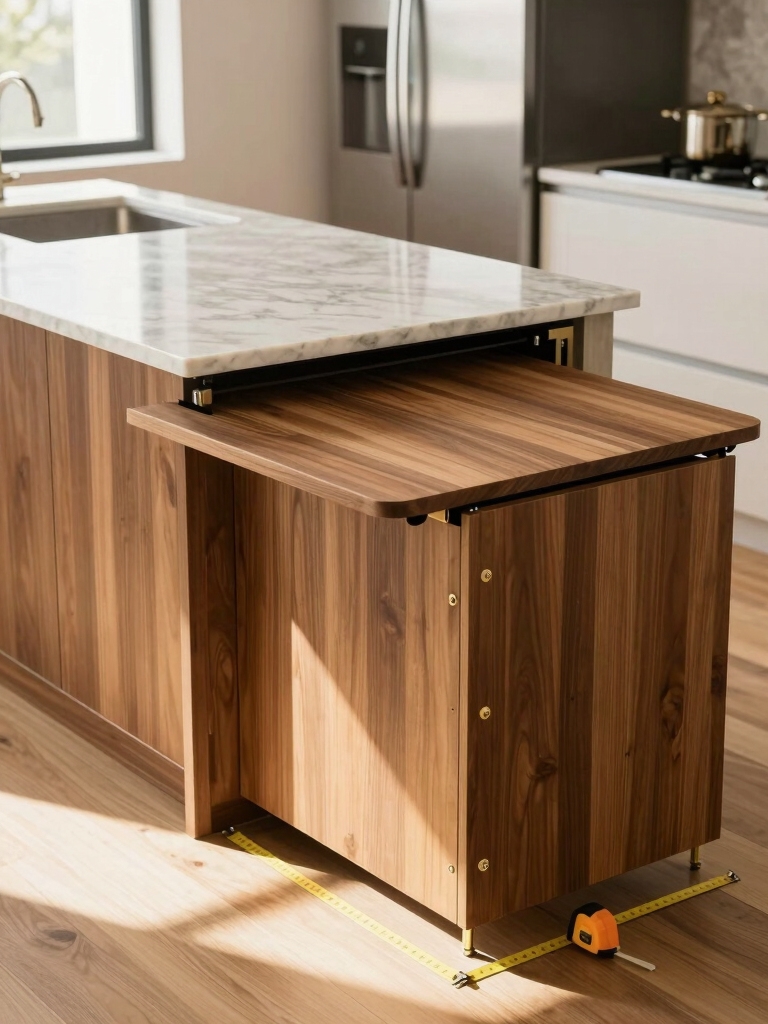
If you liked the idea of an extension that tucks away, you’ll want to plan the layout so it actually works day-to-day — I check clearances and traffic flow before I pick a mechanism or size.
I measure aisle widths, seating reach, and appliance swing paths, allow 36–42 inches for main walkways, and confirm the folded profile won’t block drawers or paths when stowed.
Also consider how different island layouts perform in varying room sizes and choose a plan that maintains proper circulation and function, such as a kitchen island layout suited to your square footage.
Types of Fold-Away Mechanisms and Hardware
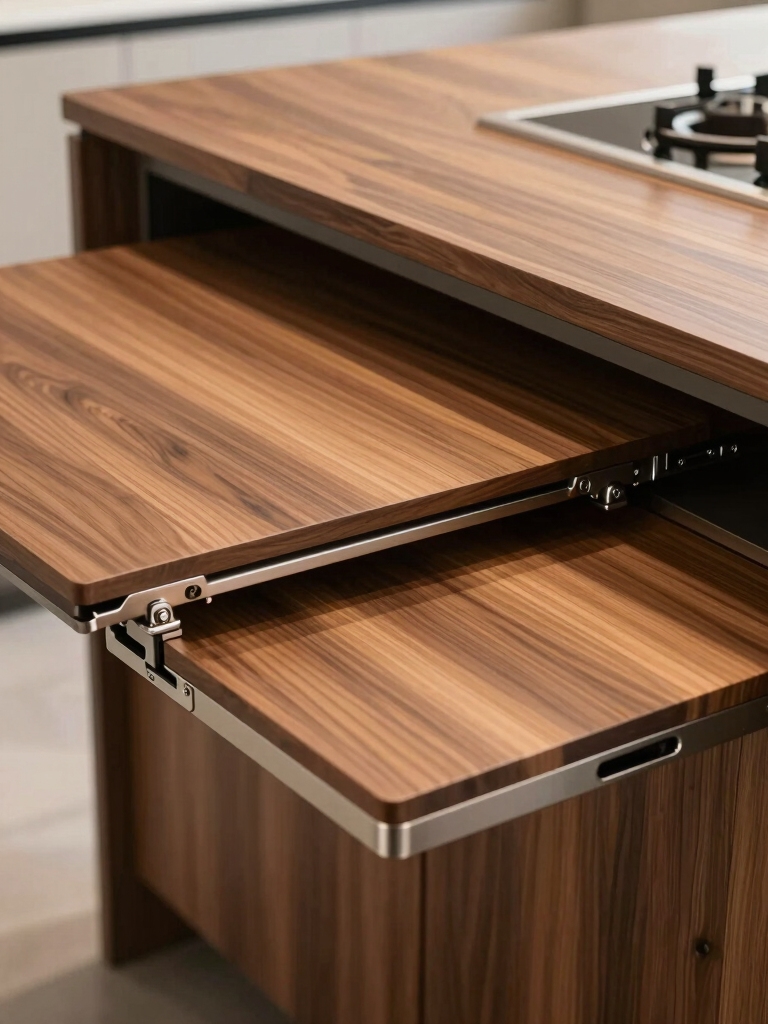
Although the choice of mechanism will shape how you use the extension every day, I like to start by sorting options into a few clear categories: drop-leaf hinges, flip-up brackets, sliding undermounts, and pivot or pull-out systems.
I explain each briefly: load capacity, installation complexity, clearance needs, and user ergonomics so you can match function to kitchen workflow and maintenance preferences.
Small islands can still function as primary prep and dining surfaces when designed with space-efficient layouts, so plan the extension to complement the overall kitchen footprint.
Materials for Durable Tables and Extensions
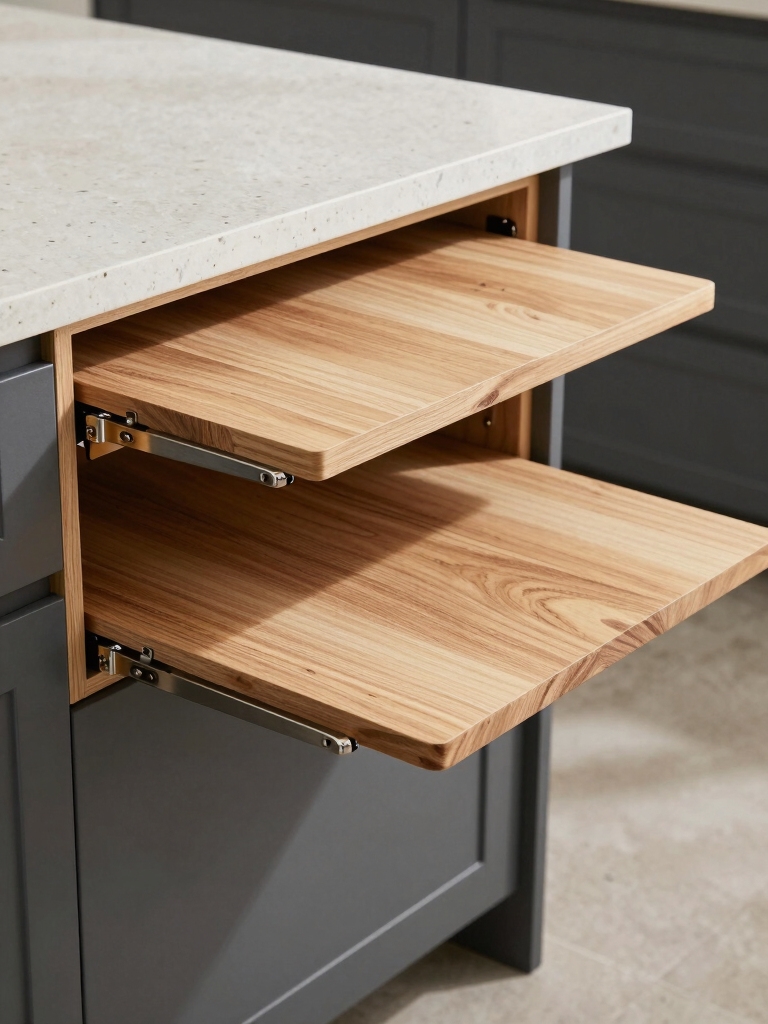
I want to help you choose materials that hold up to daily use, so we’ll compare hardwood versus engineered woods for strength and movement.
We’ll also look at metal frame options for stability and weight capacity, plus what to evaluate in durable surface finishes that resist scratches and stains.
Kitchen island designs can be inspiring and practical, and it’s worth saving standout concepts like Kitchen Island Ideas for future reference.
Hardwood Vs Engineered Woods
Let’s break down hardwood and engineered wood so you can pick what fits your kitchen island and fold-away table extension:
I prefer hardwood for longevity, repairability, and natural grain—great for heirloom pieces.
Engineered wood offers stability against warping, consistent finish, and lower cost.
Choose hardwood for character and long-term value; pick engineered when moisture resistance, budget, and dimensional stability matter most.
Warm wooden kitchen island tones can help make a cozy space feel inviting and balanced.
Metal Frame Considerations
Wood choices set the look and feel, but metal frames determine how well your island and fold-away extension hold up under daily use.
I recommend steel for strength and minimal flex, stainless for corrosion resistance, and powder coating for scratch protection.
Pay attention to tube gauge, weld quality, and hinge mounting points.
Proper bracing prevents sag and keeps the extension operating smoothly.
Consider designing the island layout to maximize every inch with the table extension space-saving layouts integrated into the workflow.
Durable Surface Finishes
Because your island’s surface takes the most abuse, I focus on finishes that balance toughness with appearance and maintenance.
I recommend quartz for scratch resistance, stainless for heat and easy cleaning, and solid-surface for seamless repairs.
For folding extensions, choose durable edge treatments and a matte finish to hide wear.
Seal wood properly and prefer low-porosity materials in heavy-use zones.
Marble can be a timeless choice for islands when properly sealed and maintained, offering classic beauty and lasting value, especially when paired with complementary materials like marble kitchen islands.
Designing for Comfort: Proper Heights and Legroom
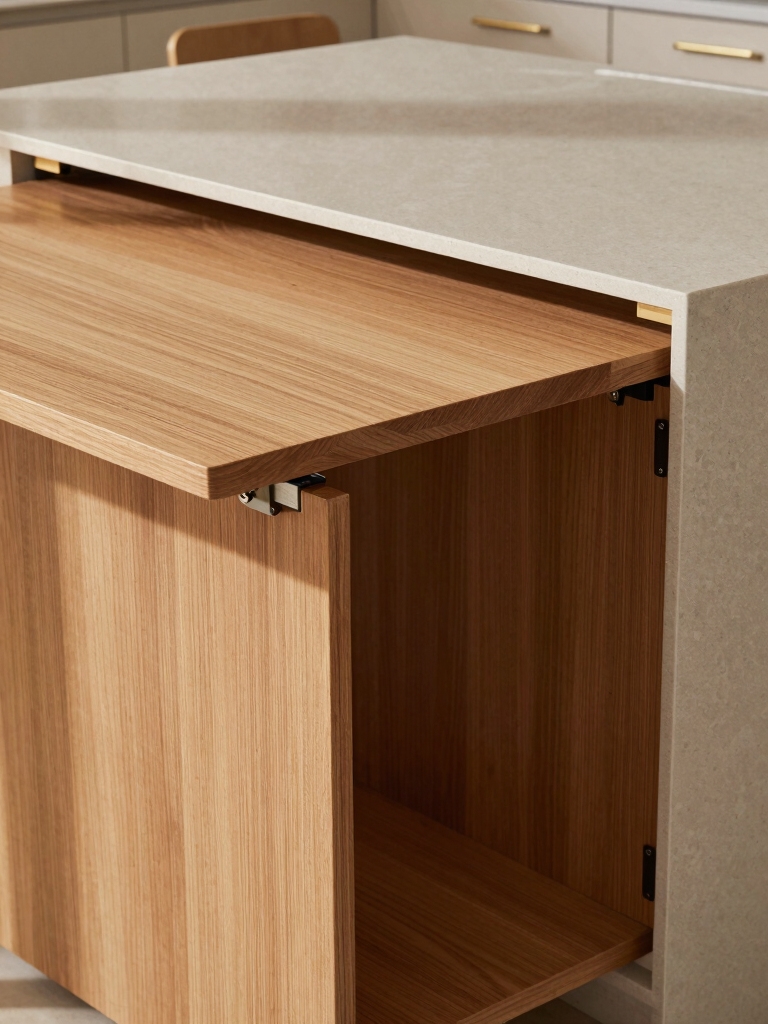
I focus on how height and legroom make a fold-away table extension feel effortless to use: when the island surface, overhang, and knee space are tuned to expected activities, people sit, eat, and work without tucking or hunching.
I recommend 28–30-inch seating height for standard chairs, 34–36-inch counter height for stools, and a 10–12 inch clear knee space beneath overhangs for comfortable posture.
Integrating Storage With Foldable Surfaces
Having the right heights and knee space makes a fold-away extension feel effortless, but storage planning determines whether it stays that way day to day.
I integrate shallow drawers for placemats and utensils beneath the fold, a narrow vertical rack for trays, and magnetic strips for knives on the interior panel.
Clear zones keep the mechanism accessible and clutter-free, so folding stays simple and reliable.
Styles That Match Your Kitchen Aesthetic
I’ll show how a fold-away table can suit a sleek modern minimal kitchen, a warm rustic space, or a balanced intermediary design.
For modern minimalism we’ll focus on clean lines, hidden hardware, and integrated finishes; for rustic charm I’ll point out texture, reclaimed woods, and iron accents; and for intermediary looks I’ll highlight subtle molding, mixed materials, and timeless proportions.
Tell me which style you prefer and I’ll give specific material and finish recommendations.
Seamless Modern Minimalism
When I’m aiming for seamless modern minimalism, I focus on clean lines, hidden hardware, and a neutral palette that lets the fold-away table feel like a built-in feature rather than an add-on.
I choose matte finishes, handleless drawers, and slim profiles so the extension disappears when stowed.
Precision joints and consistent materials maintain visual flow, keeping the island sleek and effortlessly functional.
Warm Rustic Charm
Comfort is the guiding idea here, so I lean into warm woods, textured surfaces, and thoughtful hardware that make a fold-away table feel cozy and lived-in rather than purely utilitarian.
I choose reclaimed oak, matte black hinges, hand-stitched leather pulls, and honed stone accents.
- Reclaimed wood
- Matte metal
- Natural textiles
- Subtle patina
Transitional Timeless Blend
Since so many kitchens sit between classic and contemporary, I like to design a fold-away table that feels equally at home with shaker cabinets or slab fronts.
I choose neutral finishes, subtle hardware, and a slim-profile hinge so the extension reads elegant, not fussy.
Proportions, edge details, and durable surfaces ensure the piece adapts smoothly with changing decor and daily use.
Choosing Countertop Finishes and Edge Profiles
Although a countertop can be purely practical, I care about how the finish and edge profile shape both the island’s look and daily use.
I prefer durable finishes and rounded edges for safety, but crisp edges suit modern lines. Consider:
- Matte quartz — hides wear
- Polished granite — elegant shine
- Wood butcherblock — warmth, recoats
- Eased edge — comfortable, clean-looking
Load Capacity and Structural Considerations
When I design a kitchen island with a fold-away table extension, I focus first on how much load the extension will actually carry so I can size the supports and hardware correctly.
I calculate live and dead loads, choose robust hinges, brackets, and reinforcement, and make certain the island carcass and floor anchoring resist torque.
Clearances, material stiffness, and safety factors guide my final spec choices.
DIY vs. Professional Installation: Pros and Cons
Deciding whether to tackle a fold-away table extension myself or hire a pro comes down to balancing my skill level, time, and tolerance for risk against the cost and convenience of professional work.
I weigh:
- Cost savings vs labor time
- Skill and tools required
- Warranty and reliability
- Unexpected complications and permits
I choose based on confidence, budget, and timeline.
Accessibility and Universal Design Features
Because I want my kitchen to work for everyone who uses it, I focus on accessibility and universal design features that make the island and its fold-away table easy, safe, and comfortable for people of all ages and abilities.
I prioritize adjustable-height surfaces, clear knee space, smooth edge profiles, easy-grip hardware, and intuitive operation so everyone can reach, sit, and move around without strain or barriers.
Maintenance Tips for Hinges and Moving Parts
I keep a simple maintenance routine for the fold-away hardware so the table always opens smoothly and safely.
I lubricate hinges every three to six months with a dry silicone or PTFE spray and wipe away excess to prevent dust buildup.
I also check screws, bolts, and alignment at the same time so small loosening or misalignment gets fixed before it causes wear.
Regular Lubrication Schedule
Regularly I check and lubricate the island’s hinges and sliding parts so they stay smooth and safe; I’ll walk you through a simple schedule that fits normal home use. I keep tasks brief, timed, and recorded.
- Monthly: wipe debris, apply light oil.
- Quarterly: deeper clean, grease joints.
- Annually: full inspection, replace seals.
- After spills: immediate clean and relube.
Inspect Fasteners and Alignment
After you’ve kept the hinges and sliders well-lubricated, it’s time to check fasteners and alignment so everything works smoothly and safely.
I inspect screws, bolts, and brackets for tightness and corrosion, tighten to spec, and replace stripped hardware.
I verify panels sit flush, gaps are even, and moving parts operate without binding. Small adjustments prevent wobble and extend the mechanism’s life.
Lighting and Power Solutions for Extended Surfaces
While planning the lighting and power for our fold-away extension, I focus on making the space feel intentional and fully functional whether the table’s tucked away or extended.
I prioritize low-profile fixtures, hidden wiring, and accessible outlets. Consider:
- Under-counter LED strips
- Recessed puck lights
- Pop-up power modules
- Motion or dimmer controls
These choices keep the surface clean and useful.
Cost Estimates and Budgeting for Your Project
Because unexpected costs creep in, I start budgeting by breaking the project into clear line items—materials, hardware (hinges, slides, fasteners), labor, electrical work, and a contingency—so you can see where money will actually go.
I itemize prices, get multiple quotes, prioritize durable parts, and allocate 10–15% contingency.
Track receipts, adjust scope if needed, and you’ll avoid last-minute compromises and surprises.
Real-Life Layouts and Inspiring Design Examples
When I plan real kitchens, I look for solutions that make the island both beautiful and genuinely useful—think a slim fold-away table that tucks under a countertop overhang, a flip-up leaf supported by a discreet butterfly hinge, or a pull-out dining top on full-extension slides that doubles as prep space.
I’ll show layouts and examples that balance flow, seating, storage, and sightlines.
- Peninsula for casual meals
- Island with hidden seating
- Compact galley add-on
- Open-plan entertainer’s island
I’ve shown how fold-away extensions turn cramped islands into flexible hubs — a tidy breakfast bar one moment, an expansive prep table the next.
That contrast — compact calm versus open functionality — is exactly why I love them. With thoughtful measurements, sturdy hardware, and the right materials, you’ll get comfort without clutter.
Keep hinges maintained and plan lighting and outlets, and your island becomes both practical workhorse and social centerpiece, ready whenever you need it.


