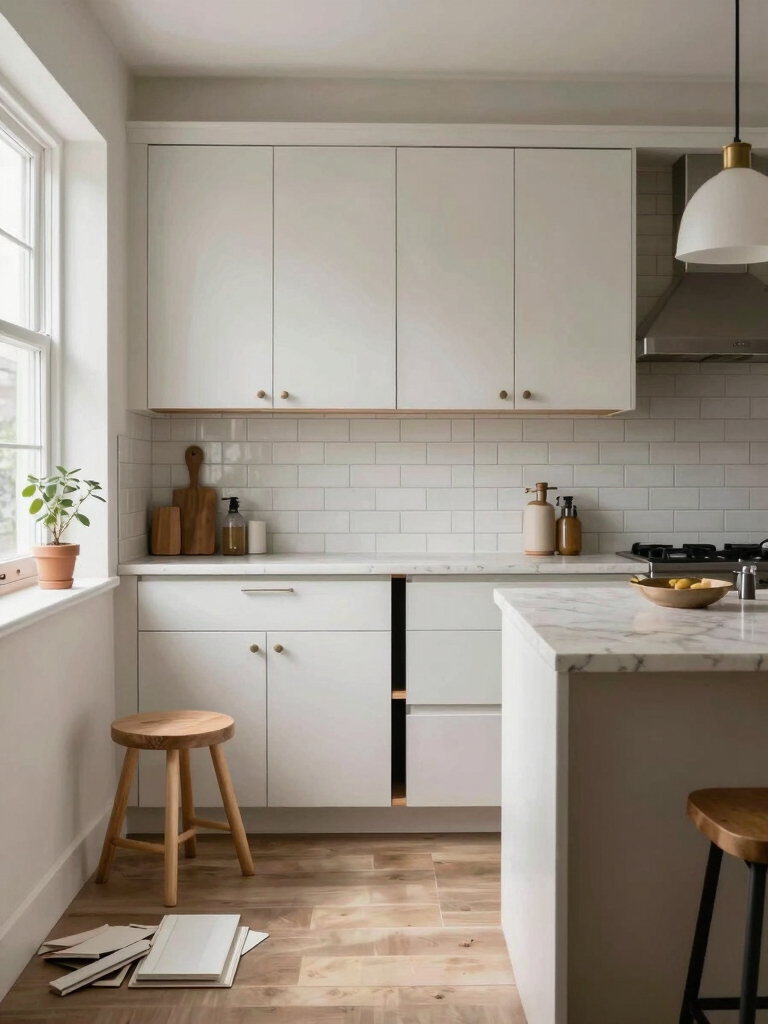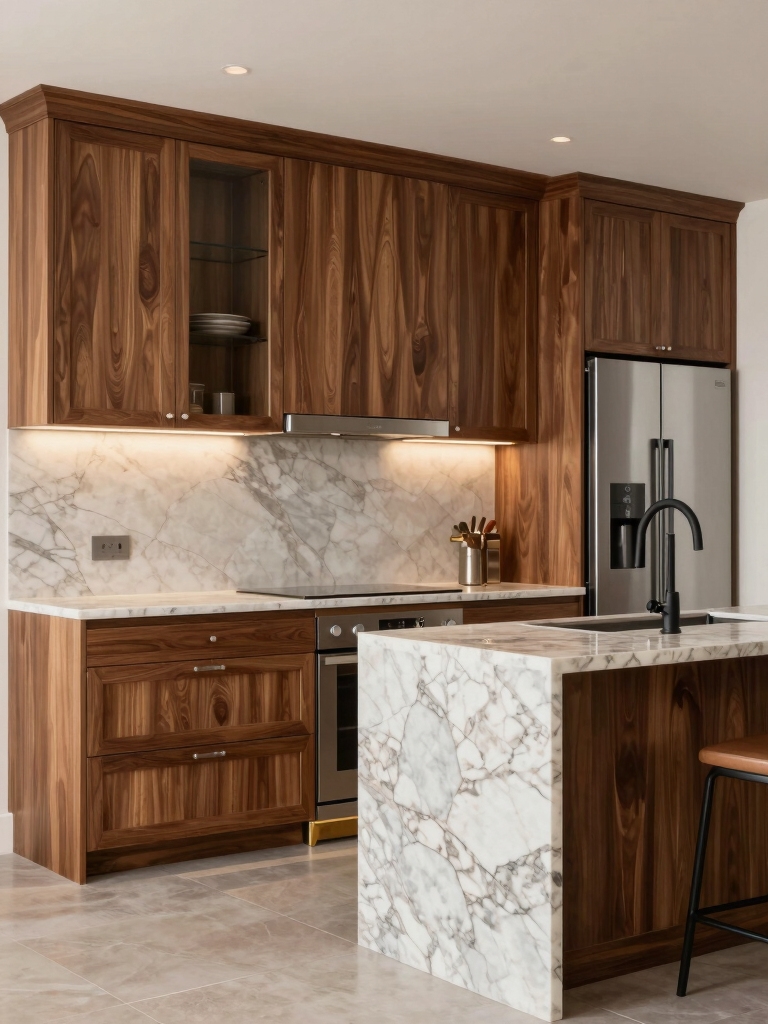

I’ll show you how to fit a genuinely useful island into a tight kitchen without blocking traffic or looking cramped: I measure natural paths (fridge→sink→stove), aim for 36–42″ clear aisles where possible, and pick slimline or mobile islands—24″ for narrow carts, 36–48″ for real prep, 48–60″ if you want seating—then tuck storage and slim appliances underneath.
I favor pale finishes, warm vintage lighting, rounded corners, and clever pull-outs; keep going and I’ll outline layouts, clearances and budget tricks.
Assessing Your Small Kitchen Footprint and Traffic Flow
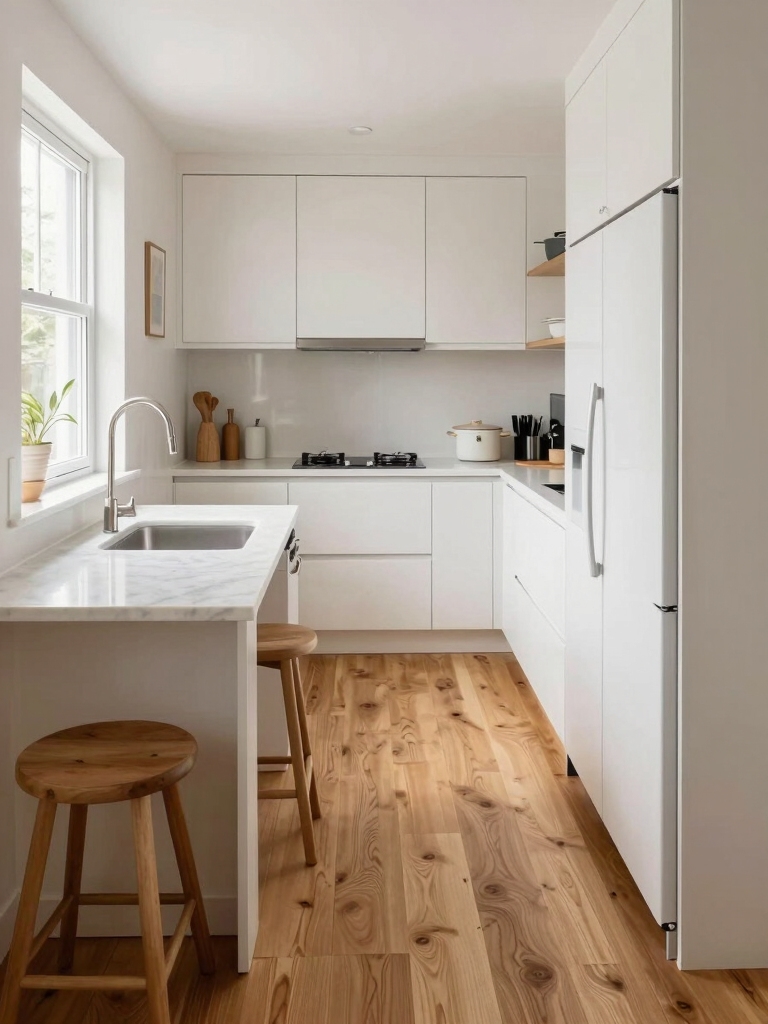
When I step into a compact kitchen, I first trace the natural paths people take — from fridge to sink, stove to prep island — because traffic flow makes or breaks a small space.
I measure clearances, note door swings, and map sightlines. That tells me where cabinets, walkways, and work zones must live.
Smart placement keeps vintage charm without sacrificing movement. Small kitchen islands that maximize space often use clever storage and slim profiles to fit without crowding space-saving layouts.
Choosing the Right Island Width and Clearance

I’ll walk you through the practical math of island sizing so your kitchen breathes and works — starting with minimum aisle clearance, then standard island widths, and how to carve out multi-use zones.
Think of clearance as circulation lanes, island width as the countertop’s personality, and zone planning as the secret to seating, prep, and storage playing nicely together.
I’ll keep it short, useful, and a little charming as we pick numbers that actually fit your space.
Small Kitchen Ideas With Island Nobody Expected inspired a few creative configurations that make the most of tight footprints, including narrow islands and integrated storage unexpected layouts that change how you use the room.
Minimum Aisle Clearance
Because you’re often cooking, prepping, and passing plates in a small kitchen, I insist on getting aisle clearances right so the island feels generous, not cramped.
I aim for comfortable movement: clearances that let two people pass, open appliance doors, and slide stools without collision.
Think efficient choreography—measure, prioritize traffic paths, and keep sightlines open for that effortless, lived-in charm.
Small islands can also double as prep stations or casual dining spots with clever storage and seating solutions, making the most of every inch and improving workflow with efficient layouts.
Island Width Standards
Aisle clearances set the choreography; now let’s talk island width so that choreography actually fits the room.
I’ll keep it crisp: the island must feel roomy without hogging floor space. Consider practical widths:
- 24–30″ for narrow prep carts.
- 36–42″ for comfortable work surfaces.
- 48–60″ for seating plus prep — only if clearance allows.
Measure, then tweak.
Also remember standard island dimensions help ensure a good fit with standard room sizes.
Multi-Use Island Zones
Let’s break down how to zone an island so it works like a miniature kitchen and gathering spot: I think regarding “task neighborhoods” — prep, cook, clean, and sit — and size each to the actions you want there.
I advise 36–48″ prep, 30–36″ cooking clearance, 24–30″ cleaning, and 15–18″ seating overhang, keeping 36–42″ aisles for flow.
Consider adding a dedicated storage zone to maximize functionality in compact spaces.
Slimline Prep Islands for Narrow Galley Kitchens

If your galley kitchen feels like a hallway with ambitions, I’ll show how a slimline prep island can give you a narrow-footprint solution without tripping traffic.
I like islands that double as chopping station, pastry rack, and casual breakfast bar so every inch earns its keep.
Let’s look at compact proportions and smart multi-use surfaces that make tight corridors feel unexpectedly generous.
Galley Kitchen Island Transformations That Amaze often use clever storage and layout tweaks to maximize function in limited space, like integrating slim drawers and shelving for a compact prep island.
Narrow Footprint Solutions
When space is tight, I lean into slimline prep islands that give narrow galley kitchens purpose without crowding them, blending form and function with a modern-vintage touch—think tapered legs, butcher-block tops, and just enough overhang for casual stool seating.
I favor designs that feel airy, practical, and charming:
- Narrow rolling island for flexible flow
- Fixed slim console with drawers
- Open-shelf slim table for display
These cozy, budget-friendly solutions can create a big impact on a small galley without breaking the bank, often achievable in small galley kitchen remodels under $1K with thoughtful materials and labor choices like those used in many Cozy Galley projects.
Multi-Use Prep Surfaces
I trim down the usual island ambitions to a slimline prep surface that pulls double duty—food prep station by day, casual bar or homework spot by night—so a narrow galley feels purposeful rather than cluttered.
I pick vintage-inspired brass fixtures, a butcher-block top, and slim storage beneath so it reads layered and lived-in, yet modern.
It’s compact, clever, and utterly usable.
Mobile and Rolling Islands for Flexible Layouts

I’ve rolled a compact island into my tiny kitchen more times than I can count, and each shift proves how much flexibility gains you in a small space.
I like vintage knobs, modern lines, and quick rearrangeability. Consider practical moves:
- Locking casters for steady prep.
- Slim storage beneath for spices.
- Foldable overhang for occasional serving.
Multiuse Islands With Dining and Workspace

I love islands that pull double duty—one side for breakfasts and homework, the other a tidy workspace when I need to send an email.
Convertible seating and hidden storage keep clutter out of sight so the surface stays usable for both plates and paperwork.
Let me show you how to balance durable eat-and-work surfaces with clever storage so the island feels like a true multitasker.
Eat-And-Work Surfaces
Often I turn small kitchen islands into the room’s busiest surface, because they’re perfect for both quick meals and focused work.
I mix durable surfaces with cozy touches, keeping clutter tidy so the island shifts roles effortlessly.
- Durable countertop
- Task lighting
- Comfortable stool
This layered modern-vintage approach makes eating and working feel intentional, not cramped.
Convertible Seating/Storage
Moving from an island that serves as my go-to eat-and-work surface, I make seating and storage pull double duty so the island works harder without feeling crowded.
I tuck benches under overhangs, hide baskets in drawers, and flip a countertop leaf into a café table. It feels modern-vintage: practical, playful, and layered — every inch earns its keep with charm.
Integrated Storage Islands to Maximize Function
With a nudge of creativity, I turn the island from a place to pass through into the heart of the kitchen, folding storage into every inch so you get more function without crowding the room.
I favor clever compartments and visible charm:
- Deep drawers for pans and linens.
- Open cubbies for bowls and cookbooks.
- Pull-out bins for recycling and bulk staples.
Islands With Built-In Appliances for Compact Efficiency
After folding storage into the island, I like to fold appliances in next — they make the island earn its keep without swallowing floor space.
I tuck a slim dishwasher, under-counter fridge, or microwave drawer into the island, mixing brass knobs and matte fronts for a modern-vintage wink.
It keeps work zones close, cuts circulation clutter, and lets small kitchens act like grown-ups without pretending to be large.
Corner-Friendly Islands for L-Shaped Kitchens
I love turning awkward corners into hardworking hotspots, so I’ll show you how a corner-friendly island can smooth the workflow in an L-shaped kitchen.
Think pull-out drawers and angled cabinets that keep pots and prep tools within an easy reach, while still leaving room for stools that don’t block traffic.
With a few smart measurements and a touch of vintage charm, you can get seating that feels cozy without sacrificing countertop real estate.
Optimizing Corner Workflow
On an L-shaped kitchen, I start thinking about the corner as less of a dead zone and more like a pivot point that an island can help activate.
I refit flow with clever storage, clear sightlines, and movement patterns.
- Pull-out trays for hidden access
- Angled prep zones to minimize steps
- Task lighting that follows the turn
Island Seating Solutions
Moving the corner from a storage hub to a movement anchor made me rethink where people actually gather, and that’s what brings us to island seating in L-shaped kitchens.
I favour compact overhangs, tapered stools that tuck, and mixed materials—brass, worn wood, matte paint—for personality.
Keep sightlines clear, allow knee room, and orient seating to invite conversation without disrupting prep flow.
Peninsula-Style Islands When Space Is Tight
When space’s tight, I lean into a peninsula-style island to squeeze maximum function from minimum square footage.
I use edges as counters, stools as cues, and clever storage. You’ll get charm without clutter.
- Adds prep surface and casual seating
- Defines zones without walls
- Hides appliances and drawers smartly
It feels modern vintage—practical, witty, and cozy.
Material and Finish Choices That Preserve Visual Space
Because light, texture, and scale steer how roomy a kitchen feels, I pick materials that stretch sightlines and calm the eye: pale, low-contrast cabinetry, narrow-grain wood or matte quartz countertops, and reflective backsplashes that don’t scream for attention.
I balance modern vintage charm with layered neutrals, subtle hardware, and tonal floors so the island reads as part of a cohesive, airy composition rather than a bulky afterthought.
Lighting Strategies to Highlight a Small Island
Lighting makes the island feel intentional rather than tacked on, so I treat lumens and layers with the same care as material and finish.
I balance charm and function with pieces that flatter scale.
- Pendant trio: adjustable height, warm dimmable LEDs.
- Under-counter toe lights: subtle grounding glow.
- Recessed accents: precise task spill without glare.
Seating Solutions That Save Room and Add Comfort
If I’m honest, a small island’s success often hinges less on square footage and more on how you seat it—so I favor solutions that tuck in, fold away, or slip under while still feeling inviting.
I choose slim stools with warm patina, banquette benches with hidden cushions, and folding teak chairs for flexibility.
Each piece balances comfort, vintage charm, and modern restraint without crowding the flow.
Custom Cabinetry and Pull-Outs for Island Organization
Think of an island as a hidden-storage machine: I design cabinetry and pull-outs that make every inch purposeful without shouting for attention.
I mix vintage charm with crisp modern lines, tailoring drawers to utensils, spices, and small appliances. Consider these smart choices:
- Slim spice rack pulls
- Tilt-out tray for crumbs
- Deep pan drawers with dividers
You’ll get calm, clever order.
Safety and Ergonomics Around Small Kitchen Islands
Because an island becomes the kitchen’s social and work hub, I treat safety and ergonomics as design priorities, not afterthoughts.
I position traffic lanes, keep counters at comfortable heights, and round corners so elbows survive family chaos.
Adequate lighting, slip-resistant flooring, and reachable storage reduce strain. Thoughtful clearances let guests mingle without interrupting workflow — practical, charming, and quietly resilient.
Budget-Friendly Upgrades That Make an Island Feel Custom
I like to dress up a modest island so it reads like a custom piece without blowing the budget. I pick details that whisper personality: trim, hardware, and lighting.
- Paint the base in a muted vintage hue and add beadboard trim.
- Swap plain pulls for brass or matte black.
- Hang an iconic pendant to bridge modern function with retro charm.
You’ve measured traffic, balanced clearances, and picked an island that moves, cooks, and chats—now live in it.
I’ll keep slimlines for tight galley mornings, rollables for weekend rearranging, banquette-ready fronts for slow coffee, and secret pull-outs for midnight snacks.
I’ll choose light, save detail, and tweak ergonomics so the island works as kitchen, table, and toolbox. I’ll enjoy it, maintain it, and let it age with character.