

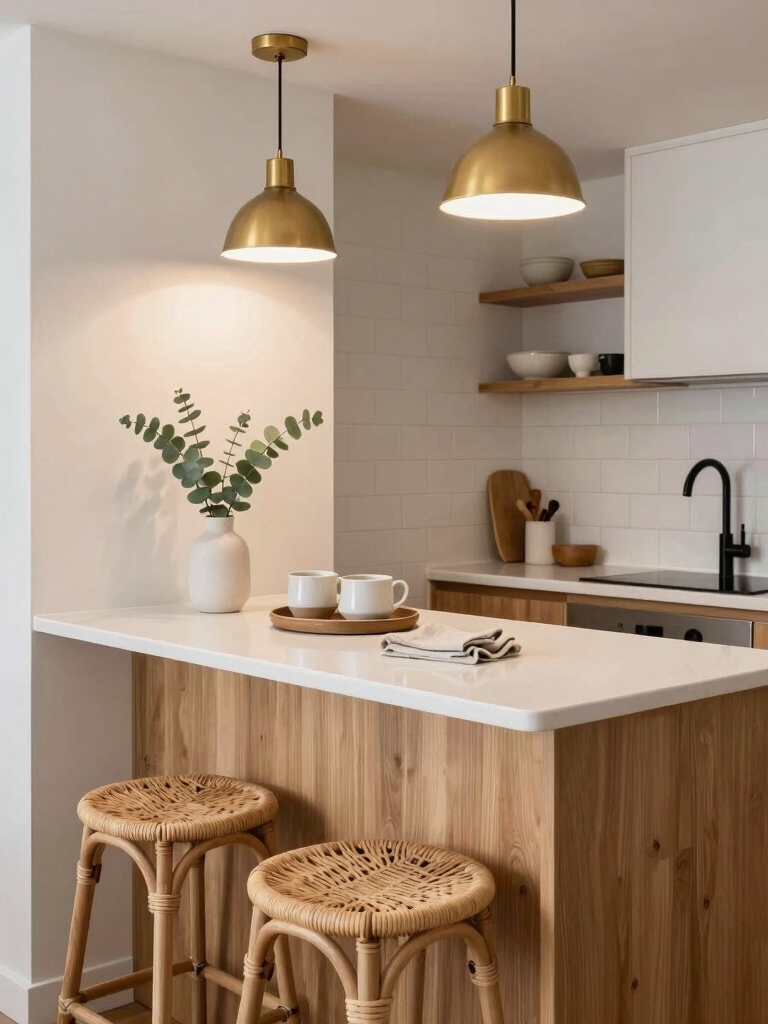
I’ll show you how a two-person island can add real function without crowding a small kitchen: choose a narrow or floating island, a drop-leaf or slim peninsula, or one with tuck-away stools to keep traffic flowing.
Prioritize 36–42″ clearances, 18–24″ knee space, and slim storage like pull-outs or fridge drawers. Pick light finishes, warm pendants, and counter-height seating for everyday comfort. Keep it compact and versatile, and I’ll guide you through layout and material choices next.
Why Choose a Two-Person Kitchen Island

When I’m planning a small kitchen, I favor a two-person island because it gives you real counter space without overwhelming the room; it lets two people prep, eat, or work side-by-side comfortably while keeping traffic flowing.
I choose compact scale, smart storage, and dual-function surfaces so the island serves as a prep zone, casual dining spot, and landing area without crowding your layout or visual lines.
Consider designs that maximize usable area with clever space-saving storage to keep small kitchens functional and uncluttered.
Measuring Your Space for a Small Island

You’ve picked a two-person island for its balance of function and flow, so now I measure carefully to make sure it fits the room and your routine.
I check clearances: 36–42 inches around prep zones, 18–24 inches knee space for seating, and aisle widths for appliances.
I sketch to scale, note traffic lines, and confirm the island won’t block sightlines or door swings.
Small kitchen island inspirations can also include unexpected design features like a narrow pull-out table or built-in storage space-saving solutions that maximize utility without crowding the room.
Narrow Islands Designed for Galley Kitchens

For galley kitchens, I favor narrow islands that keep a slim footprint so traffic flows smoothly.
I’ll show how dual-purpose storage—open shelving, pull-out drawers, or a wine rack—lets the island work hard without feeling bulky.
And I’ll suggest stools that tuck completely beneath the counter so seating won’t crowd your walkway.
A narrow island can also help create an open-feeling layout that maximizes perceived space.
Slim Footprint Options
I lean toward slim islands in galley kitchens because they deliver big function without crowding narrow walkways.
I choose narrow profiles with overhangs for two stools, thin butcher block or quartz tops, and open leg space to keep sightlines clear.
Minimalist bases, integrated power, and casters for mobility make these pieces practical and tailored to tight, modern plans.
Galley kitchens often benefit from layout strategies like efficient traffic flow to maximize usability in narrow spaces.
Dual-Purpose Storage
Think about a narrow island that pulls double duty: I want slim profiles that hide deep storage for pots and pantry items while also offering a drop-leaf prep surface or a pull-out cutting board for quick tasks.
I recommend compact, multiuse solutions:
- Deep drawers with dividers
- Vertical spice racks
- Slide-out trash bins
- Fold-down shelves
- Hidden appliance garages
Slim islands are ideal for galley kitchens where space is limited and every inch counts.
Stools That Tuck Away
When I plan a narrow island, I look for stools that disappear when they’re not needed so the walkway stays open and the kitchen reads larger.
I favor slim, stackable or fold-flat stools that slide under a shallow overhang. Choose lightweight materials and sleek silhouettes—metal or molded wood—for easy handling and a curated, airy feel that keeps your galley functional and stylish.
Consider designing the island with space-saving solutions to maximize flow in tight layouts.
Peninsula Alternatives for Tight Layouts
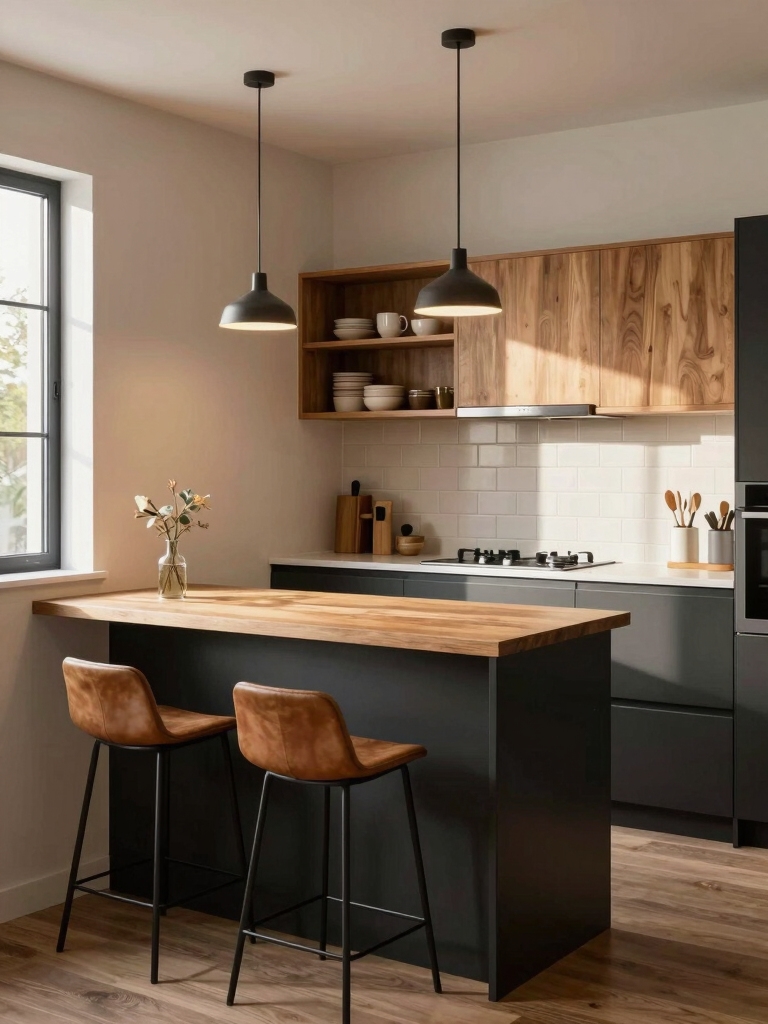
If your kitchen is too tight for a full island, I often suggest slim alternatives like a narrow breakfast bar that gives seating without blocking traffic.
A drop-leaf peninsula adds flexible prep and dining space when you need it, then tucks away to keep walkways clear.
For the sleekest option, consider a floating counter extension mounted to a wall or cabinet for extra surface area with minimal footprint.
Peninsulas can often outperform islands in small spaces by offering similar functionality with a smaller footprint and better flow, especially in galley or L-shaped layouts with peninsula designs.
Narrow Breakfast Bar
I like carving out a narrow breakfast bar when a full peninsula won’t fit, because it gives you a usable edge for quick meals and coffee without crowding the walkways.
I’ll keep it slim, stylish, and practical.
- Slim overhang for stools
- Floating shelf vibe
- Durable, easy-clean top
- Staggered seating for comfort
- Integrated lighting for ambiance
Drop-Leaf Peninsula
Because space is tight, I like a drop-leaf peninsula that stays compact most of the time but swings out when you need extra prep or a casual dining spot.
I choose clean lines, sturdy hinges, and slim stools that tuck underneath. It creates defined work and seating zones without crowding traffic, and the flip-up leaf feels intentional—smart, simple, and perfectly scaled for two.
Floating Counter Extension
With a floating counter extension, I get the extra prep and casual seating I need without tucking a bulky peninsula into my path; it mounts to the wall or cabinetry, leaves floor space open, and reads sleek and intentional.
I use it for morning coffee, extra prep, and socializing.
- Wall-mounted bracket options
- Foldable edges
- Matching materials
- Stool clearance
- Lighting plan
Compact Islands With Built-In Storage

Let’s dig into compact islands with built-in storage — I love how they turn a tight kitchen into something cleverly organized and genuinely useful.
I favor slim islands with drawers, open cubbies, and hidden trash pulls that double as seating bases.
They keep countertops clear, stash cookbooks and small appliances, and create tidy zones without overwhelming space—practical, stylish, and totally livable.
Drop-Leaf Tops and Foldable Seating Solutions
I love how a simple drop-leaf top can expand a tiny island into a usable prep or dining surface in seconds.
I’ll show fold-down barstools that tuck away neatly and hinge-mounted compartments that hide clutter without swallowing floor space.
Together they make a small kitchen feel flexible, curated, and unexpectedly roomy.
Space-Saving Drop-Leaf Designs
As someone who loves compact kitchens, I’m a big fan of drop-leaf islands because they give you tabletop space when you need it and tuck away cleanly when you don’t.
I favor streamlined mechanics and clever storage:
- Narrow leaves that fold flush
- Magnetic or soft-close hinges
- Built-in utensil drawers
- Lightweight, durable tops
- Dual-height options for prep and dining
Fold-Down Barstool Options
When I flip open a drop-leaf top, I want seating that tucks away just as neatly—fold-down barstools give you that instant, compact dining spot without crowding the floor.
I pick slim metal frames with wooden seats for warmth, mount hooks beneath the island, and choose stools that fold flat. They’re stylish, sturdy, and disappear when guests need space.
Hidden Storage With Hinges
Think of hinge-hidden compartments as the smart secret behind a tidy island: I tuck collapsible stools and table leaves into slim cavities that stay out of sight until I need them.
I love how drop-leaf tops and foldable seating transform space.
Benefits I rely on:
- Saves floor space
- Quick setup
- Clean aesthetic
- Secure hinges
- Easy access and stowaway
Counter-Height vs. Bar-Height Options
Because I want your small island to feel comfortable and useful, choosing between counter-height and bar-height seating matters more than you might expect.
I recommend counter-height for everyday ease and better integration with kitchen counters, and bar-height when you want a casual, elevated look or more visual separation.
Measure legroom and ceiling height, then pick stools that match scale and style.
Floating Islands and Wall-Mounted Tables
With a floating island or wall-mounted table, I get the feeling of extra surface without losing floor space, and that makes small kitchens breathe. I love their clean lines and flexible seating.
They suit tight footprints and modern aesthetics.
- Space-saving silhouette
- Hidden storage options
- Easy to install
- Custom heights for comfort
- Lightweight materials for a sleek look
Two-Seater Islands With Integrated Appliances
I love the idea of a two-seater island that does more than just provide seating — adding a compact built-in cooktop turns breakfast prep into a breeze.
Pair that with under-island refrigeration and you’ve got everything you need within arm’s reach without crowding a small footprint.
Let’s look at smart layouts and appliance choices that keep the island sleek and highly functional.
Built-In Compact Cooktops
I’ve found that a two-seater island with a built-in compact cooktop turns a tight kitchen into a true multitasker, blending meal prep, casual dining, and appliance storage in one streamlined unit.
I prefer clean lines and efficient layout:
- slim induction or two-burner gas
- integrated downdraft vent
- heat-resistant countertop
- tucked cookware drawers
- easy-clean surfaces and controls
Under-Island Refrigeration
Moving from a compact cooktop to under-island refrigeration makes a two-seater island even more functional and guest-friendly.
I love integrating a slim fridge drawer or beverage cooler beneath seating; it keeps snacks and wine within reach without cluttering counters.
Choose panel-ready units and quiet compressors for a seamless, polished look that preserves conversation and flow while maximizing small-space efficiency.
Stylish Materials for Small Island Designs
Often I start with the materials because they set the tone for the whole small island — sleek quartz for a modern look, warm wood for Scandinavian charm, or mixed metals for an industrial edge.
I choose finishes that balance durability and style, then pick accents to match.
- Quartz countertop
- Reclaimed oak base
- Matte lacquer cabinets
- Brass hardware
- Concrete stool tops
Lighting Ideas to Define a Cozy Island Spot
Layering light makes a small island feel intentionally cozy, so I start by thinking beyond a single overhead fixture and mix task, ambient, and accent lighting to shape the space.
I choose warm-toned pendants for focused prep light, under-counter strips to wash the island face, and a dimmable overhead to set mood. A small directional accent highlights a decorative centerpiece.
Seating Choices: Stools, Benches, and Chairs
I lean into seating as the finishing touch that defines how a small island will function, so I pick pieces that balance scale, comfort, and style.
I favor versatile options that fit two without crowding the flow.
- Slim stools for tucked storage
- Upholstered seats for comfort
- Backless options for visual lightness
- A small bench for warmth
- Chairs with arms for relaxed meals
Multiuse Islands That Double as Workstations
Think of the island as more than a prep surface — I turn mine into a focused workstation that still feels like part of the kitchen.
I add a slim pull-out keyboard tray, under-counter power, and task lighting so I can work without cluttering counters.
A neat file drawer and a docking station keep paperwork contained, letting the island shift smoothly between meals and meetings.
Color and Finish Tips to Make Islands Feel Bigger
When I turn an island into a workstation, I also use color and finish to make it read larger and more integrated with the room. I choose light, continuous hues and reflective surfaces to expand sightlines.
Consider these simple strategies:
- Pale, warm neutrals
- Glossy or satin finishes
- Tone-matched countertops
- Vertical grain or veining alignment
- Minimal contrast hardware
Budget-Friendly Small Island Makeovers
You can stretch a tiny budget further than you expect by focusing on a few high-impact updates; I’ll walk you through easy, affordable makeovers that transform a small island without a full remodel.
Swap hardware, paint the base, and add a peel-and-stick countertop or butcher-block top.
Install simple pendant lighting, add floating shelves for style and storage, and use stools that tuck neatly away.


