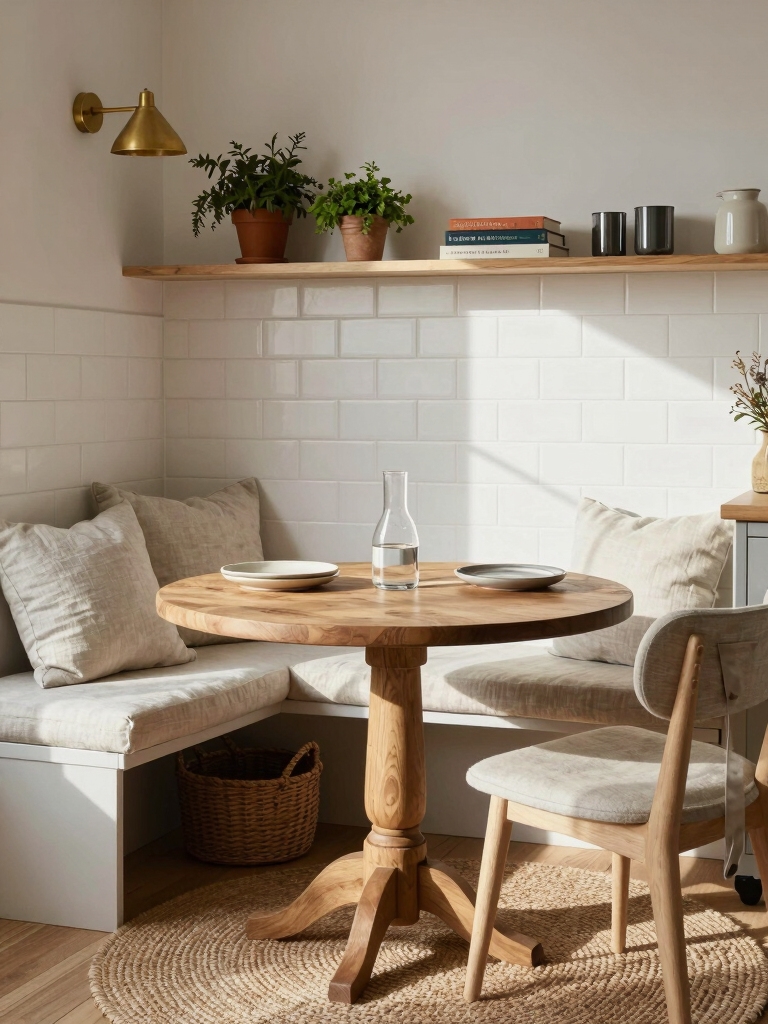
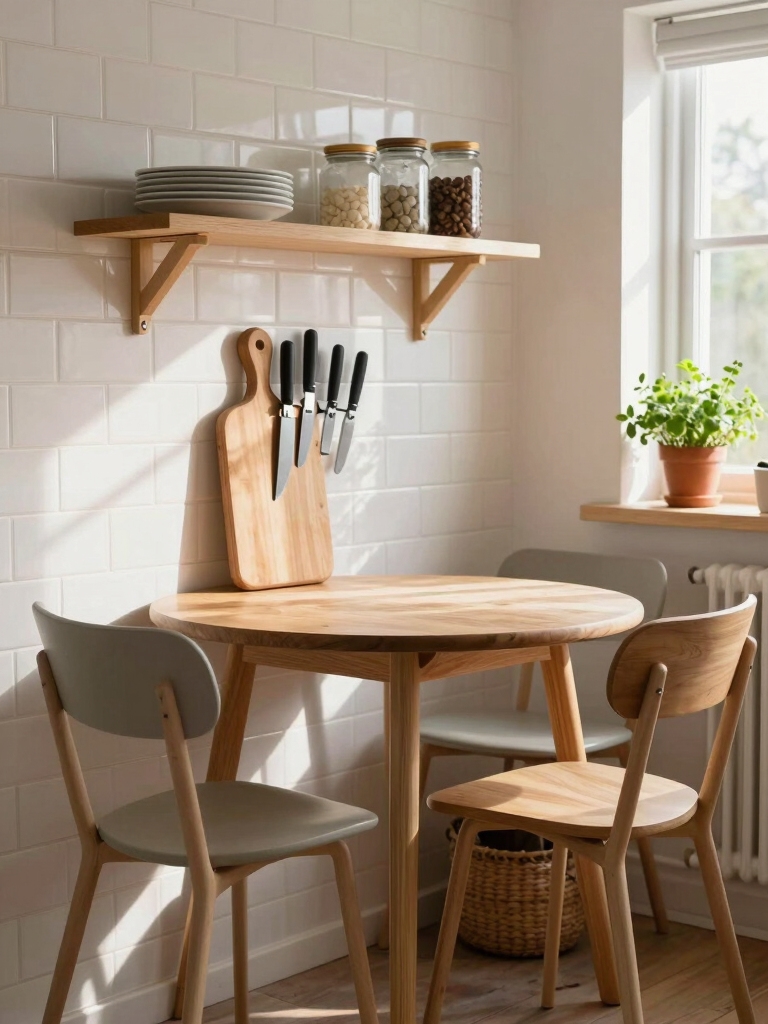
I’ll show you compact table options that actually work: wall-mounted fold-downs and slim floating shelves tuck away when you don’t need them; narrow drop-leaf or counter-height bars keep traffic clear; round pedestal or extendable tables save circulation and expand for guests.
Built-in banquettes add hidden storage; corner triangles use awkward nooks; and rolling carts or consoles add mobility and power ports for charging. Pick slim stools or stackable chairs to tuck under, and keep going to get setup and hardware tips.
Choose a Wall-Mounted Fold-Down Table
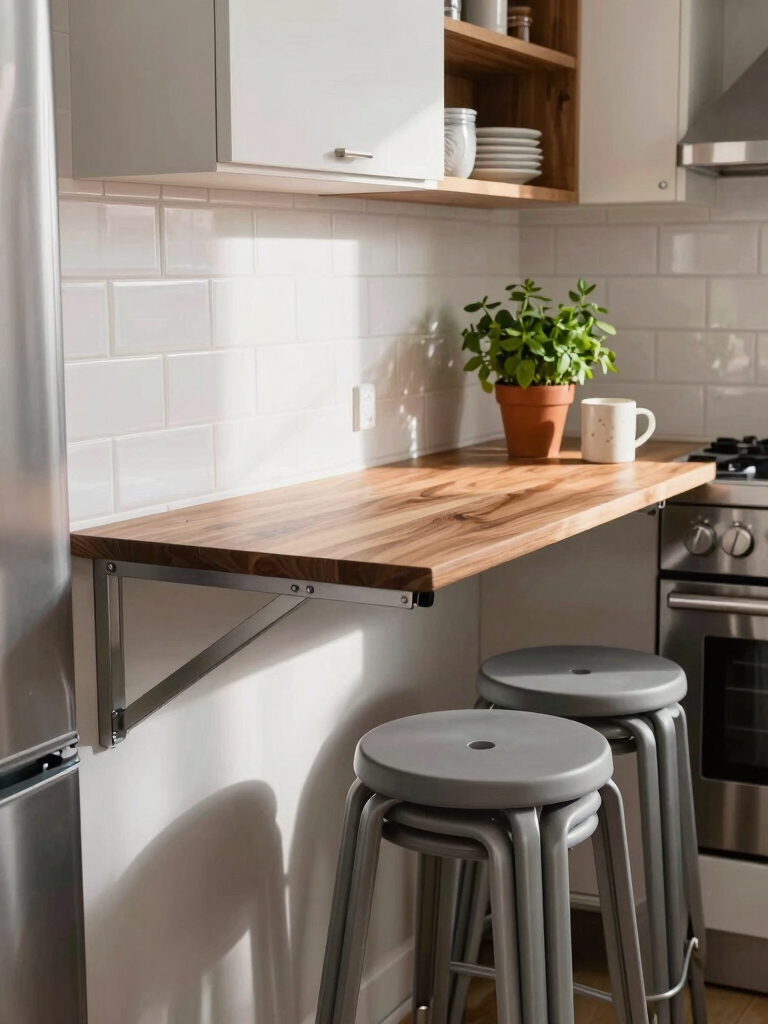
If you’re tight on space, I recommend a wall-mounted fold-down table — it tucks away when you’re not using it and gives you a sturdy surface when you need it.
I prioritize durable hardware, easy-release hinges, and a surface finish that resists scratches.
Mount it at comfortable elbow height, add hidden storage underneath, and choose a slim profile to keep traffic clear and sightlines open.
These tables are a popular choice in trending small-space storage guides because they maximize usable area and often incorporate space-saving features.
Install a Narrow Drop-Leaf Table

I like installing a narrow drop-leaf table when I need a compact, foldaway surface that tucks flush against the wall but expands for meals or prep.
I’ll walk you through durable mounting choices and hardware—like sturdy piano hinges, folding brackets, and recommended anchors—so the table feels solid when in use.
With the right setup you get maximum function without losing floor space.
Space-smart layouts often rely on space-saving seating arrangements to make the most of a small dining area.
Space-Saving Foldaway Surface
Mount a narrow drop-leaf table and you’ll instantly reclaim wall space without sacrificing a usable surface.
I use one as a prep station, folding it down after meals to free traffic flow.
Choose a width that fits a single stool, keep edges rounded for safety, and finish with moisture-resistant paint.
It’s practical, tidy, and feels custom to a small kitchen.
You can adapt this to galley layouts by placing it against a long wall to maximize walkway clearance and workflow.
Mounting and Hardware Options
Because the right hardware determines whether your drop-leaf feels sturdy or like a wobbly afterthought, I always start by choosing a mounting method that matches the wall type and how you’ll use the table.
I prefer robust piano hinges, folding brackets, or swing-out legs for support. Anchor with proper wall plugs into studs or heavy-duty toggle bolts, and seal connections to prevent loosening.
Small kitchens often benefit from multifunctional pieces that maximize storage and surface area, like compact fold-down units with built-in shelving for space-saving solutions.
Use a Round Pedestal Table for Flow

With a round pedestal table, I can keep traffic flowing in a tight kitchen without sacrificing style or seating.
I choose a compact diameter, slim pedestal base, and durable top to maximize legroom and cleaning ease.
Curved edges prevent bumps, while the single central support lets chairs slide freely.
I prioritize scale, finish, and easy movement to maintain an airy, functional space.
Many cozy island setups use seating for two to balance intimacy and space efficiency.
Pick an Extendable Table With Hidden Leaves

If I want the open feel of a small round table but occasional extra seating, I opt for an extendable table with hidden leaves.
I look for slim slides, soft-close mechanisms, and a seamless seam so the folded leaves disappear.
It stays compact for daily use, then expands cleanly for guests.
Choose durable hardware and a surface finish that masks joints.
Small kitchen islands can also serve as multifunctional dining spots in tiny layouts, so consider designs with pull-out seating to maximize space.
Opt for a Built-In Banquette With Storage

I’ve found that a built-in banquette turns wasted corners into efficient seating while giving you generous underseat storage for linens, trays, or small appliances.
I’ll show how corner configurations save floor space and how thoughtful cushioning and back support make built-ins as comfortable as freestanding chairs.
With a few smart measurements and hinge or drawer choices, you can have a cozy, space-saving nook that’s both practical and inviting.
Built-ins can also create intimate, memorable meals by making the most of cozy small kitchen layouts.
Maximize Underseat Storage
Think about swapping standard chairs for a built-in banquette and you’ll instantly free up valuable floor and closet space—underseat storage turns every meal nook into a compact organizer.
I design deep, divided compartments for dishes, placemats, and pantry overflow, add soft-close lids and breathable liners, and label sections for quick access.
Cushions lift easily, keeping the look sleek while hiding functional order.
Space-Saving Corner Solutions
When I corner a small kitchen, I see a built-in banquette as the smartest use of that awkward L-shaped space—seating, storage, and style all in one.
I design deep lift-up benches for dishes and pantry overflow, add slim drawers for linens, and keep surfaces durable.
Corner backrests follow the angle to maximize seating; compact tables slide or fold beside the bench for flexibility.
Built-In Seating Comfort
Choosing a built-in banquette with storage transforms a tight kitchen corner into a multiuse hub that I actually enjoy using every day.
I chose tufted cushions, hidden lift-up compartments for linens and pantry overflow, and a backrest angle that’s comfortable for long chats.
It saves floor space, creates a tidy look, and doubles as extra seating and a cozy work nook without feeling cramped.
Select a Slim Console Table That Doubles as Dining
I often lean a slim console against the wall and use it as a dining surface because it gives me a full tabletop without stealing floor space.
It’s narrow but sturdy, perfect for two.
I choose materials that resist stains and pair it with stools that tuck in.
- Measure clearance
- Pick durable finish
- Opt for slim stools
Place a Rolling Kitchen Cart With Fold-Out Top
I love using a rolling kitchen cart with a fold-out top because it gives me mobile prep space and extra storage without stealing square footage.
When guests come over I flip out the top for a quick dining surface, then roll the cart aside to stow it on its wheels.
It’s a compact, flexible solution that keeps knives, bowls, and pantry bits organized while freeing up your main counter.
Mobile Prep and Storage
With a rolling kitchen cart that has a fold-out top, I get extra prep space exactly when I need it and tuck it away the rest of the time.
I use it for organized, mobile tasks that save counters and steps.
- Stash knives, cutting boards, and measuring tools.
- Roll to stovetop or sink for efficient workflows.
- Hide bulk items beneath for neat storage.
Fold-Out Dining Surface
Tucked against the wall, my rolling kitchen cart with a fold-out top becomes a surprise dining table whenever guests drop by or I want a change of scene.
I keep placemats, napkins, and a compact set of dishes inside, unfold the leaf, and secure it with simple brackets. It’s stable, clean-lined, and doubles as workspace when not hosting.
Wheels for Easy Stow
I roll the cart into a narrow corner when I’m done, so it’s out of the way but easy to pull back when I need it.
I love the fold-out top for meals or prep, and locking casters keep it steady.
- Slim profile fits tight spaces
- Fold-out surface expands instantly
- Locking wheels stabilize for dining
Incorporate a Floating Shelf Table Nook
Although space feels tight, I’ve found a floating shelf table nook lets you add a usable dining or work surface without crowding the room.
I mount a sturdy, foldable shelf at elbow height, add slim stools that tuck beneath, and use wall hooks for placemats and utensils.
It saves floor space, feels built-in, and keeps the kitchen streamlined and ready for quick meals or laptop work.
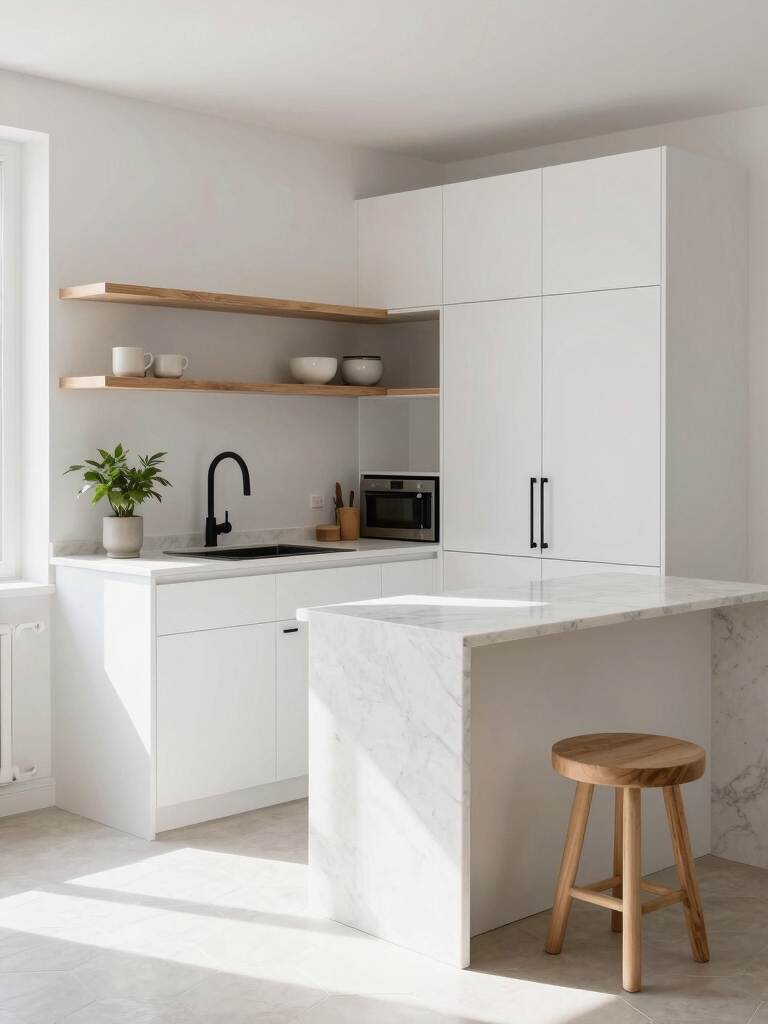
Choose a Counter-Height Bar Table for Vertical Space
I like using a counter-height bar table when floor space is tight because it pushes the focus upward and gives me room for stacked storage or hanging racks.
It also makes casual dining feel effortless—quick breakfasts or drinks at eye level without committing to a full dining set.
If you pick slim stools and a narrow tabletop, you keep traffic flow smooth while gaining handy vertical real estate.
Maximizes Vertical Storage
Often I reach for vertical solutions first when floor space is tight, and a counter-height bar table is one of my favorite tricks.
It elevates surface area and invites storage above and below.
I use narrow shelving, hooks, and baskets to keep essentials accessible without clutter.
- Slim floating shelf
- Under-table baskets
- Wall-mounted hook rail
Creates Casual Dining
Usually I reach for a counter-height bar table when I want a casual dining spot that doesn’t overwhelm a small kitchen — it gives me a defined eating area, more standing-room for guests, and easy access to vertical storage above and below.
I pick slim stools, integrate hooks or shelves underneath, and keep place settings simple so the table feels airy, useful, and convivial without crowding the room.
Use a Table With Integrated Drawer and Cubby Storage
Try a table with built-in drawers and cubbies to instantly add function without crowding your small kitchen.
I rely on smart compartments to keep clutter hidden and essentials handy.
Consider these uses:
- Utensil drawer for everyday cutlery and napkins.
- Cubbies for cookbooks, placemats, or a small basket.
- Shallow drawer for chargers, notepads, and receipts.
Select a Transparent or Glass Top Table to Maintain Sightlines
If you like the hidden storage idea but want to keep the room feeling open, I reach for a transparent or glass-top table to preserve sightlines and make a small kitchen read larger.
I prefer slim metal or wood bases, tempered glass for safety, and clear edges to avoid visual clutter. Glass reflects light, keeps traffic flow visible, and pairs well with minimalist chairs.
Create a Corner Triangle or L-Shaped Table
When space is tight, I turn an awkward corner into a smart dining spot by fitting a triangle or L-shaped table snug against the walls; it gives you usable surface area without interrupting circulation. I recommend thinking about scale, storage, and seating comfort.
- Choose slim-profile legs and rounded corners.
- Add under-table drawers or shelves.
- Measure clearances for chairs and passageways.
Use Stackable or Folding Chairs That Tuck Away
Once the corner table is in place, I like to pair it with chairs that disappear when not in use — stackable or folding models free up floor space and keep the room feeling open.
I choose lightweight, durable materials and slim profiles so stacking is effortless.
Folding chairs with nonmarking feet and a neat storage spot behind a pantry door keep clutter minimal and access instant.
Build a Multi-Use Prep Table That Converts to Dining
I like to design a prep table that pulls double duty as a dining surface, so it has to be sturdy, compact, and quick to transform.
I focus on materials, mechanism, and footprint to maximize function without clutter.
- Fold-down leaf for instant dining.
- Locking casters for stability and mobility.
- Integrated cutting board slide for prep and storage.
Choose a Table With Built-In Power and Charging Ports
After designing a prep table that folds out for dinner and rolls smoothly on locking casters, I look for one with built-in power and charging ports to keep devices and small appliances close at hand.
I prefer recessed outlets, USB-C ports, and surge protection integrated into the edge or drop-leaf. It saves counter space, reduces cord clutter, and keeps phones, mixers, and lamps conveniently powered.