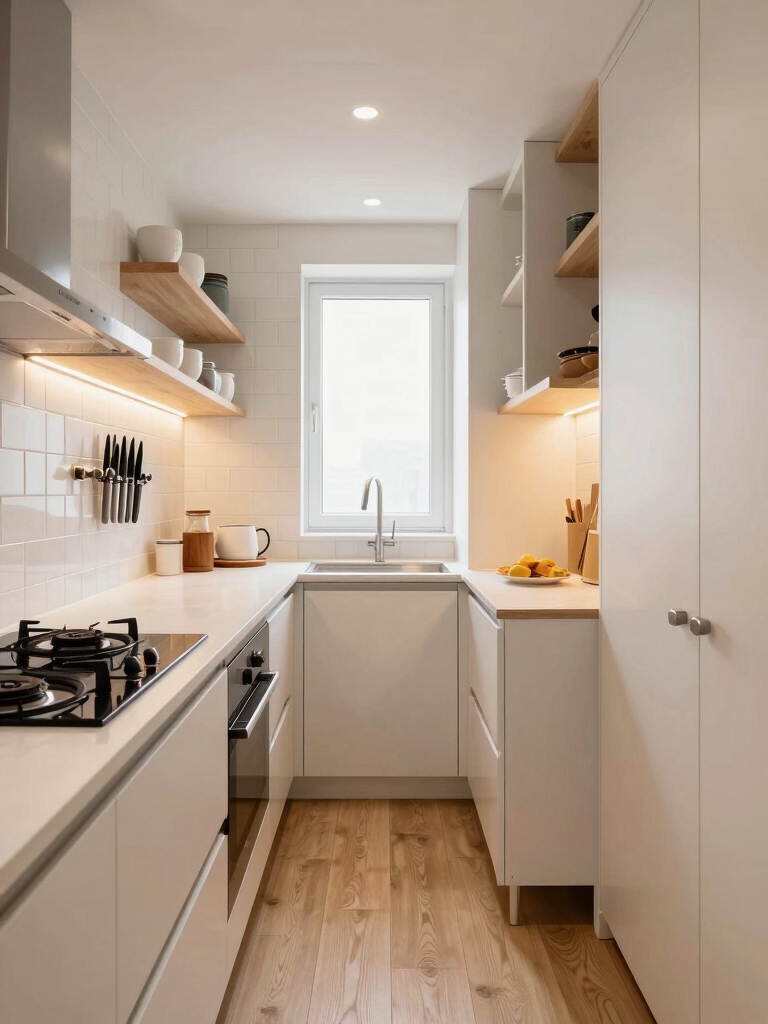

I’d start by planning clear traffic lines with 36-inch walkways and simple prep, cook, and cleanup zones so everything feels effortless. Pick a compact multi-use island with slim overhang seating and hidden storage to keep flow open.
Lean on open shelving, push-to-open cabinets, and narrow-profile appliances to reduce clutter and sightlines. Use continuous flooring, layered lighting, and a light backdrop with a bold accent to add depth. Keep going to see practical layouts and product picks.
Plan a Layout That Prioritizes Traffic Flow

Start by mapping how people will move through your kitchen and around work zones — I like to imagine a typical day to spot pinch points and smooth them out.
I prioritize clear sightlines, unobstructed walkways, and logical appliance placement.
I keep circulation paths at least 36 inches, create simple zones for prep, cook, and cleanup, and position storage to minimize cross-traffic.
Designs that use smart layouts can make small spaces feel larger and more functional.
Choose a Compact Multi-Use Island
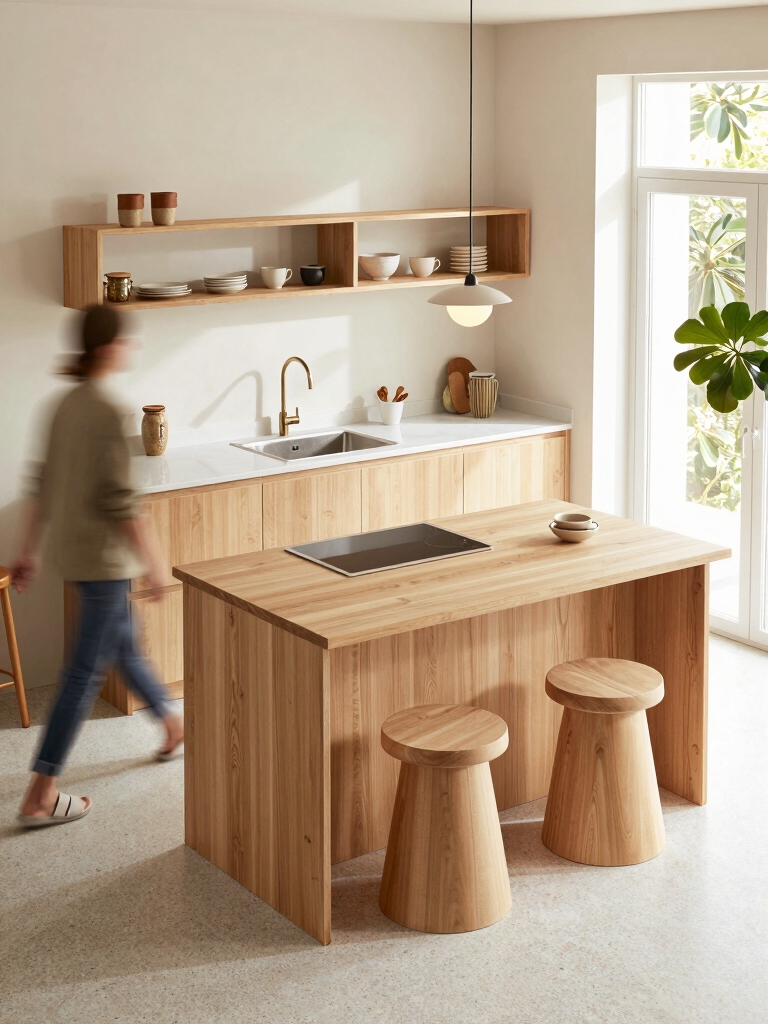
A compact, multi-use island lets me add prep space, storage, and casual seating without overwhelming a small open kitchen, so I look for a footprint that balances function with flow.
I choose clean lines, hidden drawers, and a narrow overhang for stools. It becomes a focused workstation that anchors the room, keeps sightlines open, and adapts to cooking, serving, and quick meals.
Small kitchen islands often emphasize space-saving features that combine storage and seating.
Lean Into Open Shelving for Visual Airiness

Once the island is in place and keeps the center open, I like to lean into open shelving to make the perimeter feel lighter and more airy.
I display everyday dishes, a few cookbooks, and curated ceramics to keep visual clutter minimal.
Open shelves invite texture and color while encouraging tidy habits, and they amplify light, making a compact kitchen feel intentional and breathable.
Shelving that balances form and function helps maximize storage without overwhelming the space.
Use Continuous Flooring to Connect Spaces
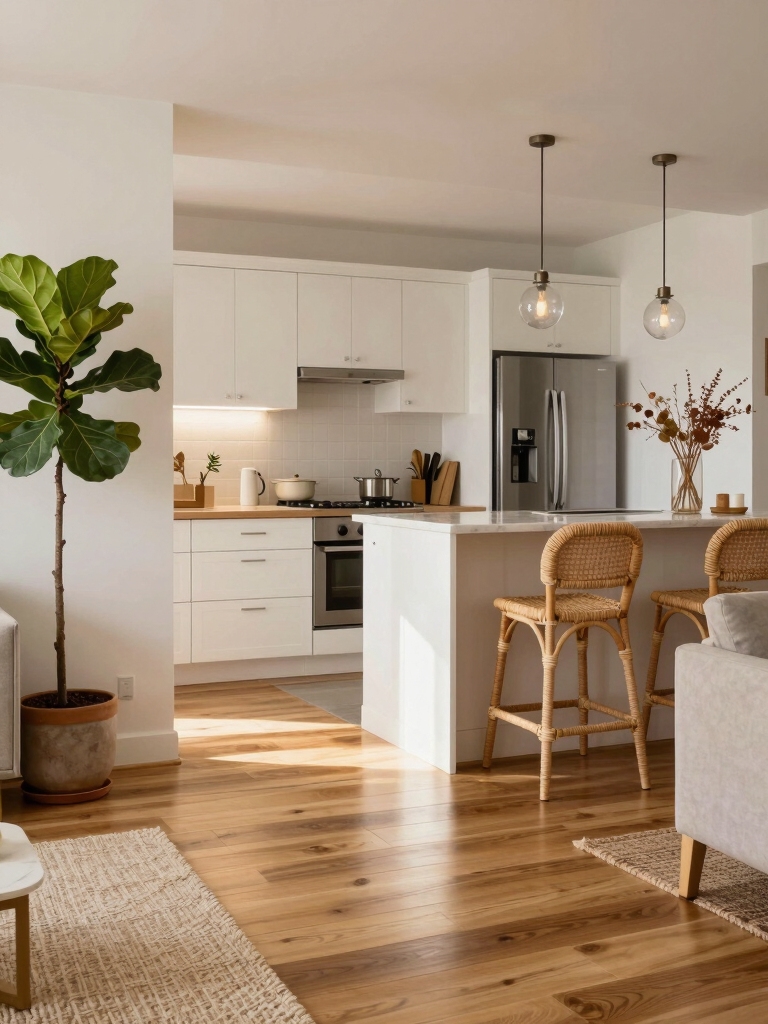
Choosing one continuous floor material helps me visually widen a small kitchen and create a smooth flow between rooms. I pick durable, neutral-toned flooring—wide-plank wood or matte tile—to unify zones without fuss.
Consistent grout lines and direction reinforce movement, while rugs define dining or seating areas.
The result feels curated, calm, and intentionally connected, making the whole space read larger and more cohesive.
Adding ample natural light from small windows can further enhance the sense of openness by reflecting off light floors and brightening sightlines, which is especially effective in flooding natural light spaces.
Opt for Slim, Streamlined Appliances

I like choosing narrow-profile appliances that keep traffic paths clear and sightlines open in a small open kitchen.
Built-in units and multi-function compact designs let you tuck essentials into cabinets or replace several gadgets with one sleek machine.
Let me show you how those slim choices save space without skimping on style or performance.
Consider integrating space-saving storage solutions from Clever Kitchen Solutions for Compact Apartments to maximize every inch without clutter.
Narrow-Profile Appliance Selection
When space is tight, I reach for slim, streamlined appliances that give me full function without the bulk; they slide neatly into narrow gaps, keep sightlines open, and make a small kitchen feel intentional rather than cluttered.
I choose narrow fridges, compact dishwashers, and slender ranges with clean faces, prioritizing quiet performance, matching finishes, and easy handles so everything reads cohesive and calm.
Clever small kitchen cabinet layouts can further maximize storage by using narrow-profile solutions to fit appliances and keep flow intact.
Built-In Space-Saving Units
Although space is limited, I still want every appliance to look like it belongs — which is why I favor built-in, slimline units that tuck into cabinetry for a seamless, custom feel.
I choose undercounter fridges, narrow dishwashers, and inset microwaves that align with cabinet lines.
They preserve sightlines, reduce visual clutter, and make the small open kitchen feel intentionally tailored and calm.
Many designers recommend incorporating space-saving islands to maximize function without crowding the room.
Multi-Function Compact Designs
Built-ins set the stage for a streamlined look, so next I focus on appliances that pull double duty without hogging space.
I choose slim, multifunction ovens, combo washer-dryers, and drawer dishwashers that tuck into cabinetry.
They keep sightlines clear, simplify workflows, and feel intentional. Selecting stainless or matte finishes helps everything read cohesive, practical, and pleasantly pared back.
Integrate Seating That Doubles as Storage
If I were designing a small kitchen, I’d prioritize seating that hides storage so every inch works harder for you; bench seats with lift-up lids or pull-out drawers give you a tidy place for linens, rarely-used appliances, or pantry overflow without adding clutter.
I favor simple cushions, durable finishes, and thoughtful compartments so seating feels intentional, comfortable, and perfectly organized for daily life.
Maximize Vertical Storage With Tall Cabinets
I love using floor-to-ceiling cabinets in small open kitchens because they reclaim wasted vertical space and keep countertops clear.
I’ll show you how built-in organizers—like pull-out shelves, spice racks, and adjustable dividers—make every inch accessible and prevent clutter.
With the right configurations, tall cabinets turn awkward nooks into streamlined, practical storage.
Floor-to-Ceiling Cabinets
A set of floor-to-ceiling cabinets can transform even the smallest kitchen by using the vertical space most people ignore, and I’ll show you how to make them work without crowding the room.
I favor streamlined doors, light finishes, and open shelving accents to keep airiness while gaining storage.
- Calm order that soothes morning routines
- Pride in a perfectly organized wall
- Joy when clutter disappears
Built-In Cabinet Organizers
Think of built-in cabinet organizers as the secret to squeezing every usable inch from tall cabinets—I’ve found they turn awkward vertical voids into orderly, reachable storage.
I recommend pull-out shelves, vertical dividers, and tall lazy Susans to keep bakeware, trays, and pantry items visible.
They streamline flow, reduce clutter, and make daily routines smoother without sacrificing style or openness in a small open kitchen.
Create Clear Sightlines With Low Partitions
When I’m working in a small kitchen, I rely on low partitions to keep the space feeling open while still carving out zones for cooking and dining.
I use waist-height shelves or half-walls to maintain sightlines, let light flow, and define tasks without closing the room. They feel intentional, airy, and smart.
- Cozy connection
- Calm clarity
- Practical elegance
Layer Lighting for Function and Ambience
While I work and entertain in a small kitchen, I layer lighting so every task feels effortless and the room stays inviting — bright task lights over prep areas, softer ambient fixtures for dining, and accent lights to highlight shelves or architectural details.
I combine under-cabinet strips, a central pendant, and adjustable spots so prep, cooking, and casual meals each have appropriate light, creating warmth and clarity.
Pick Light Reflective Materials and Finishes
Because small kitchens can feel cramped, I choose materials and finishes that bounce light around the room to make it feel brighter and bigger.
I favor glossy subway tile backsplashes, satin white cabinetry, and polished chrome fixtures to amplify daylight and lamps. These choices keep the space airy, cohesive, and uplifting.
- Warm, reflective surfaces that cheer
- Clean lines that soothe
- Bright details that invite joy
Define Zones With Area Rugs and Furniture
If I want a small kitchen to feel organized and purposeful, I use area rugs and furniture to carve out distinct zones—dining, prep, and chilling—so each activity has its own visual and functional spot.
I pick rugs sized to anchor seating, slim consoles for serving, and a movable island to define prep. These pieces guide traffic and create cozy, intentional pockets.
Use Color and Contrast to Expand the Room
I like to play with color and contrast to make a compact kitchen feel bigger and more intentional.
I choose a light backdrop, a bold focal wall, and subtle trim contrast to draw the eye and create depth.
Strategic accents unify zones without clutter.
- Warm accent hues for comfort
- Crisp whites for airy depth
- Dark edges for elegant definition
Hide Clutter With Push-To-Open Cabinetry
Stow away the visual chaos with push-to-open cabinetry — I’ve found it’s one of the simplest ways to keep a small kitchen looking calm and streamlined.
I favor handleless fronts that open with a gentle press, hiding appliances, utensils, and recycling bins.
This keeps sightlines clean, makes cleaning easier, and preserves flow between prep and living areas while feeling uncluttered and intentional.
Incorporate Glass or Transparent Elements
Keeping surfaces uncluttered makes it easier to introduce glass and transparent elements without overwhelming a small kitchen, so I like to use them selectively to amplify light and space.
I choose clear cabinet doors, a glass backsplash, and slim glass shelves to keep sightlines open and add a delicate, airy feel that still feels curated and warm.
- Sparks of sunlight
- Visual breathing room
- Quiet elegance
Design Flexible Workstations for Entertaining
When I entertain in a small open kitchen, I plan multi-purpose prep zones that shift from chopping and plating to a buffet-style spread in seconds.
I also use mobile serving stations—trolleys or foldable carts—that move where guests gather and tuck away when the party winds down. You’ll get more function without sacrificing flow or style.
Multi-Purpose Prep Zones
Because I love hosting in a small kitchen, I design multi-purpose prep zones that shift easily between cooking, serving, and socializing.
I keep tools handy, clear surfaces for plating, and a cozy spot for guests to chat while I finish dishes.
Thoughtful layouts make every inch work for the moment.
- Warm, effortless gatherings
- Calm, confident cooking
- Intimate, shared moments
Mobile Serving Stations
I roll a slim cart into place and suddenly the whole room feels ready to entertain — a mobile serving station turns any countertop into a flexible workstation for plating, pouring, or setting out hors d’oeuvres.
I stash trays, tools, and glassware on tiers, wheel it where guests gather, and use removable boards for extra prep. It’s compact, tidy, and instantly adaptable.