
I’ve set up dozens of temporary kitchens that keep cooking simple and chaos low during remodels, and you can too: prioritize a clear work triangle for cooking, prep, wash and storage; pick compact gear like a single-burner induction, countertop oven and multi-cook pot; use a rolling cart or folding table as your prep island.
Rig a collapsible sink and waste bucket for washing; stash essentials in labeled bins and a utensil caddy; keep kids and pets out of the zone. Keep going to learn practical layouts, appliance tips and safety hacks.
Planning Your Temporary Kitchen Layout

When I plan a temporary kitchen layout, I start by mapping out the essentials—where I’ll cook, prep, wash, and store—so I can keep the flow efficient and minimize trips across the work zone.
I prioritize a clear work triangle, designate counter space for staging, keep cleaning supplies handy, and use simple storage zones.
That way cooking stays functional and low-stress.
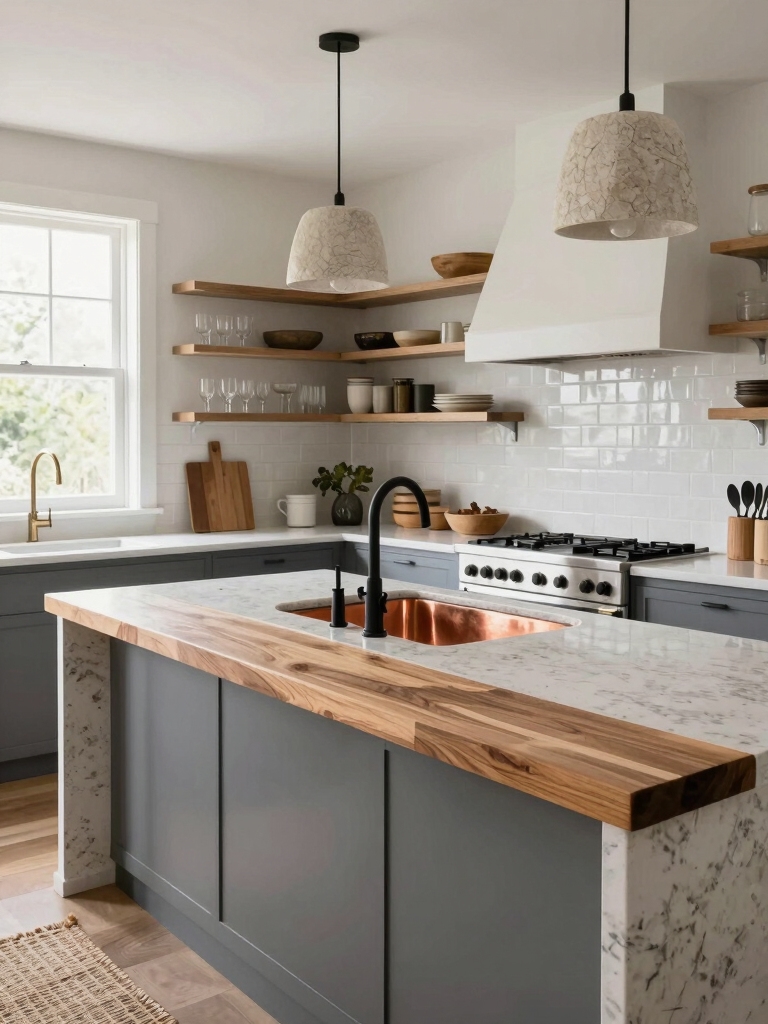
Small islands can help maximize storage and workspace in tight areas, so consider a compact kitchen island to add functionality without overwhelming the room.
Choosing the Right Temporary Appliances
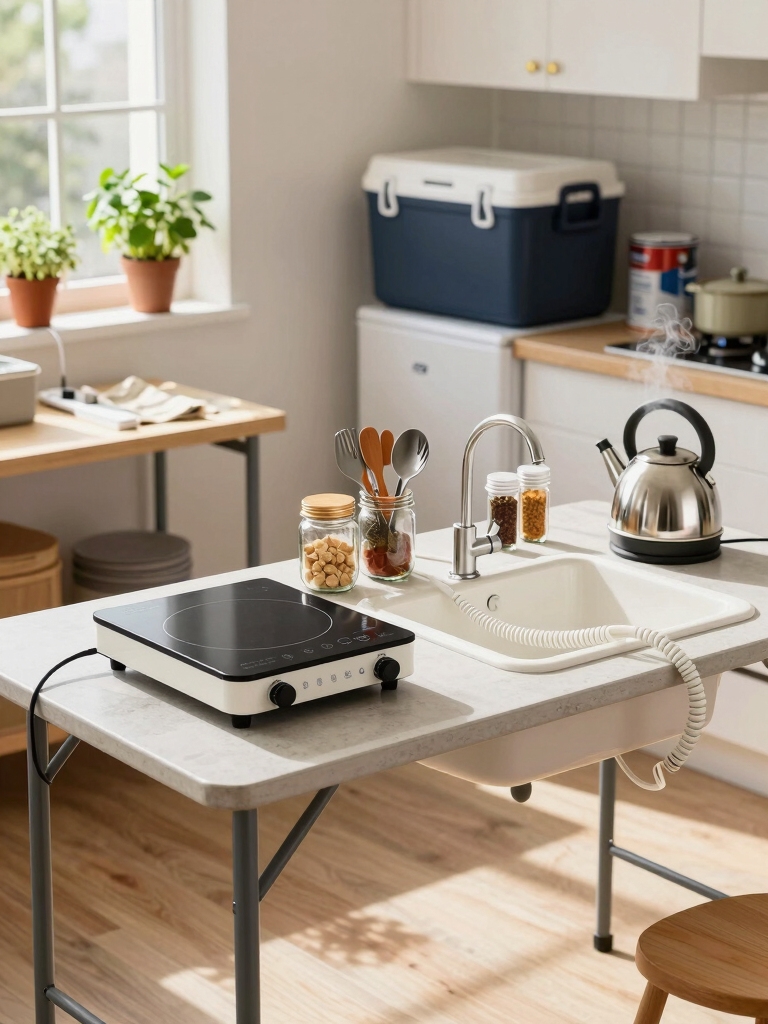
I’ll help you pick compact, essential appliances that keep cooking simple without swallowing your temporary space.
We’ll check power and outlet requirements so you don’t trip breakers or need risky extensions.
Then I’ll suggest safe portable cooking alternatives—like induction burners and countertop ovens—that match your needs and budget.
Small, efficient layouts and smart storage hacks can triple counter space in many small kitchen remodels by maximizing usable surfaces and reducing clutter.
Essential Compact Appliances
Start by thinking about what you actually cook day-to-day and pick compact appliances that match those habits—I’ll show you how to prioritize space, function, and budget without sacrificing convenience.
I choose a compact induction cooktop, small convection oven, toaster oven, and a multi-function slow cooker/pressure cooker.
Add a compact fridge and cordless kettle.
These cover meals without clutter, are easy to store, and clean.
Small islands can double as prep stations or storage space-saving solutions to maximize function in a tiny kitchen.
Power and Outlet Needs
Because power limitations can derail a great temporary setup, I always check amps, outlets, and circuit layouts before buying appliances.
I match appliance ratings to available circuits, avoid overloading shared kitchen lines, and prioritize dual-voltage or low-amp models.
I also use grounded extension solutions sparingly, label dedicated circuits, and consult an electrician if anything looks marginal to keep safety and convenience intact.
Contractors often assume homeowners won’t read the fine print on appliance specs, so I rely on contractor-preferred tips to catch common oversights.
Portable Cooking Alternatives
Think through what you actually cook day to day before you pick equipment, because the “right” temporary appliances should match your habits, space, and power limits.
I choose compact, efficient tools that save time and counter space. Consider portability, fuel type, and cleanup. Visualize use:
- Single-burner induction
- Countertop convection oven
- Electric griddle
- Instant Pot/multi-cooker
Small kitchen islands or compact layouts can help keep your temporary setup organized and efficient, especially when planning appliance placement for a tight space with space-saving strategies.
Creating a Compact Food Prep Zone

I carve out a compact food prep zone by choosing a small, dedicated surface—often a folding table or a cleared section of countertop—and arranging only the tools and ingredients I need within arm’s reach; this keeps meal prep efficient without cluttering the rest of the temporary kitchen.
I keep a cutting board, a sharp knife, one mixing bowl, a few spices, and a tray for scraps to stay tidy.
I also make the most of clever small kitchen cabinet ideas by storing frequently used items in an organized, space-saving way small kitchen cabinets.
Setting Up a Portable Sink and Dishwashing System

When my kitchen’s out of commission, I set up a portable sink and dishwashing system that’s compact, hygienic, and easy to tear down—so I can wash dishes like I normally would without dragging water through the house.
I use a folding basin, pump faucet, gray-water bucket, and dish rack to stay efficient and tidy:
- Collapsible basin
- Foot-pump tap
- Sealed waste bucket
- Draining rack
I also rely on clever small kitchen storage to hide clutter and keep the temporary setup orderly, such as using foldable organizers to stash cleaning supplies.
Smart Storage Solutions for Limited Space

I often rely on clever vertical and multi-use storage when space is tight, because a few smart choices let me keep essentials within reach without cluttering countertops.
I use wall-mounted racks, magnetic strips, nesting containers, and fold-down shelves to maximize every inch.
Clear bins and labeled baskets keep staples visible; rolling carts create a movable prep zone that tucks away when not needed.
Essential Cookware and Utensils to Keep Handy
When my kitchen’s under renovation, I keep a compact set of must-have pots and pans—a medium skillet, a saucepan, and a Dutch oven—that cover almost every meal.
I also pack essential utensils and tools in a small caddy: a good chef’s knife, cutting board, spatula, tongs, and a can opener. With those basics within arm’s reach, I can cook efficiently without cluttering my temporary space.
Must-Have Pots and Pans
Let’s keep cooking simple during your remodel: I suggest a compact set of versatile pots, pans, and a handful of utensils that cover almost every meal without crowding your temporary workspace.
I keep a small stainless saucepan, a medium sauté pan, a 4‑quart stockpot, and a nonstick skillet — durable, stackable, and easy to clean.
- Small saucepan
- Medium sauté pan
- 4‑quart stockpot
- Nonstick skillet
Essential Utensils and Tools
How do you keep cooking efficient when space and tools are limited? I stick to essentials: a chef’s knife, paring knife, cutting board, tongs, spatula, wooden spoon, whisk, can opener, measuring cups and spoons, and a colander.
Multipurpose items save space. I keep them in one tote so I can cook quickly, clean faster, and stay sane during the remodel.
Organizing a Simple Pantry and Cooler Station
With a few sturdy bins and a compact shelving unit, I set up a simple pantry and cooler station that keeps meals easy while the kitchen’s out of commission.
I keep essentials visible, chilled items organized, and cleanup minimal. Imagine this:
- Clear bins with labels
- Stackable shelving for snacks
- Insulated cooler with ice packs
- Tray for condiments and utensils
Easy Meal Ideas During a Remodel
Although the stove’s off and the countertops are piled, I’ve found a handful of dependable, low-effort meals that keep us fed and sane during a remodel.
I lean on sheet-pan salads, grain bowls with rotisserie chicken, mason-jar overnight oats, toasted flatbreads with toppings, and simple no-cook charcuterie plates. They’re fast, versatile, and taste better than the chaos suggests.
Keeping Cleanup Fast and Hygienic
Those quick meals make life easier, but they still leave dishes and crumbs that can pile up fast during a remodel, so I focus on cleanup routines that keep things hygienic and low-effort.
I set up zones, use disposable liners, and sanitize surfaces quickly. Visualize:
- Sink station with soaking basin
- Counter wipes and spray bottle
- Tray for dirty utensils
- Foldable drying rack
Managing Trash and Recycling Efficiently
Usually I keep trash and recycling simple and out of the way, because a cluttered bin can ruin an otherwise tidy temporary kitchen.
I use stackable bins with clear labels, a small compost pail for scraps, and liners changed frequently.
Placing stations near prep and exit points speeds disposal, reduces odors, and keeps the space feeling neat and functional throughout the remodel.
Power and Ventilation Considerations
Because a temporary kitchen often borrows circuits and loses built-in venting, I make power and ventilation my first safety check: confirm what outlets and breakers I can use, avoid overloading extension cords, and set up a clear plan for exhausting steam and smoke—whether with a window fan, portable hood, or cracked door.
- Coiled extension cord on counter
- Window fan facing out
- Portable range hood venting
- Crack-door steam escape
Safety Tips for a Temporary Cooking Area
If I’m setting up a temporary cooking area, I start by treating it like any small commercial kitchen: clear work zones, reliable power, and simple rules everyone follows.
I keep fire extinguisher and first-aid kit handy, unplug appliances when not in use, use surge-protected outlets, secure gas lines, maintain a dry floor, and store flammables away.
I label hot surfaces and set basic cleanup routines.
Maintaining Meal Routine With Kids and Pets
I keep meal times simple and predictable so kids and pets know what to expect, which cuts down on chaos during the remodel.
I carve out kid- and pet-safe zones away from the temporary cook area and stick to one-pot, kid-friendly recipes that save time and limit spills.
That way we eat well, stay calm, and I don’t have to play short-order chef every night.
Simple, Predictable Meal Schedule
Usually I stick to a simple, predictable meal schedule during a remodel because it keeps my kids and pets calmer and makes planning easier;
I set regular times for breakfast, lunch, dinner, and snacks, and I tell the family what to expect each day.
I prep basics, rotate favorites, and keep feeding calm:
- Warm oatmeal mornings
- Packed sandwiches midday
- Simple pasta evenings
- Fruit and yogurt snacks
Kid- and Pet-Safe Zones
While the remodel turns the kitchen into a construction zone, I set clear kid- and pet-safe areas so meals stay calm and predictable.
I create a cozy dining nook away from tools, stash snacks and dishes at kid-height, and use gates or mats to keep pets out.
Brief rules and consistent timing reduce stress, so family routines continue smoothly despite the chaos.
One-Pot, Kid-Friendly Recipes
Often I stick to one-pot, kid-friendly recipes during a remodel because they keep meals predictable, minimize kitchen time, and cut down on cleanup—so we can all eat together without turning the house into a food fight.
I choose simple, sturdy dishes and involve kids safely.
- Cheesy pasta bubbling in one pot
- Colorful veggie stir-fry with rice
- One-pan chicken and potatoes
- Hearty lentil soup with bread
Budget-Friendly Hacks and Multipurpose Tools
For a remodel that’s tight on cash, I rely on budget-friendly hacks and a handful of multipurpose tools to keep meals simple and stress low.
I use a slow cooker, cast-iron skillet, and immersion blender for countless dishes.
Collapsible colanders, nesting bowls, and silicone lids save space. Meal-prep batches, frozen portions, and smart shopping stretch both time and budget without sacrificing flavor.
Transitioning Back to Your New Kitchen
After weeks of cooking from a makeshift setup, I’m excited to move back into the new kitchen and make it feel like ours again.
I unpack thoughtfully, prioritize essentials, and add small comforts to celebrate the reset.
- Sunlit counter with favorite cutting board
- Organized spice rack within reach
- Cozy dish towel and plant
- Clear zones for prep, cook, serve
Who knew chaos could look this chic? I’ve walked you through squeeze-in layouts, clever appliances, and a sink that doubles as modern art — all so dinner still happens.
You’ll survive cramped counters and plastic plates, and laugh when the temporary microwave becomes your most reliable sous-chef.
When the dust settles and your new kitchen gleams, you’ll miss the inventiveness more than you’ll miss the mess — and that’s beautifully ironic.