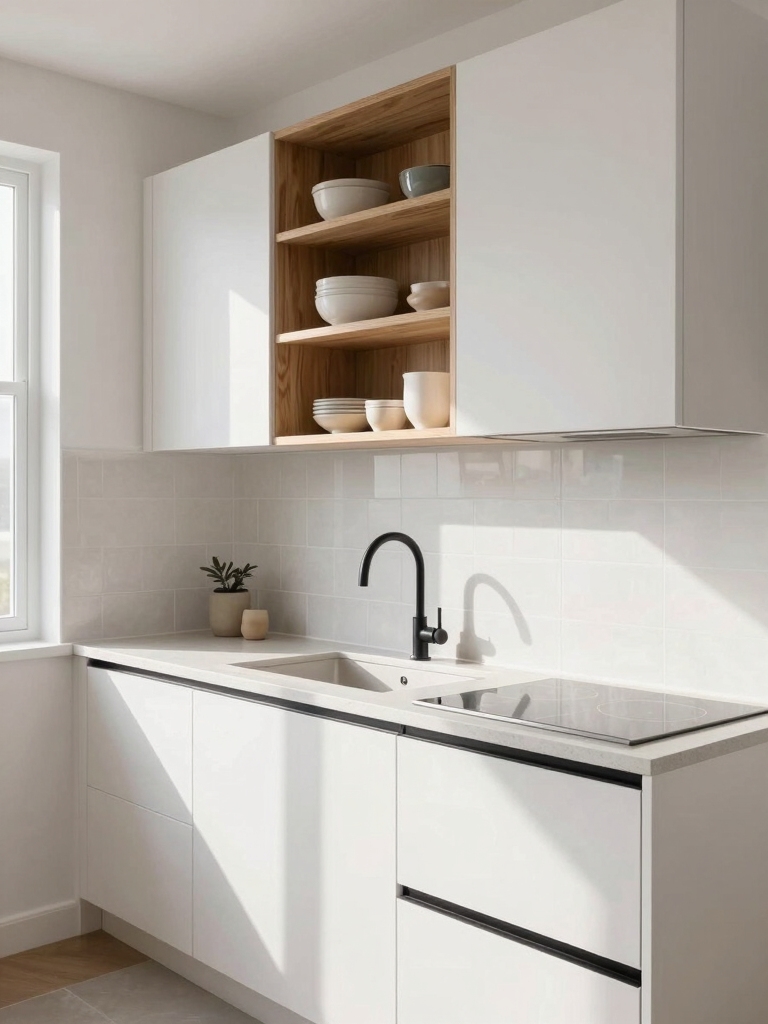

I’ll help you make every inch of a tiny kitchen work smart: I plan a workflow-first layout so prep, cook and clean flow without backtracking, pick slim integrated appliances, and stack vertical storage with pull-out pantries and custom inserts.
I add multifunction furniture like hinged benches and fold-down tables, narrow deep drawers, and slide-away appliance garages. I keep open shelving minimal, use layered lighting and reflective finishes, and stage easy micro-hosting setups — keep going and I’ll share concrete plans.
Plan a Workflow-First Layout

Thinking about how you move in your kitchen is the fastest way to make a small space work — I start by mapping the key tasks (prep, cooking, cleaning) and arranging surfaces and appliances so you can flow between them without backtracking.
I prioritize clear work zones, reachable storage, and multifunctional surfaces, so everything has a place and your movement feels effortless, efficient, and calm.
Smart layouts often include compact, efficient workflow-focused layouts to maximize function in tight footprints.
Choose Slimline Appliances
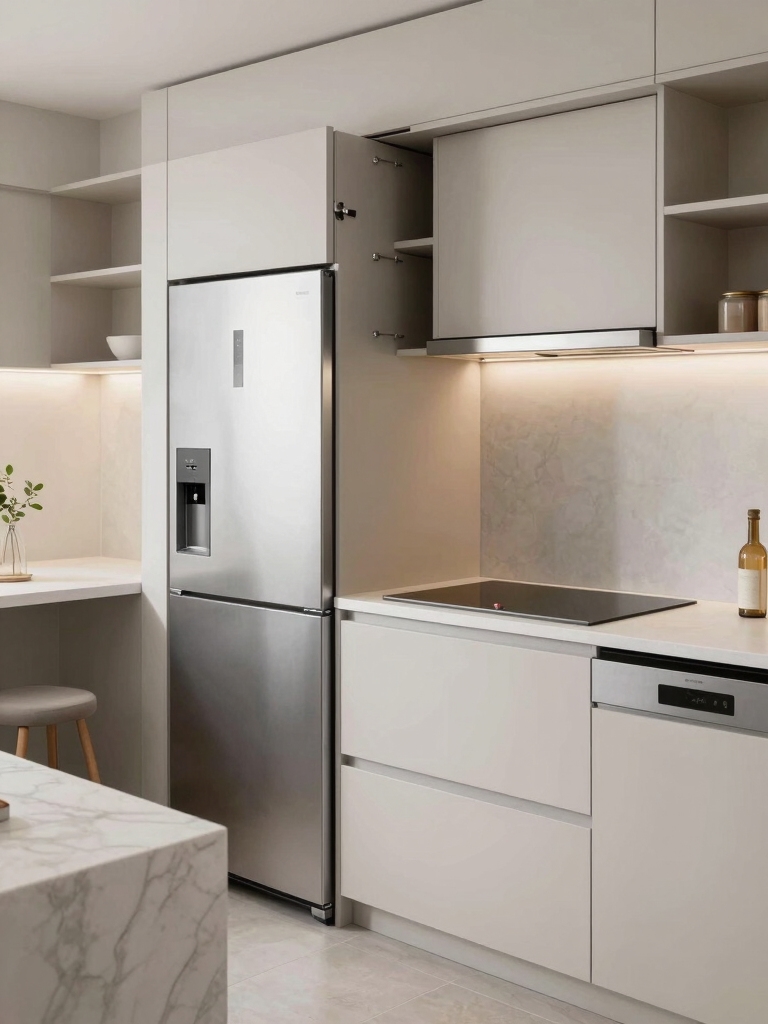
Before you buy anything, I always measure every opening and clearance so slimline appliances actually fit and function.
I’ll show you how integrated options can tuck into cabinetry for a seamless look and save precious visual space.
I also recommend multi-function units—think washer-dryer combos or oven-microwave hybrids—to get more utility from less footprint.
Clever storage solutions can make even the smallest cabinets feel expansive, including pull-out shelves and space-saving organizers that maximize every inch.
Measure Before You Buy
Measuring the space carefully is the single trick that keeps new slimline appliances from looking cramped or sticking out like a sore thumb, and I always start with a tape measure and a checklist.
I note clearances, door swing, ventilation and wiring. I double-check cabinet depths and aisle width, then compare specs to make sure the appliance fits functionally and looks intentional in my compact layout.
Compact modular kitchens are designed to maximize usability and storage in tight footprints, often relying on slimline appliances to preserve workflow.
Integrated Appliance Options
Once I’ve confirmed exact dimensions, I start looking at integrated, slimline appliances that keep a small kitchen feeling streamlined and intentional.
I choose narrow refrigerators and dishwashers that tuck behind cabinet fronts, compact ovens and pull-out hobs, and slender range hoods.
These pieces preserve visual flow, boost storage opportunities, and deliver full function without dominating the room.
I also prioritize space-saving solutions that help modern homeowners maximize every inch while keeping the design cohesive.
Multi-Function Units Matter
I prioritize multi-function, slimline appliances because they let me cram full capability into a tiny footprint without sacrificing style.
I choose combi ovens, washer-dryer combos, and slim fridges with built-in ice makers to reduce clutter.
These units free counter space, simplify wiring and plumbing, and create cleaner sightlines.
They’re efficient, attractive, and practical—perfect for compact kitchens where every inch counts.
Smart layouts often pair these multi-function units with clever storage to maximize usability.
Maximize Vertical Storage
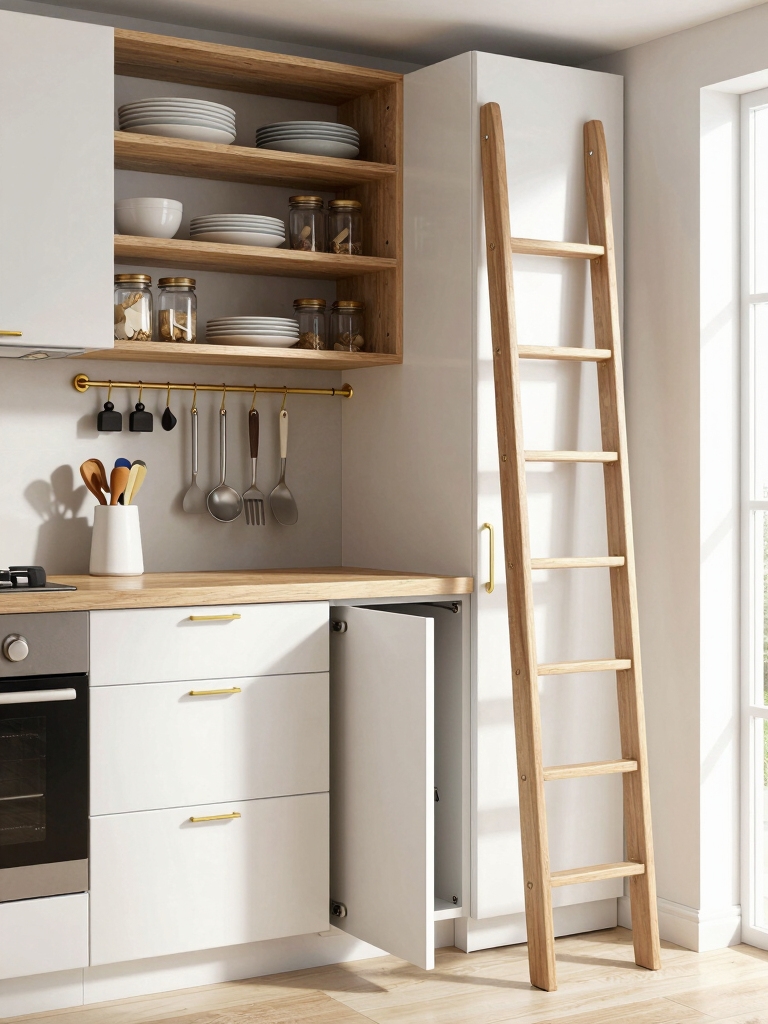
Think of your walls as untapped pantry-space and you’ll start seeing ways to squeeze real storage out of vertical surfaces.
I install open shelves, magnetic knife strips, and pegboards to keep essentials visible and accessible.
Tall cabinets reach the ceiling; I use labeled bins for seasonal items. Hooks under shelves hold mugs and pots, freeing counter space while keeping everything within reach.
Many people are inspired by small space hacks that make compact kitchens feel surprisingly functional.
Use Multi-Functional Furniture
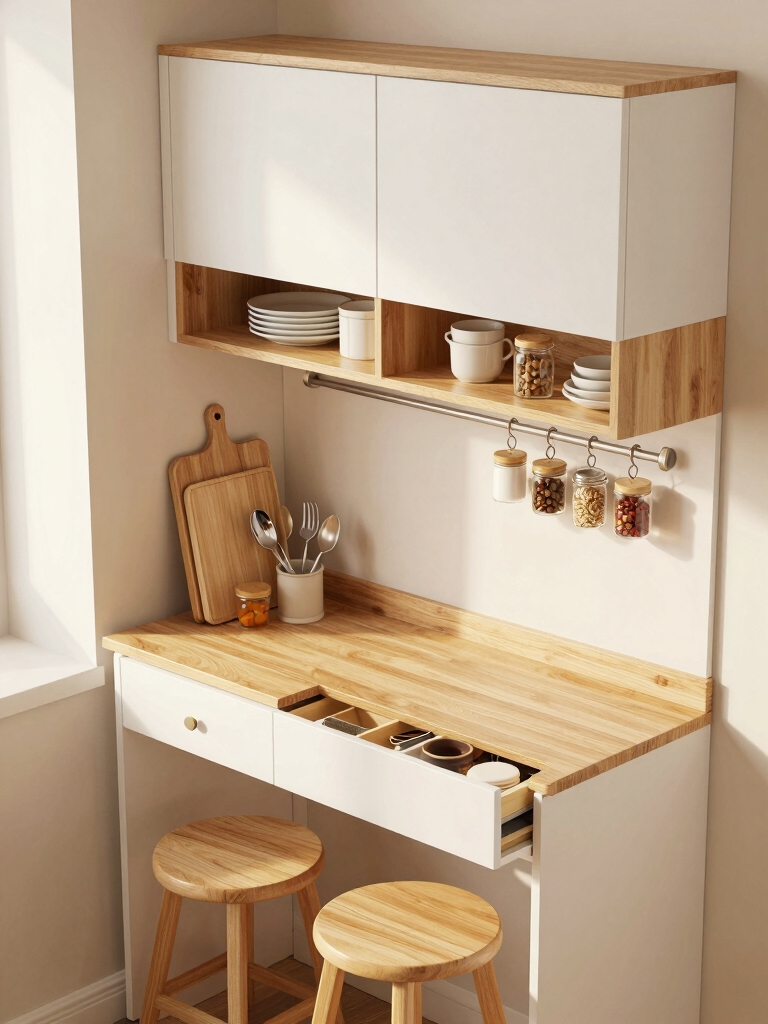
I swear by multi-functional furniture in a small kitchen because it gives you flexibility without clutter.
Think fold-away dining tables that tuck out of sight, benches with hidden storage for linens and recycling, and countertops that convert into extra prep space when you need it.
I’ll show simple options and tips so you can pick pieces that work hard and look good.
Smart kitchen islands can fit even the tiniest layouts when designed as compact space-saving islands that offer storage and seating without overwhelming the room.
Fold-Away Dining Solutions
When space gets tight, I pull out a fold-away table that doubles as a counter and workspace, then tuck it back when we’re done; it’s the kind of multi-functional furniture that keeps a small kitchen feeling open without sacrificing utility.
I choose slim, sturdy designs with quick-release hinges and easy-clean surfaces, so meals, prep, and casual work fit neatly into tiny rhythms without clutter.
Seating With Storage
Storage-seating combos are my go-to for keeping a small kitchen both tidy and inviting. I choose benches with lift-up lids and ottomans that hide cookware, so seating doubles as smart storage.
They free countertop and cabinet space, create a neat, cohesive look, and make cleanup effortless. Pick durable, easy-clean fabrics and modular pieces that tuck into corners for flexible, practical seating.
Convertible Prep Surfaces
By folding down a wall-mounted table or sliding out a hidden countertop, I get extra prep space exactly when I need it and tuck it away when I don’t.
I choose units with sturdy hinges, easy-clean surfaces, and storage beneath for knives or cutting boards.
They transform tight kitchens—doubling work area, reducing clutter, and keeping style intact without sacrificing functionality or flow.
Opt for Open Shelving Wisely
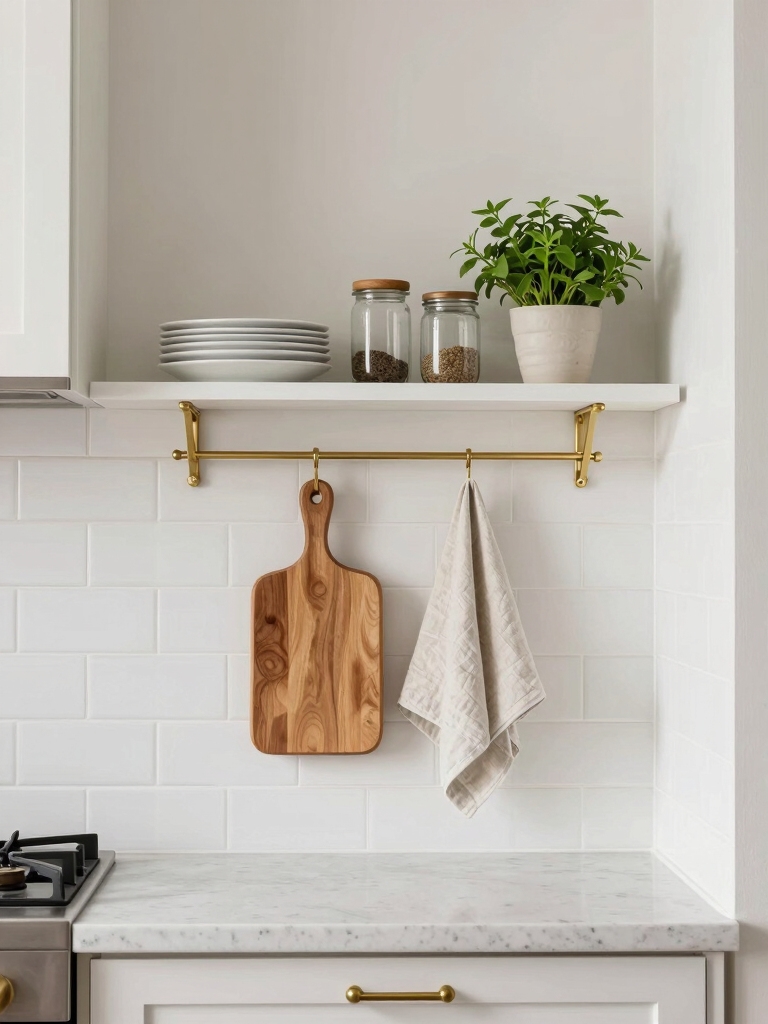
I like to keep open shelving simple and purposeful so it doesn’t turn my small kitchen into a visual mess.
I group everyday dishes, glassware, and a few decorative items for balance, keeping colors neutral and heights consistent.
I use baskets for loose bits, rotate seasonal pieces, and leave negative space so shelves feel airy, tidy, and truly functional without crowding the room.
Install Pull-Out Pantry Solutions
Pulling out a slim pantry drawer has become one of my favorite small-kitchen moves because it gives me full access without wasting any depth.
I fit canned goods, spices, and oils in labeled tiers, so nothing gets buried.
Installation was simple, and the glide system makes retrieval effortless.
It keeps counters clear, maximizes vertical space, and makes cooking smoother every day.
Create Zones With Lighting
Around task areas, I use layered lighting to define zones so each spot feels intentional and works better—under-cabinet strips for prep, a focused pendant over the small table, and soft toe-kick LEDs to guide late-night snacks. I layer, dim, and direct light to suit tasks and mood.
- Bright prep strip
- Focused pendant
- Accent shelf LED
- Warm toe-kick glow
Integrate Compact Seating
I like using fold-away tables and chairs to give my kitchen a dining spot that disappears when I need floor space.
A built-in bench with hidden storage lets me tuck away linens, trays, or clutter while adding cozy seating.
Together they keep the room functional and uncluttered without sacrificing style.
Fold-Away Table Seating
I’ve found fold-away table seating to be a game-changer in small kitchens — it tucks neatly out of sight when we don’t need it and springs into service for meals, homework, or extra prep space.
- Slim wall-mounted table folds down
- Hidden stools stow under counter
- Pivoting leaf for two or four
- Lightweight materials for easy handling
Built-In Bench Storage
Built-in bench storage blends seating and stowage into one sleek solution, and I love how it makes a small kitchen feel purposeful without crowding the space.
I tuck baskets and pantry overflow under hinged seats, add cushions for comfort, and use the bench as extra prep or seating.
It keeps clutter hidden, maximizes vertical space, and adds a cozy, tailored look that’s surprisingly practical.
Embrace Reflective Surfaces
Think of mirrors and glossy finishes as secret helpers that double visual space and bounce light into the darkest corners of your kitchen.
I use reflective backsplashes, high-gloss cabinets, mirrored panels, and glass shelves to magnify brightness and depth without crowding surfaces.
They’re low-effort upgrades that feel chic and practical.
- Sunlight amplified
- Depth illusion
- Shiny accents
- Open sightlines
Use Custom Cabinet Inserts
I love using custom cabinet inserts because they transform messy drawers into perfectly organized zones for utensils, spices, and gadgets.
I’ll show you how tailored dividers and adjustable trays make every inch of vertical space usable so plates, cutting boards, and pans sit neatly.
With a few smart inserts you’ll get faster access and a calmer, more efficient kitchen.
Maximize Drawer Organization
I’ve found that custom cabinet inserts instantly tidy up chaotic drawers, turning them into effortless workstations that save time and frustration.
I pick inserts that fit utensils, lids, spices, and gadgets so everything has a home. They streamline prep and cleanup, and they make small kitchens feel ordered and efficient.
- Slim utensil tray
- Lid organizer
- Spice drawer grid
- Gadget caddy
Tailor Vertical Storage
Moving my focus up from tidy drawers, I started treating vertical spaces like hidden drawers and it changed how my kitchen functions.
I’d custom cabinet inserts cut for baking sheets, cutting boards, and spice racks, plus narrow pull-out shelves for oils and trays.
Now everything is visible, easy to grab, and uses height I’d been wasting — neat, efficient, and surprisingly stylish.
Prioritize Countertop Decluttering
Clear off the countertops and you’ll instantly see how much room you really have. I keep only daily essentials out, store the rest, and choose slim, attractive containers so surfaces breathe.
Clear space speeds prep and feels calming.
- Single soap dispenser
- Compact knife block
- Fruit bowl with a tight footprint
- Small cutting board propped upright
Use Narrow, Deep Drawers
I love how narrow, deep drawers make a small kitchen feel organized without sacrificing storage—I’ve swapped bulky cabinets for slim drawers that pull out every inch of usable space.
I store cutting boards, baking sheets, spices in vertical dividers, and stack pots efficiently.
Soft-close slides keep things tidy, and clear labels help me grab what I need fast, keeping the space calm and efficient.
Fit Fold-Down and Slide-Away Elements
Narrow drawers keep things orderly, but when floor space is tight you’ll want features that tuck away completely—so I started fitting fold-down and slide-away elements to make the room breathe.
I chose compact solutions that disappear when not needed:
- Fold-down breakfast bar for two.
- Slide-away pantry shelves.
- Hidden appliance garage.
- Pull-out cutting board and prep station.
Apply Cohesive Color and Finish Choices
I usually start by choosing a limited palette so the space feels calm and intentional, then carry those colors through cabinets, countertops, and hardware to make even a tiny kitchen read as one cohesive room.
I pick finishes that hide wear, mix matte and subtle gloss for depth, and repeat metal tones.
Consistency simplifies visual clutter and makes the room appear larger and more refined.
Stage Micro-Hosting Strategies
I’ll focus on small, high-impact hosting moves that make guests feel cared for without turning your kitchen into a full event production.
I stage micro-hosting by simplifying service, using multiuse trays, and prepping snacks ahead so you stay present.
Here are quick visual cues I use:
- A single tray with drinks and napkins.
- Pre-portioned snacks in bowls.
- Foldable bar station.
- Mood lighting via clip lamps.