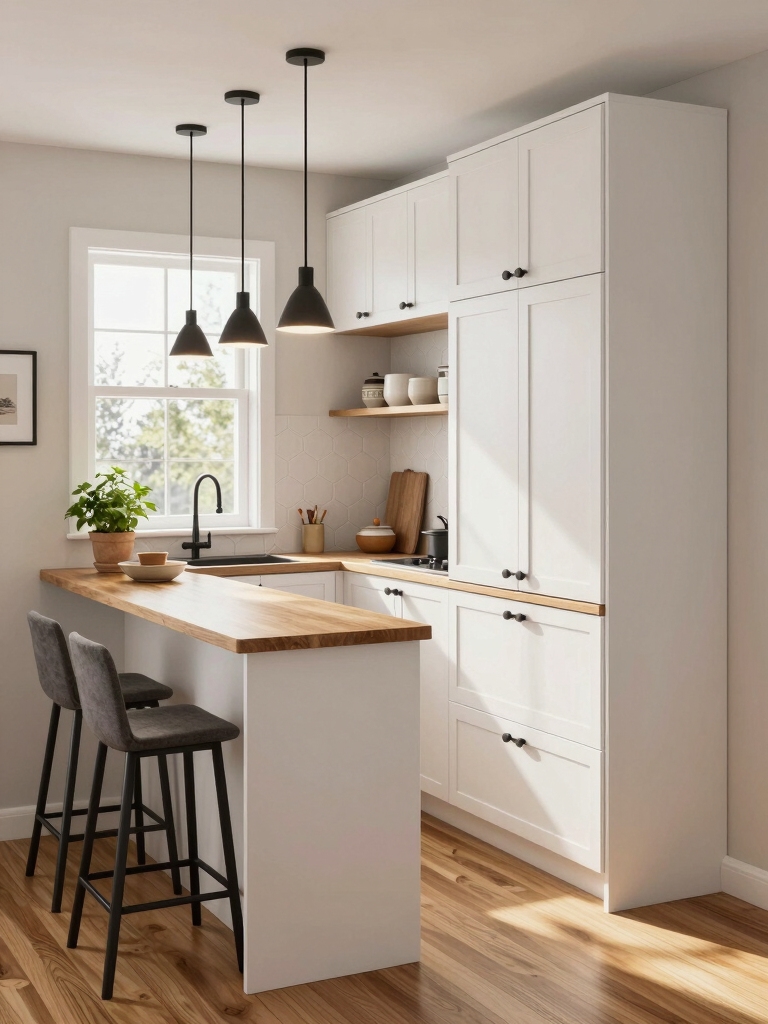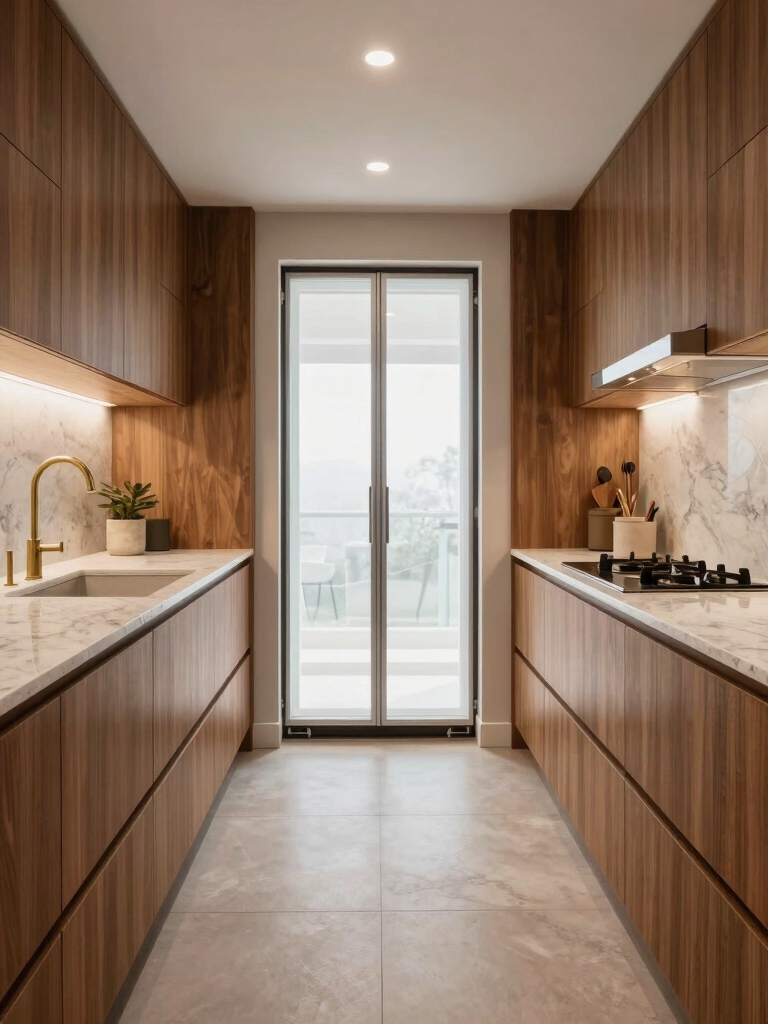

I’ll show you quick fixes to stop drawer chaos in your small kitchen: I start by clearing and measuring every drawer, keep only daily essentials, and toss or relocate expired or duplicate gadgets. I use slim dividers, layered trays for deep drawers, magnetic strips and wall hooks for lids and tools, and reserve open shelving or a pot rack for bulky items.
I label zones and do a weekly tidy so order sticks — keep going and I’ll share exact layouts and shopping tips.
Assessing Drawer Space and Priorities
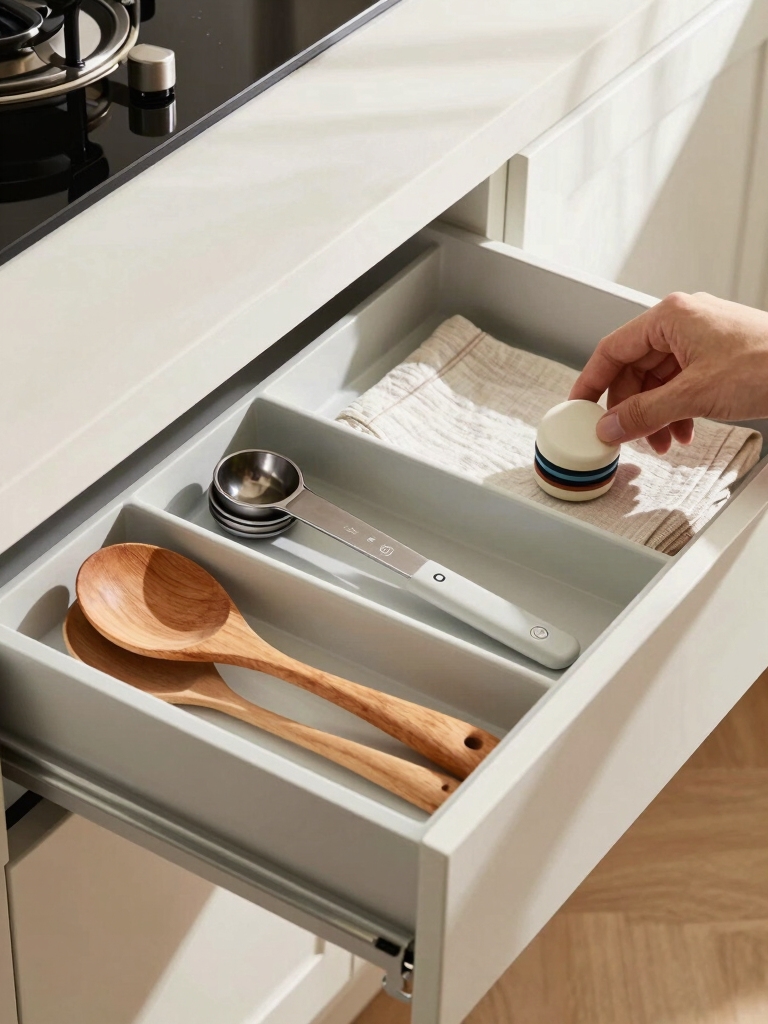
When I tackle a small kitchen, I start by opening every drawer and taking a quick inventory—what fits, what’s junk, and what I actually use daily.
I measure depths, note awkward shapes, and assign priorities: utensils, prep tools, and seldom-used extras.
Then I map zones, add simple dividers, and reserve a clear drawer for daily essentials so retrieval feels effortless and chic.
Clever storage solutions can hide clutter and make a tiny kitchen feel organized with smart compartmenting and purpose-built organizers.
Decluttering: What to Keep and What to Let Go
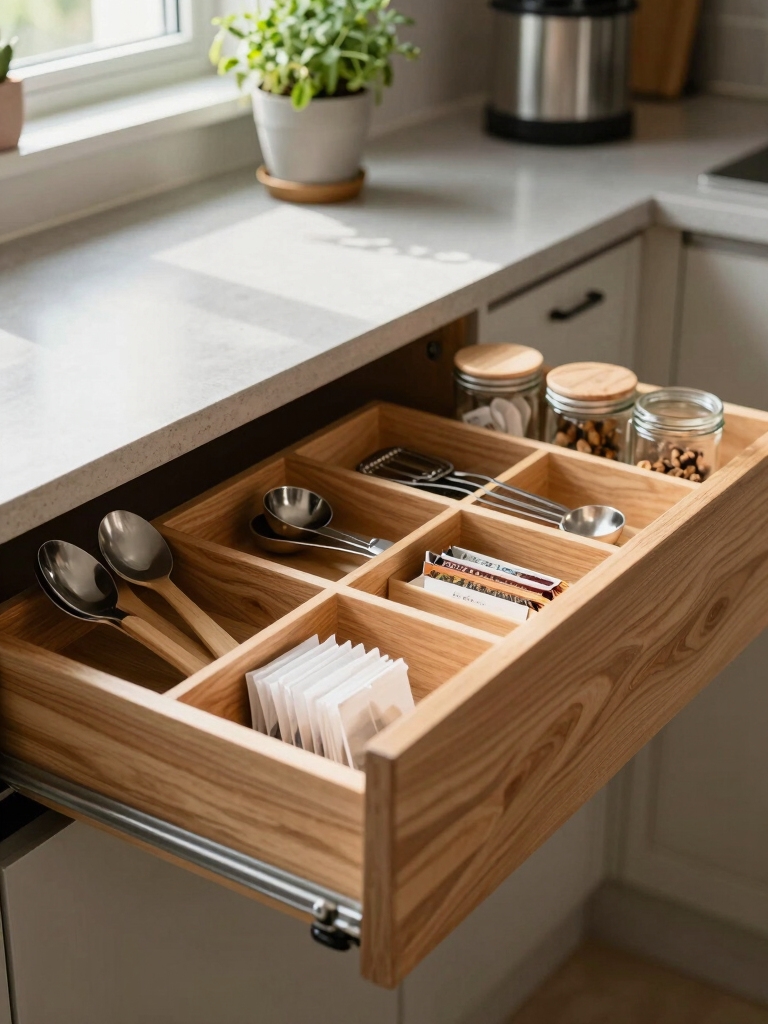
Now that the drawers are sorted and zones mapped, I move on to decluttering—deciding what earns a spot and what gets shown the door.
I keep essentials I use weekly, duplicates only if truly needed, and favorites that spark joy.
I let go of expired, broken, or seldom-used gadgets. Clear decisions create calm drawers and make daily cooking feel effortless and chic.
Small kitchen ideas that double your space visually often rely on smart storage and decluttering to maximize both form and function; see how space visually can be expanded with these strategies.
Measuring Drawers for Perfect-Fit Solutions
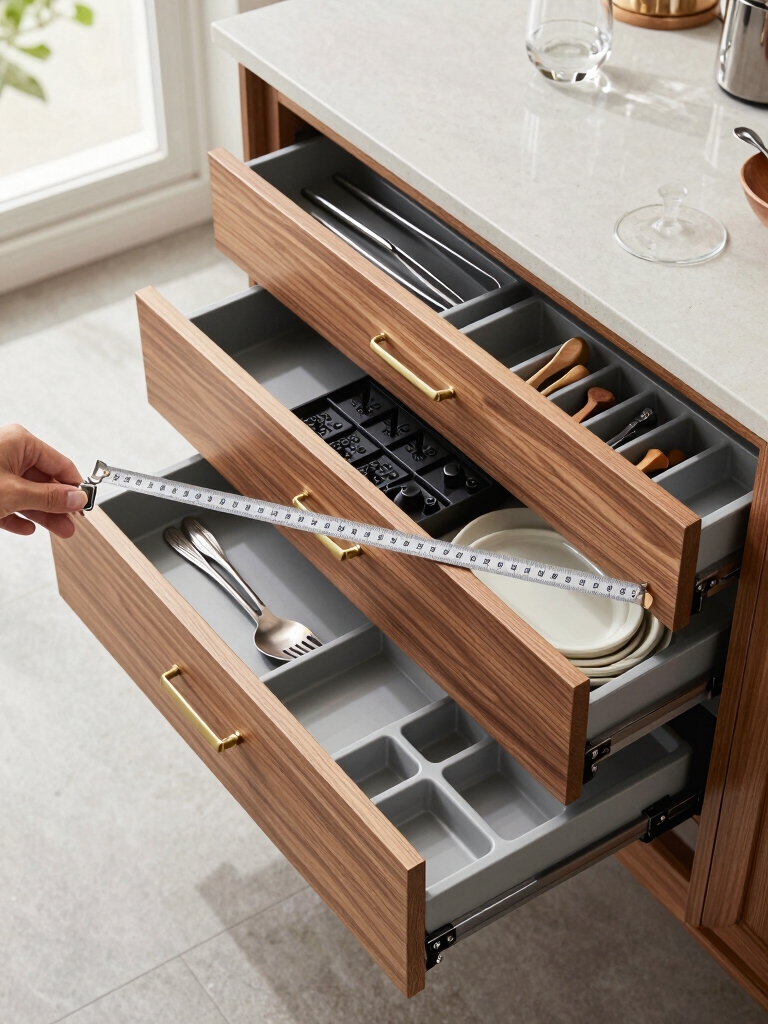
Because good organizers start with exact numbers, I measure each drawer before buying inserts or dividers. I note width, depth and usable height, checking for obstructions like slides or toe-kicks.
I sketch dimensions and photograph interiors, so I can compare online specs or test-fit store samples.
That small ritual saves returns, guarantees neat layouts and keeps my tiny kitchen feeling calm and intentional.
I also look for clever storage ideas specific to small cabinets to maximize every inch.
DIY Drawer Dividers and Inserts
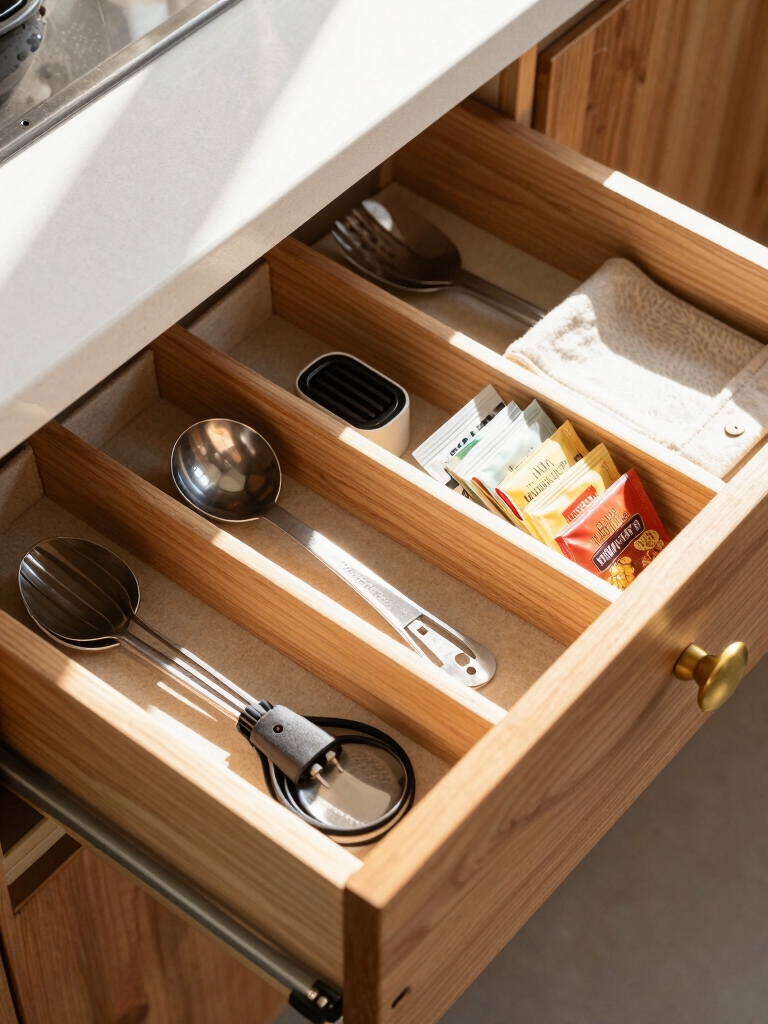
I like to roll up my sleeves and make drawer dividers that fit exactly, because nothing beats the satisfaction of a tidy space you built yourself.
I cut thin plywood or foam board, measure compartments, and add felt lining for noise-free snugness.
Simple labels, modular pieces, and a bit of paint keep utensils, gadgets, and spices organized and stylish without breaking the bank.
Shelving and storage should balance both aesthetics and practicality, so I often design dividers to complement compact kitchen shelving while maximizing every inch.
Buying Ready-Made Organizers That Actually Fit
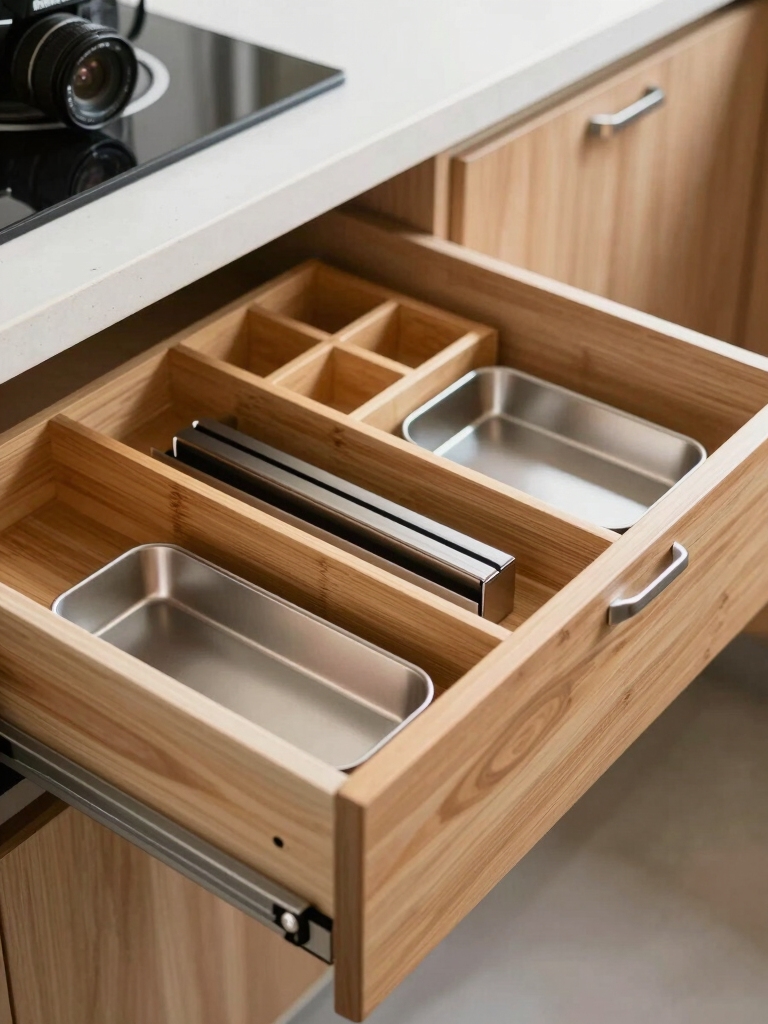
When I don’t have time to build dividers, I shop for ready-made organizers that actually fit—measuring drawers and cabinet depths first so I don’t bring home another unusable tray.
I pick modular pieces that snap together, non-slip bases, and neutral finishes that hide crumbs.
Smart compartments save time; returning utensils and lids to their proper spots keeps the drawer tidy and calm.
I also favor solutions designed for small spaces to maximize storage without crowding the apartment.
Vertical Storage Tricks for Utensils and Tools
Vertical solutions are a game-changer in tiny kitchens, and I lean on them whenever drawer space runs out.
I mount narrow utensil rails, magnetic strips for metal tools, and slender countertop crocks that keep spatulas upright without clutter.
Hanging baskets and pegboard hooks make reaching effortless, freeing drawers for linens and gadgets.
It’s tidy, stylish, and keeps essentials visible and within easy reach.
I also prioritize space-saving techniques like wall-mounted racks and multi-use organizers to maximize every inch.
Using Tiered and Stackable Inserts for Small Items
I use tiered and stackable inserts to squeeze every inch of vertical space from drawers and cabinets, turning clutter into visible, usable storage.
I group items by how often I use them—daily tools up front on the top tiers, occasional gadgets tucked lower—so reaching for what I need is instant.
This simple shift keeps small items organized and prevents me from shuffling through a mess every time I cook.
Many people share ideas for small kitchen storage that wow, including creative space-saving solutions that work well in tiny kitchens.
Maximize Vertical Space
A few clever tiered and stackable inserts can totally change how your small kitchen feels — I use them to turn wasted vertical gaps into smart, visible storage for spices, lids, and measuring cups.
They let me stack vertically without digging, keep like-items accessible, and create mini-shelves inside drawers or cabinets.
It’s an instant lift: organized, neat, and decidedly more efficient.
Group by Frequency
Often I reach for things I use every day without even thinking, so I organize inserts around frequency: daily essentials front and center in shallow, tiered trays; weekly or occasional tools tucked behind in stackable bins; and rare extras stored higher or deeper.
I love how this keeps small gadgets visible, doubles drawer capacity, and turns retrieval into a quick, stylish habit rather than a rummage.
Magnetic and Adhesive Solutions Inside Drawers
Let’s stick magnetic strips and adhesive hooks inside drawers and suddenly everything has a place — knives lie flat and safe, measuring spoons clip together, and lids stand upright without rattling.
I peel, press, and arrange items so they’re visible and reachable. Magnetic jars hold spices, tiny hooks secure scissors, and adhesive racks tame miscellany. It’s tidy, efficient, and surprisingly chic.
Rolling and Nesting Techniques for Lids and Pans
I usually tuck lids and pans together so they take up less space and stay accessible when I need them.
I roll flexible silicone lids and nest pans by size, largest-to-smallest, creating tidy stacks.
I use simple dividers or a lazy Susan to keep stacks from toppling.
It’s quick, efficient, and keeps my small kitchen feeling calm and ready for cooking.
Creating a Dedicated Zone for Baking Tools
After getting lids and pans neatly nested, I carve out a small corner just for baking tools so everything from measuring cups to rolling pins is within arm’s reach.
I use a shallow drawer with dividers for cutters and spoons, a vertical rack for sheet pans, and labeled canisters for spatulas and whisks.
It keeps baking flow smooth and joyful.
Organizing Cutlery Beyond the Standard Tray
When I rethought cutlery storage, I ditched the basic tray and looked for solutions that actually match how I cook and set the table.
I swapped uniform slots for modular inserts, vertical dividers, and a narrow utensil caddy for everyday tools.
Knife strips, roll-up pouches, and labeled compartments keep items visible, protected, and easy to grab—no rummaging, just calm, stylish order.
Storing Bulky Items Outside Drawers Efficiently
I’ve found that keeping bulky cookware out of drawers frees up so much usable space, and there are a few stylish ways to do it.
I hang pots and pans from a ceiling or wall rack, stack larger items neatly on open shelving, and use slim wall-mounted racks for lids and baking sheets.
Try mixing those approaches to match your kitchen’s flow and keep everything within easy reach.
Hang Pots and Pans
Mounting a simple pot rack transformed my cluttered lower cabinets into usable storage and gave the kitchen a cleaner, more intentional look.
I hung pans by size and frequency of use, keeping favorites within reach. Hooks, a magnetic rail for lids, and balanced spacing prevent scratching and visual chaos.
It’s practical, stylish, and frees drawers for utensils and linens.
Stack on Open Shelving
After reclaiming cabinet space with a pot rack, I started looking for smart ways to store bulky items that don’t fit neatly in drawers.
I stack dutch ovens, cutting boards, and mixing bowls on open shelves, grouping by size and color for a curated look.
I use shelf risers and non-slip liners so things stay tidy and easy to grab.
Use Wall-Mounted Racks
Bring bulky pans and oversized gadgets off your counters and onto the wall to free up real estate and keep things accessible.
I mount a sturdy rack above my stove for skillets, lids, and colanders, mixing hooks and shelves.
It looks intentional, saves drawer space, and keeps favorite tools within reach.
Choose durable hardware and arrange by size for a clean, efficient display.
Labeling and Maintenance Systems to Keep Order
I usually start by labeling the things I use most, because clear labels stop clutter from creeping back in.
I pair labels with a simple weekly tidy: quick inventory, return loose items, wipe surfaces.
I keep a slim maintenance kit—markers, labels, small bins—nearby.
That tiny ritual preserves order, saves time, and keeps my small kitchen feeling intentional and stylish.
Maximizing Deep Drawers With Pull-Out Trays
I love turning a deep, messy drawer into a sleek storage zone with layered tray inserts that let you separate utensils, lids, and gadgets.
Adding divided plate stacking on a pull-out tray keeps plates accessible and prevents chips while using every inch of depth.
Let me show you how a few simple trays can make daily cooking smoother and your countertops calmer.
Layered Tray Inserts
When I’m staring at a deep, cluttered drawer, I reach for layered tray inserts because they turn that wasted vertical space into neat, accessible tiers; each pull-out tray gives me a clear view of what’s inside without digging.
I slide trays to organize utensils, gadgets, and linens by frequency of use.
They keep items visible, prevent piles, and make retrieval effortless—stylish, simple, and precise.
Divided Plate Stacking
Pulling out a deep drawer filled with plates shouldn’t feel like a scavenger hunt, so I stack divided plates on pull-out trays to turn that vertical space into an orderly, accessible pantry.
I use slim dividers to keep plates upright, label sections for size and purpose, and slide trays smoothly for quick reach.
It’s tidy, safe, and gives small kitchens breathing room.
Small Appliance and Gadget Storage Strategies
A few smart tweaks make storing small appliances and gadgets feel effortless, and I’ll show you how to keep them accessible without cluttering your counters.
I tuck seldom-used items on high shelves, stash mixers in slide-out cabinets, and use labeled baskets for cords and attachments.
Vertical stands, appliance garages, and magnetic strips keep daily tools visible yet tidy—so your kitchen stays sleek and functional.