
I’ll show you paint tricks that make a small kitchen feel twice as big by maximizing light and simplifying sightlines. I use a monochromatic palette—pale base, mid-tone cabinets, slightly darker accents—to let light bounce and visually double the space.
I match trim to walls, choose cool tones to push surfaces back, and add vertical stripes or narrow glossy accent panels to raise height and brighten corners. Try these and you’ll see how much more spacious it can feel if you keep going.
Maximize Light With a Monochromatic Palette

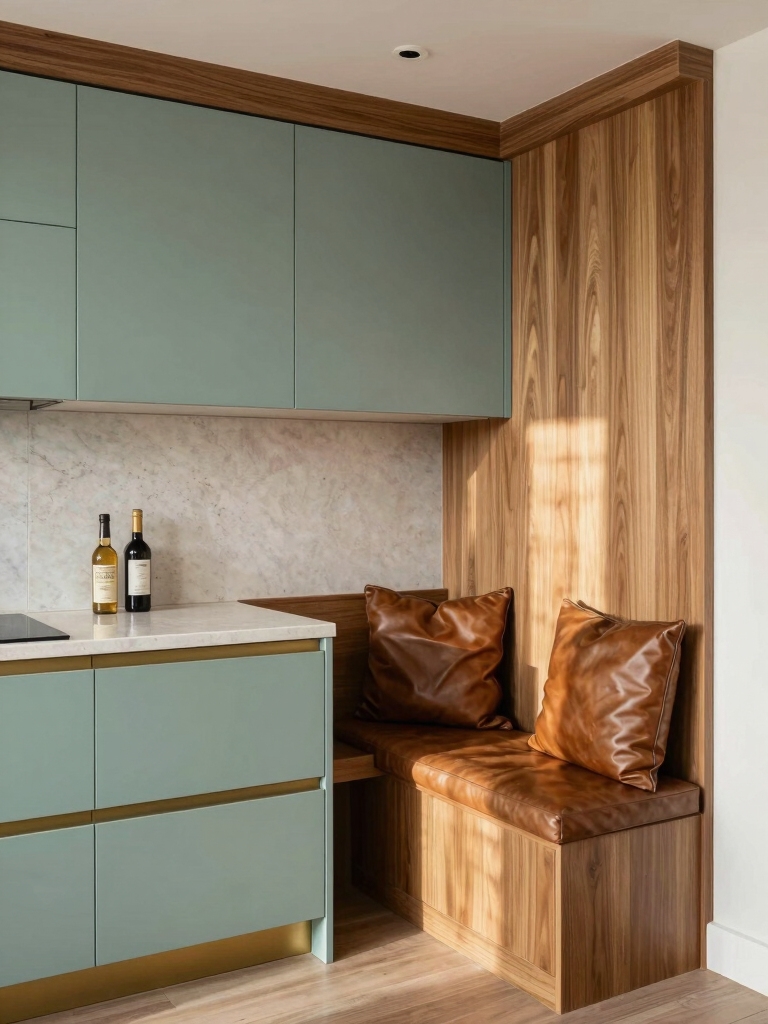
When I want a small kitchen to feel brighter and bigger, I reach for a monochromatic palette—different tones of the same color let light bounce without visual clutter.
I layer a pale base, mid-tone cabinetry, and slightly darker accents to add depth while keeping cohesion. Gloss finishes and consistent trim color reflect light, simplify sightlines, and make the room read as one calm, airy space.
Many of these tricks are classic small kitchen ideas that visually double the perceived square footage.
Use Cool Tones to Push Walls Back

How can cool hues make a tiny kitchen feel more spacious? I recommend pale blues, soft greens, or muted grays to visually recede walls, creating depth without drama.
I paint ceilings a shade lighter to lift the room and choose reflective semi-gloss for cabinets to bounce light.
Keep contrast low so surfaces blend, and you’ll get a calmer, airier feel that reads larger.
Natural light amplification through window placement and light-reflecting finishes can further enhance this effect, especially when combined with small kitchen window ideas.
Paint Trim the Same Color as Walls

I like painting the trim the same color as the walls because it creates a seamless flow that makes the room feel larger.
When trim and walls blend, your eye keeps moving upward and the ceiling feels higher. That unified color continuity keeps the kitchen feeling calm and uncluttered.
Timeless small white kitchens often use this trick to enhance brightness and visual continuity throughout the space.
Seamless Wall-Trim Flow
Because small kitchens feel larger when lines disappear, I like painting trim the same color as the walls to create a seamless, airy look.
It simplifies sightlines, minimizes visual clutter, and lets cabinetry and countertops stand out.
I choose washable, durable paint for high-traffic areas and coordinate finishes—matte for walls, satin for trim—so the space reads cohesive without obvious borders.
This approach is one of several Small Kitchen Color Ideas that help walls work harder to maximize perceived space.
Visual Height Extension
Painting trim the same color as the walls stretches the eye upward, so a small kitchen instantly feels taller and more open.
I recommend picking a slightly glossier trim finish to reflect light without breaking the vertical line. Keep door and window frames consistent, and use crown moldings sparingly.
This simple trick provides visible height and a cleaner, more spacious look. A strategic lighting plan can further reduce shadows and enhance that expanded feel by illuminating vertical surfaces and eliminating dark corners, especially with layered lighting.
Unified Color Continuity
Match your trim to the walls and you’ll create a seamless, cohesive look that makes a small kitchen feel calmer and more intentional.
I use this trick to blur edges, reduce visual clutter, and let cabinetry or hardware stand out.
Choose a durable, washable finish for trim; in low light, slightly warmer or cooler tones prevent a flat appearance while keeping the room unified.
Smart kitchen layouts can enhance this effect by optimizing sightlines and flow, reinforcing compact kitchen layouts as an important design strategy.
Create Height With Ceiling-To-Floor Vertical Stripes

If I want a small kitchen to feel taller, I turn to ceiling-to-floor vertical stripes — they draw the eye upward and give an instant sense of height without changing the layout.
I pick narrow, subtle contrasts or tonal stripes on a single wall, paint them crisply, and coordinate with simple cabinetry.
The result feels modern, airy, and thoughtfully expanded without clutter.
Designers also recommend several clever layout tricks like open shelving and multipurpose islands to maximize space and enhance flow.
Brighten Dark Corners With Accent Panels

I like to use narrow accent panels to lift dark corners, placing brighter hues where they’ll catch the eye and bounce light into the space.
Adding reflective surfaces—glossy paint, mirrored strips, or metallic trim—amplifies that effect, and I often pair them with slim vertical lighting to make the panels read like purposeful architecture.
With smart color placement and a bit of lighting, those shadowy nooks feel open and intentional instead of cramped.
Strategic Color Placement
By angling a bold accent panel into a shadowed corner, I can instantly lift the whole room without repainting every wall.
I place color where light’s weak—behind open shelving, inside a recessed niche, or along a short wall—to redirect the eye and create perceived depth.
I balance bold hues with neutral surroundings so the pop feels intentional, not overwhelming.
Reflective Surface Accents
Reach for glossy panels, mirrored tiles, or metallic backsplashes to push light into the darkest nooks of a small kitchen.
I use slim reflective accents to amplify natural and artificial light, making corners feel open without repainting.
They’re low-effort, high-impact touches that complement paint choices and hide imperfections.
- Bounce light into tight spaces
- Create perceived depth
- Highlight focal areas
- Mask wear and stains
- Coordinate with finishes
Vertical Panel Lighting
Vertical panel lighting is one of my go-to tricks for brightening tight, shadowy corners without repainting the whole room.
I install slim LED panels vertically along cabinets or between shelves to lift ceilings visually and eliminate dark zones. They’re energy-efficient, sleek, and easy to dim.
You’ll get instant depth and a contemporary feel without major renovation, perfect for small kitchens.
Reflective Sheens to Amplify Light
A few glossy finishes can make a small kitchen feel much brighter, so I usually recommend choosing higher-sheen paints on walls and trim where practical.
I pair sheen strategically to bounce light without highlighting flaws. Consider these practical tips:
- Use satin on walls for subtle reflectivity
- Choose semi-gloss for trim and cabinets
- Keep ceilings flatter
- Test swatches in daylight
- Clean surfaces regularly to maintain shine
Two-Tone Walls to Define Zones Without Clutter
When I want to define areas in a small kitchen without adding clutter, I use two-tone walls to create visual boundaries that feel intentional rather than busy.
I pair a durable lower color with a lighter upper shade to anchor counters and brighten sightlines.
It separates prep, dining, and storage visually, keeps walls easy to maintain, and feels crisp without extra furniture or trim.
Horizontal Banding to Widen Narrow Kitchens
I like using a horizontal band at waist height to trick the eye into seeing a wider kitchen.
Paint a contrasting stripe around the room and choose lighter tones above to lift the space while a bit darker color below grounds it. It’s an easy, low-cost change that makes narrow layouts feel more balanced.
Paint Stripes at Waistline
One smart trick I love for making a narrow kitchen feel wider is painting a horizontal band at about waist height; it visually expands the eye across the room and keeps things simple.
I use a crisp mid-tone stripe to ground counters and guide sightlines.
- Choose a durable, washable finish
- Keep stripe height consistent
- Align with countertops or backsplash
- Use painter’s tape for clean edges
- Coordinate with hardware and textiles
Contrast Above and Below
If you want a quick, high-impact way to make a narrow kitchen feel roomier, try contrasting the wall above and below a horizontal band—paint the lower section a richer, darker tone and the upper a lighter one to push sightlines outward and upward.
I’ve used this trick: choose durable darker paint below for scuffs, glossy trim on the band, and airy pale tones above to widen and brighten.
Use a Lighter Ceiling to Elevate Perception
When I paint the ceiling a lighter shade than the walls, the whole kitchen instantly feels taller and airier, like I’ve opened up a little extra vertical space without moving a single cabinet.
I recommend a soft white or pale tint to bounce light and reduce visual weight.
- Enhances natural light
- Creates depth without remodeling
- Masks minor ceiling imperfections
- Keeps focus on cabinetry
- Works with recessed lighting
Paint Interiors of Shelves and Cabinets Light
Carrying that idea of lightness down into open shelving and cabinet interiors makes a big visual difference in a small kitchen.
I paint inside shelves and cabinets a soft, reflective white or pale gray so dishes and items pop and shadows fade. It brightens corners, creates perceived depth, and lets your countertops and decor read larger without changing layout—simple, affordable, effective.
Strategic Contrasting Backsplash for Depth
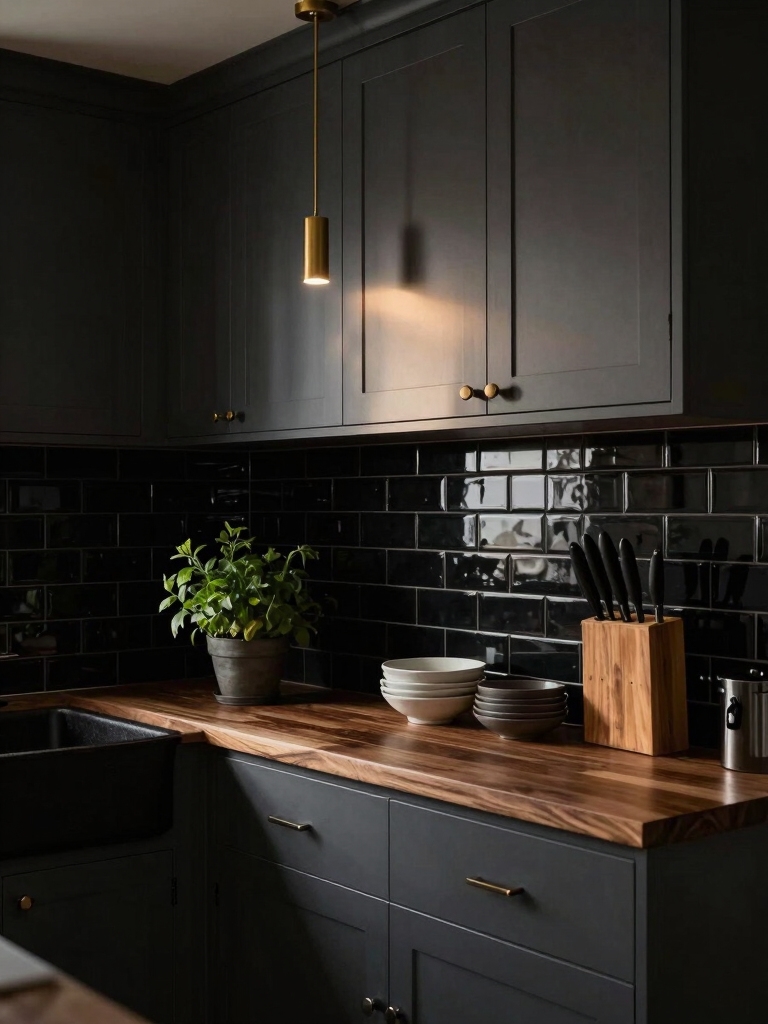
Because contrast gives your eye something to anchor on, I use a darker or bolder backsplash to make a small kitchen feel deeper and more intentional.
It frames counters, adds visual depth, and reads like a purposeful design choice rather than clutter.
- Anchors the space
- Highlights work zones
- Adds perceived depth
- Balances light cabinets
- Creates focal interest
Seamless Cabinet and Wall Color for Continuity
I like matching cabinet and wall colors in a small kitchen because it creates a seamless, airy feel that makes the space look bigger.
I’ll often use tonal layering—slightly different shades or finishes—to add subtle interest without breaking the flow. For a crisp finish, I keep trim just a notch lighter so edges read clean and the room still feels cohesive.
Match Cabinet and Wall
By painting cabinets the same color as the walls, I create a seamless flow that makes a small kitchen feel larger and more cohesive.
I pick a durable finish, simplify hardware, and let light do the work. Matching cabinets to walls erases busy edges and calms the room.
- Visual continuity expands space
- Easier color decisions
- Highlights fixtures instead of frames
- Cleaner silhouette
- Low-contrast, high-impact design
Use Tonal Layering
When I layer tones—slightly lighter trim, mid-tone cabinets, and a deeper wall hue—the kitchen reads as a cohesive whole instead of a patchwork of surfaces.
I pick three related shades, keeping undertones consistent, so light bounces evenly and sightlines flow.
This simple rule hides visual clutter, makes the space feel larger, and lets hardware or accents pop without competing with chaotic color changes.
Keep Trim Slightly Lighter
Keeping trim a shade lighter than cabinets and walls ties everything together while subtly lifting the room. I use this trick to create flow and visual height without bold contrasts.
It keeps edges crisp, reflects extra light, and feels intentional in compact kitchens.
- Creates seamless shifts
- Adds perceived height
- Reflects light subtly
- Highlights architectural lines
- Feels cohesive and calm
Use Subtle Mural or Ombre for Visual Flow
Although I often recommend simple color shifts for small kitchens, a subtle mural or ombre can give the room a sense of movement and make it feel larger without overwhelming the space.
I pick soft gradients or a low-contrast botanical sketch on a single wall to draw the eye horizontally or upward. It creates visual flow, masks imperfections, and feels intentional without crowding.
Trim and Door Color to Recede or Advance Space
A subtle mural or omre can guide the eye, but trim and door colors are what actually decide whether walls feel to push back or come forward.
I choose trims to either vanish or frame—darker trims advance, lighter trims recede.
Pick contrast based on depth you want, consider reflectivity, and keep hardware consistent.
- Use low-contrast for spaciousness
- Dark trim for coziness
- Cool tones recede
- Warm tones advance
- Match door finish to hardware
Matte Walls With Gloss Accents to Reduce Visual Noise
When I want to calm a busy small kitchen, I paint the walls matte and save glossy finishes for a few deliberate accents; the contrast keeps attention focused and reduces visual noise without stripping away personality.
I choose matte for expanses, then add gloss on cabinetry edges, a backsplash stripe, or hardware to catch light. The result feels calm, layered, and intentional—more spacious, not sterile.