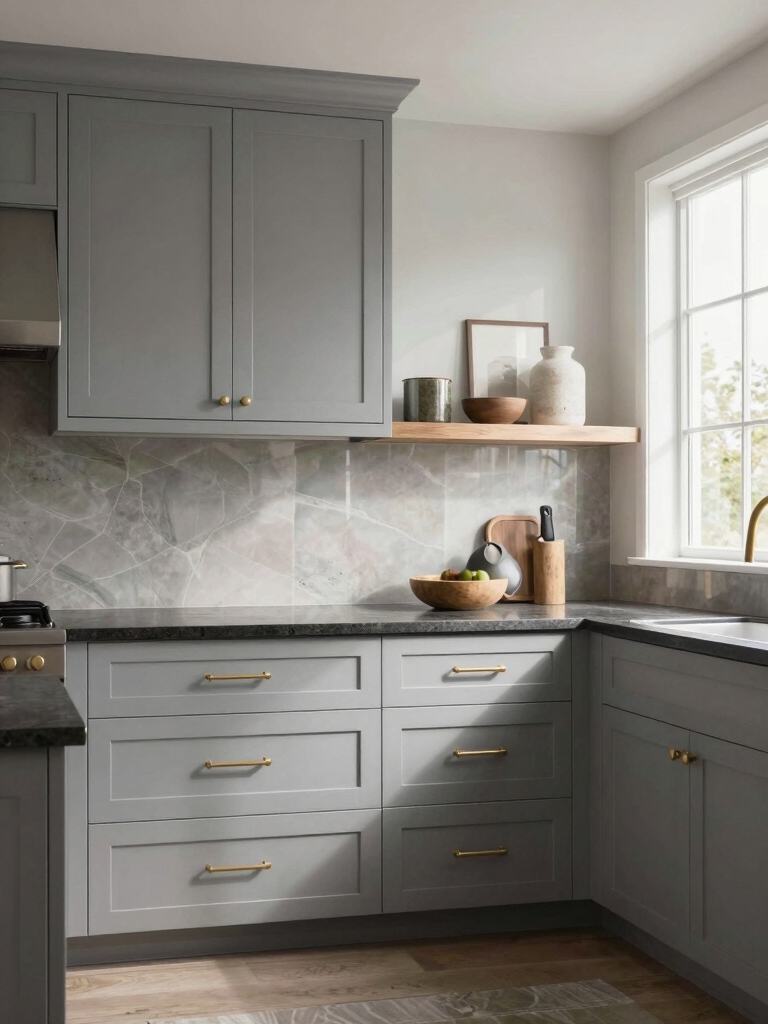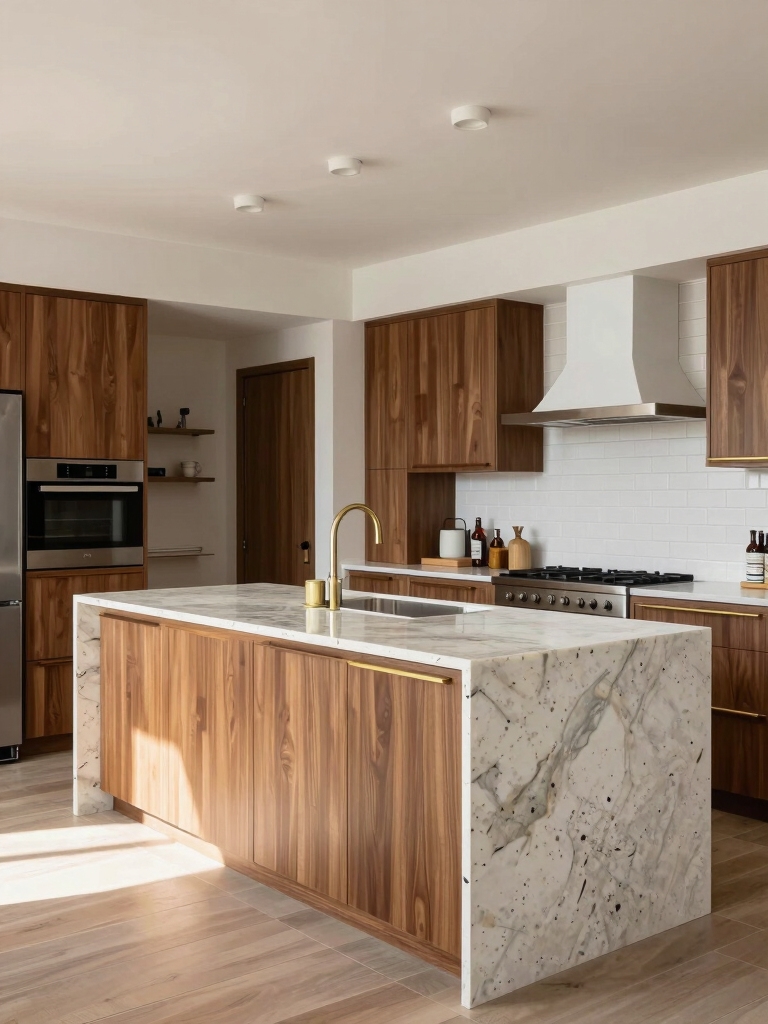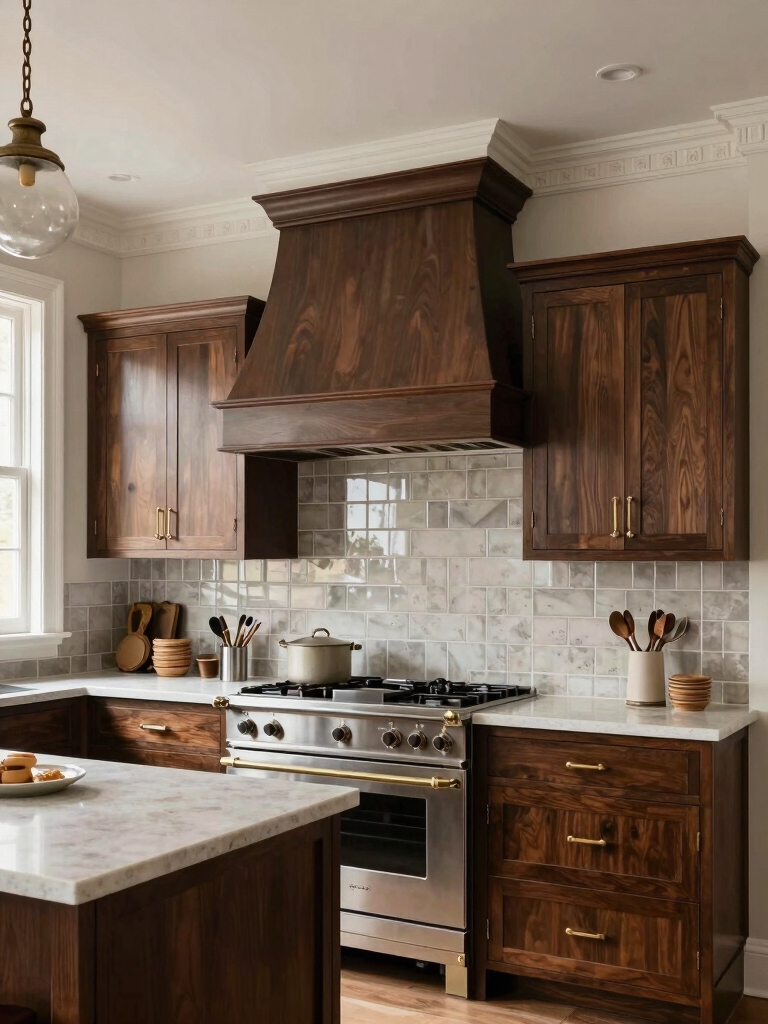
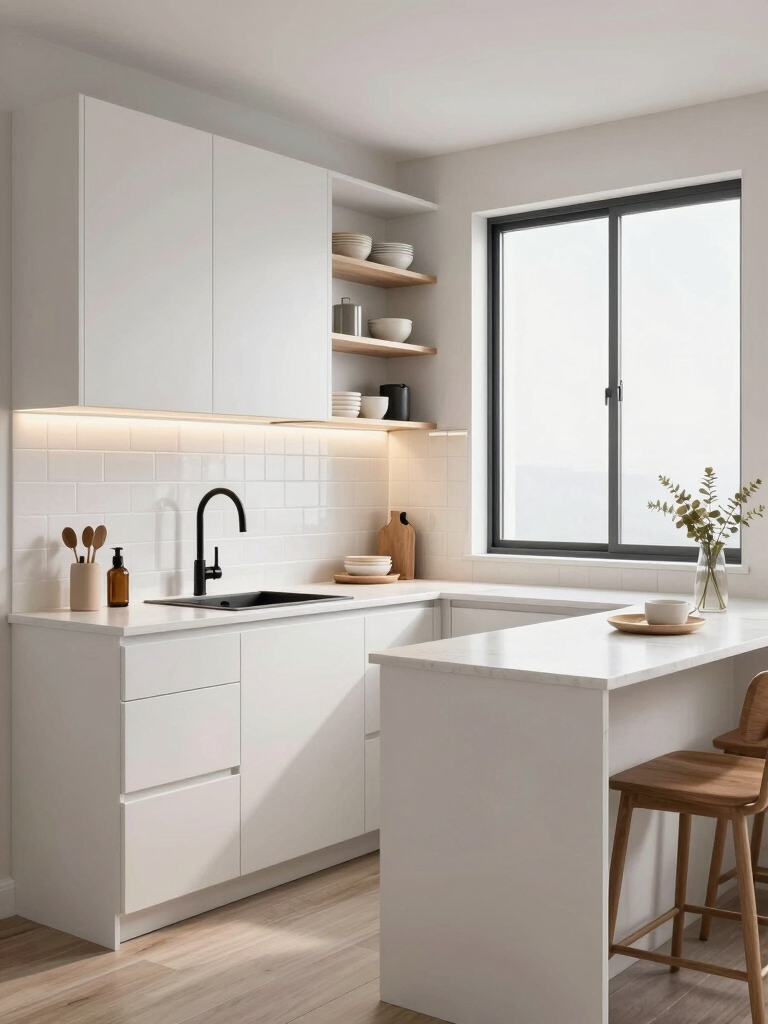
I’ll show you compact, budget-friendly tweaks that feel like a full remodel: remove a short wall or swap upper cabinets for thin open shelves to widen sightlines; nudge the fridge a few inches to add a landing, tighten the appliance triangle for faster prep, and convert corners to pull-out shelving or a shallow pantry to free counters.
Raise cabinets to the ceiling, reorient the cooktop for a continuous prep surface, and pick light, reflective finishes—keep going and I’ll share how to make each change happen.
Open Sightlines by Removing a Short Wall or Partial Partition
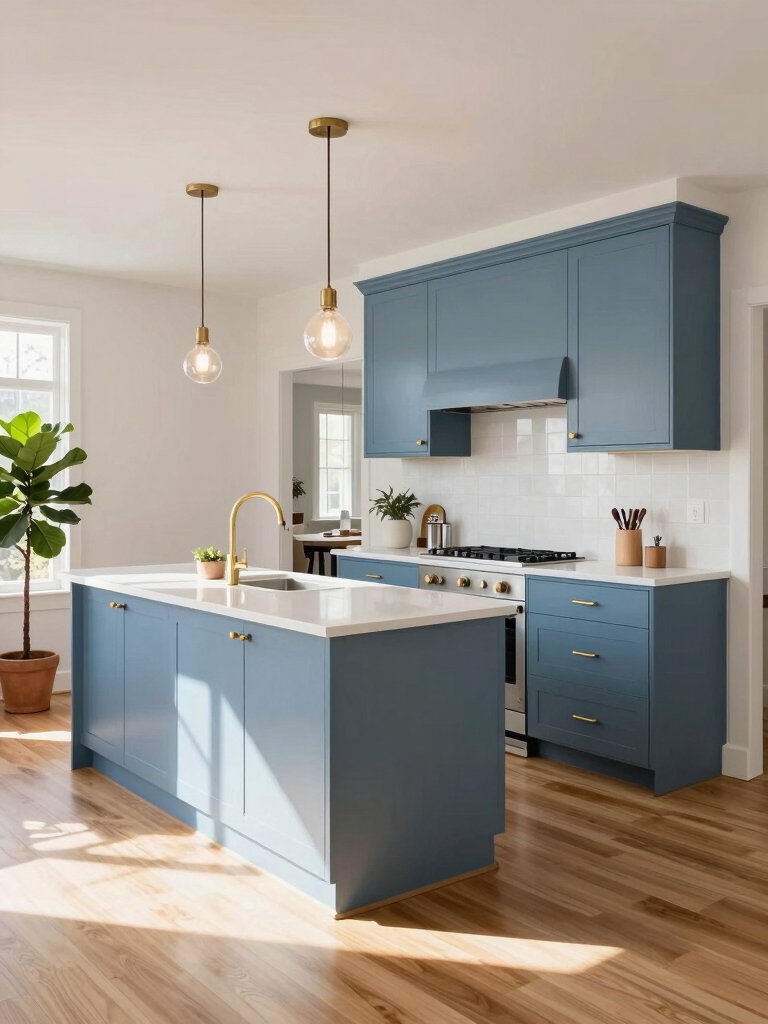
I often suggest opening up sightlines by taking down a short wall or partial partition because it instantly makes a small kitchen feel larger and more connected to the rest of the home.
I’ll help you decide what to remove, preserve structural and storage needs, and choose matching finishes so the space reads cohesive, airy, and welcoming while keeping cooking and cleanup efficient.
Small kitchen extensions can add real value, especially when they create usable space without major structural work—consider targeted small kitchen extension strategies to boost resale appeal.
Rework the Appliance Triangle for Better Workflow

I’d start by tightening the appliance triangle so the stove, sink, and fridge sit closer together for quicker, smoother movement.
Then I’d balance the work zones so prepping, cooking, and cleanup each have clear counter space nearby.
Finally, I’d improve clearances—wider aisles and unobstructed door swings—to keep the flow effortless and safe.
Designers often recommend small layout tricks like optimizing the appliance triangle to make kitchens feel larger and function better.
Move Triangle Closer
Let’s shift the appliance triangle a bit closer so you can move between stove, sink, and fridge with less fuss; I’ll show you how small adjustments make cooking flow more naturally.
I suggest trimming awkward gaps, nudging the fridge or sink a few inches, and aligning work surfaces so your steps shorten.
These modest moves save time, reduce spills, and make meal prep oddly joyful. Architects also often use work triangle principles to guide those adjustments for efficient layouts.
Balance Work Zones
Shifting the triangle closer makes a big difference, but to really streamline your kitchen I rework the whole set of zones so cooking, prep, and cleanup feel natural and balanced.
I group tools, storage, and surfaces by task, place frequently used items within reach, and create short, direct paths between stove, sink, and fridge.
The result: efficient flow and calmer cooking. Choosing the right island size can make or break that balance and should match your room’s proportions and traffic patterns — consider standard room sizes when planning.
Improve Clearances
Because tight clearances turn even simple tasks into awkward maneuvers, I rework the appliance triangle to give each station the breathing room it needs while keeping paths direct.
I shift appliances, adjust countertop lengths, and stagger doors so cooks move fluidly between sink, stove, and fridge.
The result feels intentional: efficient, comfortable, and quietly stylish without sacrificing storage or sightlines.
Kitchen island layouts often provide a practical way to improve flow and work zones, especially in smaller spaces where island templates help organize traffic and storage.
Slide the Refrigerator to Create Counter Landing Space

If you slide your refrigerator over by a few inches, you’ll immediately free up useful counter landing space that makes daily tasks feel smoother and less cramped.
I moved mine and suddenly had a spot to set groceries, staging bowls, or a coffee mug. It’s a small shift with big daily payoff — practical, chic, and surprisingly transformative for flow and function.
Modern layouts often use islands to maximize every inch and improve traffic flow.
Convert Unused Corner Into Pull-Out Shelving
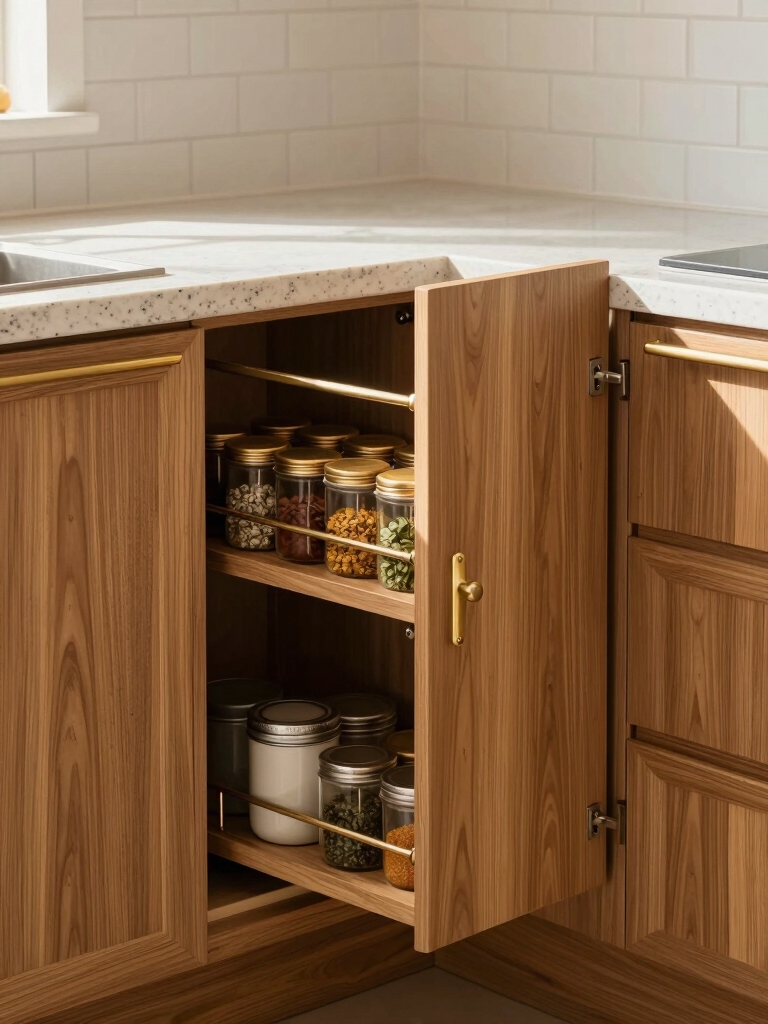
I like turning that awkward unused corner into a smart pull-out shelving unit to maximize storage without changing the whole layout.
I’ll walk you through simple installation steps and the few tools you’ll need so it feels totally doable.
Then we’ll cover access and organizing tricks—like tiered shelves and labeled baskets—to keep everything reachable and tidy.
Smart kitchen updates like adding functional storage can offer big benefits without major demolition or a full redesign.
Maximize Corner Storage
One of my favorite small changes is converting an awkward corner into a pull-out shelving unit that makes every inch useful. I love how it hides clutter and feels elegant.
Consider these benefits:
- Improved access to pots and pans.
- Better visibility of rarely used items.
- Customized shelving heights.
- Smooth glide hardware for effortless reach — small tweak, big impact.
Easy Installation Steps
Usually I start these projects by measuring the corner and sketching a simple plan so I know exactly what pull-out unit will fit and how it will operate; you’ll want to grab a tape measure, pencil, and a notepad and take clear inside-cabinet measurements (height, depth, width) plus the door swing and adjacent obstructions.
I cut a base, install smooth slides, secure the frame, test travel, and adjust for a snug, seamless fit.
Access and Organization Strategies
I often start by imagining how much more usable the corner will be once I can actually reach everything without fishing around, so I plan the pull-out to prioritize frequently used items and clear sight lines.
I suggest:
- Measure depth and swing.
- Choose full-extension slides.
- Use adjustable shelves.
- Add soft-close and non-slip liners.
The result feels tidy, accessible, and chic.
Add a Shallow Pantry Cabinet for Vertical Storage
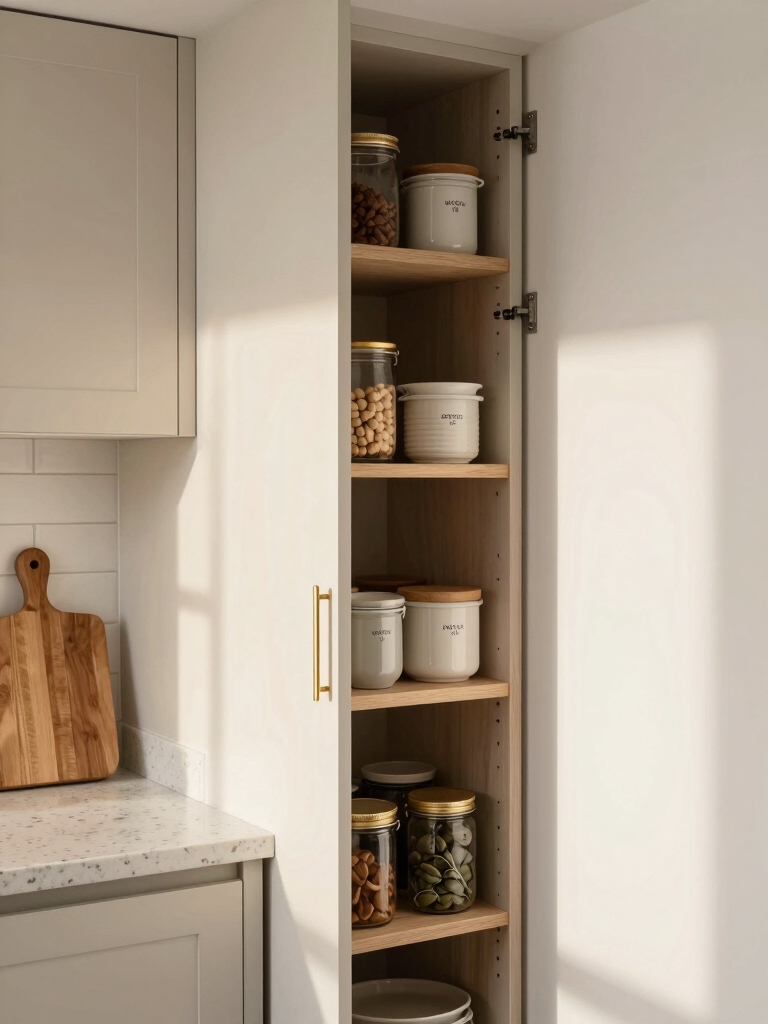
When I wanted more storage without shrinking my floor space, I added a shallow pantry cabinet and instantly gained tidy vertical storage for spices, oils, and baking sheets.
I tucked it beside the fridge, chose narrow adjustable shelves, and used clear containers and labeled cans so everything’s visible.
It keeps countertops clear, makes cooking smoother, and feels surprisingly elegant in a small kitchen.
Replace Bulky Upper Cabinets With Open Shelving
I swapped my heavy upper cabinets for open shelving and instantly felt the room breathe—the visual weight disappeared and the space looks larger.
I love that everyday dishes and pantry staples are within easy reach, which makes cooking and cleanup faster.
Plus, styling a few favorite pieces adds warmth and personality without cluttering the kitchen.
Visual Weight Reduction
Often I swap out bulky upper cabinets for open shelving to instantly lighten a small kitchen’s look and feel.
I keep the styling minimal and curated so the space breathes. Consider these refinements:
- Choose thin-profile shelves.
- Match shelf color to wall.
- Limit displayed items.
- Use balanced spacing.
The result feels airy, modern, and intentionally calm.
Easy Access Storage
Swap out those bulky uppers and you’ll find your kitchen feels more open and welcoming right away.
I replaced closed cabinets with streamlined open shelving to keep everyday dishes and cookware reachable, trimming visual weight and saving steps.
It makes prep smoother, encourages tidy habits, and lets me personalize storage with baskets and hooks that stay practical without turning into clutter.
Styling and Display
Removing bulky uppers not only frees up space but gives you a clean canvas for styling and display, and I’ve found that thoughtful open shelving turns everyday items into décor.
I arrange pieces to feel curated, practical, and airy.
- Prioritize frequently used items
- Mix textures and heights
- Keep a consistent color story
- Limit clutter for calm visuals
Install a Narrow Pull-Out Spice and Tray Cabinet
If you’re tight on space but want smarter storage, I recommend installing a narrow pull-out spice and tray cabinet beside your range or fridge.
I love how it corals spices, baking sheets and cutting boards without stealing floor space.
It pulls out smoothly, keeps everything visible, and adds a clean, custom look.
Small investment, huge daily convenience—simple, stylish, and totally practical.
Swap a Single Sink for a Farmhouse or Shallow Basin
For a small kitchen, I love switching a single under-mount sink for a farmhouse or shallow basin because it instantly boosts usability and style without demanding major layout changes.
It feels inviting, cleans easier, and adds character. Consider practical benefits:
- Easier washing of pans
- More visible workspace
- Cleaner aesthetic line
- Quick installation, big impact
Extend Countertop Over a Washer or Under-Stair Area
I often extend a continuous countertop over a stacked washer or an under-stair nook to gain useful prep space without changing the footprint.
It hides laundry essentials behind a sleek surface while keeping the work area feeling clean and intentional.
Let me show you simple ways to make that overlap both practical and stylish.
Maximize Prep Space
A smart way I’ve stretched countertop real estate in tight kitchens is by extending the work surface over a washer or into the unused under-stair cavity, turning neglected zones into practical prep space without a full remodel.
I’ve found simple finishes and clever layout choices make a big difference:
- Seamless edge for easy cleanup
- Pull-out chopping board
- Task lighting
- Accessible storage drawers
Conceal Laundry Essentials
Tuck in the washer and build the countertop right over it, and you’ll instantly hide laundry clutter while gaining useful prep space.
I love extending counters into under-stair niches or over machines: a seamless surface, hidden hampers, and a spot for folding or coffee prep.
Choose moisture-resistant materials, ventilated fronts, and a consistent finish so the laundry feels integrated, not an afterthought.
Introduce Under-Cabinet Lighting and Task Layers
When I plan lighting for a small kitchen, I focus on under-cabinet fixtures and clear task layers that make cooking and cleanup effortless.
I add discreet LEDs for prep, dimmable ambient light, and focused spots for the sink. Consider:
- LED tape for counters
- Warm color temp for coziness
- Integrated switches
- Zoned dimming for flexibility
Choose Pocket or Barn Doors to Save Swing Room
I lean toward pocket or barn doors in small kitchens because they reclaim the swing space that clutters circulation and limits layout choices.
I’ve swapped out swinging doors to free sightlines, add storage opportunities, and create seamless flow between rooms. Pocket doors disappear; barn doors slide with style.
Both options give you more usable square footage and cleaner, calmer movement without sacrificing charm.
Raise Upper Cabinets to the Ceiling to Eliminate Dust Ledges
After freeing up floor and sightlines with pocket or barn doors, I like to complete the clean, modern look by raising upper cabinets to the ceiling so dust ledges disappear.
It simplifies cleaning and makes ceilings feel taller.
Consider practical choices:
- Full-height cabinetry
- Integrated crown molding
- Hidden lighting
- Accessible upper storage
The result feels tidy, intentional, and effortless.
Reorient Cooktop to a Continuous Prep Counter
By sliding the cooktop along the counter and keeping that surface uninterrupted, I create a continuous prep zone that feels calm and efficient.
I position burners to one side, so chopping, mixing and plating flow without obstacle. It simplifies cleanup, highlights countertop material, and lets me work with rhythm.
Guests notice the uncluttered surface—it’s practical and quietly elegant.
Use Lighter Finishes and Reflective Surfaces to Enlarge Feeling
Sliding the cooktop to open up prep space also showed me how much light and reflection matter in a small kitchen.
I chose pale cabinetry, glossy subway tile, slimline pendant glass, and a mirrored backsplash to extend sightlines.
Practical tips:
- Matte counters, glossy walls.
- Reflective splashbacks.
- Under-cabinet lighting.
- Light wood tones to warm the palette.
Create a Multifunctional Island With Storage and Seating
I often find that adding a compact island transforms a small kitchen from merely functional into genuinely social.
I design islands with deep drawers, open shelving, and hidden recycling bins so every inch works.
A slim overhang adds seating without crowding traffic, while integrated lighting and a durable surface keep it handsome and practical. It becomes prep zone, casual table, and tidy storage hub.
I love how small layout tweaks can feel like a mini miracle, and you don’t need a gut job to get big gains.
For example, a neighbor moved their fridge three feet, added a shallow pantry and raised cabinets to the ceiling—suddenly there was room for a prep counter and hidden spice pull-outs, and the kitchen felt twice as organized.
Try one change at a time; you’ll be surprised how stylish and functional your space becomes.