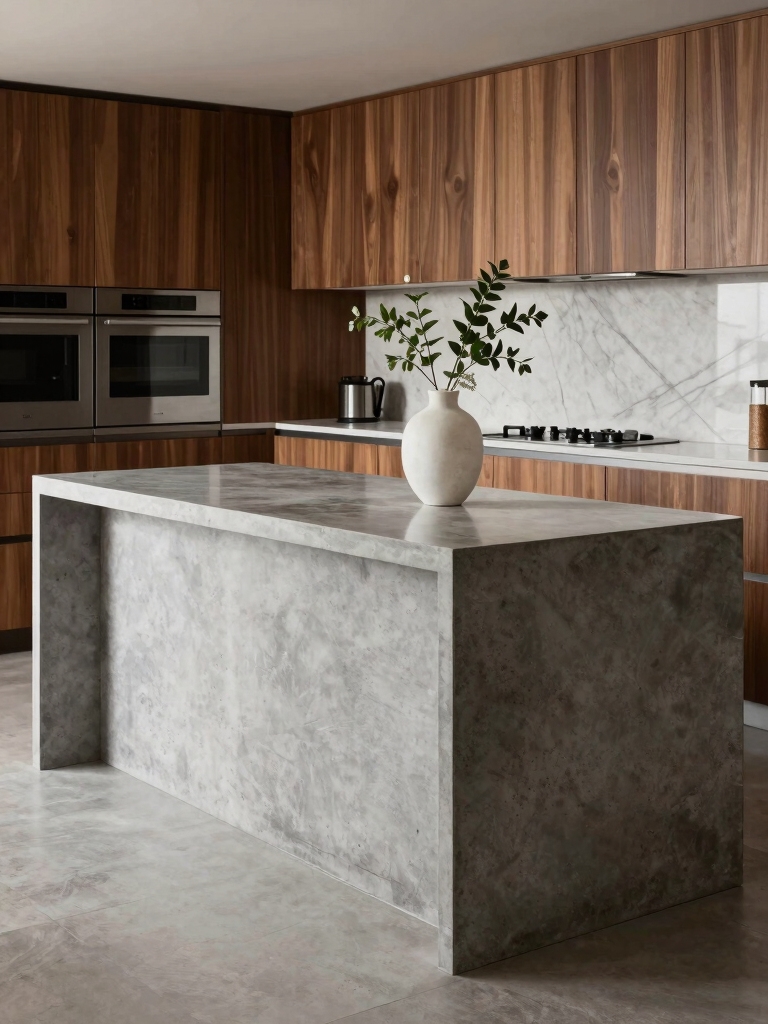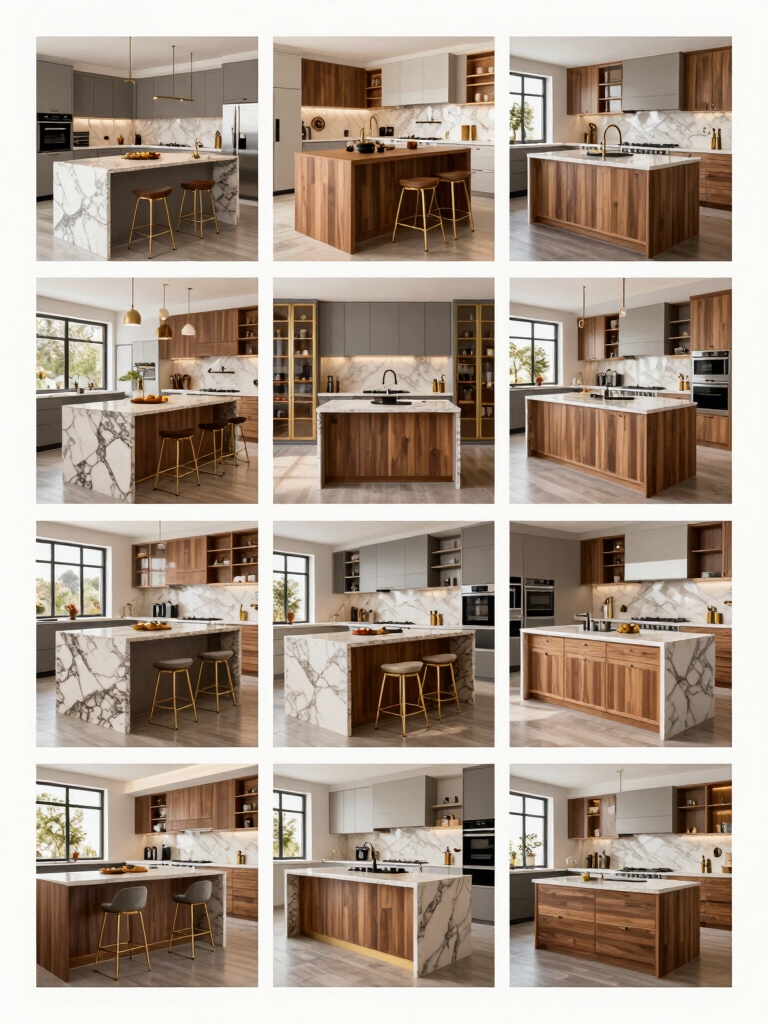

I design Japandi kitchen islands to marry Japanese restraint with Scandinavian warmth, so surfaces feel calm and usable. I choose warm oak or walnut, matte stone counters, and linen textiles for tactile balance. Proportions stay human-scale with 36–48 inches of clearance and recessed handles for clean sightlines.
Storage hides clutter while open shelving shows a few ceramics. Layered warm lighting and low-profile stools keep the island inviting. Keep going to see practical layouts, material pairings, and care tips.
Principles of Japandi Design Applied to Kitchen Islands

When I think about Japandi principles for kitchen islands, I look for that sweet spot where Japanese restraint meets Scandinavian warmth: clean lines, natural materials, and purposeful simplicity.
I prioritize uncluttered silhouettes, balanced proportions, and thoughtful functionality that invites use.
Subtle contrasts, muted palettes, and integrated storage keep the island serene yet practical, so it feels both calming and inherently livable.
Wood finishes that age like wine add character over time, developing a patina that deepens the island’s warmth and authenticity.
Choosing the Right Materials: Wood, Stone, and Textiles

I’m excited to walk you through how warm woods, stone countertops, and natural textiles work together to shape a Japandi kitchen island.
I’ll show how choosing the right wood tone sets the mood, how to pair stone for contrast and durability, and how textiles add soft, tactile balance.
Together they create a calm, functional centerpiece that feels both cozy and refined.
Oak cabinets are a timeless choice that bring warmth and enduring appeal to a kitchen, often featured in designs for their grain and durability; consider Timeless Oak when selecting wood.
Warm Wood Choices
Although Japandi leans toward restraint, I always reach for warm woods first because they anchor the island with both comfort and quiet sophistication.
I favor oak, walnut, and chestnut tones—grains that read natural without fuss.
Lighter finishes brighten, mid-tones add calm, darker accents provide depth.
I mix matte oils and subtle satin for tactile warmth that invites lingering and everyday use.
Warm wood kitchen cabinets are back in style, offering timeless appeal that complements Japandi simplicity.
Stone Countertop Pairing
Because the countertop is the island’s stage, I choose stone that both respects the warm wood below and raises the room’s quiet elegance; I want materials that converse, not compete.
I favor honed quartzite or subtle marble veining for soft contrast, durable granite for practicality, and muted concrete for modern calm.
Each choice balances texture, tone, and maintenance so the island feels unified and timeless.
Marble kitchen islands are often considered a timeless investment because their veining and durability elevate both aesthetic and long-term value.
Natural Textile Accents
Stone sets the stage, but textiles are what soften the scene and make the island feel lived-in.
I favor linen runners, woven stools, and cotton napkins that echo wood tones and stone coolness. They add texture, warmth, and humility.
Consider these tactile touches:
- Linen runner — soft, natural drape
- Woven stool seat — earthy, durable
- Cotton napkins — everyday elegance
- Wool throw — cozy contrast
Designers often use simple, well-curated accents to style kitchen islands without overcrowding them.
Color Palettes That Balance Warmth and Simplicity

When I pull together a Japandi kitchen island, I aim for palettes that feel both inviting and pared-back, mixing warm neutrals with soft contrasts so the island reads as calm but never cold.
I prefer muted greiges, warm woods, and charcoal accents, adding a single soft green or clay tone for depth.
That restrained mix keeps the space serene, tactile, and quietly elegant. Contemporary kitchen cabinets are often leading the way in these schemes, with modern cabinetry helping to define clean lines and functional simplicity.
Proportions and Scale for Functional Islands

If I want a Japandi island to feel as comfortable to use as it’s beautiful to look at, I start by measuring clearances and workflow first—aiming for at least 36–42 inches of walking space on primary sides and 48 inches if there’s heavy traffic or multiple cooks.
I balance height, depth, and sightlines, then:
- Respect human scale
- Keep proportions simple
- Allow visual breathing room
- Prioritize movement and comfort
Kitchen islands can be planned using a few easy-to-copy layout templates to ensure both form and function.
Integrated Storage Solutions for a Clutter-Free Surface

I love how hidden organizers keep a Japandi island calm, so I plan concealed drawer inserts for utensils, spices, and everyday tools that never crowd the countertop.
I also recommend a vertical pull-out pantry at one end for oils, jars, and tall items—it’s a slim, elegant way to store what you need without visual clutter.
Together those solutions keep the surface serene and everything within easy reach.
Concealed Drawer Organizers
Nestled beneath a clean countertop, I love how concealed drawer organizers let a Japandi island stay serene and practical at once; they tuck utensils, linens, and gadgets out of sight while keeping everything within an easy reach.
- Order — calm in every pull.
- Beauty — hidden harmony.
- Efficiency — time saved.
- Joy — simple daily rituals feel elevated.
Vertical Pull-Out Pantries
Think of a skinny cabinet that disappears into the island’s silhouette — I love how a vertical pull-out pantry gives me instant access to oils, spices, and baking staples without cluttering the countertop.
It keeps essentials organized, visible, and within arm’s reach while preserving clean lines. I choose warm wood tones and slim hardware so functionality feels intentional and the island stays serenely minimal.
Countertop Finishes That Complement Japandi Style
When I’m choosing a countertop for a Japandi kitchen, I look for surfaces that balance warm natural texture with clean, quiet lines. I favor materials that feel calm, durable, and tactile.
- Light oak butcher block — cozy, organic
- Honed limestone — soft, understated
- Matte quartz — refined, low-gloss
- Soapstone — deep, soothing
Each invites mindful cooking and serene mornings.
Seating Options That Blend Comfort With Minimalism
I often recommend low-profile bench seating for Japandi islands because it keeps sightlines clean while inviting casual togetherness.
Pairing that with slim backless stools gives you flexible spots that don’t clutter the space yet still feel welcoming.
Let’s look at materials and proportions that keep both pieces comfortable and distinctly minimal.
Low-Profile Bench Seating
I often choose low-profile bench seating for a Japandi kitchen island because it keeps sightlines open and feels effortlessly calm.
I want cozy communal moments without visual clutter.
Consider sensations:
- Warm wood under fingertips.
- Soft, neutral textiles.
- Grounded simplicity that soothes.
- Flexible seating for shared mornings.
Benches anchor the space, invite conversation, and honor restrained beauty.
Slim Backless Stools
Lean in and you’ll feel how slim backless stools quietly change a Japandi island — I pick them when I want seating that tucks away visually but still welcomes conversation.
Their narrow profiles and warm materials keep sightlines open, while thoughtful proportions support relaxed posture.
I prefer natural wood or muted metal finishes, pairing cushions sparingly to preserve minimalism without sacrificing everyday comfort.
Lighting Strategies to Enhance Texture and Mood
When we layer lighting around a Japandi kitchen island, textures come alive and the room’s mood settles into calm purpose; I’ll show you how simple fixtures and thoughtful placement make that happen.
I favor warm tones, dimmers, and mixed sources to sculpt surfaces and feeling:
- Pendant soft pools
- Under-cabinet wash
- Accent grazing
- Ambient dimmer glow
Combining Open Shelving and Concealed Cabinets
Balancing open shelving with concealed cabinets lets me keep the Japandi island feeling airy while hiding clutter where it matters.
I pair raw wood shelves for ceramics and plants with matte-front cabinets for utensils and appliances, keeping lines clean.
Intentional displays and hidden storage work together so the island feels curated, functional, and calm—practical beauty without fuss.
Appliance Choices That Respect the Aesthetic
Because appliances can make or break the calm of a Japandi island, I choose pieces that feel quiet, purposeful, and tactile rather than flashy.
I favor muted finishes, simple controls, and honest materials that age gracefully. Consider:
- Matte stainless or soft black
- Integrated panels
- Subtle knobs and hidden vents
- Compact, efficient performance
These choices keep the island serene and useful.
Mixing Japanese Craftsmanship With Scandinavian Simplicity
I love combining Japanese craftsmanship with Scandinavian simplicity because the mix highlights natural materials like warm woods and stone while keeping everything streamlined.
I’ll show how thoughtful joinery and tactile finishes pair with clean, functional lines to make a kitchen island both beautiful and practical.
Together they create a calm, uncluttered focal point that feels handmade but utterly modern.
Natural Materials Focus
When I choose materials for a Japandi kitchen island, I look for pieces that feel honest and purposeful—solid oak or walnut with visible grain, smooth stone like honed basalt, and subtle woven textiles for seating. I want tactile calm and lasting warmth.
- Wood that ages gracefully
- Stone that grounds
- Linen for softness
- Ceramics with quiet glaze
Clean Functional Lines
As I blend Japanese joinery and Scandinavian restraint, I focus on lines that do more than look tidy—they organize the island’s function and flow.
I use seamless edges, recessed handles, and balanced proportions so movement feels effortless.
Every joint and subtle angle guides use, hides clutter, and highlights craftsmanship. The result is a calm, efficient centerpiece that invites cooking and conversation without fuss.
Small-Space Japandi Islands: Making Every Inch Count
Let’s carve out every inch with intention: I’ll show you how a Japandi island can be compact without feeling cramped, balancing clean Scandinavian lines with warm Japanese restraint.
I pick multifunctional pieces, natural wood tones, light-reflecting surfaces, and smart storage to make small spaces breathe:
- Slim profile
- Foldable extension
- Hidden drawers
- Open shelving
You’ll feel calm, efficient, and cozy.
Accessorizing Mindfully: Utensils, Dishware, and Decor
Moving from fitting function into tight spaces, I turn attention to the handful of objects that give a Japandi island personality: utensils, dishware, and the small decor that makes the space feel lived-in.
I choose tactile wooden spoons, matte stoneware plates, and a single sculptural vase. Each piece is purposeful, pared-back, and warm—curated to support cooking, display, and calm everyday beauty.
Maintenance and Care for Natural Materials
Because natural materials respond to touch and time, I give them simple, consistent care that honors their character and keeps the island feeling intentional.
I wipe spills quickly, oil wood periodically, avoid harsh cleaners, and celebrate patina.
Small rituals prolong beauty and tell a lived-in story.
- Gentle wipe
- Timely oil
- Soft tools
- Respect patina
Case Studies: Real-World Japandi Island Transformations
When I look at real Japandi island makeovers, I’m drawn to how restrained choices and small gestures transform everyday routines into something quietly intentional.
I describe three kitchens: a compact island with mixed wood tones and integrated storage, a light-filled space pairing matte black appliances and soft ash, and a family hub that balances durable surfaces with serene minimalism—each proving thoughtful restraint feels luxurious and lived-in.
I’ve loved exploring how Japandi kitchen islands blend warmth and simplicity to make cooking and gathering feel calm and intentional.
By choosing honest materials, balanced proportions, and smart storage, you can create an island that’s both beautiful and practical—doesn’t that kind of effortless harmony make every day a little more peaceful?
Keep it purposeful, curate thoughtfully, and enjoy a space that’s as functional as it is serene.