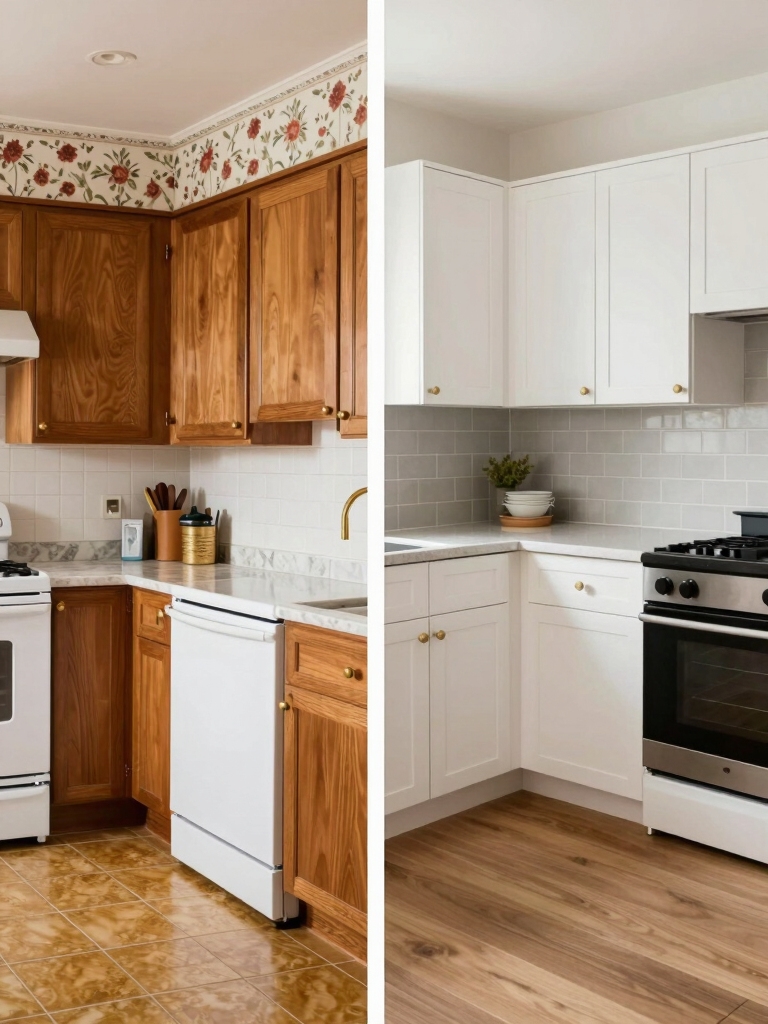

I don’t just swap cabinets; I tune proportions — rail-and-stile widths, trim heights, and eased edges — so your kitchen reads midcentury, not costume. I match baseboards and hood geometry, scale hardware to door sizes, and plan drawer interiors for real use.
I pick countertop thickness, overhangs, banquette depths (17–18″ seats, 42–48″ seating zones), and warm glazes that age well. Keep going and I’ll share the small, deliberate moves that make the room sing.
Cabinet Door Profiles and Edge Details

When I dig into a midcentury kitchen, the cabinet door profile is where the room’s personality shows up first — and it’s often the detail people skip.
I notice rail-and-stile proportions, recessed versus flat panels, and crisp eased edges.
Those choices change light, shadow, and touch.
I’ll show you how small profiles and subtle bevels evoke era authenticity without feeling costume-y.
Midcentury remodels often benefit from MCM kitchen touches that honor the era perfectly without going overboard.
Original Trim and Baseboard Proportions

When I work on a midcentury kitchen I try to keep the original trim profile intact—those subtle curves and ridges are part of the room’s voice.
I also pay close attention to proportions, matching baseboard height and trim thickness so the whole space reads as one era, not a patchwork.
If you swap in modern skinny trim, you’ll lose more than detail; you’ll lose rhythm. I aim to create remodels that honor the home’s original character and timeless kitchen proportions so the transformation feels authentic and cohesive.
Maintain Original Profile
I always start a midcentury kitchen remodel by checking the trim and baseboard profiles, because proportions make or break the period look; keeping the original profile — or accurately replicating it — preserves the visual rhythm that ties cabinets, floors, and walls together.
I match thickness, reveal, and simple curves, salvaging originals when possible. Small deviations shout; faithful profiles whisper authenticity.
Timeless touches like period-appropriate hardware and moldings instantly add character to a vintage kitchen, so I often incorporate vintage trim to reinforce the era’s aesthetic.
Preserve Original Proportions
Keeping the original trim profile is only the first act; getting the proportions right is what makes the room sing.
I measure ceiling height, door scale, and window sightlines, then match baseboard height and casing width to those cues.
When proportions align, cabinets and appliances feel balanced, not tacked on. It’s a subtle choreography that preserves midcentury rhythm and lets original details breathe.
I also draw on Retro Kitchen Remodel: Vintage Flair Meets Modern Freshness for guidance on blending period details with updated finishes and fixtures, emphasizing vintage-modern balance in every decision.
Hardware Scale, Finish, and Placement

Because hardware is the handshake of a kitchen, I pay close attention to scale, finish, and placement so every drawer and cabinet feels deliberate.
I choose pieces that sing midcentury lines without shouting.
Consider:
- Proportion to door size.
- Finish matched to trim tones.
- Placement that respects sightlines and ergonomics.
Small changes make rooms feel intentional and joyous.
Adding stylish objects above cabinets can complete the look and prevent that awkward empty space from feeling unfinished, with decorative accents selected to echo the kitchen’s midcentury vibe.
Drawer Interiors and Functional Layout

Often I obsess over what goes inside a drawer as much as its face, since those hidden systems make a kitchen truly usable.
I plan zones: utensils, prep tools, spices, and trays nested for quick reach. Soft-close slides, shallow top drawers, deep lower drawers, and adjustable dividers keep things tidy.
Thoughtful layouts save time and keep a midcentury vibe functional and joyful.
I also incorporate smart cabinet organization principles like nested tray storage to simplify everyday use and maintain the design aesthetic.
Countertop Thickness and Overhangs

After sorting what goes into drawers, I start looking up at the edges where form meets function: countertop thickness and overhangs make a big visual and practical difference in a midcentury kitchen.
I pick choices that balance look and use:
- Thin profile for sleek, airy lines.
- Thick slab for drama and durability.
- Moderate overhang for seating without wobble.
Waterfall islands remain a striking choice for many remodels, often showcasing continuous slab edges that emphasize material and flow.
Backsplash Material and Pattern Choices
I lean into the backsplash as the place where midcentury restraint gets to flirt with personality; pick the material and pattern right and you get a tidy, era-appropriate backdrop that still surprises.
I favor ceramic subway, elongated hex, or thin stacked tiles in matte or gloss. A single accent band or geometric repeat adds rhythm without shouting—subtle contrast, clean lines, confident charm.
Integrated Lighting: Undercabinet and Task Fixtures
I usually start by thinking about light the way midcentury designers thought about furniture—functional, sculptural, and honest—so I pick undercabinet and task fixtures that disappear until you need them and then feel inevitable.
I choose fixtures that flatter materials and worktops.
- Warm LED strips for mood
- Adjustable arm task lamps for prep
- Dimmer zones to layer light
Appliance Scale and Color Integration
Lighting sets the mood, but scale and color make the appliances sing or whisper in that space — and they should feel like informed guests, not oversized strangers.
I pick proportions that respect midcentury lines: narrower fridges, compact ranges, modest hoods.
I layer finishes—matte black, warm steel, muted pastels—so appliances either recede or delight, never shout, aligning function with vintage restraint.
Flooring Transitions and Material Seams
When you walk from the cozy dining nook onto the kitchen floor, those seams should feel like a thoughtful handshake, not a trip hazard or an awkward pause.
I pay attention to material meet-points, height, and sightlines. Consider:
- Flush connections for safety and flow
- Metal or wood thresholds for style
- Grout size and direction to guide the eye
Open Shelving Depth and Display Rhythm
Because open shelving sets the visual tempo of a midcentury kitchen, I think depth and spacing deserve the same fuss as cabinet finish or tile pattern.
I pick shelf depths to suit dishes, glassware, plants and art—shallower for plates, deeper for bowls—then stagger heights to create a friendly rhythm. It reads intentional, not cluttered, and invites curated everyday beauty.
Window Treatments and Daylight Control
I always try to keep original glass intact when I can — those imperfections are midcentury character you can’t fake.
I pair period-appropriate fabrics like woven linen or thin ikat with simple tracks so the look feels authentic but the light stays friendly.
For bright afternoons I use sheer layers or pleated diffusers to soften glare without losing that sunny, open vibe.
Original Glass Preservation
I’ll be blunt: original midcentury glass deserves more than a token nod during a remodel — it’s a character piece that shapes light, mood, and how you use the room.
I guard panes, repair putty, and balance light with subtle treatments. Consider:
- Repair, not replace.
- UV films sparingly.
- Interior blinds minimal and breathable.
Keep daylight honest; enjoy the glow.
Period-Appropriate Fabrics
Think of period-appropriate fabrics as the punctuation for your windows—I favor materials that speak midcentury without shouting, so they frame light rather than eat it.
I pick woven linens, lightweight sagos and subtle geometric prints; they nod to the era, add texture, and offer visual rhythm.
Layer sparingly, match scale to window size, and let fabric enhance architecture, not compete with it.
Light Diffusion Strategies
Where the right fabric frames the window, the way light behaves once it passes through matters just as much.
I choose layers that bend sun into warmth, reduce glare, and keep views.
Consider these quick moves:
- Sheer panels for soft, even glow.
- Top-mounted blinds for directional control.
- Semi-opaque rollers to preserve silhouette while limiting heat.
Built-in Seating and Banquette Proportions
Let’s dig into banquette proportions so your built-in seating actually feels comfortable and looks intentional:
I lean toward a 42–48-inch depth for a cozy banquette that lets people sit cross-legged or cuddle without bumping the table, while seat heights between 17 and 18 inches keep knees happy and align with most dining tables.
Add 12–16 inches backrest height and a 24–30-inch table clearance.
Vent Hood Shape and Visual Weight
I often tell clients that the vent hood is the kitchen’s hat—its shape and visual weight set the room’s tone more than most people realize.
I choose forms that balance scale, then tweak finish and edge to flirt with midcentury lines.
- Clean, boxy for grounding
- Tapered for uplift
- Low-profile for subtlety
The right hood sings without shouting.
Wall Color Temperature and Glaze Techniques
After choosing a hood that anchors the room, I turn my attention to the walls—their temperature and the subtle hand of glaze will either harmonize with that hat or compete with it.
I test warm vs. cool undertones, imagining sunlight and evening lamp glow.
A thin, brushed glaze adds depth without fuss; layered, imperfect strokes nod to midcentury charm while keeping the palette calm.
Aging and Patina: Letting Materials Wear Gracefully
When I plan a midcentury kitchen, I work with materials that will earn their stripes rather than pretend to be new forever: worn brass softens a room, oak darkens to honeyed warmth, and honed concrete develops thumbed-in character over time.
I encourage patience and small rituals:
- Let brass breathe; polish selectively.
- Oil oak yearly for depth.
- Seal concrete lightly; embrace marks.
Think of your midcentury kitchen as a favorite record—each groove, chip and careful label matters.
I’ve shown you where to listen: the cabinet’s edge like a needle, trim and hardware keeping rhythm, countertops as warm vinyl overhangs, banquettes and hoods filling the chorus.
If you let surfaces age like a well-played tune, the room will sing true. Tinker thoughtfully, and your kitchen will play the era back better than new.