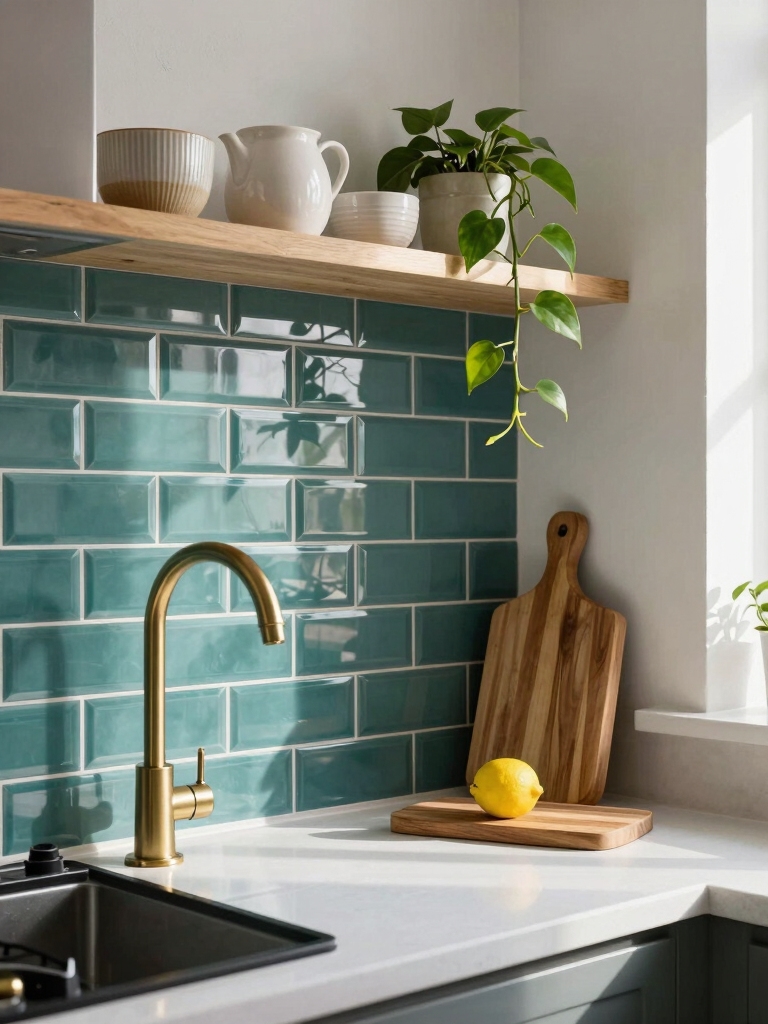

I’ve learned tiny kitchens work best with slim, mobile, and foldaway islands that add function without crowding circulation. I recommend rolling butcher-block carts with lockable casters, slim breakfast bars or floating peninsulas with a 10–14″ overhang, drop‑leaf or extendable table‑island hybrids, and vertical multi‑tiered islands with integrated appliance niches and pull‑out trash.
Light finishes and durable tops keep things airy and practical. Keep going and I’ll show layouts, measurements, and hardware tips to make one fit.
Rolling Kitchen Carts With Built-In Storage

I’ve found rolling kitchen carts with built-in storage are the unsung heroes of small kitchens — they give you prep space, hide clutter, and move out of the way when you need floor room.
I pick carts with locking casters, shallow drawers for utensils, and open shelves for frequently used items.
They act as a mobile command center without crowding the room.
Choose compact islands designed for tiny floorplans and space-saving storage to maximize functionality in tight kitchens.
Narrow Breakfast Bars for One-Wall Kitchens

I like adding a narrow breakfast bar to a one-wall kitchen because a slim counter-depth extension gives you usable surface without crowding the walkway.
I often recommend fold-down seating to keep space flexible, and I’ll show options that tuck away when you don’t need them.
Built-in storage drawers under the bar keep essentials close and make the whole setup feel intentionally designed.
Unexpectedly, a compact island can serve multiple roles in tiny layouts, inspiring small kitchen ideas that maximize function without sacrificing style.
Slim Counter-Depth Extensions
Although the wall takes up most of the room, I still find you can gain useful counter and seating space by adding a slim counter-depth extension—a narrow breakfast bar that tucks neatly against the cabinets without crowding the walkway.
I recommend a 10–14″ overhang, a durable surface, and streamlined stools. It offers prep space, casual dining, and visual continuity without overwhelming a one-wall kitchen.
Small kitchen islands can also maximize storage and workflow when planned correctly, especially with space-saving solutions like narrow, multiuse designs.
Fold-Down Seating Options
Fold-down seating can really open up a one-wall kitchen without eating into precious floor space. I like narrow breakfast bars that hinge up when guests arrive and fold flat against the backsplash when not in use.
Choose sturdy brackets, a slim tabletop, and comfortable stools that tuck under. It’s a simple, curated solution that keeps traffic flowing while adding practical dining real estate.
Many small kitchens also benefit from multifunctional pieces like compact tables that double as prep space.
Integrated Storage Drawers
Think of narrow breakfast bars with integrated storage drawers as a small-kitchen multitool: they give you a slim dining surface while hiding away utensils, linens, and often-misplaced gadgets.
I use them to keep countertops clear and grab what I need fast. Practical choices I recommend:
- Shallow utensil trays
- Knife block inserts
- Linen dividers
- Charging cubby
- Pull-out trash bin
They’re a clever way to make the most of tight spaces by combining seating and storage in one compact unit, a trick often used in small kitchen cabinet ideas.
Drop-Leaf Islands That Fold Away

I love drop-leaf islands because they give you extra counter space when you need it and tuck away completely when you don’t.
I’ll show simple ways to get a sturdy, wobble-free hinge and support system so the folded leaves feel as reliable as a full island.
With the right hardware and placement, you can have both a roomy work surface and clear floor space in seconds.
Peninsula designs often offer similar space-saving benefits in narrow layouts, making them a good alternative for very small kitchens with limited floorplans.
Space-Saving Surface
I’ve learned that a drop-leaf island can make a tiny kitchen feel flexible without sacrificing style: when you lift the leaf it’s a full prep surface or casual table, and when you drop it it tucks out of the way to open up traffic flow.
I pick pieces that:
- extend work area fast
- double as dining space
- store utensils underneath
- look proportional to room
- fold cleanly, saving floor space
They also pair well with other small kitchen solutions like space-saving islands to maximize usable surface and storage.
Stable Hinge Solutions
Because a drop-leaf island only works if the hardware’s reliable, I look for hinge systems that feel solid every time you lift or drop the leaf.
I favor soft-close, stainless steel hinges and removable support brackets that lock in place.
They minimize wobble, resist corrosion, and simplify maintenance. Choose hidden or decorative options to match your kitchen’s style while prioritizing smooth, repeatable operation.
Slimline Peninsula Extensions
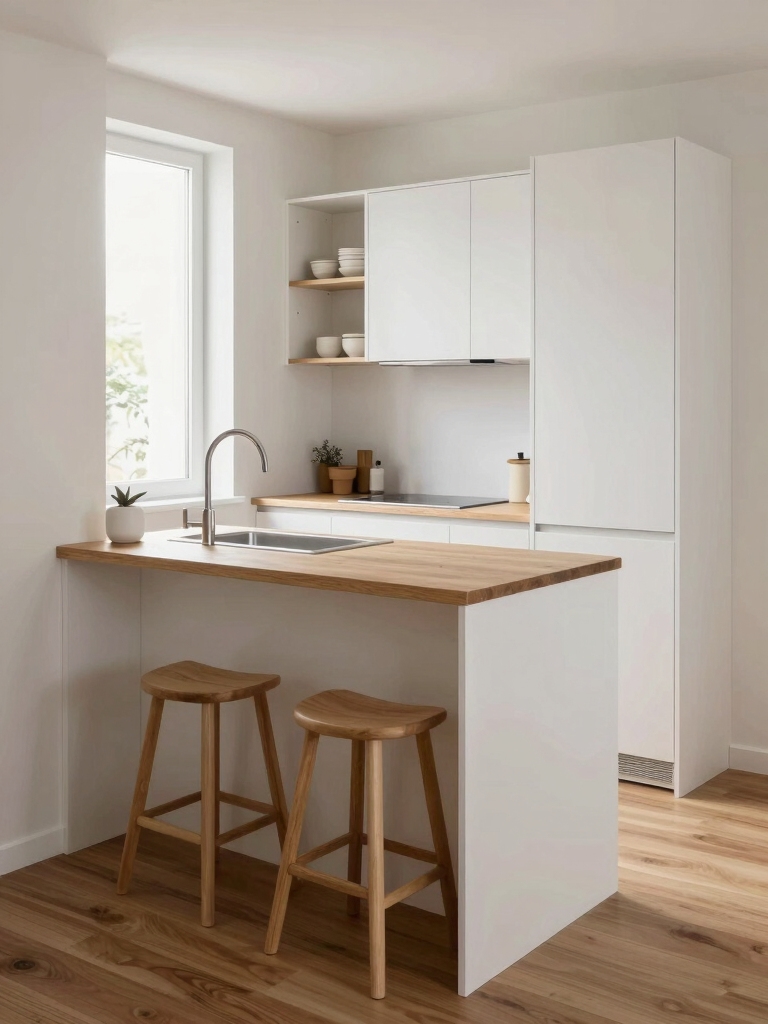
When floor space is tight but you still want extra prep area and casual seating, I’ll show how a slimline peninsula extension can transform your kitchen without crowding it.
I favor narrow counters that define zones, boost function, and keep traffic flowing.
- Defines work triangle efficiently
- Provides bar seating without an island
- Adds storage beneath
- Uses minimal footprint
- Supports open sightlines
Mobile Butcher Block Workstations

Roll a sturdy butcher block into place and you’ll see how instantly it changes your kitchen’s workflow:
I use mobile butcher block workstations for quick prep, extra counter space, and a flexible serving surface that stows away when I don’t need it.
I pick models with lockable casters, a lower shelf for bowls, and a finish that resists stains so it wears well.
Multi-Tiered Narrow Islands for Vertical Storage
I love using multi-tiered narrow islands to stack storage upward and reclaim floor space in a small kitchen.
I’ll show how layered shelves can hide cookware and add a raised counter for stools so you get seating without crowding the room.
I’ll also point out smart ways to tuck slim appliances—like a compact microwave or under-counter fridge—into the tiers for a streamlined look.
Maximize Vertical Storage
Although my kitchen is compact, I’ve learned that a multi-tiered narrow island can transform vertical dead space into highly accessible storage, and I’ll show you how to use tiers smartly so every inch counts.
I prioritize function and flow:
- Store everyday dishes within reach
- Add pull-out spice racks
- Use open shelves for baskets
- Hang mugs on pegs
- Reserve top shelf for overflow
Layered Seating Options
When you add layered seating to a multi-tiered narrow island, you get both extra seating and a clear separation between prep and social zones, and I’ll show you how to choose heights and stools that keep traffic flowing.
I recommend 6–8 inch height differences, slim backless stools under the lower counter, and a taller ledge for casual standing or bar stools—keeping sightlines open and storage beneath.
Slim Appliance Integration
Think vertical and you’ll be surprised how much functionality a narrow multi-tiered island can swallow without feeling bulky.
I design slim appliance integration to keep flow and storage crisp. I tuck appliances into staggered tiers so everything’s reachable.
- Built-in microwave at eye level
- Pull-out pantry below
- Slim wine fridge niche
- Appliance garage for mixer
- Charging drawer with outlet
Compact Islands With Integrated Seating
I like compact islands with integrated seating because they make every inch work harder without feeling cramped; they give you a spot to eat, work, or chat while keeping circulation open.
I recommend a slim overhang for stools, built-in storage beneath, and durable surfaces.
Choose seating heights that match counters, tuck stools when not used, and keep finishes light to maintain an airy, curated feel.
Appliance-Ready Mini Islands
I like making small islands do more, so I’ll show how built-in appliances can be tucked into a compact footprint.
Think about compact cooktops and under-counter microwaves or dish drawers, plus slide-out appliance storage that hides mixers and toasters when you don’t need them.
I’ll point out practical layouts and hardware choices that keep the island functional without overwhelming a small kitchen.
Built-in Appliance Integration
Imagine a mini island that’s more than counter space — it hides your microwave, houses a compact dishwasher, or tucks in a wine fridge so everything’s within reach without cluttering the kitchen.
I design built-in appliance integration to maximize flow and storage.
- Measure clearances first
- Choose drawer-style appliances
- Match finishes
- Plan electrical/plumbing
- Keep service access easy
Compact Cooktop Options
I often recommend compact cooktops for appliance-ready mini islands because they give you real cooking capability without overwhelming a small footprint.
I suggest two- or three-burner induction or gas units, low-profile designs, and integrated controls to save counter space.
Choose durable surfaces, simple ventilation, and placements that keep prep and seating functional.
I favor reliable brands and clean lines for lasting utility.
Slide-out Appliance Storage
Slide-out appliance storage pulls together the convenience of built-in gear with the flexibility a mini island needs, and I’ve found it’s one of the smartest space-saving moves you can make.
I recommend designing with purpose: hide small appliances, access easily, and keep surfaces clear.
- Stash a toaster
- Fit a mixer
- Ventilated drawers
- Power strip inside
- Soft-close tracks
Floating Countertop Islands for Open Space
As someone who loves making small spaces feel larger and more purposeful, I’m excited to show how a floating countertop island can open up sightlines without sacrificing prep surface or storage.
I recommend slim, wall-mounted tops with hidden brackets, integrated lower shelves for baskets, and durable finishes.
They keep traffic flowing, offer casual seating, and feel intentional—perfect for open-plan tiny kitchens.
Corner Islands Built for Tight Footprints
When space is tight, I love tucking an island into a corner to create a hardworking hub without crowding the room.
It maximizes circulation and storage while keeping surfaces accessible. I pick compact shapes and smart finishes so the corner reads intentional, not cramped.
- L-shaped mini island
- Narrow peninsula style
- Open shelving below
- Integrated seating for one
- Light-reflective surface
Islands With Hidden Trash and Recycling
I tuck waste and recycling into my island so bins stay out of sight but never out of reach, keeping prep zones clean and odors contained.
I choose pull-out compartments with removable liners, labeled sections for sorting, and soft-close slides.
A vented cabinet or charcoal filter controls smells.
These solutions keep small kitchens tidy, make sorting effortless, and preserve countertop workspaces without bulk.
Reclaimed Wood Mini Islands for Warmth
I lean into reclaimed wood mini islands because they bring instant warmth and personality to a small kitchen without taking over the space.
I pick compact pieces that feel lived-in and purposeful, pairing them with simple hardware and durable finishes.
- Adds texture without clutter
- Eco-friendly material choice
- Customizable sizing
- Easy to refinish later
- Anchors the room subtly
Extendable Table-Island Hybrids
Reclaimed wood gives a mini island soul, but sometimes you need one piece that pulls double duty — a table that becomes prep space and vice versa.
I favor extendable table-island hybrids with hidden leaves, locking sliders, and butcher-block tops.
They sit compact for two, expand for guests, and hide storage underneath. Pick durable hardware and finishes that stand up to chopping and spills.
Islands Designed for Small Open-Plan Layouts
When your living area and kitchen share the same square footage, you’ll want an island that respects flow and sightlines while still doing real work.
I recommend compact, multifunctional pieces that anchor the space without crowding it.
- Narrow profile for clear walkways
- Seating that tucks away
- Open shelving to keep visual lightness
- Dual-purpose prep and dining surface
- Integrated power for devices and task lighting
Custom Built-In Islands to Match Cabinetry
A custom built-in island can make your kitchen feel deliberately finished and effortlessly cohesive, so I’ll walk you through how to match it to your cabinetry without overdoing the detail.
I recommend echoing cabinet finishes, scale, and hardware for harmony. Keep moldings minimal, align door styles, and consider a contrasting countertop or inset open shelving for personality while preserving a compact, unified look.