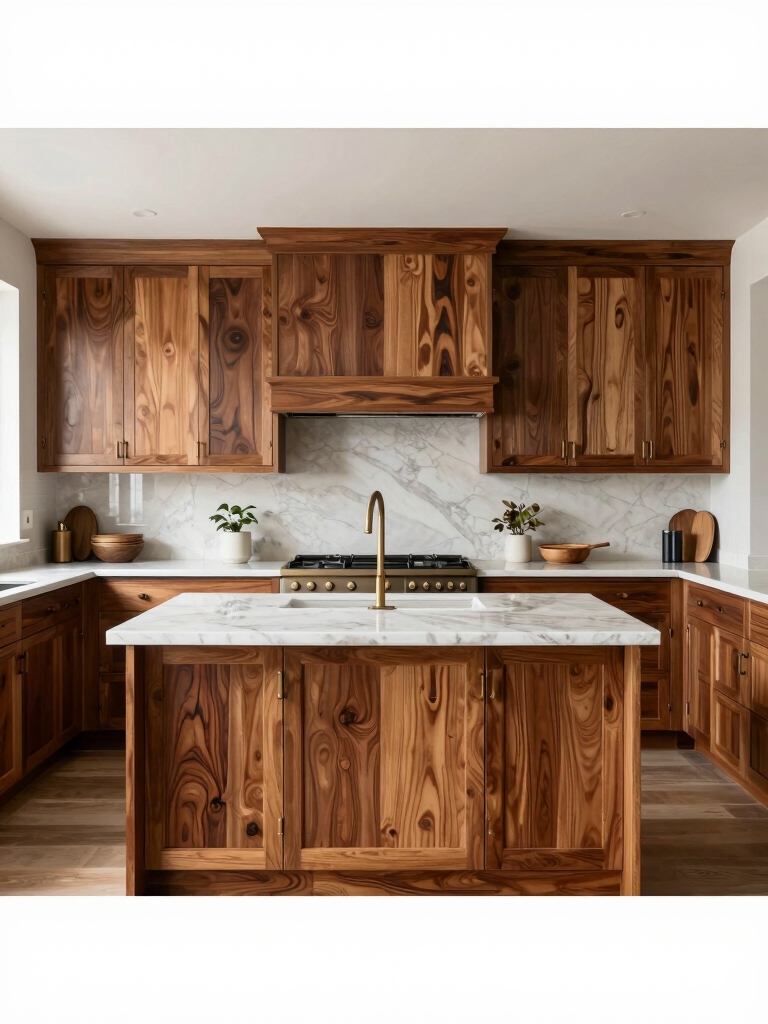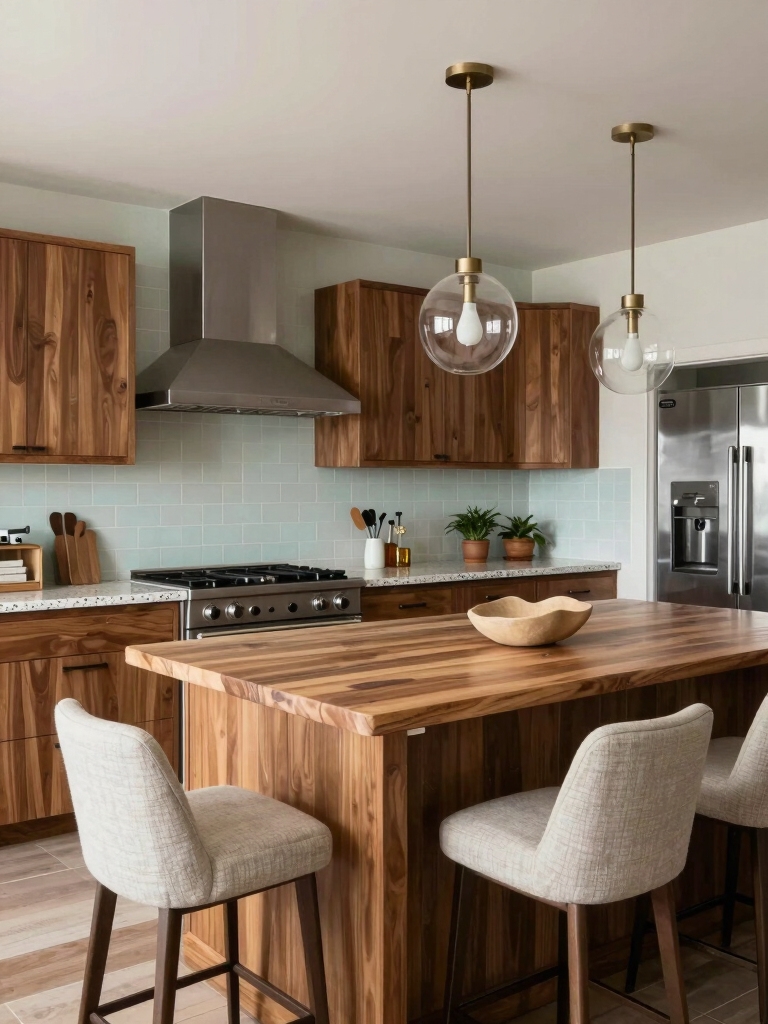

I’ll show you how to squeeze every inch from a small kitchen without sacrificing calm or style: I lean on open shelving and tall pull-out pantries so things stay visible and reachable, slimline integrated appliances to reduce visual clutter, corner lazy Susans and vertical lid racks to reclaim lost space, and drop-leaf islands or mobile carts for flexible prep.
Bright under-cabinet lighting, continuous flooring, and an upper‑lighter/lower‑darker paint split lift the room. Keep going and I’ll share exact layouts, hardware, and storage tricks.
Open Shelving and Vertical Storage Solutions

I’ve found that opening up a small kitchen with open shelving and vertical storage instantly makes it feel larger and more functional; you can see and grab what you need without digging through cabinets.
I arrange frequently used dishes and clear containers on lower shelves, hang mugs and utensils on hooks, and add slim baskets above. It’s tidy, accessible, and gives the space personality.
Stylish shelving choices like floating shelves and slim wall-mounted units add both storage and visual openness, making them ideal for compact kitchens.
Slimline and Integrated Appliances

Embrace slimline and integrated appliances to keep a small kitchen feeling calm and uncluttered;
I prefer units that tuck into cabinetry or sit flush with counters so your eye moves across clean surfaces instead of getting hung up on bulky metal.
Choose narrow ovens, compact dishwashers, and undercounter fridges with paneling that matches cabinets.
They save visual space and make the room feel intentional and tranquil. Compact modular kitchens are designed for real home cooking and efficient use of space, often featuring modular components that make customization simple.
Pull-Out Pantry and Lazy Susan Units

I love how pull-out pantries and Lazy Susans let me use every inch of vertical space so nothing goes wasted.
They make daily cooking easier because everything slides out or spins into view for quick, easy access.
And because they can be built to fit odd nooks or exact cabinet dimensions, they feel like a custom solution for a small kitchen.
Pantry ideas for small kitchen owners often include space-saving solutions that maximize storage without sacrificing style.
Maximize Vertical Storage
Maximizing vertical space makes a small kitchen feel organized and spacious.
I install pull-out pantry shelves and corner lazy susans to use every inch upward, keeping spices, tins, and appliances accessible.
Tall cabinets with adjustable shelving let me adapt storage as needs change.
I choose clear containers and consistent labels so things stay visible, tidy, and easy to reach.
Kitchen pantry cabinets help maximize every single inch in small kitchens, making storage more efficient and accessible with smart organization.
Easy-Access Organization
Building upward only goes so far; making what’s stored there easy to reach matters just as much. I love pull-out pantries and lazy Susans — they tame clutter and save steps.
I suggest choosing smooth glides, adjustable shelves, narrow spice pulls, corner lazy Susans, and labeled baskets. These simple choices keep essentials visible, accessible, and delightful every day.
Many of the smartest solutions for cabinet organization come from clever cabinet organization strategies that maximize space and function.
Custom Fit Solutions
A few thoughtful custom-fit solutions can transform awkward nooks into hardworking storage that actually gets used. I love pull-out pantries for slim spaces—everything stays visible and reachable.
Corner lazy Susans rescue deep cabinets, turning lost corners into neat tiers for pots, spices, or small appliances.
Both options feel tailored, save time, and keep the kitchen calm and efficient. Tiny kitchens can have a big impact with clever choices like space-saving fittings that maximize every inch.
Multi-Functional Islands and Drop-Leaf Counters

Think of a drop-leaf counter or compact island as your kitchen’s secret weapon — I like them because they give you flexible prep space, extra storage, and a spot for casual dining without overwhelming a small footprint.
I recommend designs that fold, hide, and adapt to daily life.
- Foldable leaf for guests
- Built-in shelving
- Pull-out cutting board
- Stools that tuck
- Mobile casters
Small kitchens can benefit from unexpected island inspirations like a narrow, space-saving island that still offers storage and seating, similar to design ideas for compact islands.
Under-Cabinet Lighting and Bright Layers

Let’s brighten things up: I rely on under-cabinet lighting to erase shadows, highlight countertops, and make a small kitchen feel wider and more welcoming.
I layer soft LED strips with puck lights for task clarity, choosing warm tones for coziness.
Dimmer controls and strategically placed fixtures create depth without glare, guiding workflow and adding a refined, lived-in glow that feels intentional and practical.
Light-Reflective Finishes and Glossy Surfaces
I often pair under-cabinet lighting with reflective finishes to multiply light and make a small kitchen feel larger; glossy surfaces bounce illumination around the room so that every watt works harder.
I choose subtle sheen, light colors, and strategic mirrors to keep things calm and bright.
- Glossy cabinet fronts
- High-sheen backsplash tiles
- Polished quartz counters
- Metallic hardware accents
- Light-toned reflective paint
Narrow, Deep Drawers for Pots and Pans
I’ve found that swapping a bank of shallow cabinets for a few narrow, deep drawers transforms how I store pots and pans—and saves priceless floor and shelf space.
I organize by size and nest lids vertically with slim dividers, so everything’s reachable. Soft-close slides keep noise down.
It feels intentional and calm, turning clutter into an efficient, tidy system that makes cooking easier.
Wall-Mounted Fold-Down Tables and Workstations
After clearing out the clutter with those deep drawers, I wanted a workspace that wouldn’t steal precious floor area—so I installed a wall-mounted fold-down table.
It’s compact, sturdy, and doubles as extra prep or a laptop spot. I love the clean look and instant utility.
- Folds flat when not used
- Durable hinge hardware
- Easy DIY install
- Counter-height options
- Built-in storage underneath
Pocket Doors and Space-Saving Entry Options
When I swapped swinging doors for a pocket door, the whole kitchen felt instantly roomier and more open without losing any privacy or style.
I chose a soft-close model with a frosted glass panel to let light pass while masking clutter.
Slim barn-door alternatives, bi-folds, or inset sliding doors can also save clearance. They streamline traffic and free wall space for shelves or hooks.
Corner Appliance Garage and Hidden Storage
Swapping that pocket door opened up wall space and gave me room to think about hiding the things that make a kitchen feel cluttered—so I carved out a corner appliance garage that tucks small gadgets behind a lift-up door.
It keeps counters tidy and items accessible without visual noise.
- Hidden coffee station
- Mixer shelf with outlet
- Pull-out cutting board
- Cable management hooks
- Shallow spice cubby
Mixed-Material Backsplashes to Add Depth
I love using mixed-material backsplashes to make a small kitchen feel layered and intentional.
I’ll show how combining textured tiles, contrasting grout lines, and carefully chosen metal finishes can create depth without overwhelming the space.
With a few thoughtful swaps—like pairing matte stone with glossy subway tile and matching grout to your favorite metal accents—you can get a polished, cohesive look.
Layered Texture Combos
Mixing materials lets me create a backsplash that feels layered and intentional, even in a tiny kitchen.
I pick textures that play off each other—matte stone, glossy subway, metal trim—to make a compact wall feel rich without clutter.
- Matte porcelain paired with glass mosaic
- Slim stainless accents
- Chalky cement tiles with wood trim
- Textured penny tile inserts
- Sandblasted stone bands
Bold Grout Contrasts
Often I reach for bold grout to give a mixed-material backsplash real structure and personality; it’s a tiny change that instantly defines lines between stone, glass, and metal so each material reads clearly.
I choose grout as a deliberate design line—contrasting hues emphasize pattern, hide imperfections, and create depth in a compact kitchen. It’s an economical, high-impact detail that feels intentional and curated.
Mix Metals Thoughtfully
Bring together different metals to give a small kitchen backsplash real dimension and personality — I like to layer brass, stainless, and matte black so each finish plays off the others.
I’ll mix tiles, trim, and fixtures sparingly to avoid chaos and keep the look intentional.
- Pick a dominant metal
- Use others as accents
- Match warm vs cool tones
- Repeat finishes twice
- Keep grout neutral
Compact Sink and Faucet Combinations
When I redesigned my tiny kitchen, choosing a compact sink-and-faucet combo felt like picking the centerpiece for a small stage: it had to perform beautifully without taking up room.
I picked a shallow single-bowl sink with a high-arc pull-down faucet for flexible washing and minimized clutter with an integrated drainboard. The result feels intentional, efficient, and unexpectedly stylish.
Open-Concept Flow With Continuous Flooring
In my remodel I kept the flooring continuous from kitchen to living area so the space reads as one calm, connected room; the unbroken surface visually expands the footprint and makes traffic flow effortless.
I chose durable planks and minimal shifts to keep sightlines clean.
- Pick matching plank material
- Use subtle grout or seam lines
- Extend baseboards consistently
- Align plank direction
- Keep thresholds flush
Color Blocking and Vertical Paint Tricks
I’ve found that a simple upper-lower color split can instantly define a small kitchen without crowding it, pairing a lighter shade above with a bolder tone below for balance.
You can also use vertical stripes or a floor-to-ceiling accent to create the illusion of higher ceilings and more height.
Let me show you how to choose colors and where to place them for the biggest visual impact.
Upper-Lower Color Split
Although the kitchen is small, I’ve found that splitting the walls into an upper and lower color creates depth and personality without crowding the space.
I use the darker tone below to hide scuffs and a lighter hue above to lift sightlines. It makes cabinetry pop and feels intentional.
- Choose washable lower paint
- Keep the top airy
- Match trim to lower tone
- Use a subtle divider
- Test samples first
Vertical Stripe Illusion
You can take the same idea of two-tone walls and turn it vertical to make a narrow kitchen feel taller and more streamlined.
I paint slim, alternating stripes from ceiling to counter to draw the eye upward and mask cramped proportions.
Choose two complementary hues—one light, one richer—for subtle contrast.
It’s an easy, high-impact trick that feels intentional and airy.
Custom Cabinet Inserts and Drawer Organizers
Cabinet-curation starts with smart inserts and drawer organizers that make every inch usable and calm.
I love tailoring compartments to tools, lids, and spices so everything has a home and I can find it fast.
- Cutlery trays with adjustable dividers
- Vertical lid racks
- Pull-out spice drawers
- Knife blocks built into drawers
- Corner carousel inserts
I’ve shown savvy solutions that squeeze storage, style, and simplicity into small spaces. Mix open shelving, slimline appliances, and smart sliders to maximize every inch; marry bright layers with continuous flooring to broaden the feel.
With custom inserts, compact sinks, and a multi-use island, you’ll craft a kitchen that’s efficient, elegant, and easy to enjoy.
Start small, savor the smart swaps, and celebrate a curated, cozy culinary corner that truly works for you.