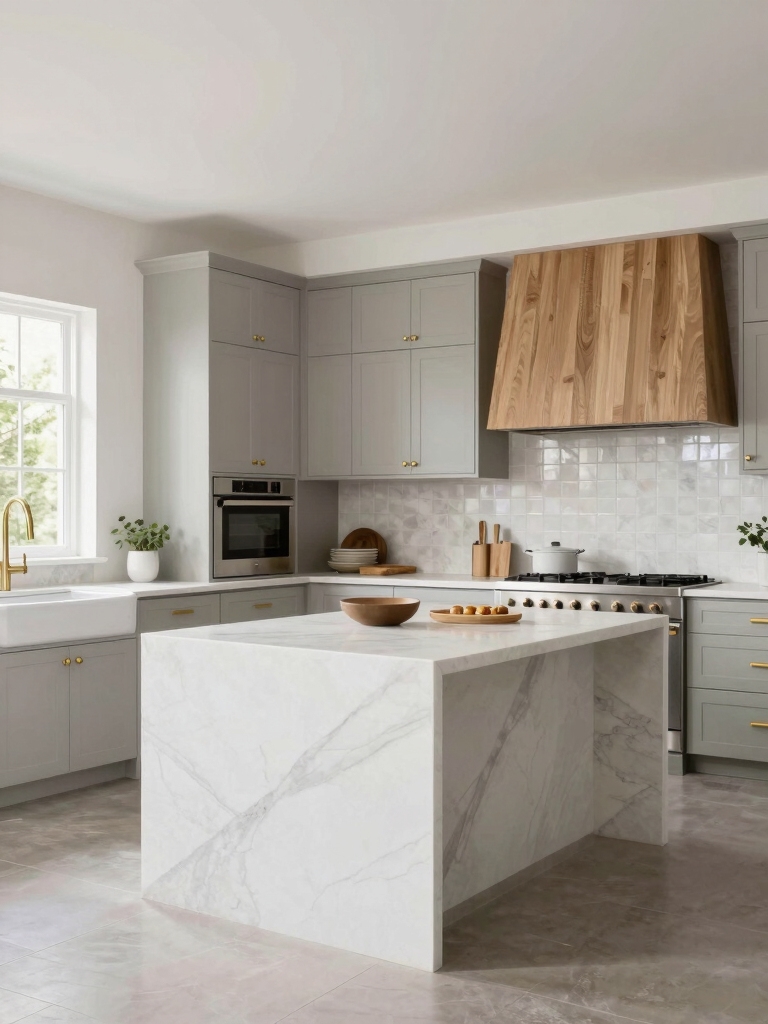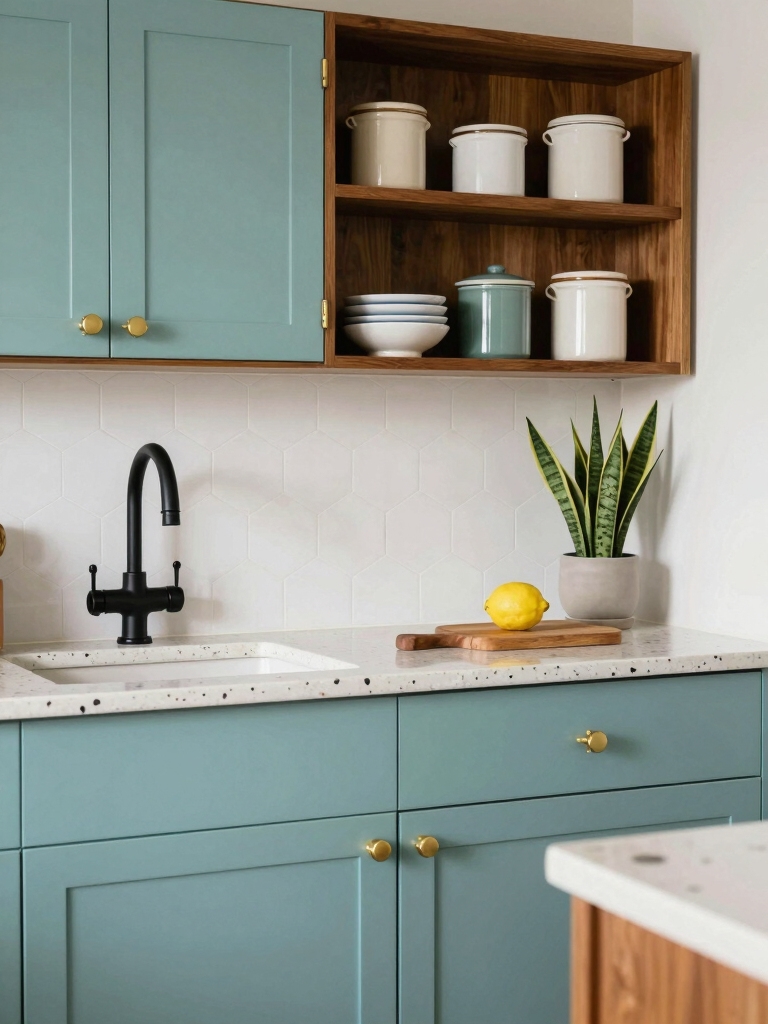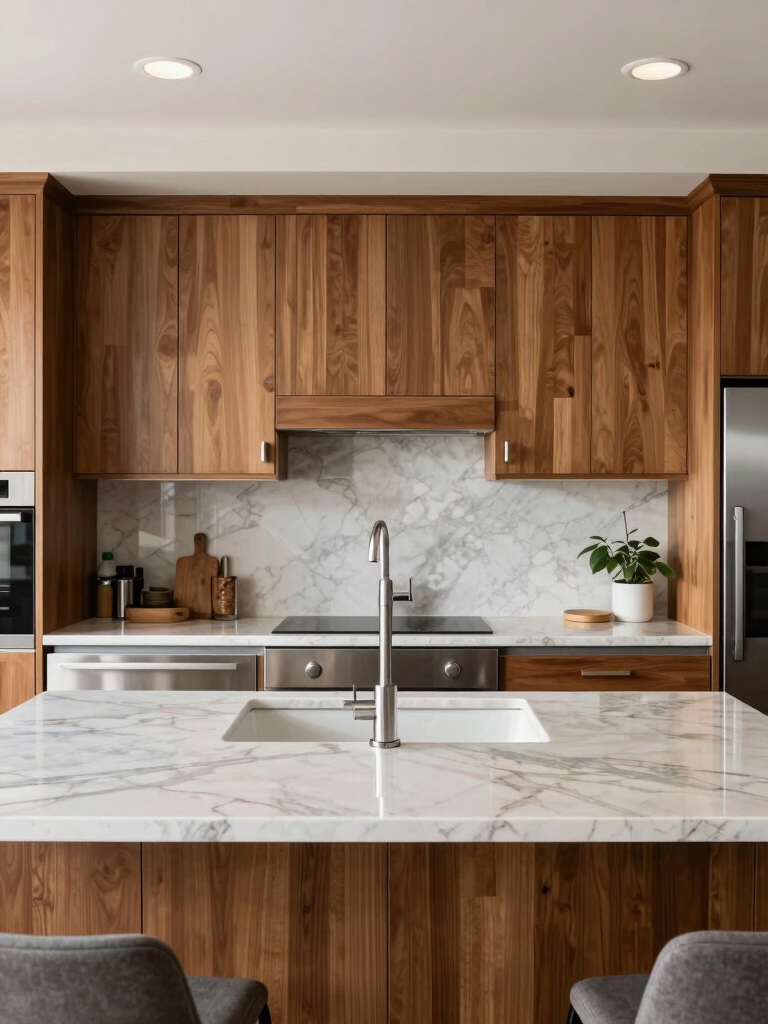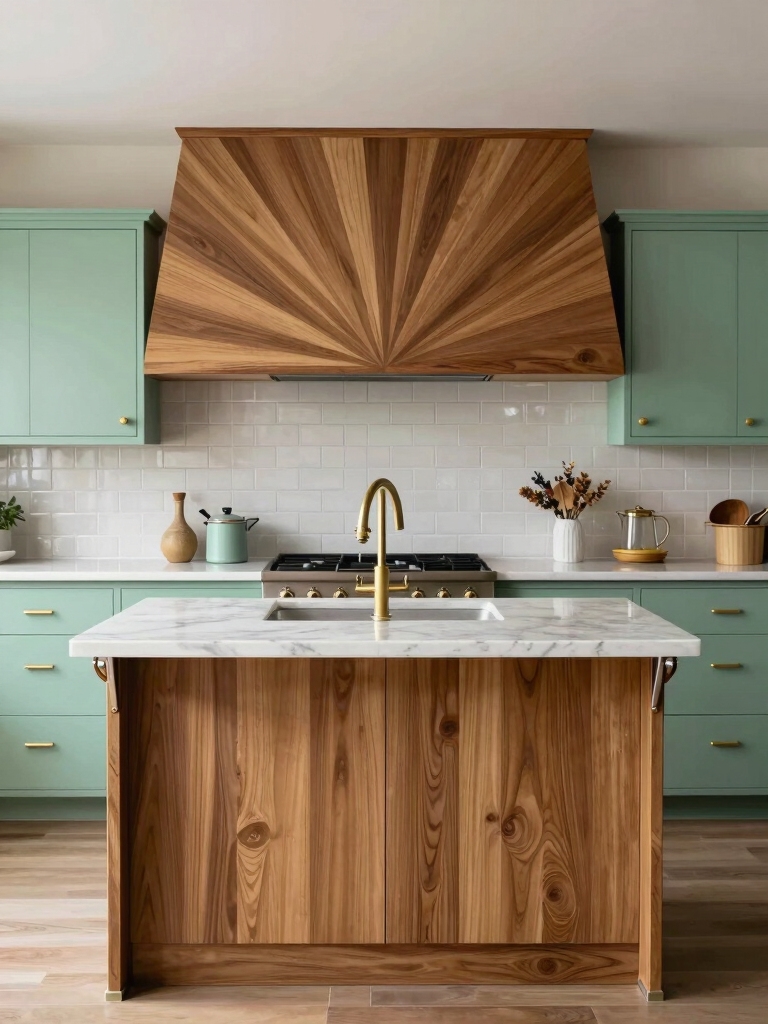

I focus on grounded proportions, clear circulation, and built‑ins—deep base drawers, plate ledges, and a multipurpose island—to keep a Craftsman kitchen honest and livable. I favor visible joinery, solid quartersawn oak or walnut, matte finishes, and muted handmade tiles that patinate beautifully.
Lighting and hardware lean warm and handcrafted, with integrated appliance panels and discreet task lighting. Stick to simple, measured details and layered materials, and you’ll see how authentic character and modern function can coexist.
Defining Craftsman Proportions and Layouts

When I think about Craftsman proportions and layouts, I focus on balance: grounded, human-scale rooms, straightforward traffic paths, and elements that read as honest structure rather than decoration.
I favor clear sightlines, measured ceiling heights, and scaled openings that respect the home’s rhythm.
Intentional spacing lets furniture breathe and activity zones feel natural, creating comfort without excess or contrivance.
Timeless design principles emphasize functionality and enduring materials, which is why many top designers prioritize simple, honest details in kitchen remodels.
Built‑In Cabinetry and Workbenches

To carry that sense of measured, human-scale order into the kitchen, I lean on built-in cabinetry and workbenches as the backbone of both form and function. They anchor sightlines, hide clutter, and stage daily rituals.
I prefer simple proportions, durable surfaces, and flexible storage so the space feels calm, purposeful, and ready for cooking.
- Deep base drawers
- Open plate ledges
- Integrated spice cubbies
- Butler’s pantry counter
- Folding prep shelf
Island layouts often steal the spotlight in small kitchens, providing a central workspace and gathering point with multi-function surfaces that maximize utility and flow.
Exposed Joinery and Handcrafted Details

I love how visible mortise-and-tenon joints make the skeleton of a cabinet feel honest and strong, so I often point them out as a focal detail.
Hand-carved drawer fronts add a personal, tactile layer that invites touch and rewards close inspection. Together they turn cabinetry from mere storage into crafted, story-rich elements of the kitchen.
Carpenters often recommend using solid-wood construction and traditional joinery for lasting durability and repairability, especially when choosing wooden kitchen cabinets.
Visible Mortise-and-Tenon
I often point out how visible mortise-and-tenon joinery becomes the soul of a Craftsman kitchen, because it honestly shows how pieces fit and stay together.
I highlight exposed joints as intentional accents, balancing strength and beauty, and I choose finishes that celebrate tool marks and tight fit.
- Solid oak apron with pegged joint
- Warm patina around tenons
- Slight tool chamfers
- Contrasting wood pegs
- Subtle shadow lines
Timeless wood finishes develop a warm patina that improves with age and handling.
Hand-Carved Drawer Fronts
Let’s lean into the way hand-carved drawer fronts quietly lift a Craftsman kitchen from well-made to soulful:
I trace grooves and motifs that echo the home’s timberwork, carving each front so the tool marks and slight irregularities read as deliberate, human-made gestures.
I choose patterns that balance restraint and warmth, pairing them with exposed joinery and matte finishes to keep the composition intentional and lived-in.
Oak kitchen cabinets are a timeless choice that reinforce the Craftsman emphasis on natural materials and fine woodworking, often found in Timeless Oak.
Simple, Honest Materials

A Craftsman kitchen sings when materials are honest and straightforward, and I choose each surface and fixture for how it feels and endures rather than how it trends.
I favor tactile, lasting choices that age gracefully and serve daily life without fuss.
- Warm honed stone countertop
- Matte porcelain sink
- Solid brass hardware
- Textured subway tile
- Hand-forged light fixtures
Farmhouse kitchens often use reclaimed wood and simple lines for a cozy rustic vibe that complements Craftsman honesty.
Period‑Appropriate Wood Species and Finishes

Several wood species keep a Craftsman kitchen feeling authentic and grounded, and I pick each one for grain, color, and how it responds to finish over time.
I favor quartersawn oak, rich walnut, and warm maple—each takes oils and shellac beautifully.
I recommend matte or satin finishes that show texture, protect wear, and age gracefully while keeping the palette restrained and honest.
Knotty alder brings warmth and a lived-in character that complements those choices, especially in casual or rustic Craftsman schemes and when paired with knotty grain textures.
Authentic Cabinet Door Styles and Drawer Fronts
How should a Craftsman cabinet look and feel when you open it? I want doors and drawers that honor simplicity, joinery, and purpose.
I choose recessed panels, mission rails, and substantial stiles—each calming and honest.
- Oak grain aligning vertical and horizontal
- Shaker-influenced recessed panels
- Wide stiles with visible joinery
- Deep, dovetailed drawers
- Matte bronze cup pulls
Open Shelving and Plate Racks
I often leave a run of open shelving near the sink because it gives the room breathing space and keeps everyday plates within easy reach; when you open your cabinets, let these shelves carry the same honest, crafted feel—solid oak with visible end grain, evenly spaced plate racks, and a soft chamfer on the fronts so hands meet timber, not sharp corners.
I layer curated pottery, linen napkins, and a few cookbooks for warmth.
Mission‑Style Hardware and Hinges
Drawing from the same honest materials as the shelving, I choose mission‑style hardware and hinges that feel inevitable in the hand—solid, matte‑finished metals with square lines and just enough heft to suggest longevity.
- Warm bronze patina catching morning light
- Broad, flat pulls grounding cupboard faces
- Exposed mortise hinges, simple and strong
- Subtle iron rivets at attachment points
- Quiet, confident thumb latches
Durable, Practical Countertop Choices
Those solid bronze pulls and exposed hinges set a tone I want the counters to answer—sturdy, honest, and built to live with.
I favor honed granite, warm soapstone, or tight-grain butcher block for durability and low fuss.
Seams are minimized, edges simple. I pick finishes that hide wear, resist heat, and patinate gracefully so the surface earns character without compromising daily utility.
Traditional Tile Patterns and Backsplashes
When I plan a Craftsman kitchen, I start with classic subway layouts for a clean, timeless backdrop.
Then I layer in geometric accent tiles to give rhythm and personality without overpowering the room.
I prefer handmade matte finishes to keep the palette warm and tactile while staying easy to maintain.
Classic Subway Layouts
A few timeless choices keep resurfacing in my remodels, and classic subway layouts are one I always bring up first — they’re deceptively simple but endlessly adaptable.
I favor clean grout lines, varied offsets, and muted tones to anchor a Craftsman kitchen while letting woodwork and hardware sing.
- Glossy white, offset 50%
- Soft gray grout
- Stacked for modern nod
- Herringbone for interest
- Quarter-round trim
Geometric Accent Tiles
Several patterned tiles can lift a Craftsman kitchen from cozy to enchanting, and I like to pick geometric accents that echo the home’s woodworking and fixtures.
I layer simple hexes, octagons and crisp squares to create focal bands or subtle field patterns.
I curate muted palettes and restrained contrasts so the tile reads as tailored, complementary, and true to the era.
Handmade Matte Finishes
Moving from geometric accents into more tactile finishes, I favor handmade matte tiles for classic backsplashes because they anchor a Craftsman kitchen with quiet, crafted character.
I choose subtle irregularities, soft glazes, and muted palettes to layer warmth and restraint.
- Warm clay tones with soft edges
- Slightly varied matte glazes
- Narrow subway layouts
- Herringbone pockets in muted hues
- Hand-cut hex accents
Warm, Muted Color Palettes
When I choose warm, muted colors for a Craftsman kitchen, I aim to create a lived-in calm that highlights wood grain and handcrafted details without shouting for attention.
I layer soft ochres, sage, and clay to complement oak and cherry, then balance contrast with deep trim tones.
I curate subtle variation in walls, cabinetry, and textiles to feel timeless, cozy, and quietly intentional.
Craftsman Lighting and Fixtures
Layered color sets the stage, and the right lighting finishes the story by shaping how those warm, muted tones and wood grains read at every hour.
I choose fixtures that feel honest and handcrafted, balancing function with gentle glow to highlight texture and joinery.
- Tiffany-inspired pendant over the sink
- Mission-style sconces flanking cabinets
- Brass task lighting under shelves
- Frosted glass ceiling fixture
- Dimmable recessed warmth
Built‑In Seating and Banquettes
I love how a cozy window banquette anchors a Craftsman kitchen, giving you a sunlit spot for coffee or a quiet read.
I also recommend integrating built‑in storage beneath the seat to keep linens, games, or pantry overflow neatly out of sight.
Let’s look at practical layouts and material choices that make these seats both beautiful and useful.
Cozy Window Banquette
Because I love pockets of comfort in busy rooms, a cozy window banquette feels like the natural next step for a Craftsman kitchen — it turns underused glass into a welcoming nook for morning coffee, homework, or quiet reading.
I choose tapered legs, wood slat back, crisp cushions, muted plaid fabric, and a pendant light to make it feel intentional.
- sunlit seat
- built-in cushion
- mission-style wood
- layered pillows
- soft task lamp
Built‑In Storage Seating
The cozy window banquette got me thinking about making every seat pull double duty, so I started planning built-in storage seating that keeps clutter out of sight without sacrificing comfort.
I chose warm wood tones, deep drawers beneath cushions, and adjustable shelving inside benches for seasonal dishes.
A stitched leather cushion and brass pulls nod to Craftsman detail while keeping the look tidy and intentional.
Flooring That Matches the Era
When I pick flooring for a Craftsman kitchen, I look for materials and patterns that feel rooted in the home’s original era while still standing up to modern use.
I favor warm wood tones, durable finishes, and simple tile patterns that whisper history without shouting it.
- Narrow oak planks, hand-scraped
- Hex or penny tile in muted glaze
- Terrazzo with earthy aggregates
- Inlaid maple borders
- Matte porcelain that mimics stone
Balancing Modern Appliances With Historic Character
I like to keep the built-in character of a Craftsman kitchen front and center, so I start by preserving original cabinetry and inset features whenever possible.
Then I pick appliances and tech that echo the era — think panel-ready fridges, discreet ventilation, and hardware with period-appropriate finishes. That way we get modern performance without erasing the room’s historic soul.
Preserve Built-In Style
I’ll lean into the built-in character that drew me to a Craftsman kitchen while fitting in modern appliances so the room feels both honest and useful.
I keep original cabinetry lines, conceal tech where possible, and prioritize proportional scale.
- Repainted inset cabinets
- Hidden fridge panels
- Drawer microwave beneath counter
- Open plate rack display
- Period hardware retained
Integrate Period-Friendly Tech
Keeping the built-in character I love means choosing modern appliances that whisper, not shout. I pick matte or muted finishes, integrated panels, and compact tech hidden behind period cabinetry.
Smart features live discreetly — under-shelf lighting, quiet dishwashers, efficient induction cooktops — so the kitchen works like today but reads like yesterday, curated and calm without sacrificing performance.
I’ve loved walking you through the thoughtful threads of a true Craftsman kitchen — proportion, polished practice, and purposefully placed pieces.
Trust the tactile truth of honest timber, tailor-built banquettes, and subtle, simple fixtures to sing.
Balance bright modern benefits with beloved, bygone beauty, and you’ll craft a calming, connected core where family flourishes.
Let measured materials, mindful moments, and meticulous making guide you to a homey, heartfelt haven.