


I’ll show you practical, zone-based cupboard layouts that put groceries at your fingertips and daily tasks within easy reach. Decide cabinet zones first, then label clearly with simple words and readable fonts. Use clear bins so you can see contents at a glance, and add pull-out drawers for fast access. Keep a real-time inventory tidy and rotate stock to cut waste. If you keep going, you’ll uncover more budget-friendly tweaks and real-life layouts you can copy.
Decide Cabinet Zones: A Simple Starter Guide

When you’re organizing a cabinet, the first step is to carve it into zones that match how you use the space.
I map zones by frequency, tasks, and seasonal needs, then label approximate areas.
I keep daily items within arm’s reach, bulk supplies in back or top shelves, and rarely used tools on the highest rack.
Simple, repeatable.
In addition, consider implementing smart cabinet organization techniques to maximize efficiency and accessibility.
Labeling That Actually Sticks

We’ll tackle labeling that actually sticks by pairing clear words with quick, visual cues.
I’ll show you simple, durable labels and practical icons that reduce rummaging and boost findability. Together, we’ll use consistent colors and print sizes so one glance tells you where things belong. Incorporating consistent colors not only enhances the aesthetic but also aids in quicker identification of items.
Labeling That Sticks
Labeling that sticks isn’t just about slapping a tag on a container; it’s about choosing a system you’ll actually rely on daily.
I keep labels simple: plain text, consistent fonts, and readable sizes. I place them where you reach most—front edges or lids.
I revisit periodically, updating as habits shift, ensuring accuracy without overhauling the whole shelf. Clarity over complexity, always. Incorporating essential kitchen organization tips can also help streamline your labeling process for better efficiency.
Visual Cues That Help
Visual cues turn labeling into a real habit.
I keep things visible and simple, so you don’t hunt for hours. Use bold, legible tags on shelves and clear jars with color-coded lids.
Group similar items, align labels, and maintain consistency. When you notice a tag, you’ll know exactly where to restock, saving time and reducing clutter every single day. Additionally, smart cabinet organization can enhance your kitchen’s efficiency and make meal prep a breeze.
Use Clear Bins and Containers for Quick Visuals
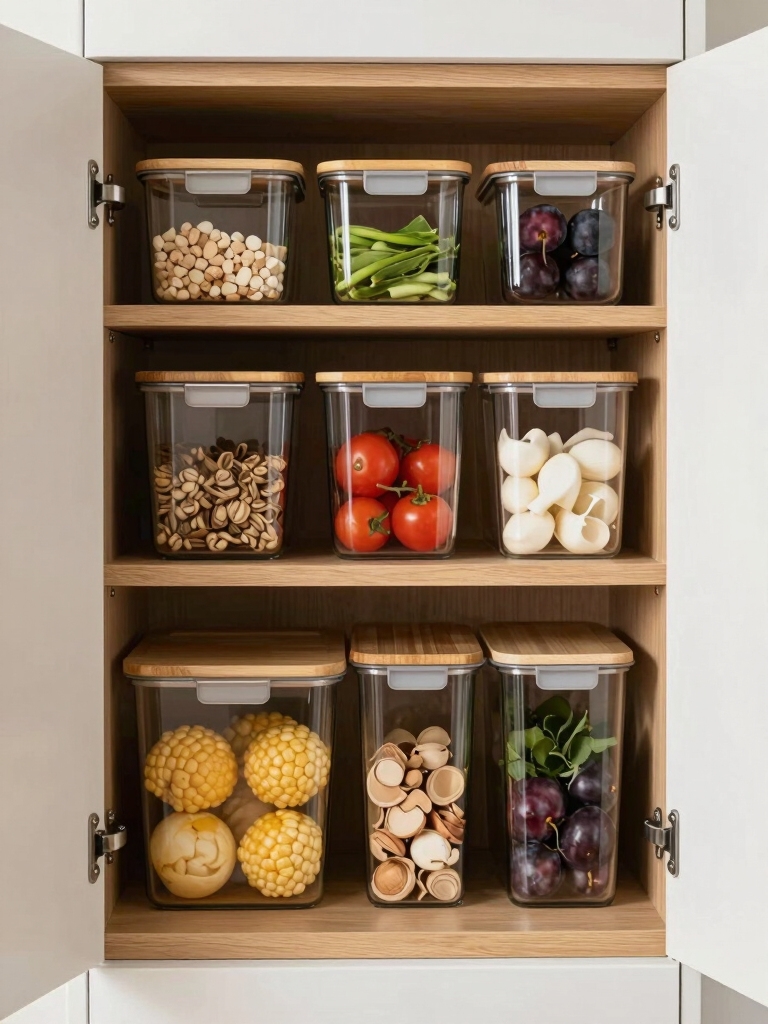
I’m starting with clear bins and containers so you can grab what you need at a glance.
Clear visuals help with quick rotations and keep everything visible, so you’ll stack smartly to save space.
If we group by item and use consistent lid colors, you’ll see the layout improve right away.
Clear Visual Cues
Clear bins and containers make quick visual cues possible, so I can see at a glance what’s in each spot and grab what I need without digging.
I label lids and fronts, group similar items, and keep every bin at eye level. This approach reduces rummaging, speeds restocking, and keeps the pantry orderly, calm, and easy to navigate for you. Additionally, smart kitchen organization can transform your cooking experience by allowing you to find items quickly and efficiently.
Stacking For Space
Stacking for space thrives when I use clear bins and containers so I can see at a glance how much is left and where it sits.
I group like items, stack by height, and label fronts for quick checks. This keeps totes neat, prevents overstock, and reveals gaps I can fill efficiently. Additionally, utilizing clear bins and containers can streamline the entire meal prep process by making it effortless to find ingredients quickly.
Practical, calm, and organized—easy groceries, faster finds.
Pull-Out Drawers for Fast Access
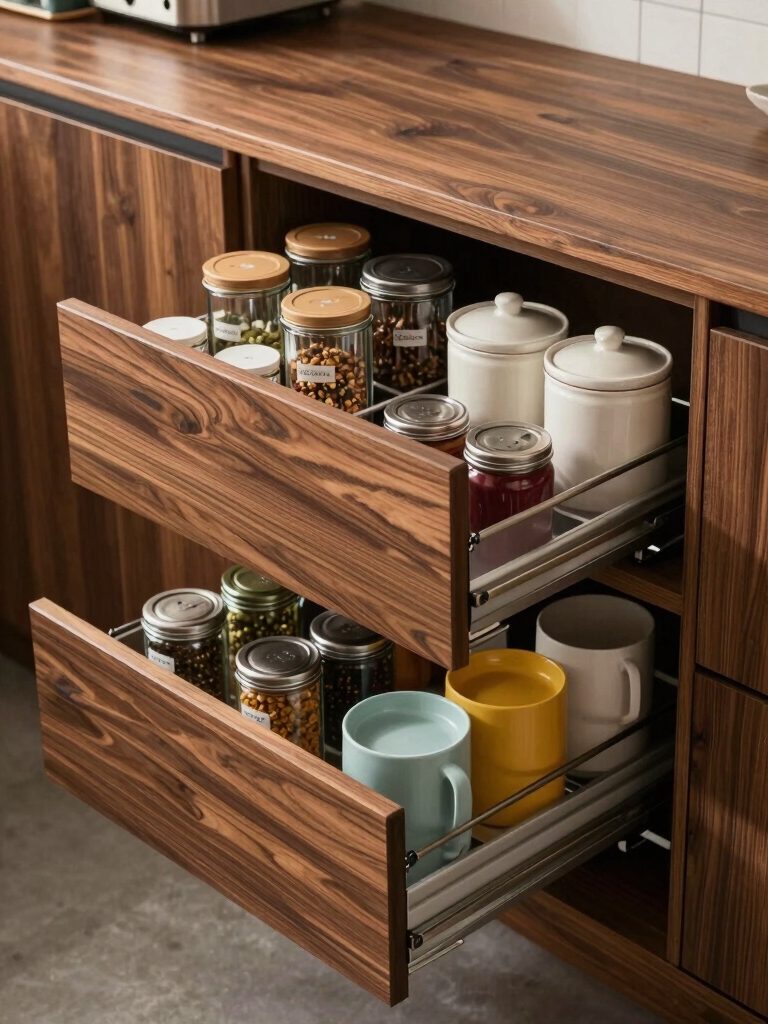
Pull-out drawers make fast access a real possibility in any pantry or cabinet.
I use them to see every item at a glance, reducing searching time and mess.
Here are quick benefits:
- Seamless visibility
- Easy front-to-back retrieval
- Better organization and rotation
They fit tight spaces, slide smoothly, and keep contents fresh. Additionally, they enhance kitchen cabinet organization by maximizing the use of vertical space.
Simple upgrade, instant efficiency.
Modular Shelves for Flexible Growth

Modular shelves give me the flexibility to grow with your needs.
I design my setups to adapt as your groceries change, not force you into a fixed system. You can add, remove, or reposition units easily, keeping shelves level and accessible.
This approach reduces clutter, improves visibility, and helps you maximize vertical space without remodeling the entire kitchen. Additionally, small kitchen organization ideas can further enhance your space-saving solutions, ensuring that everything has its place.
Create a Pantry-Style Top-To-Bottom Flow Today
Today, I’ll walk you through a pantry-style top-to-bottom flow that keeps essentials visible and reachable, starting with the layout and then moving to vertical storage techniques.
We’ll align items by use and frequency, use clear labeling for quick finds, and stack containers to maximize vertical space without crowding.
If you start with a simple pantry map, you’ll see how labeling and vertical storage tie together to create a fast, friendly system.
Pantry Layout Flow
Caring for a pantry that flows from top to bottom starts with a simple, deliberate layout: group items by how often you use them and place the most-wanted staples at eye level.
1) Place everyday cans within reach
2) Store bulk snacks below
3) Reserve infrequently used items higher up
Vertical Storage Techniques
Vertical storage is all about making the most of every inch so your pantry feels calm and functional.
I optimize shelves by grouping similar items, stacking safely, and using risers for height efficiency.
I prioritize quick access zones, rotate stock, and maintain a predictable flow from top to bottom.
You’ll discover a tidy, reliable system that saves time and reduces clutter.
Labeling For Clarity
Labeling for clarity starts with a simple rule: labels guide your eye from top to bottom, so everything lands in the right place every time.
I guide you through three essentials:
- Use clear, concise names
- Maintain consistent font and size
- Place labels at shelf level for quick scanning
This keeps groceries easy to locate and put away.
Color-Coding and Visuals to Cut Search Time
Color-coding and visuals cut search time by making at-a-glance decisions possible.
I group similar items with consistent colors and labels, so you can spot what you need in seconds. Clear icons on shelves guide you to staples, snacks, and cleaners.
Visual cues reduce rummaging, and a quick color map keeps your system reliable, even after busy weeks.
Build Dedicated Spice and Snack Stations
I’ll set up dedicated spice and snack stations so everything you reach for is easy to grab and put away.
I organize by category, label clearly, and place frequently used items at eye level. This keeps prep fast and cleanup simple.
- Spice rack by cuisine
- Snack bin with lids
- Quick-grab baskets for everyday staples
Fix Under-Sink and Awkward Spaces With Smart Storage
Under sinks and tight corners, smart storage is the key to reclaiming usable space without adding clutter.
I start by measuring clearances, then choose slim pullouts and adjustable baskets to fit awkward gaps.
I label contents, group similar items, and keep frequently used tools accessible.
Finally, I install a compact step stool and assess weekly to maintain order.
Real-Time Inventory: Know What You Have Now
Real-time inventory starts with a simple, steady habit: I take stock of what’s in reach today and update it as I go.
I’ll keep it precise and useful:
- List every item I can grab without moving others
- Note quantities and expiration dates
- Reconcile weekly against receipts
This helps groceries feel instantly visible, not guessed.
Budget-Friendly Tweaks That Feel High-End
Budget-friendly tweaks can feel luxe without breaking the bank, and I’ll show you practical steps that elevate your space with smart choices.
I start with affordable organizers, clear containers, and labeled bins to sharpen visibility.
Swap mismatched hardware for simple, cohesive pulls. Use under-shelf lighting and a neutral palette to create cohesion.
Small upgrades, big impact—organized surfaces reward daily choices.
Maintenance Habits to Keep Cupboards Effortless
Maintaining cupboards doesn’t have to be a slog; with simple routines, you’ll keep them effortless and organized.
I share practical habits you can use daily:
- Do a 5-minute weekly tidy to restore order.
- Group similar items and label shelves for quick finds.
- Rotate stock, using oldest first to minimize waste.
These steps keep cupboards efficient and stress-free.
Real-Life Layout Examples You Can Copy Now
Here are real-life layout examples you can copy now, built from practical setups I’ve tested in kitchens, pantries, and utility spaces.
I prioritize clear zones: prep, cook, bake, and snack. Use labeled bins, adjustable shelves, and pull-out trays for visibility.
Group similar items, keep frequently used tools within arm’s reach, and maintain spacing for airflow.
Implement gradually, adjust, and align to your space.
Conclusion
I’ve shown you how to stage your cupboards with simple zones, clear bins, and pull-out drawers, so groceries are always in reach. Stick to real-time inventories and budget-friendly tweaks, and your setup stays polished without a marathon cleanup. Maintain it with quick, weekly checks and easy reconfigurations as your needs evolve. Picture your space humming like a perfectly organized newsroom—minus the chaos. And yes, I’ll keep your shelves from becoming a time traveler’s closet, with one handy anachronism: a magnetic chalkboard clock.


