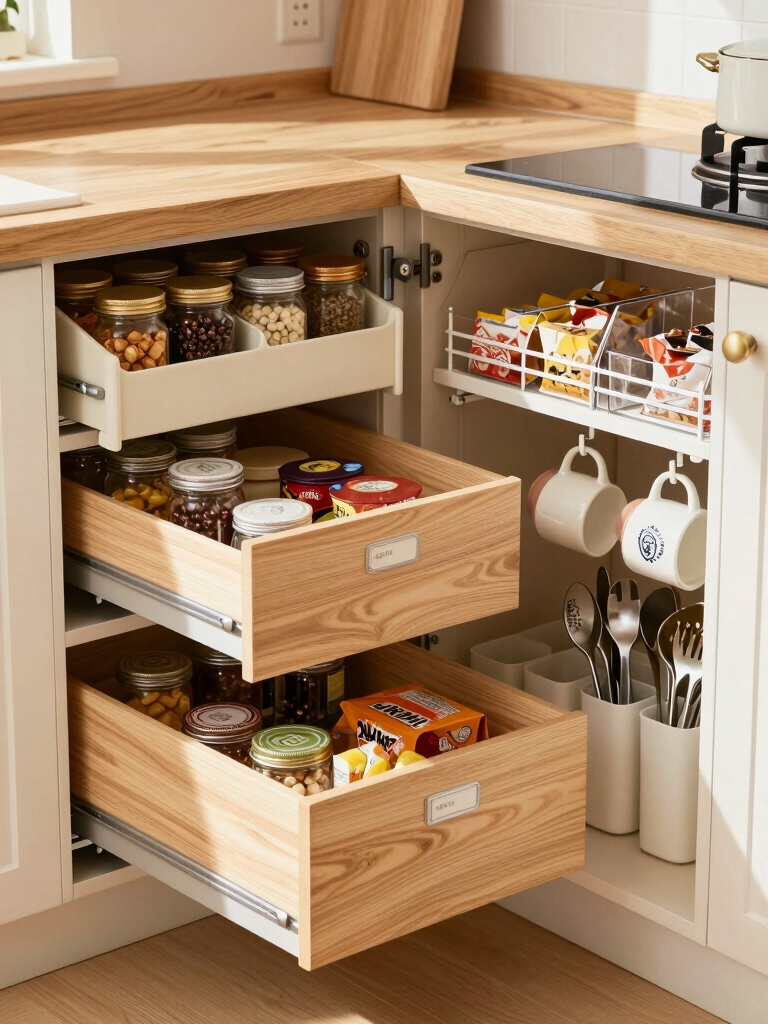

I’ve got a set of weekend cabinet projects that actually change your kitchen without a full remodel: paint for a pro finish, two-day veneer refacing, swapping doors, open-shelf conversions, new hardware, magnetic or Velcro accent panels, under-cab lighting, and quick repairs for chips and water damage.
I favor satin or semi-gloss paint, light prep, and thin coats, and I’ll show easy ways to add two-tone stain or replace doors — keep going and I’ll show how each one’s done.
Quick Cabinet Painting Tricks for a Professional Finish

When I paint cabinets, I focus on three things: prep, the right products, and technique — get those right and you’ll have a durable, showroom-quality finish without hiring pros.
I sand lightly, degrease, and tape clean lines.
I choose a bonding primer and a satin or semi-gloss acrylic enamel, apply thin, even coats, and dry between layers for smooth, lasting results.
Pro painters also swear by spray application for the most uniform finish and faster results.
Two-Day Cabinet Refacing With Veneer Sheets

If painting feels limiting or you want a more dramatic change in just a weekend, I’ll show you how to reface cabinets with veneer sheets in about two days.
I measure, cut, and apply edge-banding, smoothing seams with adhesive and a roller.
You’ll get a sleek, consistent grain, minimal disruption, and a high-end look without full replacement—smart, fast, and budget-savvy.
Veneer sheets can often be applied without aggressive sanding when proper adhesion techniques and surface cleaning are used, making them a great option for paint-free updates.
Swap Cabinet Doors for an Instant Style Change

Swap out cabinet doors and you’ll instantly refresh the whole room without touching the carcasses; I’ve done this enough times to know it’s the fastest way to change style, scale, and color with minimal cost and mess.
I’ll walk you through choosing profiles, finishes, and hinges, plus measuring and swapping steps so you get a cohesive, high-impact result without a full remodel.
Many total beginners can complete these projects over a weekend with basic tools and simple techniques.
Easy Open Shelving Conversion for a Modern Look

I tore out a few upper doors in my last kitchen and instantly opened up the space, so converting cabinets to open shelving is one of my go-to moves for a modern, airy feel.
I’ll keep it simple:
- Remove doors, sand edges
- Paint interior for contrast
- Add thin floating shelves
- Group dishes by color
- Style with plants and bowls
Showcase Open Kitchen Cabinets With Stylish Display with thoughtfully arranged items to keep the look curated and functional.
Replace Hardware to Elevate Your Cabinets

When I want to give cabinetry an instant style boost, I start by replacing the hardware—knobs and pulls are the jewelry of a kitchen and they change the whole vibe without a full remodel.
I pick finishes that contrast or complement countertop tones, swap sizes for ergonomics, and tighten alignment.
It’s quick, affordable, and instantly modernizes function and aesthetic with minimal fuss.
Freshly painted cabinets transform your kitchen by tying new hardware and paint together for a cohesive, updated look.
Add Decorative Trim and Molding to Plain Doors
I’ll walk you through picking trim profiles that suit your cabinet style and scale so the final look feels intentional.
Then I’ll cover simple installation steps and the finishing touches—sealing, caulking, and paint—to make the molding look built-in.
With a few careful choices and basic tools, you can transform plain doors into a custom focal point.
Shaker-style simplicity remains widely popular, so choosing trim that complements Shaker cabinets can help your makeover feel both modern and timeless.
Choosing Trim Profiles
Although a simple change, adding trim can completely redefine plain cabinet doors, and I’ll walk you through picking profiles that match your room’s style and skill level.
I prefer clean, mixed, and textured trims—here’s how I decide quickly:
- Shaker: crisp, modern
- Ogee: classic elegance
- Beadboard: casual cottage
- Flat stock: minimalist
- Cove: soft, shift
Choose scale, shadow, and proportion. Avoid common painting mistakes like insufficient surface prep and improper primer application to ensure a smooth, durable finish and long-lasting results.
Installation and Finishing
Since adding trim and molding is where the cabinet really comes alive, I start by laying out the pieces on the door to confirm fit and sightlines before gluing or nailing anything.
I clamp, pre-drill, and use thin bead glue for a clean hold, then fill seams with wood filler, sand smooth, prime, and paint.
The result reads intentional and durable.
Apply Peel-and-Stick Laminate for Fast Refresh
Start by peeling back a corner and feeling how the laminate lays — that tells me whether a panel will go on smooth or need an extra pass with the squeegee.
I’ll prep clean, measure carefully, and work slowly.
Quick tips:
- Clean surface thoroughly
- Cut slightly oversized
- Align edges before sticking
- Smooth center outward
- Trim with sharp blade
The result feels modern and surprisingly durable.
Refresh Cabinet Interiors With Paint and Liner
For a quick, high-impact refresh, I paint interiors and add a peel-and-stick liner to make cabinets feel new inside and out.
I sand lightly, use a durable primer, then roll a low-sheen paint for easy cleaning. Liner adds pattern, protects shelves, and hides wear.
I trim precisely, press seams flat, and reinstall shelves for a polished, functional result that feels intentional.
Install Glass Door Inserts for Visual Interest
I swap a couple of solid cabinet fronts for glass inserts when I want to add light, texture, and a bit of display without a full remodel. It’s quick, chic, and practical.
Consider:
- Choose clear, frosted, or seeded glass
- Match trim finish to hardware
- Remove doors carefully
- Use silicone or glazing clips
- Style contents for balance
Create Faux Shaker Doors With Trim and Paint
If you liked the lightness glass doors bring, you’ll appreciate how faux Shaker fronts add that same clean, tailored look without swapping out every cabinet.
I trace and cut simple battens, glue and nail them to inset panels, then fill, sand, and prime. A satin paint unifies the kitchen, giving crisp, modern lines with minimal cost and weekend effort.
Use Chalk Paint for a Distressed, Vintage Finish
I like to start by lightly sanding and wiping cabinets so the chalk paint grips without losing character.
I’ll apply two thin coats of chalk paint, then selectively sand edges to create that worn, vintage look.
Finally I seal everything with a clear wax or topcoat to protect the finish and keep it looking lived-in.
Prep and Sand Lightly
While you’re prepping the cabinets, I start by clearing hardware and giving surfaces a light sanding to guarantee the paint sticks and the distressing reads as authentic.
I focus on clean edges and smooth shifts, then dust thoroughly.
Quick checklist:
- Remove knobs and hinges
- Light sanding with fine grit
- Wipe with tack cloth
- Fill minor dents
- Mask nearby surfaces
Layer Chalk Paint Coats
Usually I start with two thin coats of chalk paint, brushing with the grain and letting each coat dry to the touch before the next—this builds color without obscuring panel details.
Then I add a third, slightly watered-down coat on flat surfaces to deepen tone. I avoid heavy buildup on edges, keeping layers subtle so texture reads vintage without looking messy.
Distress and Seal Finish
Start by gently distressing the edges and raised details with fine-grit sandpaper or a sanding sponge to reveal the underlayer and give the cabinets that lived-in character.
I then:
- Wipe dust with a damp cloth
- Apply clear wax thinly with a rag
- Buff for sheen and protection
- Spot-age with dark wax if desired
- Reattach hardware after cure
It’s simple, charming, and durable.
Magnetic or Velcro Panels for Removable Accent Facings
I like to snap on magnetic or Velcro panels when I want a quick, high-impact change without committing to a full refinish; they let you swap colors, patterns, or textures in minutes.
I cut lightweight panels to fit doors, finish edges for polish, and hide fasteners. It’s low-risk, budget-friendly, and perfect for renters or anyone craving seasonal updates without tools or permanence.
Under-Cabinet Lighting Installation in a Weekend
I’m excited to show how under-cabinet lighting can lift your refreshed cabinets, starting with how to pick the right fixtures—warm or cool LEDs, puck or strip, hardwired or plug-in—based on look and budget.
I’ll walk you through quick, weekend-friendly steps: measure and plan, mount and connect, then test and tidy.
With a little prep you’ll get polished, usable light without rewiring your whole kitchen.
Choosing the Right Lights
Often I find the right under-cabinet lighting transforms a tired kitchen into a workspace that actually invites cooking — and you can do it over a weekend.
I pick fixtures by function and vibe, balancing brightness, color temperature, and size. Consider:
- LED strips for even light
- Puck lights for accents
- Warm vs cool temperature
- Dimmable drivers
- Low-profile channels
Quick Installation Steps
Once you’ve picked the lights, I’ll walk you through fast, practical steps to get them mounted and working by the weekend—no electrician required for most setups.
I measure and mark locations, test-fit strips or puck lights, connect low-voltage plugs or hardwire kits, secure with screws or adhesive, hide wires with trim, and test brightness. Simple adjustments keep the look polished and functional.
Quick Touch-Ups: Repairing Chips and Water Damage
When you spot a chip or a water stain on a cabinet, I’ll show you how small fixes can keep your kitchen looking intentional and cared-for without a full overhaul.
I walk you through quick, tidy repairs that preserve finish and function:
- Clean and dry the area
- Lightly sand edges
- Use wood filler or putty
- Match color with marker
- Seal with clear coat
Paint-Grade Stain Technique for a Two-Tone Effect
After patching chips and taming water stains, I like to shift focus to visual impact—specifically a paint-grade stain that gives cabinets a chic two-tone look without the fuss of full glazing or distressing.
I paint upper cabinets a soft matte, then apply a translucent stain on lowers to reveal wood grain. It’s quick, reversible, and elevates contrast with minimal tools and effort.
You’ve got a toolbox of weekend wins — from quick paint tricks and new hardware to swapping doors or adding under-cabinet lights — that make your kitchen feel brand new without a full remodel.
Want to keep things fresh and flexible while staying realistic about time and budget? Pick one project, set a clear plan, and enjoy the instant payoff; these small, design-forward moves really add up to big, practical style.