


If you’re chasing 16 practical cabinet upgrades, I’ve got you covered. I assess your space first—measure everything, inventory your gear, and pinpoint what truly belongs where. Then I group items into cook, prep, bake, and snack zones, add pull-out organizers, flexible shelves, and slim under-cabinet racks. I keep labels clear, limit duplications, and design for quick access. You’ll declutter fast with a simple weekly routine, and you’ll discover more handy tips as you keep going.
Start Here: Define Your Cabinet Goals and Pain Points
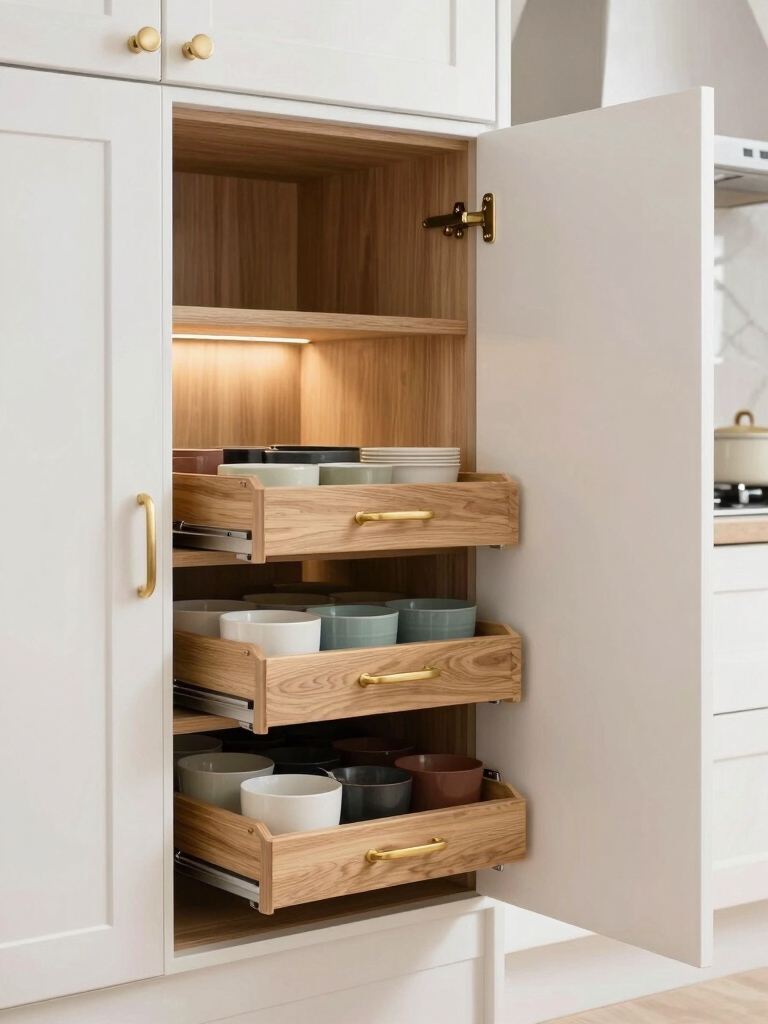
Starting by defining your cabinet goals and pain points sets the tone for real progress.
I’ll guide you calmly: identify daily needs, emergency essentials, and rarely used items.
List top priorities, then flag frustrations like clutter, wasted space, or stuck lids.
Align goals with workflow, time, and accessibility.
Keep it actionable, measurable, and revisable as you test and improve your setup. Additionally, consider utilizing essential kitchen organization tips from real homeowners to enhance your approach.
Assess Your Space: Measure, Inventory, and Prioritize
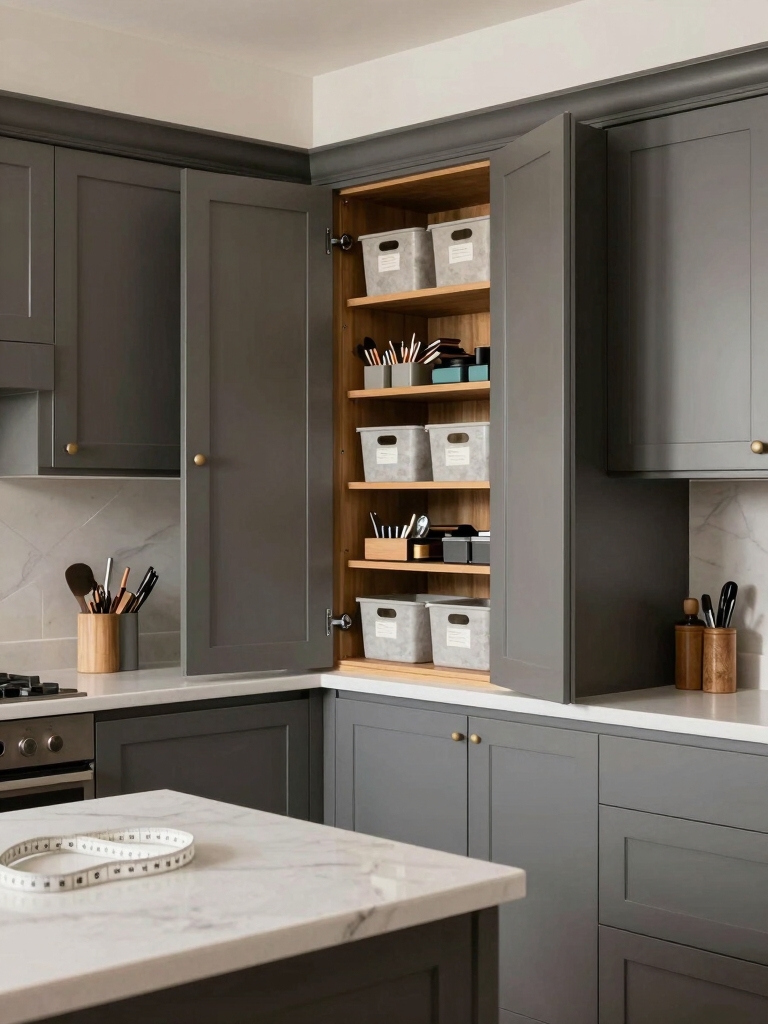
Evaluating your space starts with a clear three-step approach: measure what you’ve got, take a precise inventory, and then prioritize how you’ll use every square inch.
I’ll walk you through practical steps to map dimensions, list items, and rank usage, so you can design smarter storage.
- Measure all cabinets, shelves, and gaps.
- Inventory every item, noting size, frequency, and weight.
- Prioritize zones by necessity and mess potential.
In addition, consider creative solutions for small kitchen spaces to maximize functionality without sacrificing style.
Kitchen Cabinet Organization Basics: Zones for Cook, Prep, Bake, and Snack

I’m here to help you set up kitchen cabinet zones that make cooking, prep, baking, and snacking flow smoothly.
Think of dedicated spaces: a cook zone with pots and spices, a prep zone with towels and knives, a bake zone with pans and measuring tools, and a snack zone for quick grabs.
I’ll guide you through simple organization ideas so you can locate items fast and keep messes to a minimum. Additionally, implementing organization tips can maximize your cabinet space and efficiency.
Zones For Cook
When organizing for the cook zone, I group items you reach for during cooking within arm’s reach: pots, pans, measuring tools, mixing bowls, and common spices.
This keeps prep efficient and reduces motion waste.
- Keep sauté pans near the stove
- Place measuring tools with the mixing bowls
- Store frequent spices at eye level for quick grab-and-go access
Additionally, consider using kitchen cabinet organization layouts that maximize space and accessibility for your cooking essentials.
Prep And Bake
Prep and bake is all about keeping the tools and ingredients you use for recipes within easy reach, so you can assemble and bake without zigzagging around the kitchen.
I store sheet pans, mixing bowls, and measuring spoons near the sink and oven, while ingredients like flour and sugar stay in clear canisters. This setup speeds workflows, reduces misdrops, and stays tidy. One way to enhance this organization is by incorporating space-saving solutions, such as vertical storage racks or drawer dividers, to maximize your cabinet space.
Snack Organization Basics
Snack Organization Basics: I’ll keep snacks tucked in a dedicated cabinet zone so you can grab a quick bite without digging through the pantry.
I organize by type, accessibility, and shelf height, so you’ll find favorites fast.
- Keep go-to snacks at eye level.
- Use clear containers for portion control.
- Label bins for easy restock and quick checks.
Additionally, consider implementing smart storage solutions like vertical dividers or tiered shelving to maximize every inch of your cabinet space.
Pull-Out Solutions That Really Fit Your Cabinets

Pull-out solutions that really fit your cabinets start with measuring precisely and choosing slides that match your cabinet depth, hinge clearance, and door swing.
I’ll guide you to pick sturdy frames, install level tracks, and space them for easy access. Using pull-out solutions can drastically enhance your kitchen’s functionality and organization.
I keep it simple, practical, and tidy, so you get smooth pulls, reliable storage, and less clutter in your kitchen.
Flexible Shelf Upgrades for Small-Cace Cabinets

Small cabinets demand smart shelving that adapts to what you store and how you use it.
I share practical upgrades that fit tight spaces, from adjustable dividers to shallow rack tiles, making every inch count. You’ll gain organized access without bulk. Additionally, incorporating modular risers for vertical stacking can significantly increase your storage efficiency.
- Install adjustable shelf supports
- Add slim, stackable bins
- Use modular risers for vertical stacking
Lazy Susans and Turntables for Easy Access
Lazy Susans and turntables are my go-to solution for quick access in tight spots.
I keep spices, oils, and tins organized on sturdy bases, so items don’t tip or spin away. I label corners clearly and rotate shelves regularly to prevent digging.
Keep it smooth: load heavier items lower, lighter ones higher, and wipe spills immediately for lasting efficiency.
Use Uniform Containers to Maximize Space and Visibility
Uniform containers streamline both space and visibility.
I show you how consistency matters: contents readable, shelves tidy, odds of digging minimized. Embrace uniform sizes for stacks and rotation. Here’s how:
- Align lids and bases so fronts face out
- Use clear materials to spot contents instantly
- Group similar items together for quick grabbing
Labeling That Doesn’t Clutter Counters
I’m all about clear label placement that’s easy to read without crowding the counters.
I’ll show you simple, visible label systems that keep things organized and minimize clutter.
Let’s focus on practical tips that balance readability with a neat, streamlined look.
Clear Label Placement
Clear labeling should enhance accessibility without crowding your counters.
I keep labels small, clear, and aligned, so you can find what you need in seconds. No clutter, no guesswork, just calm organization.
Here’s how:
- Place on inner cabinet edges for quick visibility
- Use consistent fonts and colors
- Swap bulky tags for slim, magnetic options
Minimal Counter Clutter
Now that labels stay slim and visible, the goal shifts to keeping counters calm.
I’ll choose a single, simple setup: one small tray for essential items, a wall-mounted hook for frequently used tools, and a designated spot for mail or receipts elsewhere.
Regularly purge nonessentials, wipe surfaces weekly, and resist adding decorative clutter that distracts from function.
Visible Label Systems
Labels should enhance, not crowd, your space. I use visible label systems to guide my kitchen flow without clutter.
Clear labels on jars and shelves save time and reduce guesswork. Here’s how I keep it tidy:
- Choose slim, durable tags
- Color‑code by category
- Update labels as items change
Ditch Duplicates: A Simple Declutter Process That Works
If you want a simple decluttering win, start by ditching duplicates.
I walk you through a quick, practical method: gather common items, compare quantity with need, and remove extras in one pass.
Keep a single, functional set of tools and staples.
Label what remains, plan future checks, and celebrate the clearer, calmer cabinet you’ve earned.
Pantry-Style Bins for Cabinet Doors
I love using pantry-style door bins to turn cabinet doors into extra storage, so you can see lids, wraps, and snacks at a glance.
These cabinet door organizers keep essentials organized and within reach without crowding your shelves.
If you’re curious about optimizing space, I’ll share practical setup tips and quick positioning ideas that fit your kitchen workflow.
Pantry-Style Door Bins
Pantry-style door bins are a simple, efficient way to reclaim cabinet space and keep frequently used items within easy reach.
I swap clutter for accessibility, placing small, lightweight staples where I grab them first. This keeps shelves clear and helps me stay organized, without digging.
- Snacks within arm’s reach
- Tea and coffee packets handy
- Spices visible and easy to grab
Cabinet Door Organizers
Cabinet door organizers—pantry-style bins that attach directly to the inside of cabinet doors—make small items easy to grab without digging.
I recommend them for spices, packets, and lids, so your shelves stay clear. Measure door depth, choose bite-size bins, and label edges.
Installation is quick, and cleaning is simple. I love how they reclaim vertical space and reduce clutter.
Slide-Out Racks for Spice and Bakeware Caddies
Slide-out racks make spice jars and bakeware caddies easy to access without digging through shelves.
I group items by use, so I grab what’s needed fast, not later. This keeps counters clear and reduces wasted space.
- Install beneath upper cabinets for visibility
- Use labeled sections for spices and lids
- Pull-out depth fits standard racks without crowding
Drawer Dividers That Prevent Morning Mayhem
I’ve found that smart drawer dividers boost morning routine efficiency by keeping utensils and essentials in their spots.
With tight spaces, space optimization tips really matter, so I’ll share simple setups that reduce searching and chaos.
Let’s discuss how these organizers can make every morning calmer and more efficient.
Drawer Divider Benefits
Drawer dividers save us from that morning scramble by turning a chaotic drawer into organized zones.
I notice how easy it’s to spot the right tool, grab it, and keep others in place. This reduces rummaging and resets efficiency.
- Clear compartments guide quick access
- Custom widths fit any drawer
- Neat tools, fewer misplacements
Morning Routine Efficiency
Morning routines run smoother when your drawers are already sorted. I line up flatware, lids, and utensils with clear dividers, so I grab what I need without digging.
I embrace zones: coffee setup, breakfast prep, snacks. Small, intentional placements cut chaos, speed up decisions, and reduce morning stress.
You’ll notice fewer misplacements and more consistent, efficient mornings.
Space Optimization Tips
Space-saving drawer dividers are a simple, effective way to curb morning chaos.
I guide you through practical, tidy tweaks that save seconds and reduce frustration. You’ll feel calmer, faster, and more centered at breakfast.
- Measure drawers precisely before buying
- Group items by use and label clearly
- Use adjustable dividers to fit evolving needs
Vertical Storage Hacks for Tall, Narrow Cabinets
Vertical storage in tall, narrow cabinets can transform a cramped kitchen into a functional workspace.
I share practical tweaks, like slim risers, pull-out organizers, and labeled bins, so every inch counts.
I’ll keep items accessible, use adjustable shelving, and group by frequency.
You’ll stay organized, see essentials at a glance, and avoid clutter with simple, repeatable routines.
Hidden Storage Tricks That Don’t Require Remodeling
Hidden storage can feel like magic until you learn a few simple tweaks that don’t require a single hammer swing or cabinet swap.
I’ll show you practical, quick routes to reclaim space without remodeling.
- Use drawer dividers to group similarly sized items.
- Add slim, wall-mounted shelves inside doors for spices and lids.
- Install magnetic strips for metal tools and measuring spoons.
Maintenance Habits to Keep Cabinets Clutter-Free
Keeping cabinets clutter-free is about steady habits, not one-time hacks.
I keep a simple routine: weekly quick purge, monthly audit, and a running list of items I use often.
I return things to their spots, label shelves, and wipe surfaces after cooking.
Small, consistent actions save space, reduce stress, and keep my kitchen orderly for you to enjoy.
Quick-Win Budget Plan: Organize in One Weekend
If you’re aiming to tidy up fast, I’ll show you a practical, one-weekend plan that actually sticks.
I’ll share a budget-friendly approach that fits real life, not fantasies, and keeps you moving.
- Triage and sort: separate essentials, duplicates, and trash;
- Gather affordable tools and labeled bins;
- Schedule quick, focused 4-hour sessions to finish a zone each time.
Conclusion
Alright, you’ve got a clear roadmap now. With goals set, space measured, and zones defined, you can tame even stubborn cabinets. Start small, test pull-outs, and upgrade shelves as you go—these tweaks compound fast. Think of maintenance as a habit, not a chore, and your kitchen will stay usable and calm. The one-line truth: organization is momentum—tiny steps today become lasting clarity tomorrow. If you stay practical, you’ll finish this weekend with cabinet bliss.


