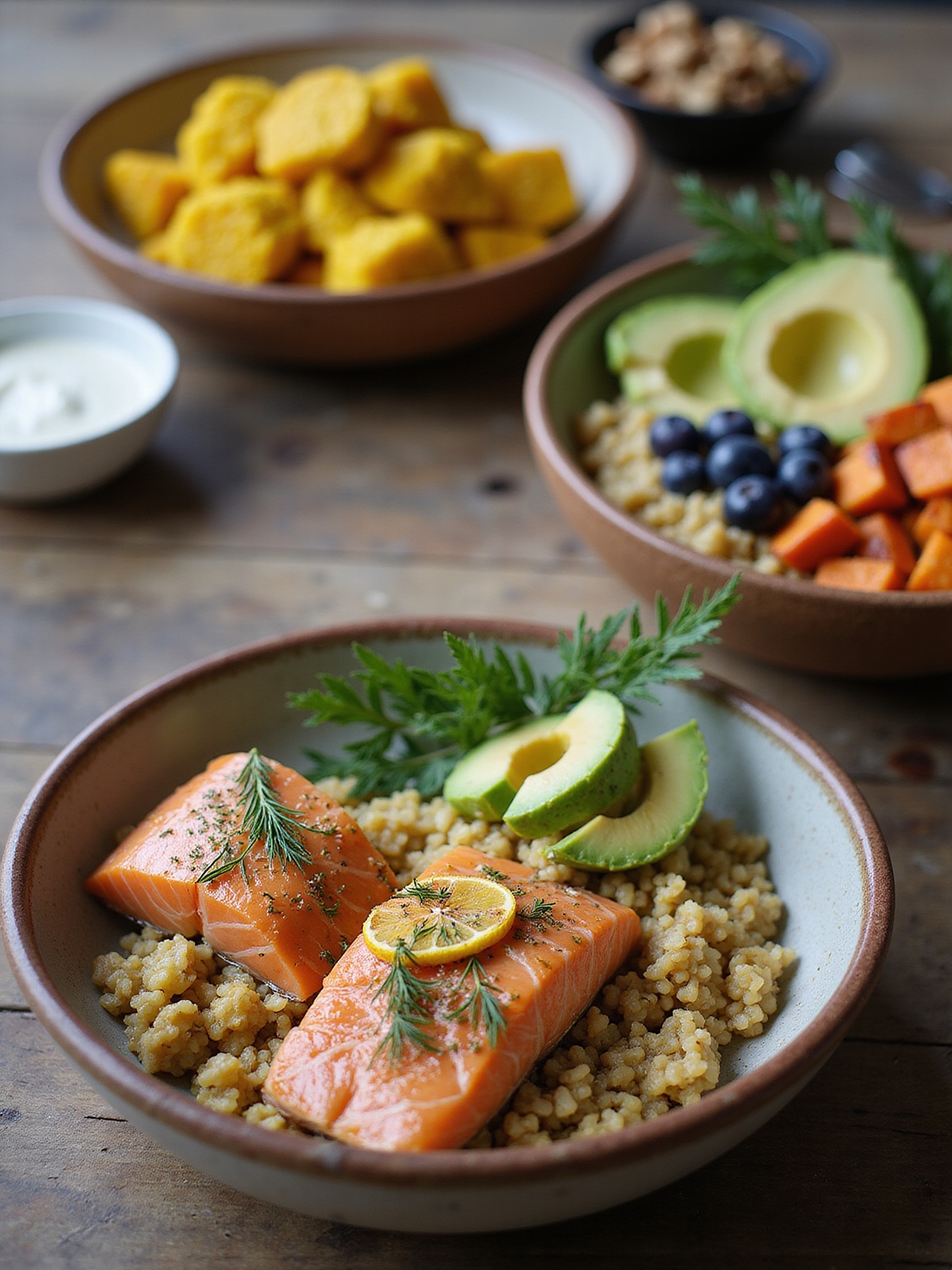
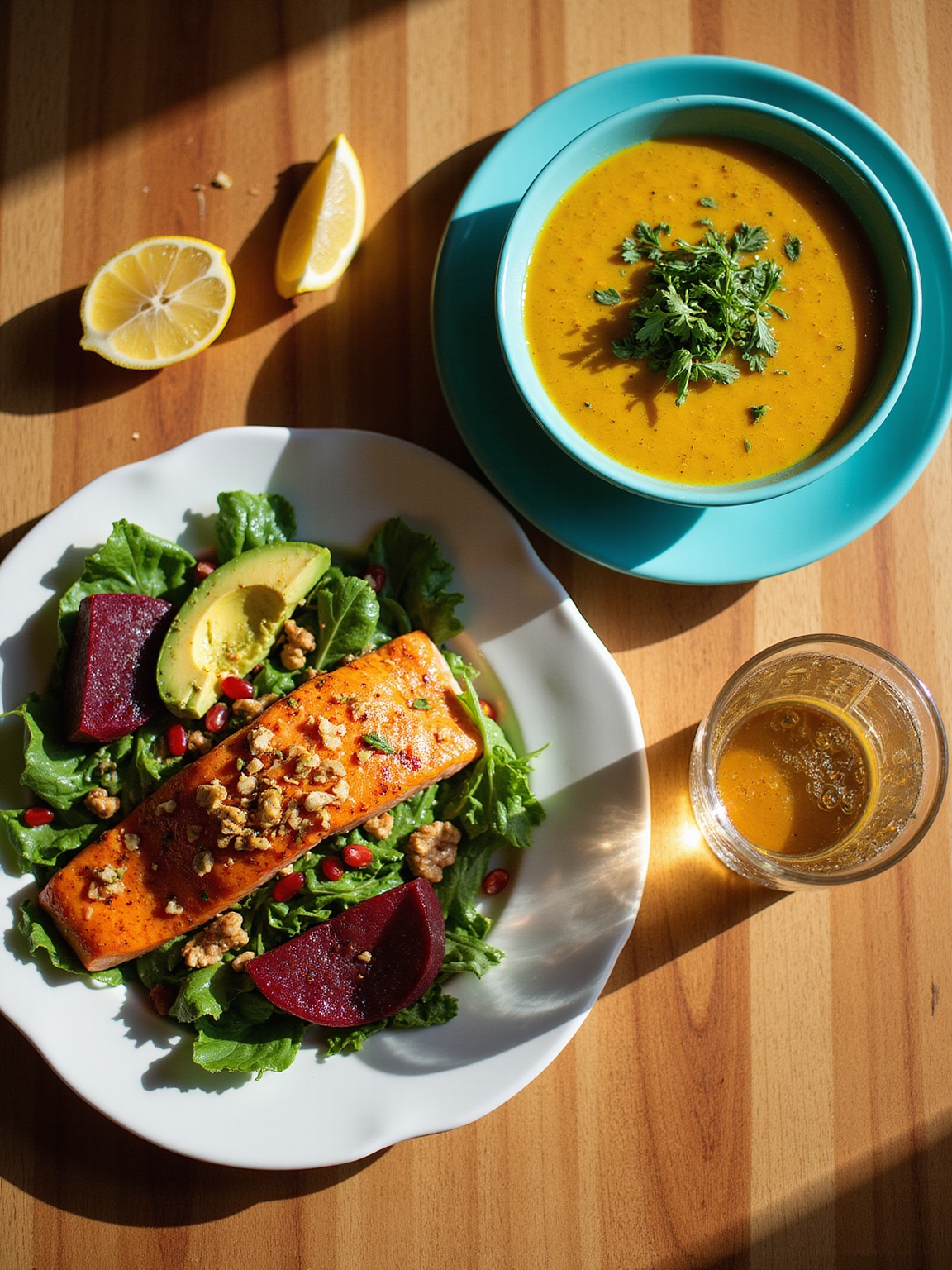
About 70% of chronic inflammation cases link to diet, so small daily swaps really matter. You can cut inflammatory triggers and still enjoy flavorful meals by focusing on colorful veggies, whole grains, healthy fats and spices like turmeric and ginger. I’ll show practical, budget‑friendly dishes, pantry staples and quick swaps that keep meals satisfying and kid‑friendly—so you can simplify your routine and feel better day to day.
Anti-Inflammatory Basics: Foods to Eat, Foods to Avoid, Sample Plate

Because chronic inflammation links to conditions like heart disease, diabetes, and arthritis, choosing the right foods can make a real difference in how you feel day to day. Aim for colorful vegetables, fatty fish rich in omega-3s, whole grains, legumes, nuts, and olive oil—these reduce inflammatory markers in trials.
Limit processed meats, refined carbs, sugary drinks, and excessive alcohol, which promote inflammation. For a practical sample plate: half nonstarchy vegetables, a quarter lean protein or fatty fish, a quarter whole grains or starchy veg, plus a small portion of healthy fats. Drink water and season with herbs and spices. Include staple anti-inflammatory items like extra virgin olive oil and whole grains in regular meals to maintain benefits.
Quick Pantry Staples for an Anti-Inflammatory Kitchen

Stocking a few evidence-backed pantry staples—like extra-virgin olive oil, canned tomatoes, dried beans, whole grains, and ground turmeric—lets you build anti-inflammatory meals without a trip to the store.
These long-lasting items are nutrient-dense and versatile, so you can mix and match them into salads, soups, or grain bowls that support reduced inflammation.
Keep a simple shopping list and rotate staples before they expire to make healthy choices easy and practical.
Extra pantry items such as nuts and seeds are also helpful for adding healthy fats and fiber to meals, which can support reduced inflammation.
Pantry Anti-Inflammatory Essentials
When you keep a few key staples on hand, cooking anti-inflammatory meals becomes faster and more reliable; these pantry items deliver nutrients and compounds—like omega-3s, polyphenols, and fiber—that research links to reduced chronic inflammation.
Stock canned wild salmon or sardines for EPA/DHA, extra-virgin olive oil for oleocanthal, and chia or flax seeds for ALA and fiber.
Add turmeric and black pepper for curcumin absorption, dried oregano and rosemary for polyphenols, and unsweetened cocoa powder for flavanols.
Keep plain legumes and brown rice for resistant starch.
These choices let you assemble evidence-based meals without extra effort.
Include a few versatile herbs and spices to boost flavor and polyphenol content in simple preparations.
Long-Lasting Healthy Staples
If you want a pantry that reliably supports anti-inflammatory cooking, keep long-lasting staples that provide omega‑3s, polyphenols, fiber, and heat-stable spices for everyday use.
Stock canned wild salmon or sardines, extra-virgin olive oil, and ground flaxseed for omega‑3s.
Add dried beans, lentils, rolled oats, and quinoa for fiber and sustained energy.
Keep jarred turmeric, dried ginger, black pepper, and smoked paprika; their compounds remain stable with heat and boost anti-inflammatory pathways.
Store green tea, dark chocolate (70%+), and bottled balsamic or apple cider vinegar for polyphenols.
Rotate stock, check dates, and buy small batches.
Include extra-virgin olive oil regularly, as it’s a cornerstone anti-inflammatory fat supported by research.
Anti-Inflammatory Fats & Proteins for Balanced Meals

You can make meals more anti-inflammatory by choosing healthy fats like olive oil, avocados, nuts, and fatty fish, which research links to reduced inflammation markers.
Pair those with lean proteins such as skinless poultry, legumes, tofu, or fish to keep calories and saturated fat in check while supporting muscle and immune function.
Small swaps—olive oil for butter, beans for processed meats—are practical, evidence-based steps you can use at every meal.
Adding more fruits and vegetables, which are rich in antioxidants and fiber, also supports joint comfort and overall inflammation reduction; see antioxidant-rich produce.
Healthy Fat Choices
Many people benefit from prioritizing fats and proteins that lower inflammation while supporting steady energy and cell repair. You’ll choose fats rich in omega-3s and monounsaturates, like olive oil, avocados, and fatty fish, to reduce inflammatory markers and improve vascular health. Use nuts and seeds in moderation for antioxidants and plant-based omega-3s. Limit refined seed oils and trans fats. Pair fats with vegetables and whole grains to aid absorption and satiety. Practical swaps—olive oil for margarine, avocado for mayo—make meals both satisfying and anti-inflammatory. Research shows that choosing these fats as part of an overall anti-inflammatory pattern supports long-term heart and metabolic health.
| Fat source | Benefit | Use |
|---|---|---|
| Olive oil | Monounsaturated | Dressings, cooking |
| Avocado | Fiber, MUFA | Spreads, salads |
| Walnuts | ALA omega-3 | Snacks, toppings |
| Fatty fish | EPA/DHA | Meals twice weekly |
| Chia/flax | Plant omega-3 | Smoothies, yogurts |
Lean Protein Options
Choose lean proteins that support repair and lower inflammation while keeping meals satisfying. You’ll favor fish like salmon, mackerel, and sardines for omega-3s, and choose skinless poultry, lean cuts of pork or beef, and plant proteins such as lentils, chickpeas, and tofu for variety.
Aim for grilled, baked, or poached preparations to avoid added inflammatory fats. Include portions around palm-sized servings and combine with fiber-rich vegetables to modulate glycemic load.
Rotate protein sources to boost nutrient diversity and limit processed meats. These choices are backed by studies linking omega-3s and plant proteins to reduced markers of inflammation. Incorporate a variety of seafood and plant proteins to maintain a balanced pescatarian approach to anti-inflammatory eating.
Grain & Bean Swaps That Keep You Full Longer

Swap in whole grains and beans that slow digestion, and you’ll stay satisfied longer while lowering inflammatory spikes. Choose swaps that boost fiber, protein, and抗-inflammatory nutrients to steady blood sugar and reduce cravings.
- Replace white rice with quinoa or farro — more fiber, magnesium, and plant protein.
- Swap pasta for lentil or chickpea varieties — higher protein and resistant starch support gut health.
- Use barley or steel-cut oats instead of refined cereals — they deliver sustained energy and polyphenols.
You’ll feel fuller, eat less overall, and support markers linked to inflammation. Start small, test combinations, and note how your appetite and energy shift.
Simple Anti-Inflammatory Breakfasts

Now that you’ve picked whole grains and beans that steady blood sugar and curb cravings, breakfast is a perfect place to keep that momentum going. Choose anti-inflammatory staples: oats, walnuts, berries, eggs, and leafy greens. You’ll get fiber, omega-3s, polyphenols, and protein to lower inflammation markers and sustain energy. Prep simple combos the night before and vary textures to stay satisfied. Aim for minimally processed foods, moderate healthy fats, and limited added sugar. Use the quick guide below to mix-and-match options for balanced mornings.
| Base | Protein | Topping |
|---|---|---|
| Oats | Egg | Berries |
| Toast | Yogurt | Nuts |
Easy Anti-Inflammatory Smoothies & Bowls
You can start your day with bright, anti-inflammatory green smoothies that combine leafy greens, ginger, and a splash of citrus for vitamin C and polyphenols.
Try a turmeric berry breakfast bowl—turmeric’s curcumin pairs well with antioxidant-rich berries and a healthy fat like nut butter to boost absorption.
Both options are quick to make, research-supported for reducing inflammation markers, and easy to adapt to your taste.
Anti-Inflammatory Green Smoothies
Frequently, a simple green smoothie can deliver a powerful dose of anti-inflammatory nutrients in minutes—leafy greens, berries, ginger, turmeric, and a healthy fat like avocado or flax provide polyphenols, vitamin C, and omega-3 precursors that research links to lower inflammation markers.
You can build balanced blends that support recovery and steady energy. Keep portions sensible, favor whole foods, and avoid sweetened juices. Try combinations and note effects on your body.
- Spinach, frozen mixed berries, banana, flaxseed, water
- Kale, cucumber, apple, ginger, almond milk
- Romaine, parsley, pear, avocado, lemon juice
Turmeric Berry Breakfast Bowls
Wake up your morning routine with a turmeric berry breakfast bowl that combines anti-inflammatory power and easy prep—berries provide anthocyanins, turmeric supplies curcumin, and a healthy fat (like yogurt, nut butter, or ground flax) boosts curcumin’s absorption.
Blend frozen berries, a banana, a teaspoon of turmeric, a pinch of black pepper, and your chosen fat for a creamy base.
Top with seeds, oats, and fresh fruit for fiber and texture. You’ll get antioxidants, polyphenols, and sustained energy.
Aim for whole-food ingredients, modest portions of added sugar, and routine variation to maximize benefits without culinary boredom.
Fast 15-Minute Weekday Lunches
Whip up nourishing, anti-inflammatory lunches in 15 minutes or less by relying on a handful of staple ingredients—leafy greens, salmon or canned tuna, legumes, whole grains, nuts, and turmeric-rich dressings—so you get steady, evidence-backed doses of omega-3s, fiber, and antioxidants without fuss.
You’ll rotate simple templates, prep components ahead, and dress just before eating to preserve nutrients. Try these easy combos:
- Mixed greens, canned salmon, quinoa, lemon-turmeric vinaigrette.
- Chickpea salad with red onion, parsley, olive oil, walnuts.
- Whole-grain wrap with spinach, hummus, grated carrot, pumpkin seeds.
These options maximize anti-inflammatory benefits and suit busy weekdays.
One-Pan Anti-Inflammatory Dinners for Minimal Cleanup
Keep cleanup to a minimum while packing your plate with anti-inflammatory nutrients by cooking complete meals on a single sheet pan or skillet. You’ll roast colorful vegetables, lean protein, and turmeric- or garlic-spiced olive oil together, preserving antioxidants and reducing prep time. Research supports whole-food combos for inflammation control; cooking once keeps textures and flavors simple. You’ll aim for varied colors, fiber, and omega-rich ingredients, then portion and refrigerate for easy reheats. Here’s a small emotional prompt to guide your choices:
| Comfort | Clarity |
|---|---|
| Warm roast | Calm routine |
| Bright veg | Easy cleanup |
Flavor-Forward Anti-Inflammatory Salads
You’ll boost anti-inflammatory benefits and flavor by finishing greens with bright citrus dressings that add vitamin C and help balance fats.
Tossing in crunchy seed toppings like pumpkin or flax gives you omega-3s, fiber, and satisfying texture.
Try simple combinations—lemon-tahini with toasted seeds or orange-olive oil with chia—for reliable, evidence-backed results.
Bright Citrus Dressings
When you toss bitter greens with a bright citrus dressing, the acid lifts flavors while delivering anti-inflammatory benefits from vitamin C and flavonoids found in lemons, oranges, and grapefruits.
You’ll make a simple vinaigrette with extra-virgin olive oil, fresh citrus juice, and a touch of mustard for emulsification.
Use citrus zest for concentrated aromatics and pair with leafy greens, herbs, and roasted vegetables to balance bitterness and texture.
Try these combinations:
- Lemon, Dijon, olive oil — for peppery arugula.
- Orange, honey, apple cider vinegar — for spinach and fennel.
- Grapefruit, ginger, sesame oil — for mixed greens and avocado.
Crunchy Seed Toppings
Toss a handful of toasted seeds over your salad to add a satisfying crunch plus a concentrated dose of anti-inflammatory nutrients: pumpkin, chia, flax, and sesame deliver omega-3s, lignans, fiber, and magnesium that have been linked in studies to reduced inflammation markers.
You can toast seeds lightly to deepen flavor and release oils without degrading nutrients.
Measure portions (one to two tablespoons) to balance calories.
Mix seed types for complementary textures and nutrient profiles, and store them frozen or airtight to preserve freshness.
Sprinkle seeds just before serving to keep crunch, and combine with leafy greens, beans, and olive oil for synergy.
Anti-Inflammatory Spice Blends and Quick Uses
Bring together a few key spices—turmeric, ginger, cinnamon, cumin, and black pepper—and you’ve got a simple toolkit that reliably reduces inflammation in meals and snacks.
You’ll mix, sprinkle, or steep them for measurable benefits supported by studies on curcumin and gingerols.
Try these quick uses to add flavor and function:
- Stir 1 tsp turmeric + pinch black pepper into yogurt or smoothies.
- Grate fresh ginger into dressings or soups for anti-inflammatory zip.
- Combine cinnamon and cumin in roasted-vegetable rubs to boost antioxidants.
Use small, regular amounts; they complement whole foods and fit easily into daily cooking.
Make-Ahead Batch Recipes for Busy Weeks
If you plan your weekend cooking, you’ll save time and keep anti-inflammatory meals handy all week.
Batch-cook staples like turmeric-lentil stew, roasted vegetable bowls with olive oil, and quinoa tossed with herbs; these store well and retain nutrients when cooled quickly and refrigerated.
Portion into airtight containers for balanced lunches and dinners—aim for proteins, fiber-rich grains, and colorful vegetables.
Reheat gently to preserve healthy fats and bioactive compounds.
Label dates and rotate within four days, or freeze portions up to three months.
This routine lowers decision fatigue, supports consistent anti-inflammatory eating, and fits a busy schedule.
Kid-Friendly Anti-Inflammatory Meals for Travel
How can you keep kids nourished with anti-inflammatory foods when you’re on the go? Pack simple, whole-food options that reduce irritation and support energy.
Choose portable proteins, fiber, and color-rich produce; include a cool pack and insulated container to keep textures appealing. Evidence suggests meals combining protein and antioxidants stabilize appetite and inflammation markers.
Try these easy travel-friendly combos:
- Greek yogurt, blueberries, and a sprinkle of ground flaxseed.
- Hummus, cucumber sticks, and roasted sweet potato cubes.
- Turkey slices, avocado mash, and cherry tomatoes.
Rotate choices, involve kids in packing, and check for allergies or intolerance.
Smart Swaps to Cut Sugar and Refined Carbs
When you swap refined carbs and added sugars for whole grains, fiber-rich produce, and naturally sweet alternatives, you lower spikes in blood sugar and reduce dietary drivers of inflammation.
Choose rolled oats, quinoa, or farro instead of white bread and pastries; their fiber slows glucose absorption. Replace sugary snacks with fruit, plain yogurt with a drizzle of honey, or nut butter on apple slices to satisfy sweetness with nutrients.
Swap white rice for cauliflower rice or brown rice in mixed dishes. Read labels to spot hidden sugars and pick options with minimal ingredients.
Small, consistent swaps yield measurable inflammation benefits.
Quick Meal Templates to Mix and Match Daily
Because variety and simplicity keep healthy eating sustainable, these quick meal templates give you a reliable framework to mix and match anti-inflammatory ingredients across the week.
You’ll base meals on a protein, a colorful vegetable, and an anti-inflammatory fat or spice, adjusting portions for hunger and activity.
Rotate these bowls, plates, and toasts so meals feel fresh without extra planning.
- Grain bowl: quinoa, roasted salmon, spinach, turmeric dressing.
- Plate: grilled chicken, steamed broccoli, avocado, lemon.
- Toast: whole-grain bread, mashed white beans, tomato, olive oil.
These combos follow evidence on inflammation and satiety.
Troubleshooting Meal Planning, Cost, and Picky Eaters
Although meal planning can feel intimidating, you can address common barriers—time, budget, and picky eaters—without sacrificing anti-inflammatory goals.
Start by batching staples (grains, roasted veggies, legumes) to cut prep time; studies show meal prep improves diet quality. Stretch ingredients: use frozen berries, canned beans, and whole grains to lower costs while preserving nutrients. When someone’s picky, offer familiar formats—wraps, bowls, or smoothies—and introduce one new food at a time. Keep flavor tools handy: lemon, herbs, olive oil, spices. Track favorites and leftovers to refine plans, reduce waste, and make anti-inflammatory eating practical and sustainable.
Conclusion
You’ve seen how colorful veggies, whole grains, legumes, and healthy fats calm inflammation and keep energy steady—so why not make half your plate leafy greens and roasted veg, a quarter lean protein or fatty fish, and a quarter whole grains or beans? With pantry staples like turmeric, ginger, olive oil, and frozen berries, you’ll prep quick, budget-friendly meals that satisfy kids and adults alike. Stick with simple swaps and templates, and you’ll feel the difference.