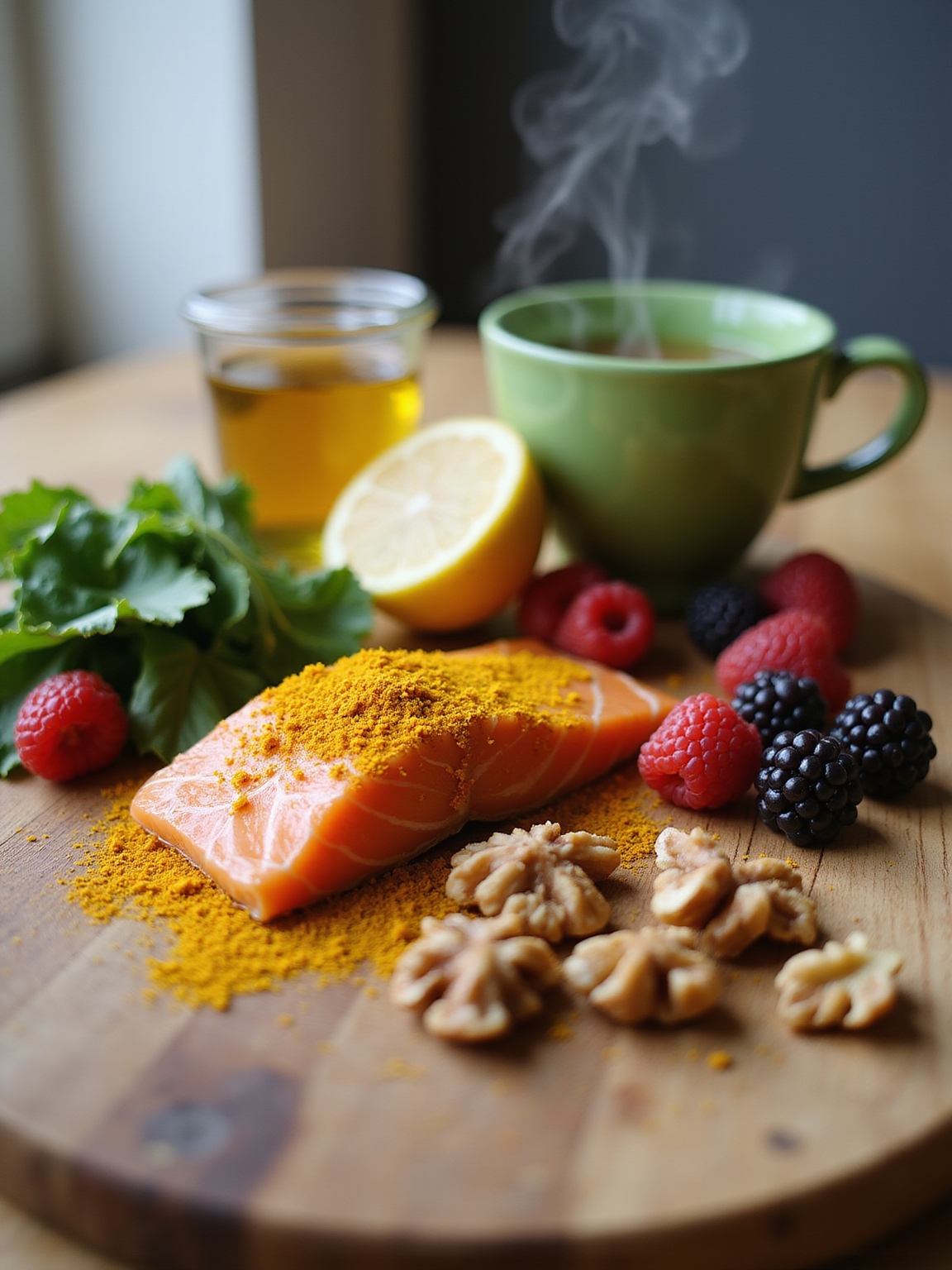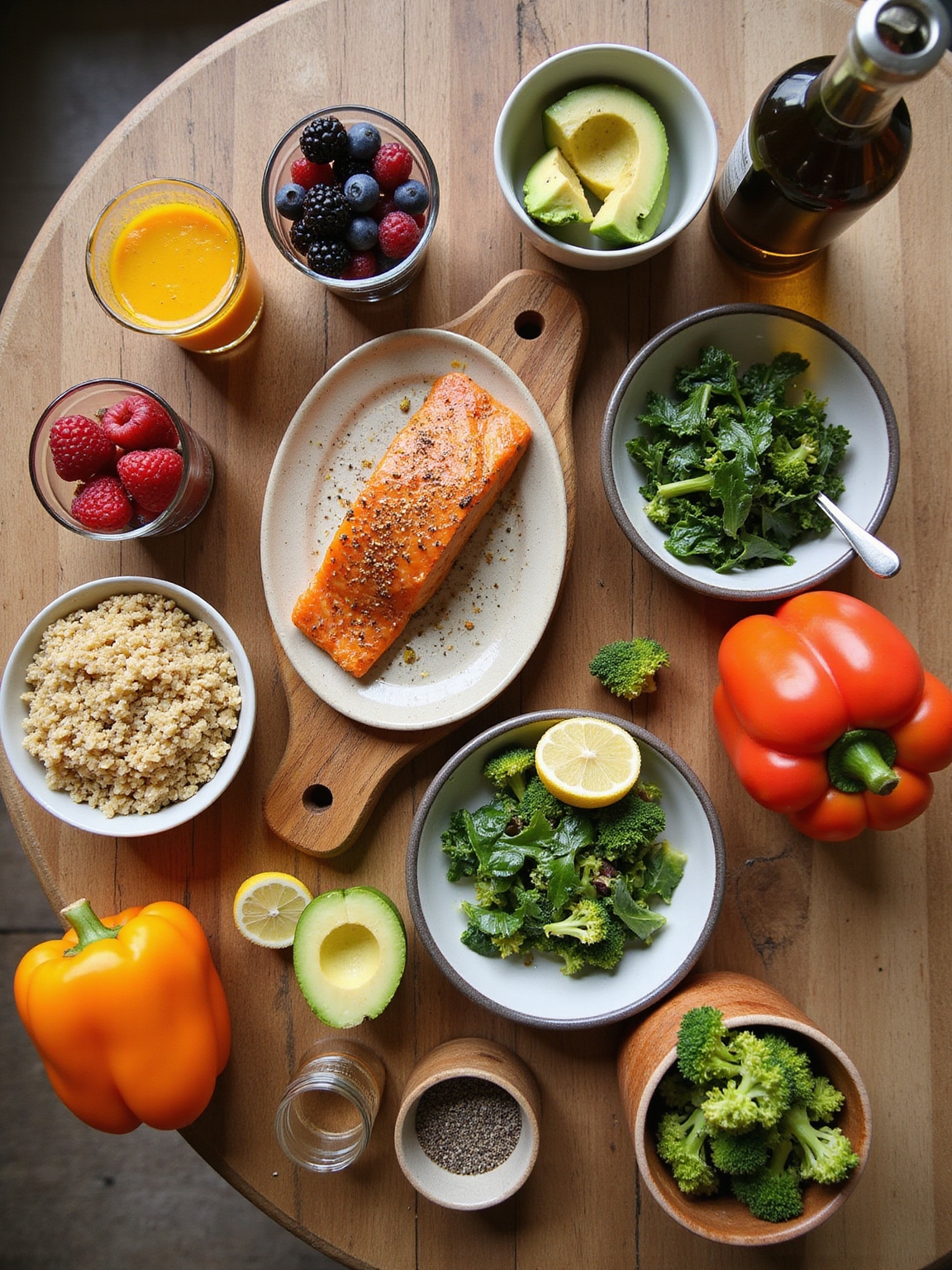

You might not know that small, consistent shifts in omega‑3s, fiber and polyphenols can lower inflammation markers as effectively as some lifestyle changes. You’ll get practical 1,200‑calorie meal ideas that balance protein, healthy fats and low‑glycemic carbs so blood sugar stays stable and inflammation drivers drop. I’ll show portion rules, swaps for allergies or preferences, and signals to watch — plus easy grocery and tracking tips to make it sustainable.
What a 1,200‑Calorie Anti‑Inflammatory Day Looks Like

If you’re aiming for a 1,200‑calorie anti‑inflammatory day, focus on nutrient-dense foods that deliver omega‑3s, fiber, antioxidants, and phytonutrients while keeping added sugars and refined carbs low.
You’ll structure meals to balance protein, healthy fats, and complex carbs: a modest omega‑3–rich breakfast, a fiber-forward lunch with colorful vegetables, a light protein snack, and a dinner emphasizing lean protein and nonstarchy vegetables.
Portion control and timing help stabilize blood sugar and reduce postprandial inflammation. Hydrate with water and green tea. Monitor symptoms and energy; adjust portions or macronutrient ratios with a clinician or dietitian for personalized safety. Include anti-inflammatory staples like fatty fish, berries, leafy greens, nuts, and olive oil for daily meals and snacks to maximize benefits from essential foods.
Which Anti‑Inflammatory Foods to Eat : and Why

Now that you’ve seen how a 1,200‑calorie anti‑inflammatory day can look, let’s look at which foods actually help lower inflammation and why they work.
You’ll favor fatty fish (salmon, sardines) for omega‑3s that reduce proinflammatory cytokines. Bright vegetables and berries supply polyphenols and antioxidants that neutralize oxidative stress.
Whole grains and legumes offer fiber to support a healthy gut microbiome, linked to lower systemic inflammation. Nuts, seeds, and olive oil provide beneficial fats and antiinflammatory compounds.
Fermented foods add probiotics for immune balance. Choose varied, minimally processed options to get complementary, evidence‑based benefits. Include staples like leafy greens, berries, fatty fish, nuts, seeds, whole grains, legumes, olive oil, and fermented foods to build an effective anti-inflammatory grocery list.
Foods and Habits to Avoid on This Plan
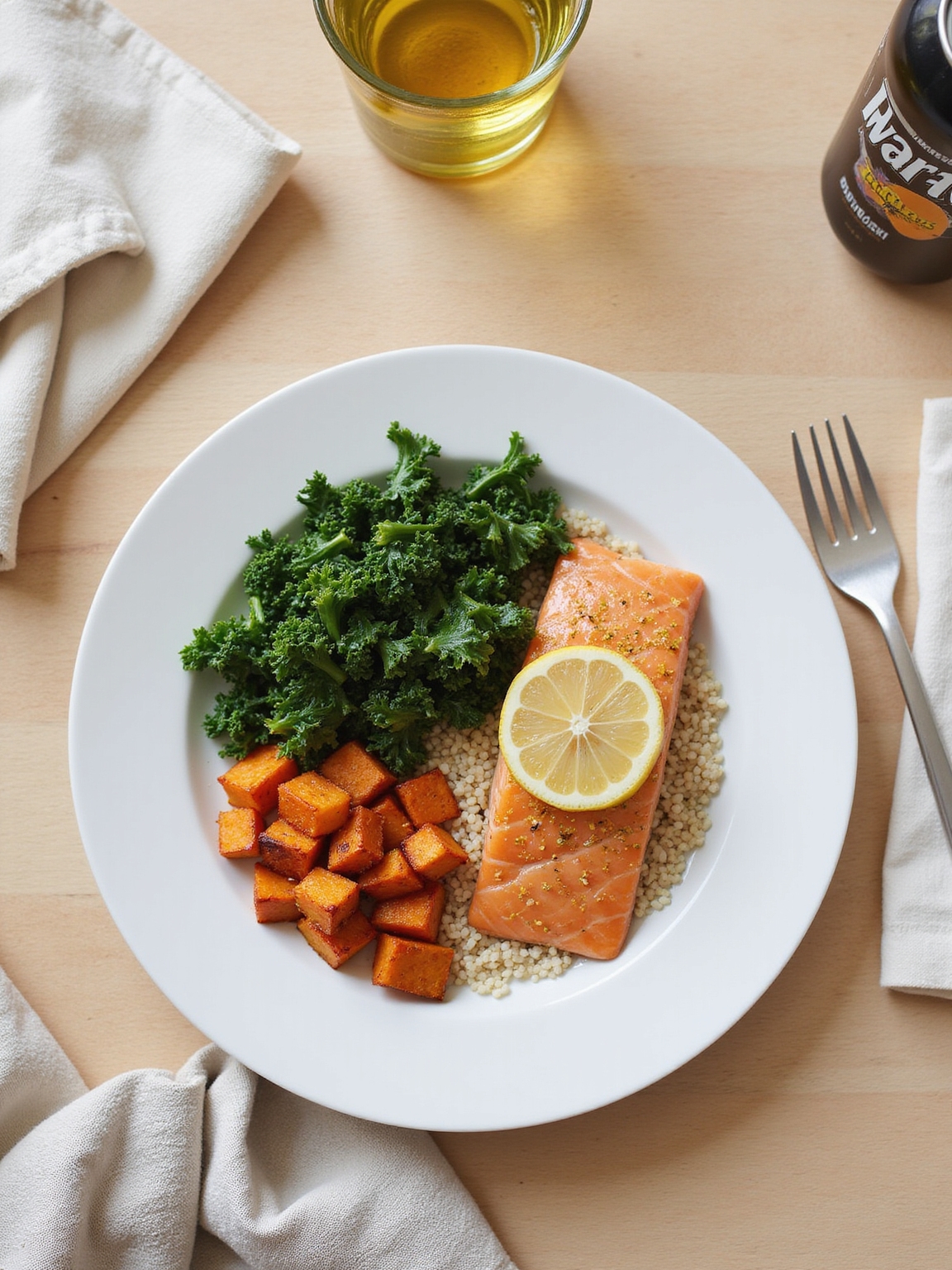
To help lower chronic inflammation, you’ll want to cut back on high‑omega‑6 vegetable oils (like corn, soybean, and sunflower) and limit added sugars and sweets, which both promote pro‑inflammatory pathways in the body.
Small, evidence-based swaps—olive or avocado oil instead of seed oils, and whole fruit or spices instead of sugary treats—can make a measurable difference.
I know change can feel hard, so start with one swap a week and track how you feel.
Consider reducing intake of processed foods high in refined carbs and trans fats, which are linked to increased systemic inflammation.
High-Omega-6 Oils
Because the balance of dietary fats affects inflammation, you’ll want to limit high–omega-6 oils that can push your omega-6:omega-3 ratio toward a pro-inflammatory state.
Replace common seed oils (corn, soybean, sunflower, safflower) and processed foods made with them.
Research links excessive omega-6 intake to increased inflammatory markers when omega-3s are low, so prioritize olive oil, avocado oil, and small portions of nuts and seeds that are lower in omega-6.
Cook simply, read labels, and choose whole foods.
If you’re unsure, consult a dietitian to tailor fat intake so it supports your 1,200-calorie anti-inflammatory plan.
Many everyday processed products contain high levels of seed oils, so checking ingredient lists can help you reduce omega-6 intake.
Added Sugars and Sweets
Although a little sweetness can lift your mood, added sugars and many sweets promote inflammation, weight gain, and metabolic strain when consumed regularly, so you’ll want to limit them on a 1,200-calorie anti-inflammatory plan.
You should prioritize whole foods and naturally sweet options like berries or a small piece of dark chocolate instead of sodas, candies, pastries, and sweetened yogurts.
Added sugars spike blood glucose and insulin, increase CRP and proinflammatory cytokines, and add empty calories that undermine satiety.
Read labels for hidden sugars (maltose, dextrose, syrups), cook more at home, and use modest portions to keep inflammation low.
Focus on an overall anti-inflammatory diet pattern that emphasizes whole, minimally processed foods to maximize benefits.
Simple Portioning Rules for 1,200 Calories

Start by visualizing your plate: fill half with nonstarchy vegetables, a quarter with lean protein, and a quarter with whole grains or starchy vegetables — this simple rule reliably keeps a 1,200-calorie day balanced and nutrient-dense.
Use these portioning rules to stay consistent, minimize inflammation triggers, and meet micronutrient needs without counting obsessively.
- Veggies: aim for 2–3 cups per day, varied colors.
- Protein: 20–30 g per meal, prioritize fish, legumes, poultry.
- Grains/starch: 1/2–1 cup cooked per meal, choose whole grains.
- Fats: 1–2 tbsp per meal, focus on olive oil, nuts.
Adjust portions to hunger and activity. Including anti-inflammatory foods like fatty fish and olive oil can support reduced inflammation over time, which is a core goal of many anti-inflammatory diets.
Quick Sample Daily Menu (1,200 Calories)

Frequently, keeping inflammation in check is easiest when you follow a simple, structured daily menu that matches the portion rules you just learned; this sample 1,200-calorie day shows how to distribute veggies, lean protein, whole grains, and healthy fats across meals so you meet nutrient needs without overeating.
For lunch, have a large salad with mixed greens, roasted vegetables, 3–4 oz grilled salmon, quinoa (¼ cup cooked), and a tablespoon olive oil vinaigrette.
Snack on a small apple with 10 almonds.
Dinner: 3–4 oz turkey or tofu, steamed broccoli, ½ cup sweet potato.
Hydrate, prioritize sleep, and adjust portions based on hunger cues.
Including everyday anti-inflammatory meal ideas makes it easier to stick with the plan long term.
Breakfast Ideas Under 300 Calories (Anti‑Inflammatory)
You can start your day with anti‑inflammatory breakfasts under 300 calories that balance fiber, protein, and antioxidants.
Try quick berry oat bowls for whole‑grain beta‑glucans and anthocyanins, savory turmeric eggs for protein plus curcumin’s potential benefits, or a green smoothie bowl to pack leafy greens, healthy fats, and phytonutrients.
These options are simple to prepare, evidence‑friendly, and adaptable to your taste and tolerance.
Quick Berry Oat Bowls
A simple berry oat bowl gives you a nutrient-dense, anti‑inflammatory breakfast that’s easy to prepare and fits under 300 calories.
You’ll get fiber, polyphenols, and low-glycemic carbs to stabilize blood sugar and reduce inflammation markers when combined thoughtfully.
Build bowls using portion control and minimal added sugar.
- 40 g rolled oats (cooked)
- 80 g mixed berries (blueberries, raspberries)
- 120 ml unsweetened almond milk
- 1 tsp chia seeds
You can swap yogurt for milk for probiotics.
Measure portions, prioritize berries for antioxidants, and listen to satiety cues for consistent anti‑inflammatory benefits.
Savory Turmeric Eggs
Often, savory turmeric eggs make a quick, science-backed breakfast that delivers protein, healthy fats, and the anti-inflammatory benefits of curcumin without exceeding 300 calories.
You’ll whisk eggs with a pinch of black pepper—needed to enhance curcumin absorption—then sauté with spinach and tomatoes for fiber and antioxidants.
Use a teaspoon of olive oil to keep healthy monounsaturated fats and control calories.
Herbs like cilantro or chives add polyphenols and flavor without sodium.
This meal supports satiety and metabolic health; if you’re on medications or have inflammation conditions, check interactions and dose with your clinician.
Green Smoothie Bowls
Frequently, green smoothie bowls give you a nutrient-dense, low-calorie breakfast that blends anti-inflammatory ingredients—like leafy greens, berries, ginger, and omega-3–rich seeds—into a satisfying, spoonable meal under 300 calories.
You’ll get antioxidants, fiber, and healthy fats that modulate inflammation and support satiety.
Use measured portions to stay near 300 calories while maximizing phytonutrients.
Quick tips:
- Base: spinach + unsweetened almond milk (low-calorie, nutrient-rich).
- Fruit: frozen berries for anthocyanins and sweetness.
- Protein: a small scoop of plant protein or Greek yogurt.
- Toppings: chia seeds, a few walnuts, and grated ginger.
Lunch Bowls and Salads ~350 Calories
Because your midday meal can either fuel inflammation or help fight it, choosing lunch bowls and salads around 350 calories gives you a practical way to balance anti-inflammatory ingredients with satisfying portions.
Aim for leafy greens, colorful vegetables, a palm-sized portion of lean protein or legumes, and a tablespoon of olive oil or ground flaxseed for omega-3 benefits.
Include fiber-rich whole grains like quinoa sparingly to stabilize blood sugar.
Season with turmeric, black pepper, and lemon for flavor and potential anti-inflammatory effects.
You’ll feel energized, reduce inflammatory triggers, and keep total daily calories aligned with your 1,200-calorie goal.
Dinners Under 450 Calories With Healthy Fats and Fish
You can enjoy dinners under 450 calories that still deliver anti-inflammatory benefits by choosing quick, omega-3–rich fish like salmon, sardines, or trout.
Pair those proteins with healthy fats—olive oil, avocado, or a handful of walnuts—to support inflammation reduction and nutrient absorption.
Keep sides simple and low-calorie, such as steamed greens, roasted cauliflower, or a small quinoa salad, to balance the meal without blowing your calorie target.
Quick Omega-3 Fish Options
Often you can meet anti-inflammatory goals without hours in the kitchen by choosing fatty fish like salmon, mackerel, trout or sardines, which are rich in EPA and DHA—omega-3s shown to reduce systemic inflammation markers. You can prepare satisfying dinners under 450 calories that prioritize these oils, protein, and minimal added sugars. Try quick techniques and simple seasonings that preserve omega-3 content and flavor.
- Pan-seared salmon, lemon, steamed asparagus (20–25 min)
- Mackerel broil with garlic-herb rub (15 min)
- Trout foil packets with cherry tomatoes (20 min)
- Sardine toast on whole-grain crisp (5 min)
Follow portion guidance and cook gently.
Healthy Fat Pairings
Pairing fatty fish with complementary healthy fats boosts absorption of anti-inflammatory nutrients and keeps dinners under 450 calories without sacrificing satisfaction.
You can drizzle a teaspoon of extra-virgin olive oil over grilled salmon to enhance omega-3 uptake and add monounsaturated support.
Try avocado salsa—about a quarter avocado—to provide fiber and potassium while staying calorie-conscious.
A sprinkle of chopped walnuts adds plant-based omega-3s and crunch; use one tablespoon to control calories.
These combinations are backed by studies showing fat improves carotenoid and omega absorption.
You’ll feel nourished and satisfied while maintaining anti-inflammatory goals and calorie targets.
Easy Low-Calorie Sides
When you build dinners around a modest portion of fatty fish and a few smart, low-calorie sides, you get meals that deliver anti-inflammatory omega-3s, fat-soluble nutrient absorption, and satisfying texture without blowing your calorie target. Choose sides that boost fiber, antioxidants, and healthy fats while keeping calories low.
Pairings are evidence-based: cruciferous veggies, leafy greens, and acid (lemon, vinegar) enhance absorption and reduce inflammation markers. Try these efficient options:
- Steamed broccoli with lemon zest and chili flakes
- Shaved Brussels sprouts salad with apple cider vinaigrette
- Roasted asparagus with a drizzle of extra-virgin olive oil
- Cucumber, dill, and yogurt tzatziki
Anti‑Inflammatory Snacks (100–150 Calories)
A small, well-chosen snack can lower inflammation without blowing your calorie budget, and 100–150 calories is a practical target for daytime hunger or between-meal fuel.
Choose snacks with antioxidants, fiber, and healthy fats—like a small handful of walnuts, a sliced apple with 1 teaspoon almond butter, or plain Greek yogurt with berries—to reduce inflammatory markers and support satiety.
Portion control matters: measure servings to keep calories consistent. Pairing protein and fiber stabilizes blood sugar and limits inflammatory spikes.
Listen to your hunger, favor whole foods, and consult reliable research or a clinician if you have chronic inflammation concerns.
Swap Ingredients Without Changing Calories or Benefits
You can swap ingredients smartly to keep calories steady while preserving anti‑inflammatory nutrients. Use portion‑equivalent swaps — for example, replace 1/2 avocado with a similar‑calorie mix of olive oil and mashed white beans to maintain healthy fats and fiber.
Focus on nutrient‑preserving alternatives (whole grains for refined, fatty fish for processed meats) so your meals stay effective and evidence‑based.
Portion-Equivalent Swaps
Many simple swaps keep calories and anti-inflammatory benefits intact while making meals more interesting and easier to follow. You can match portions by volume or weight so food swaps don’t alter your 1200-calorie target or nutrient balance. Try these practical, evidence-based equivalents to maintain satiety and anti-inflammatory compounds:
- Swap 3/4 cup cooked quinoa for 1/2 cup cooked brown rice.
- Replace 1 medium sweet potato with 3/4 cup butternut squash cubes.
- Use 1 cup raw spinach instead of 1/2 cup romaine for equal antioxidants.
- Trade 1 tbsp olive oil for 2 tbsp mashed avocado.
Measure, adjust, and trust the science behind portions.
Nutrient-Preserving Alternatives
When you swap ingredients with care, you can keep calories and anti-inflammatory benefits intact while improving flavor, texture, or accessibility. You’ll choose swaps that preserve fiber, omega-3s, polyphenols, and protein density. For instance, swap canned chickpeas for cooked lentils to retain protein and lower sodium, or use Greek yogurt instead of sour cream for probiotics and calcium. Track portion sizes so calorie targets stay steady. Evidence shows small ingredient shifts maintain nutrient profiles while improving markers of inflammation. Use this simple guide to make practical, measurable swaps that fit a 1200-calorie anti-inflammatory plan.
| Replace | With |
|---|---|
| Sour cream | Greek yogurt |
| Canned beans | Cooked lentils |
| White rice | Cauliflower rice |
Make‑Ahead and Batch‑Cook Tips for Busy Weeks
Since inflammation-friendly eating is most sustainable when it’s simple, prepping meals and batch-cooking staples will save you time and help keep anti-inflammatory choices consistent across a busy week.
You’ll reduce decision fatigue and rely on nutrient-dense, portion-controlled components. Follow evidence-based strategies to preserve phytonutrients and limit added fats.
- Roast root veg and crucifers to use in bowls.
- Cook whole grains in bulk and portion into 300–400 kcal servings.
- Make legume-based salads for protein and fiber.
- Freeze single-serve portions to prevent spoilage.
Label containers with dates, rotate within 3–4 days, reheat gently to retain nutrients.
Grocery List for a Week of 1,200‑Calorie Meals
Prepping staples makes shopping simpler, so plan your grocery list around versatile, anti-inflammatory ingredients that pair well across breakfasts, lunches, and dinners while keeping daily intake near 1,200 calories.
Buy leafy greens (spinach, kale), cruciferous veggies (broccoli), colorful vegetables, and berries for fiber and polyphenols.
Choose fatty fish or canned salmon, lean poultry, or plant proteins like lentils and chickpeas.
Include extra-virgin olive oil, nuts, seeds, and avocados for healthy fats.
Stock low‑fat dairy or fortified plant milk, whole grains (quinoa, oats), herbs, turmeric, and ginger.
Aim for seasonal produce and minimally processed items for consistency and nutrient density.
Track Calories for This Plan Without Obsessing
Although tracking calories can feel rigid, you can use simple, evidence-based strategies to stay accurate without getting anxious: focus on portion habits (plate balance, palm/fist measures), log meals with a reliable app or photo diary, and weigh key staples like cooked grains and proteins until you internalize portions.
Use these practical steps to stay consistent and science-forward:
- Weigh cooked portions for a week to build baseline portions.
- Use a vetted app to scan labels and save frequent meals.
- Photograph plates to spot portion drift over time.
- Aim for consistency, not perfection; adjust with data, not guilt.
Adjust the Plan: Allergies, Vegetarian, Gluten‑Free
When you tweak an anti‑inflammatory meal plan for allergies, vegetarian preferences, or gluten‑free needs, focus first on nutrient equivalence so you don’t lose the plan’s evidence-based benefits. You’ll swap proteins and grains while maintaining omega-3s, fiber, and antioxidants. Choose fortified plant milks, legumes, nuts, and certified gluten-free whole grains. Monitor iron, B12, and calcium; supplement when needed. Prioritize low-inflammatory cooking methods and whole foods. Here’s a quick swap guide:
| Restriction | Swap | Key nutrients |
|---|---|---|
| Dairy allergy | Fortified almond milk | Calcium, vitamin D |
| Vegetarian | Lentils, tofu | Protein, iron |
| Gluten-free | Quinoa, buckwheat | Fiber, magnesium |
| Nut allergy | Seeds, soy | Healthy fats |
Signs This Plan Is Working : and When to See a Pro
After you’ve adjusted meals for allergies or dietary needs, watch for clear, measurable signs that the anti-inflammatory plan is helping: reduced joint stiffness or pain, steadier energy across the day, fewer flare-ups of skin or gut symptoms, and improved sleep quality.
Track changes objectively—pain scales, sleep hours, and symptom frequency—over 2–8 weeks.
If you see steady improvement, keep the plan and consider gradual calorie adjustments.
If symptoms persist, worsen, or new issues appear, consult a clinician. Early referral is vital for uncontrolled inflammation, unexplained weight loss, severe fatigue, or suspected autoimmune disease.
- Track metrics regularly
- Expect 2–8 weeks
- Continue if improving
- See a pro if severe
Conclusion
You’re not signing up for starvation — you’re choosing a scientifically grounded, inflammation‑soothing plan that actually fuels you. Stick with omega‑3s, colorful veggies, fiber and modest portions, and you’ll likely notice less joint stiffness, steadier energy and better digestion — not miracles overnight, but measurable improvement. If inflammation persists or you feel unwell, see your clinician. Keep portions consistent, track simply, and celebrate small wins: they add up to big health change.