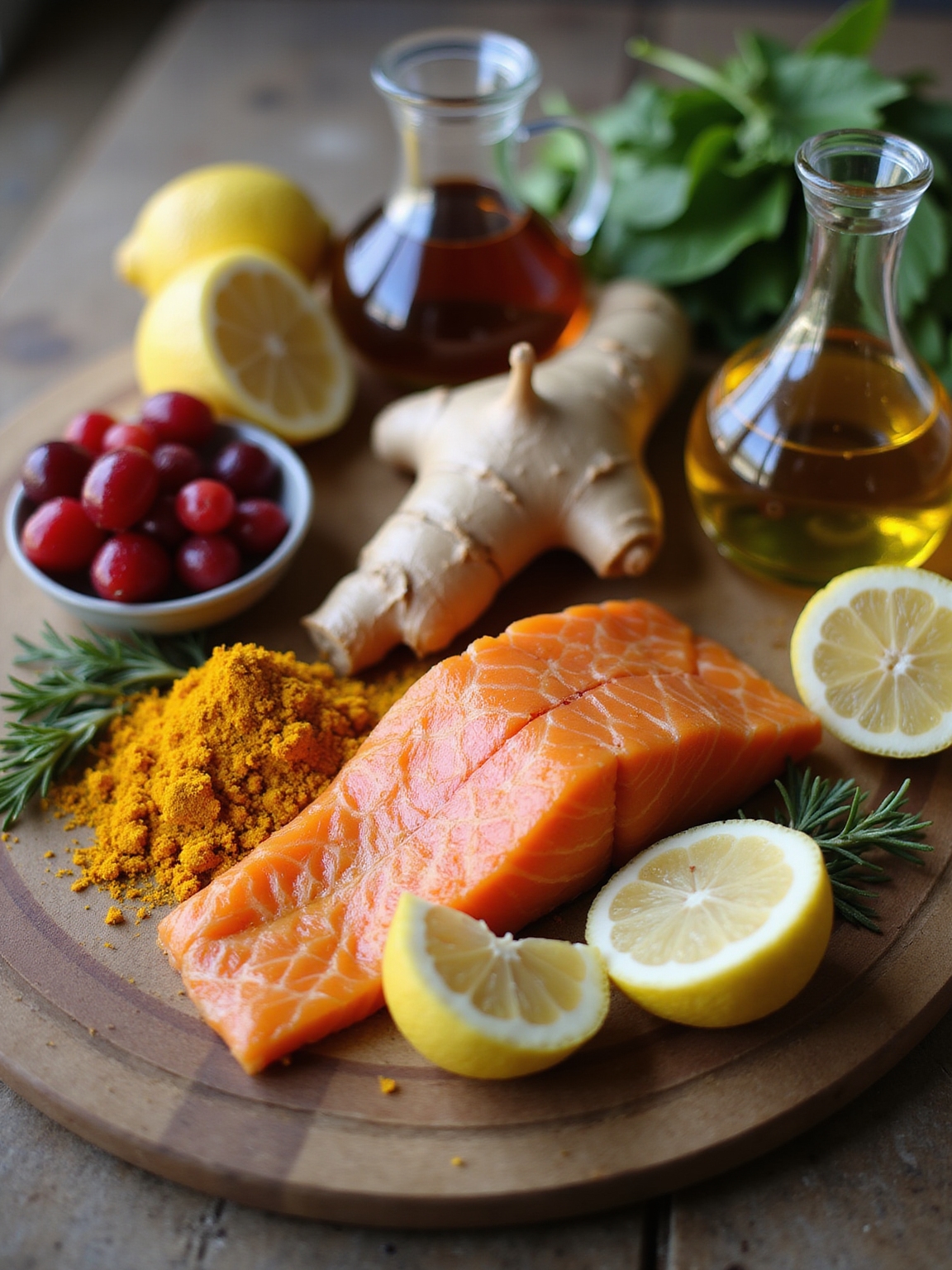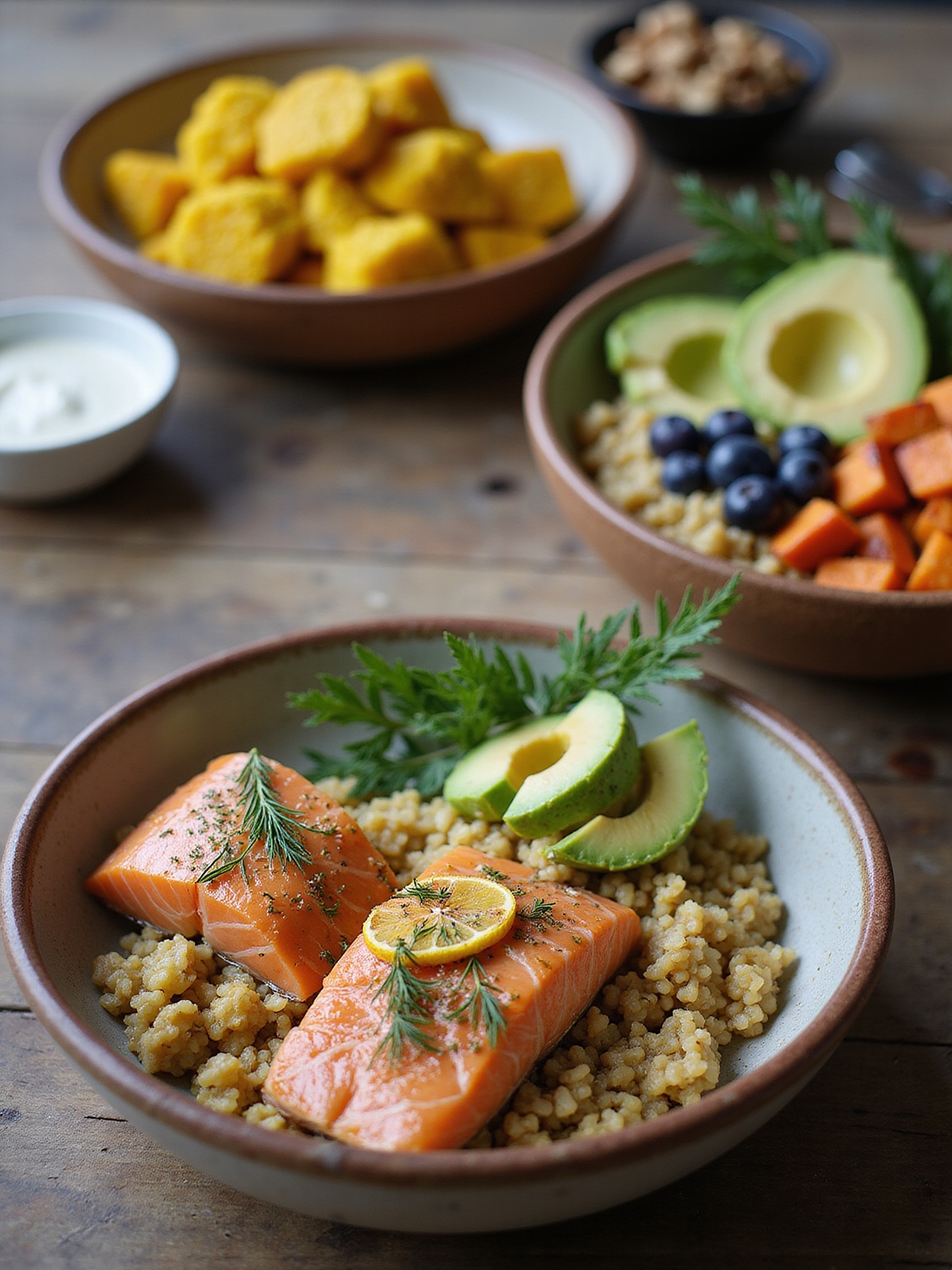

An evidence‑based approach to anti‑inflammatory vegan meals emphasizes whole grains, legumes, colorful vegetables, nuts, seeds and spices like turmeric and ginger. This combination supports satiety, steady blood sugar and a lower inflammatory profile while remaining flexible for everyday cooking. Practical tips on building balanced plates, batch cooking and simple high‑protein plant bases make the pattern easy to follow — and the next sections show concrete meals and schedules to put it into practice.
How This Guide Helps Anti‑Inflammatory Vegans
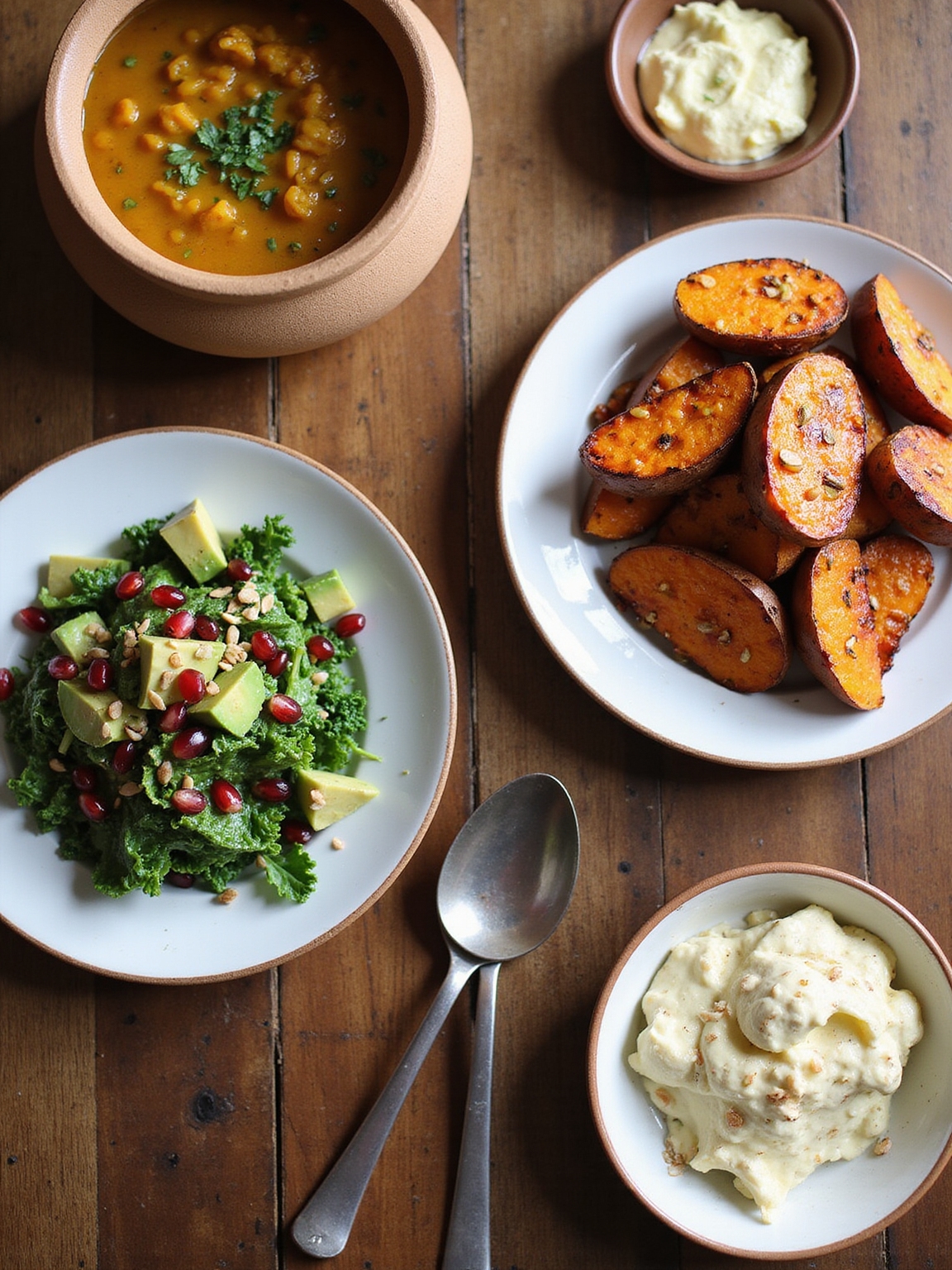
For readers seeking practical ways to reduce chronic inflammation without animal products, this guide synthesizes current evidence on plant-based anti‑inflammatory foods, meal patterns, and nutrient considerations into actionable recommendations; it highlights which ingredients have the strongest clinical or mechanistic support (for example, omega‑3–rich seeds, polyphenol‑dense berries, and fiber‑rich legumes), explains how to combine them for balanced meals, and notes common nutrient gaps and simple strategies to address them.
The guide offers meal templates, shopping lists, and timing tips that prioritize variety, minimal processing, and glycemic control.
It flags supplementation needs and provides realistic steps for gradual change.
It also identifies pantry staples from an anti‑inflammatory grocery list, including whole grains, nuts, seeds, and spices like turmeric and ginger, to make anti‑inflammatory cooking convenient and affordable (pantry staples).
Core Anti‑Inflammatory Foods to Focus On

Centered on ingredients with the strongest human or mechanistic evidence, the core anti‑inflammatory foods emphasize omega‑3–rich seeds (flax, chia), polyphenol‑dense berries and colorful vegetables, fiber‑rich legumes and whole grains, nuts (especially walnuts), and minimally processed sources of monounsaturated fats such as olive oil and avocados.
The recommendation is practical: prioritize whole, varied plant foods shown to modulate inflammation markers. Visualize meals built around simple combinations:
- A bowl with beans, greens, and grains.
- A salad of mixed vegetables, walnuts, and olive oil.
- Overnight oats with flax and berries.
- A lentil stew with turmeric and spinach.
Portion focus supports sustainable anti‑inflammatory patterns. Practical staples to keep on hand include staples like whole grains and legumes for easy meal-building.
Pantry Staples for an Anti‑Inflammatory Vegan Kitchen

A well-stocked anti-inflammatory vegan pantry centers on a handful of evidence-backed spices (such as turmeric, ginger, and cinnamon) that provide concentrated antioxidant and anti-inflammatory compounds.
Complementing these are whole grains and legumes—like quinoa, oats, lentils, and chickpeas—that supply fiber and phytonutrients linked to reduced inflammation.
Finally, healthy fats and seeds (extra-virgin olive oil, flaxseed, chia, and walnuts) offer anti-inflammatory omega-3s and polyphenols that support regular meal-building.
Include readily available frozen fruits and vegetables as convenient, nutrient-dense options that retain their anti-inflammatory benefits when fresh produce isn’t on hand, and keep extra-virgin olive oil for both cooking and finishing dishes.
Pantry Anti‑Inflammatory Spices
With a focus on compounds shown to reduce markers of inflammation—such as curcumin, gingerols, eugenol, and quercetin—this pantry lineup prioritizes spices that fit easily into everyday vegan cooking while offering measurable anti‑inflammatory benefits.
Evidence supports anti‑oxidant and anti‑cytokine effects; practical uses maximize bioavailability (fat, black pepper, gentle heat).
Suggested staples and uses create vivid, usable imagery:
- Turmeric — golden stews, dressings with black pepper
- Fresh/dried ginger — stir‑fries, infusions, marinades
- Cloves/ground cinnamon — baked oats, spiced sauces
- Ground pepper/garlic powder — finishing spice, savory balance
Store airtight, cool, dark; rotate frequently for potency. Adding a small amount of healthy fat when using turmeric can boost absorption of curcumin and enhance its anti‑inflammatory effect.
Whole Grains And Legumes
Among pantry foundations, whole grains and legumes stand out for their consistent, evidence-backed ability to guarantee inflammatory markers through fiber, resistant starch, and plant proteins that modulate gut microbiota and reduce systemic cytokine activity.
Staples like oats, brown rice, quinoa, lentils, chickpeas, and beans provide sustained energy, promote short-chain fatty acid production, and improve glycemic control—key for inflammation management.
Practical tips include soaking or sprouting legumes to enhance digestibility, varying grain types for nutrient diversity, and batch-cooking portions for quick bowls, stews, and salads.
Measured portions paired with vegetables ensure meals remain filling, balanced, and inflammation-conscious.
Batch-cooking these staples also saves time and supports meal planning for busy weeks.
Healthy Fats And Seeds
Following whole grains and legumes, attention shifts to fats and seeds as concentrated sources of anti-inflammatory nutrients and bioactive compounds.
Research supports omega-3–rich flax and chia, monounsaturated olive oil, and antioxidant-packed nuts and seeds for reducing inflammatory markers.
Practical pantry choices enable daily dosing: ground flax stirred into oatmeal, a tablespoon of tahini in dressings, toasted walnuts over salads, and a drizzle of extra-virgin olive oil finishing roasted vegetables.
Simple swaps replace pro-inflammatory fats, improving lipid profiles and satiety.
Recommendations emphasize whole forms, minimal processing, and balancing portions within a diverse, plant-forward eating pattern.
- Ground flax: earthy, nutty
- Chia: gelled, delicate
- Walnuts: crunchy, rich
- Olive oil: green, peppery
Including regular servings of these foods supports heart health and lowers markers of inflammation through their omega-3 content.
Build a Balanced Anti‑Inflammatory Vegan Plate (3 Steps)

Regularly assembling an anti‑inflammatory vegan plate can reduce oxidative stress and chronic inflammation when it emphasizes three components: colorful plant-based vegetables and fruits, high‑quality plant proteins and healthy fats, and fiber‑rich whole grains or legumes.
First, fill half the plate with varied vegetables and fruits—leafy greens, berries, crucifers—for phytochemicals and antioxidants.
Second, add a quarter plate of minimally processed plant proteins such as tempeh, tofu, or legumes to support repair and satiety.
Third, include a quarter plate of whole grains or starchy legumes plus a drizzle of olive oil or mashed avocado for anti‑inflammatory lipids and sustained energy.
Following principles of the Anti Inflammation Mediterranean Diet can further enhance variety and heart-healthy fats with an emphasis on plant-forward meals and extra-virgin olive oil for daily use, a pattern shown to reduce inflammation in many studies Mediterranean pattern.
High‑Protein Whole‑Food Plant Bases (No Powders)
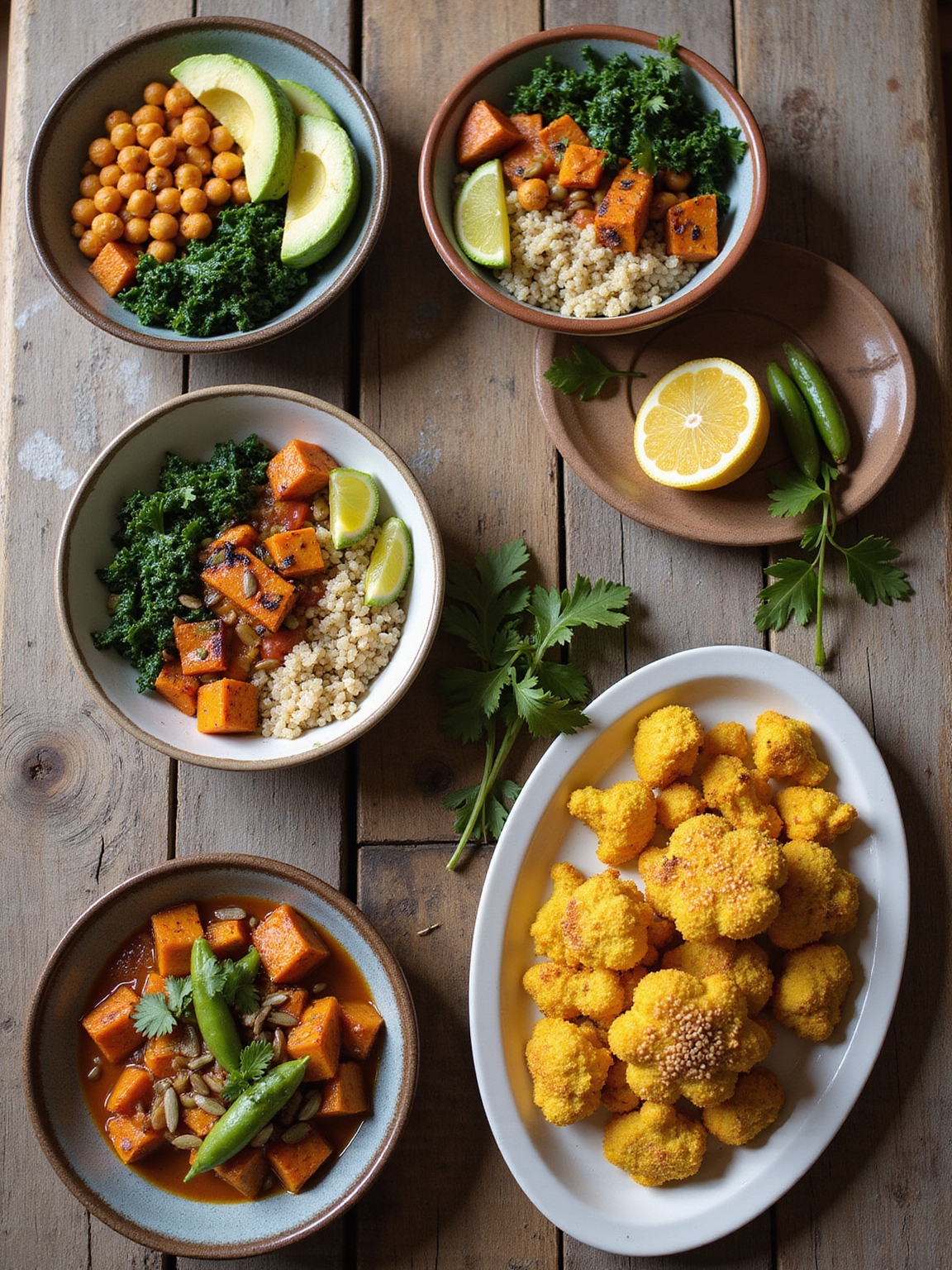
After outlining a balanced anti‑inflammatory plate, attention shifts to the foundations that supply sustained protein without isolated powders: whole‑food plant bases that combine complete amino acid profiles with anti‑inflammatory micronutrients and fiber.
Practical examples emphasize variety and digestibility, supporting recovery and satiety with minimal processing. Consider textures, colors, and pairings to optimize absorption and enjoyment:
- Lentil and quinoa bowls — earthy, iron‑rich, complete protein.
- Tempeh stir‑fries — fermented, B‑vitamin dense, savory chew.
- Chickpea and spinach stews — fiber‑heavy, potassium‑rich comfort.
- Black bean and brown rice salads — resilient, magnesium‑supportive balance.
Anti‑Inflammatory Spices, Herbs and Blends

Turmeric, rich in curcumin, is highlighted for its documented anti-inflammatory effects and pairs well with black pepper to improve absorption.
Ginger offers warming, gastrointestinal-soothing properties and has clinical support for reducing markers of inflammation and pain.
Blends of Mediterranean herbs—such as oregano, rosemary, and thyme—provide synergistic antioxidant and anti-inflammatory compounds that are easy to incorporate into everyday vegan meals.
Turmeric: Golden Anti‑Inflammatory Power
Often celebrated in both traditional medicine and modern research, turmeric stands out for its primary active compound, curcumin, which has demonstrated anti-inflammatory effects in numerous clinical and laboratory studies.
Its culinary versatility and bioavailability strategies make it practical for vegan meals. Suggestions emphasize pairing with fat and black pepper to enhance absorption and using whole root or powder for varied textures.
- Golden-hued stews, creamy with coconut milk
- Bright dressings emulsified with olive oil
- Roasted vegetables dusted with turmeric and sea salt
- Smoothies blended with a dash of black pepper
Measured use supports consistency and safety.
Ginger: Warming Inflammation Fighter
Ginger root, rich in bioactive compounds such as gingerols and shogaols, has been shown in clinical and laboratory studies to reduce markers of inflammation and alleviate pain associated with osteoarthritis and muscle soreness.
It offers versatile, warming flavors that complement soups, stir-fries, smoothies, and dressings while providing measurable anti-inflammatory effects.
Fresh, grated ginger yields more gingerols; lightly cooking preserves activity yet mellows heat.
Suggested practical uses: steep slices in hot water, add to lentil stews, or blend into turmeric-ginger dressings for salads and roasted vegetables.
Contraindications and drug interactions are uncommon but should be checked with a clinician.
Mediterranean Herb Blends
Moving from the pungent warmth of ginger, Mediterranean herb blends offer a complementary, aromatic approach to lowering inflammation through combined phytochemicals found in oregano, rosemary, thyme, basil, and sage.
Evidence links these herbs to antioxidant and anti‑inflammatory effects; their volatile oils and polyphenols modulate pathways like NF‑κB and reduce cytokine production.
Practical uses include marinades, dressings, and roasted vegetables, where heat releases beneficial compounds without excess oil.
For sensory clarity, imagine:
- Sunbaked oregano over tomatoes,
- Piney rosemary on roasted potatoes,
- Peppery thyme in lentil stew,
- Sweet basil finishing a chickpea salad.
Easy Omega‑3 Sauces and Antioxidant Dressings

Highlighting nutrient-dense toppings, this section presents simple vegan sauces and dressings that boost omega‑3 intake and deliver concentrated antioxidants without sacrificing flavor. Recipes center on ground flaxseed, chia, walnuts, and algal oil emulsions combined with lemon, garlic, turmeric, and antioxidant-rich herbs. Emphasis is on measurable portions (e.g., 1 tbsp flax per serving) and evidence-based pairing to enhance absorption of fat‑soluble compounds. Practical tips include blending for texture, acid for brightness, and storing briefly to preserve oils. Sample options:
| Sauce | Key omega‑3 source | Flavor note |
|---|---|---|
| Creamy flax tahini | Ground flax | Nutty, smooth |
| Walnut chimichurri | Walnuts | Bright, herby |
| Chia vinaigrette | Chia + algal oil | Tangy, silky |
5 Weeknight Dinners Under 30 Minutes
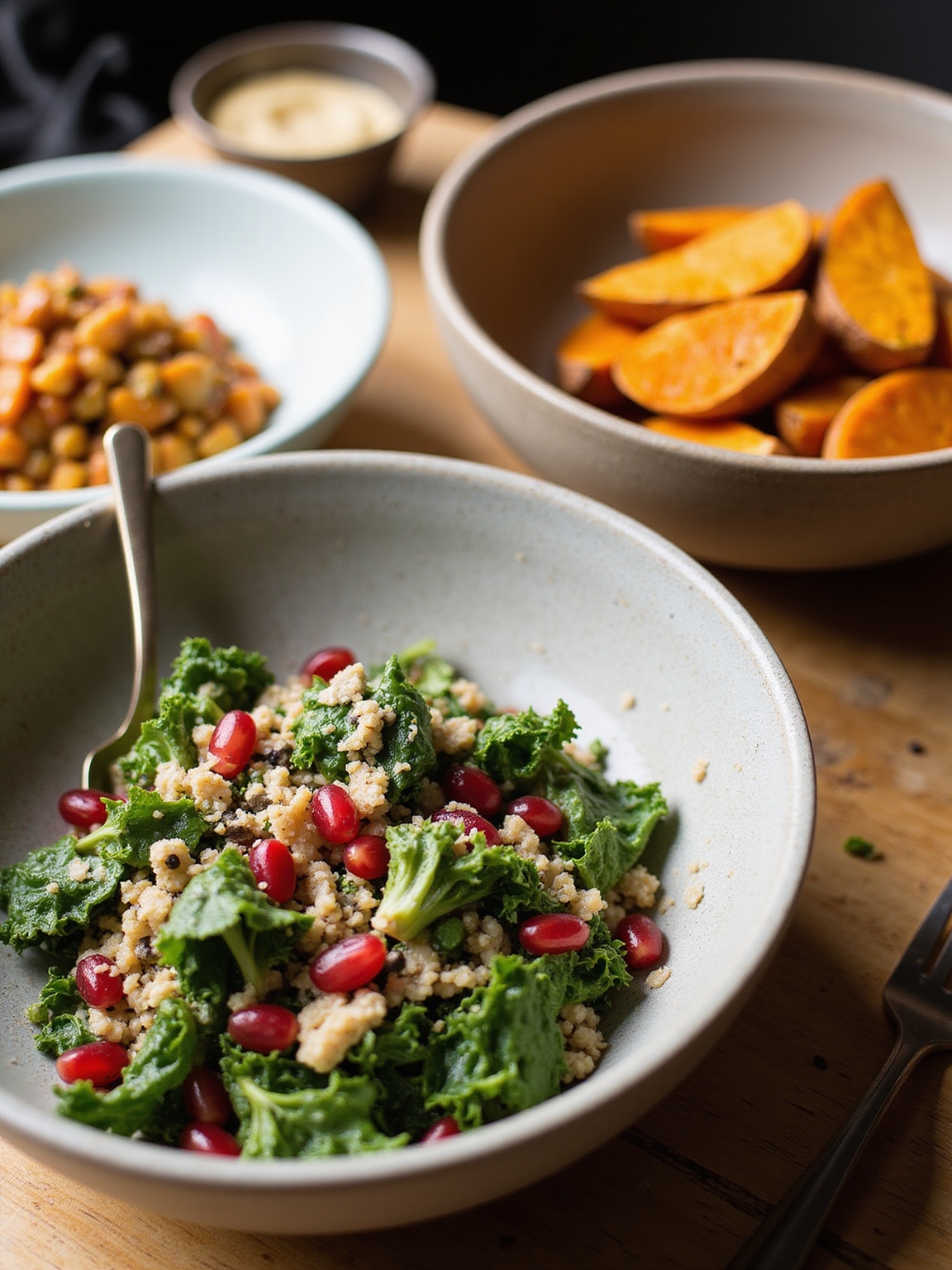
How can busy weeknights still support an anti-inflammatory eating pattern? Practical choices emphasize quick plant proteins, fiber-rich vegetables, healthy fats, and anti-inflammatory spices. Prepared components (prewashed greens, canned beans, frozen vegetables) speed assembly without sacrificing nutrients.
Simple methods like sautéing, steaming, or quick stir-fries preserve antioxidants and fiber. Suggested combinations evoke imagery:
- Bright turmeric-lime chickpea stir with spinach.
- Miso-glazed tempeh, steamed broccoli, brown rice.
- Lemon-herb white bean pasta with cherry tomatoes.
- Spicy peanut soba with shredded cabbage and carrots.
These meals balance polyphenols, omega-3 precursors, and low glycemic carbs to reduce inflammatory potential.
One‑Pot and Sheet‑Pan Meals for Meal Prep
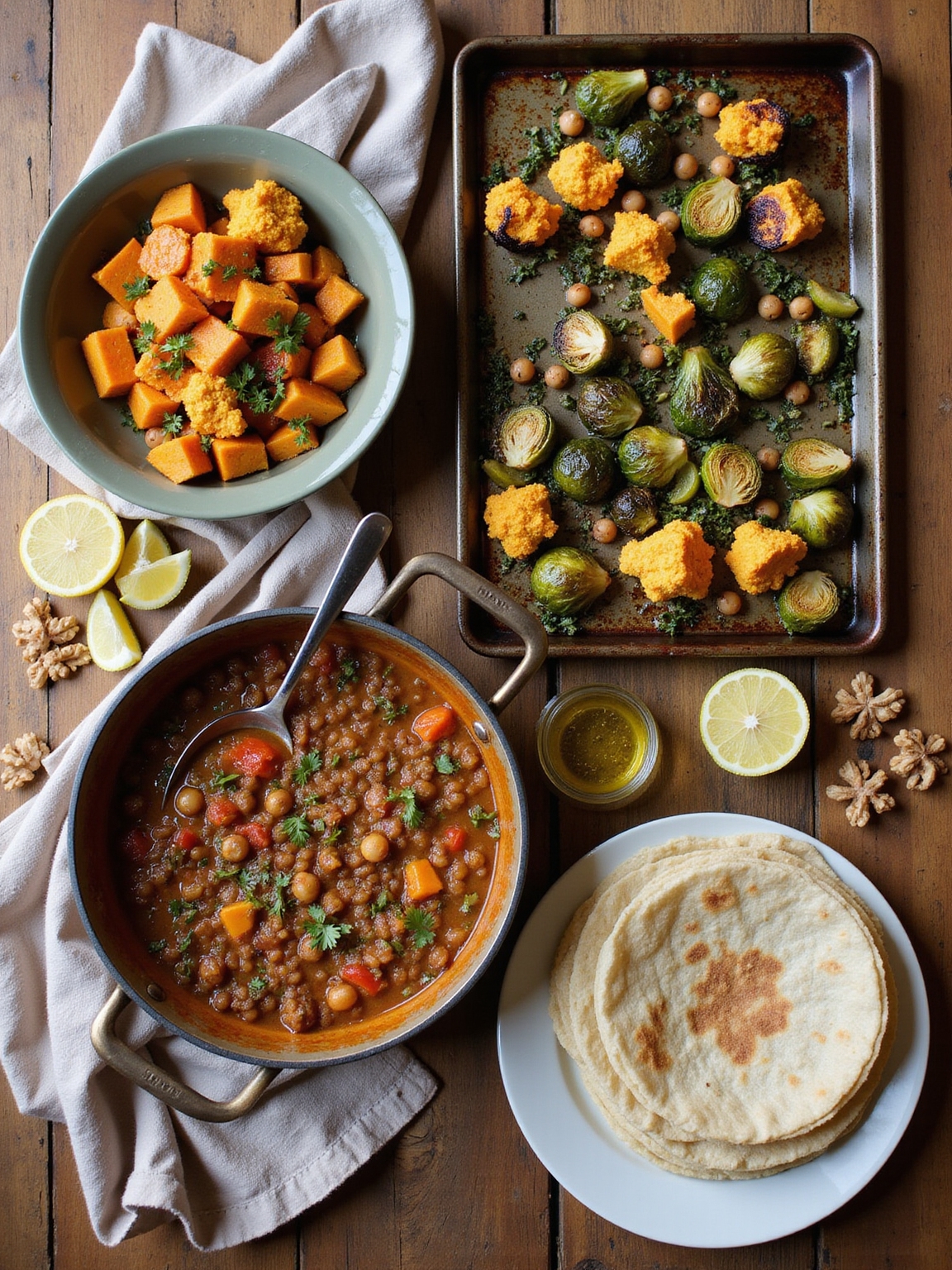
One‑pot meals that combine legumes, whole grains and anti‑inflammatory spices offer concentrated protein and minimal cleanup, making them practical for batch cooking.
Sheet‑pan vegetable roasts—especially cruciferous and root vegetables tossed with turmeric, black pepper and a drizzle of olive oil—retain texture and concentrate flavors for easy reheating.
Together, these approaches simplify meal prep while supporting sustained, plant‑based anti‑inflammatory nutrition.
One‑Pan Protein Combos
Combine simplicity with nutrition: one‑pan protein combos streamline meal prep by delivering balanced, anti‑inflammatory meals with minimal cleanup.
They pair plant proteins, whole grains, and fibrous vegetables to support satiety and modulate inflammation through antioxidants and fiber.
Practical guidelines emphasize portioning, varied textures, and simple spice blends (turmeric, garlic, black pepper) for synergistic effects supported by research.
- Roasted chickpeas + quinoa + greens
- Tofu cubes + brown rice + broccoli
- Lentils + sweet potato wedges + kale
- Tempeh strips + farro + Brussels sprouts
These combos are adaptable, batch‑friendly, and nutrient‑dense for weekly planning.
Sheet‑Pan Veg Roasts
Frequently, sheet‑pan veg roasts provide a fast, efficient method for prepping anti‑inflammatory vegan meals that maximize flavor and nutrient retention with minimal cleanup.
They combine cruciferous vegetables, root vegetables, and antioxidant‑rich peppers with a heart‑healthy oil and turmeric‑ginger marinade to reduce inflammation markers and preserve phytonutrients during roasting.
Batch roasting yields versatile components for bowls, wraps, or salads across the week, saving time and encouraging consistent plant intake.
Practical tips include cutting uniform pieces, spacing to avoid steaming, and adding quick‑roast proteins like chickpeas near the end.
Simple seasoning and proper temperature control reliably produce satisfying, nutrient‑dense meal prep.
Comfort Bowls: Grain + Legume Combos

Drawing on research linking whole grains and legumes to reduced inflammation and improved metabolic markers, comfort bowls pair a high-fiber grain base with a protein-rich legume to deliver sustained satiety and stable blood glucose.
Practical pairings emphasize texture, color, and anti-inflammatory ingredients. Suggested compositions evoke balance and warmth:
- Pearled barley + lentils, roasted carrots, lemon-tahini drizzle.
- Brown rice + black beans, sautéed spinach, avocado slices.
- Quinoa + chickpeas, roasted broccoli, turmeric-ginger dressing.
- Farro + white beans, caramelized onions, mustard-seed vinaigrette.
These bowls favor whole foods, simple spices, and portioned plant proteins for measurable benefit and everyday comfort.
Overnight Breakfasts and Make‑Ahead Mornings
Nightly preparation of ingredients—soaked oats, chia seeds, chopped fruit, and pre-cooked grains—reduces morning decision fatigue and preserves anti-inflammatory nutrients.
Clear, simple assembly steps (layering jars, portioning nut butter, adding citrus or ginger last) make breakfasts ready in minutes and help retain texture and flavor.
Choosing insulated jars or leakproof containers and packing toppings separately enables easy, portable servings without compromising freshness.
Prep Nightly Ingredients
With a few minutes each evening, ingredients can be prepped to create nourishing overnight breakfasts and grab-and-go mornings that support reduced inflammation.
The approach emphasizes fiber, omega-3 sources, and low-glycemic fruits to stabilize blood sugar and reduce inflammatory markers.
Practical nightly tasks set up effortless mornings: portioning, soaking, and layering components in jars or containers.
- Soaked oats or quinoa with chia for soluble fiber and texture.
- Toasted walnuts or ground flax for plant-based omega-3s.
- Fresh berries or apple slices for polyphenols and vitamin C.
- Unsweetened plant yogurt or nut milk for creaminess and probiotics.
Quick Assembly Tips
For efficient mornings, assemble overnight breakfasts and make-ahead bowls using a simple, repeatable formula that balances soluble fiber, plant omega-3s, low-glycemic fruit, and a creamy probiotic base.
Measure portions the night before: 1/3 cup rolled oats or cooked quinoa, 1 tablespoon ground flax or chia, and 1/2 cup unsweetened plant yogurt or soaked cashews.
Add berries or sliced apple for low-glycemic sweetness and a pinch of cinnamon or turmeric for anti-inflammatory benefit.
Stir, seal, and chill.
Label jars with date and contents.
Reheat briefly or eat cold; add a handful of nuts or seeds at service for texture.
Portable Serving Ideas
Among small preparations that save time and maintain nutrient integrity, overnight breakfasts and make-ahead morning bowls offer portable, evidence-backed solutions for anti-inflammatory eating.
They concentrate whole grains, omega-rich seeds, berries, and plant protein into insulated jars or compostable containers, preserving polyphenols and fiber for busy mornings.
Practical tips focus on layering, cold-soak oats, and pre-portioning dressings to prevent sogginess.
Suggested portable combos evoke texture and color:
- Chia pudding, almond milk, blueberries, crushed walnuts
- Overnight oats, ground flax, cinnamon, sliced apple
- Quinoa breakfast bowl, turmeric tahini, roasted chickpeas
- Smoothie pack, spinach, frozen mango, hemp seeds
These choices balance convenience with clinical nutrition principles.
Snacks and Small Plates That Curb Cravings
By selecting small plates that combine fiber, healthy fats, and antioxidants, individuals can reduce inflammatory signaling while satisfying immediate cravings.
Examples include hummus with raw vegetables, avocado-tomato on crispbread, and spiced roasted chickpeas; each balances soluble fiber, monounsaturated fats, and polyphenols.
Portion control and mindful pacing slow intake and stabilize blood sugar, reducing urge-driven eating.
Prioritizing minimally processed ingredients limits added sugars and omega-6 overload.
Simple pairings—berries with walnuts, edamame with lemon and sea salt, or turmeric-roasted cauliflower—offer practical, portable options supported by evidence linking these nutrients to lower markers of inflammation.
Batch‑Cook Anti‑Inflammatory Meals: Tips & Schedules
With a few strategic planning habits, batch-cooking can consistently deliver nutrient-dense, anti-inflammatory meals that save time and reduce decision fatigue.
The approach emphasizes whole plant foods, varied spices (turmeric, ginger), and proper storage to preserve phytonutrients.
Practical scheduling pairs one long cook day with midweek refreshes; portioning into meal-sized containers aids adherence.
Suggested visual checklist:
- Roasted root vegetables and crucifers
- Legume-based stews or dals
- Whole grains (quinoa, brown rice) batch-cooked
- Fresh leafy salad packs and dressings
Evidence supports that preparation increases vegetable intake and meal quality, making inflammation-focused eating sustainable.
Troubleshooting: Boredom, Cost and Nutrient Gaps
Frequently, people who adopt anti-inflammatory vegan meal plans encounter three common challenges—boredom, cost, and potential nutrient gaps—that can undermine adherence and health benefits. Practical strategies reduce these risks: rotate spices and textures, prioritize seasonal produce, and use fortified foods or supplements when indicated. Evidence supports varied plant proteins and strategic shopping to maintain nutrient adequacy affordably. Below is a quick troubleshooting guide.
| Issue | Practical fix |
|---|---|
| Boredom | Change herbs, cooking methods, theme nights |
| Cost | Buy frozen, bulk legumes, seasonal sales |
| Nutrient gaps | Fortified foods, B12, omega-3 sources, blood tests |
3‑Day Anti‑Inflammatory Vegan Meal Plan
Having addressed common obstacles like boredom, cost, and nutrient shortfalls, the guide now presents a single-day anti-inflammatory vegan meal plan that models practical, evidence-based choices.
The day emphasizes whole plants, omega‑3 sources, and colourful polyphenol-rich foods to reduce inflammation markers while supporting satiety and nutrients.
- Breakfast: turmeric chia pudding with berries and walnuts.
- Lunch: lentil and roasted vegetable salad with leafy greens and lemon‑tahini dressing.
- Snack: apple slices with almond butter and cinnamon.
- Dinner: wild rice, sautéed greens, chickpea‑tomato stew with fresh herbs.
Portions adapt to energy needs; seasoning and variety maintain adherence.
Conclusion
Despite promising to banish inflammation with a single quinoa bowl, the guide quietly admits there’s no culinary magic pill — only sensible choices. It maps evidence‑based staples, practical swaps and easy batch plans so readers can consistently eat anti‑inflammatory, nutrient‑dense vegan meals that satisfy. Warming spices, protein‑rich plants and simple prep replace hype. In short: it’s not miraculous, just reliably effective, affordable and pleasantly doable.