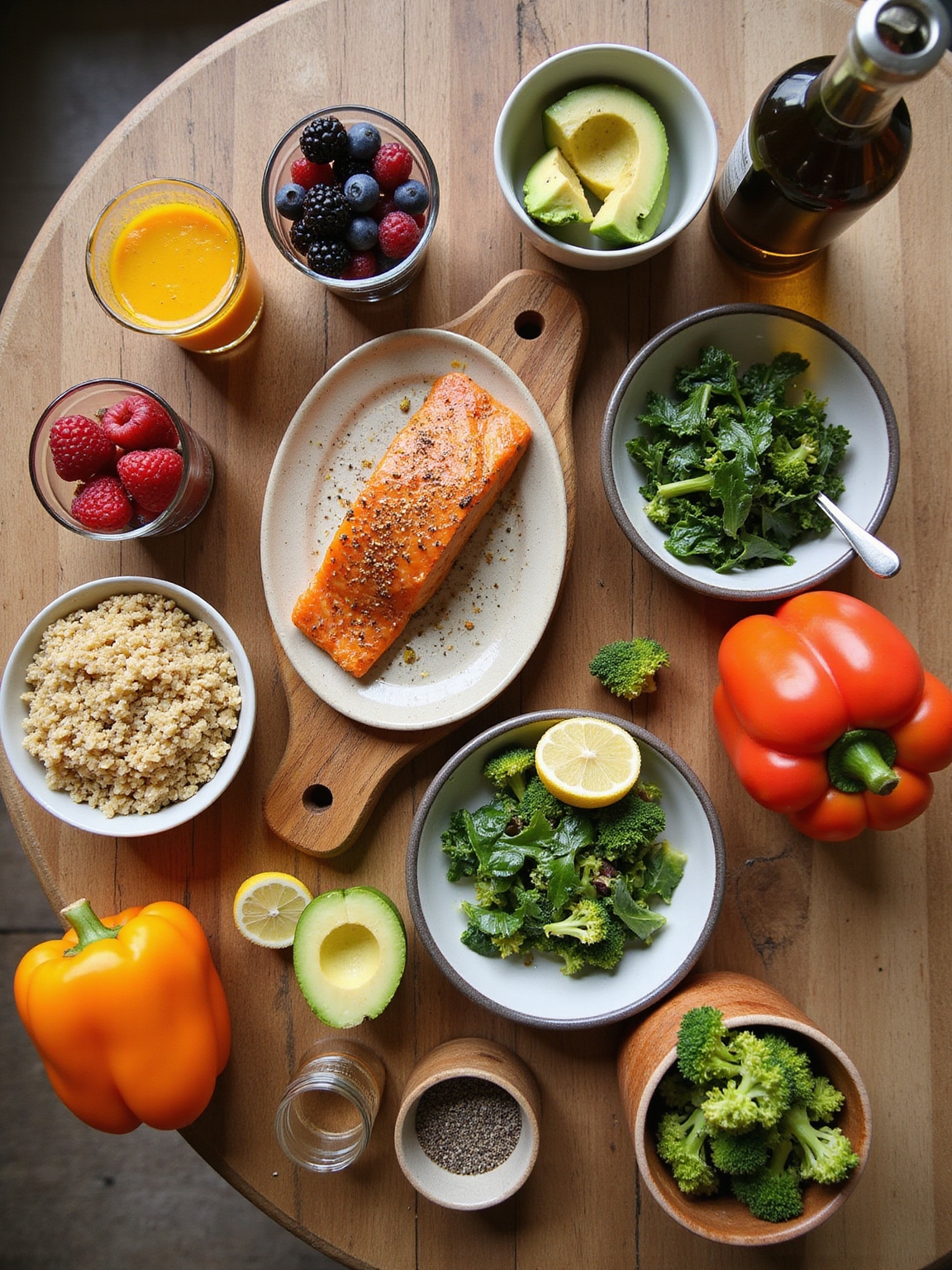

About 60% of adults report chronic aches or fatigue linked to inflammation, so what you eat at lunch really matters. You can build quick, portable meals that lower inflammation by focusing on lean protein, colorful veggies, whole grains, and healthy fats, and I’ll show you practical swaps, fast no‑cook ideas, and packing tips that save time and money—keep going to get easy templates you can prep in 10–20 minutes.
3 Quick Rules to Build an Anti‑Inflammatory Lunch

When you build an anti‑inflammatory lunch, focus on combining a lean protein, colorful vegetables, healthy fats, and a whole‑food carbohydrate—each component plays a different role in lowering inflammation and supporting steady energy.
You’ll aim for portion balance: about a palm-sized protein, two fists of vegetables, a thumb of healthy fats, and a cupped handful of whole grains or starchy veg.
Prioritize minimally processed items, moderate added sugars, and use herbs, citrus, or vinegar instead of heavy sauces.
Prepare components ahead, rotate colors and textures across the week, and adjust portions to your appetite and activity level.
Include staples like fatty fish, leafy greens, berries, nuts, olive oil, and whole grains to make shopping and meal prep easier and more effective for reducing chronic inflammation and supporting overall health, especially when you keep essential foods on hand.
Top Anti‑Inflammatory Ingredients to Pack

If you want lunches that actually lower inflammation, start by filling your box with ingredients shown in studies to help — oily fish like salmon or sardines for long‑chain omega‑3s, leafy greens and cruciferous veggies for antioxidants and fiber, berries and cherries for polyphenols, nuts and seeds for healthy fats and magnesium, and whole grains or sweet potatoes for steady blood sugar. Pack portions that fit your day, aim for color and texture, and prep once for several meals. Use this quick guide:
| Protein | Veggies | Snacks |
|---|---|---|
| Salmon, sardines | Kale, broccoli | Walnuts, chia |
| Beans, lentils | Spinach, Brussels | Berries, dark chocolate |
Research shows that including anti‑inflammatory foods consistently can help reduce chronic inflammation over time.
What to Avoid During a Busy Workday

Because you’re trying to keep inflammation down while juggling deadlines, avoid quick fixes that spike blood sugar and promote inflammation — sugary drinks, refined carbs (white bread, pastries), and heavily processed snacks — and don’t rely on large servings of fried or highly processed meats, which are linked to higher inflammatory markers; instead choose balanced, portable options that combine protein, fiber, and healthy fats to stabilize energy and reduce inflammatory responses.
Skip excessive caffeine late afternoon, artificial sweeteners, and trans fats. Limit alcohol and high-sodium convenience meals. Pack whole-food snacks and hydrate; planning small, consistent meals helps you avoid reactive, inflammatory choices. Evidence supports following an anti-inflammatory diet to help you stay on track with long-term inflammation control.
5‑Minute No‑Cook Anti‑Inflammatory Lunches

When you’re short on time, you can assemble no‑cook lunches that still lower inflammation: antioxidant bowls with berries, leafy greens, and seeds; omega‑rich wraps filled with smoked salmon or canned sardines and avocado; and fresh herb salads tossed with olive oil and lemon.
These combos pack polyphenols, omega‑3s, and anti‑inflammatory phytonutrients shown to support recovery and reduce markers of inflammation.
Keep a few staple ingredients on hand and you’ll be able to put one together in under five minutes.
A simple shopping list of staples like olive oil, berries, leafy greens, seeds, and fatty fish makes it easy to maintain an anti‑inflammatory diet for the long term.
Quick Antioxidant Bowls
Often you’ll want a lunch that’s ready in minutes and still gives you a strong anti-inflammatory boost; quick antioxidant bowls do exactly that by combining no‑cook, nutrient-dense ingredients like leafy greens, berries, nuts, seeds, and a drizzle of extra‑virgin olive oil or citrus.
You’ll build bowls with a base (spinach, arugula), colorful fruit (blueberries, pomegranate), and crunchy elements (walnuts, pumpkin seeds) to supply polyphenols, vitamin C, and omega precursors.
Toss in chickpeas or tofu for protein, season with turmeric, black pepper, and lemon, and pack portions into containers—evidence suggests this mix supports reduced inflammatory markers and sustained energy.
Keep pantry staples like extra‑virgin olive oil, walnuts, and turmeric on hand to make these bowls quickly and consistently available, as they are essential anti-inflammatory kitchen ingredients for everyday use extra‑virgin olive oil.
Omega-Rich Wraps
If you liked the convenience and antioxidant bang of quick bowls, omega-rich wraps give you the same no‑cook speed with a focus on anti‑inflammatory fats you can eat on the go. You’ll layer ingredients that research links to reduced inflammation: omega-3s, fiber, and polyphenols. Use canned salmon or sardines, whole-grain or spinach wraps, avocado, and crunchy veg. Dress lightly with lemon and olive oil. Pack tightly and chill. These wraps also support steady energy and satiety through balancing healthy fats, protein, and fiber for all-day fullness.
| Ingredient | Benefit |
|---|---|
| Sardines | EPA/DHA for inflammation |
| Avocado | Monounsaturated fat |
| Whole-grain wrap | Fiber, lower glycemic load |
| Veggies | Polyphenols and fiber |
Fresh Herb Salads
Build a fresh herb salad in minutes by tossing together a mix of anti‑inflammatory ingredients—fresh herbs, leafy greens, a source of healthy fat, and a bright acid—for a no‑cook lunch that’s both flavorful and backed by research.
You’ll want parsley, cilantro, basil or mint for polyphenols; mixed greens or arugula for fiber; avocado or olives for monounsaturated fat; and lemon or apple cider vinegar to enhance nutrient absorption.
Add a protein like canned salmon, chickpeas, or cooked lentils to stabilize blood sugar.
Dress simply, season with turmeric and black pepper, and pack airtight to keep herbs vibrant.
Eating these easy meals regularly supports an anti‑inflammatory diet and makes daily meal prep manageable.
Protein‑Packed Portable Meals for Focus

Because your brain runs best on steady amino acids and minimal inflammation, protein‑packed portable meals can sharpen focus through the afternoon slump. You’ll favor low‑inflammatory proteins (fatty fish, legumes, Greek yogurt) plus fiber and antioxidants to steady glucose and lower cytokine spikes. Prep simple portions: roasted salmon bites, chickpea salad jars, or yogurt with berries and walnuts. Pack in insulated containers and include a small ice pack. Aim for 20–30 g protein per meal and pair with whole grains or veggies for sustained release.
| Meal | Protein | Anti‑inflammatory add-on |
|---|---|---|
| Salmon bites | 25g | Turmeric drizzle |
| Chickpea jar | 20g | Spinach |
| Yogurt bowl | 18g | Berries & walnuts |
Anti‑Inflammatory Wraps and Sandwiches to Eat On the Go
When you’re short on time, quick high-protein wraps let you pack lean meats, beans, or tofu with anti-inflammatory spices for sustained energy.
You can also build portable veggie sandwiches using whole-grain bread, leafy greens, avocado, and turmeric‑spiced spreads to keep inflammation markers lower.
Both options travel well and give you evidence-backed nutrients without sacrificing convenience.
Quick High‑Protein Wraps
Reach for a high-protein wrap when you need a satisfying, anti-inflammatory lunch that travels well—combining lean protein, fiber-rich greens, and healthy fats helps blunt post-meal inflammation and keeps you full longer. Choose grilled chicken, canned salmon, or chickpea mash, add spinach or arugula, avocado, and a drizzle of olive oil or tahini. Prep in bulk, wrap tightly, and refrigerate for easy grab-and-go meals. Aim for 20–30 g protein per wrap and include turmeric or black pepper for added benefit. Simple swaps cut carbs and boost nutrients without extra time.
| Protein | Add-ins |
|---|---|
| Chicken | Avocado |
| Salmon | Spinach |
| Chickpeas | Turmeric |
Portable Veggie Sandwiches
Often you’ll want a lunch that’s both portable and anti-inflammatory, and veggie sandwiches deliver that with minimal prep.
Choose whole-grain or sprouted bread, avocado or hummus for healthy fats, and colorful vegetables—spinach, shredded carrot, cucumber, and tomato—for polyphenols and fiber shown to reduce inflammation.
Add a protein like smoked salmon, grilled tofu, or a few slices of turkey to stabilize blood sugar.
Use mustard or a yogurt-tahini spread instead of mayo to cut saturated fat.
Wrap tightly in parchment to prevent sogginess.
Pack a citrus wedge and keep chilled; eat within a few hours for best texture and safety.
Make‑Ahead Salads That Stay Crisp All Week
If you want salads that stay crisp all week, plan ingredients and storage with a few science-backed techniques that preserve texture and flavor. You’ll choose sturdy greens (kale, romaine), separate wet components, and dress just before eating to prevent wilting. Use airtight containers and a paper towel to absorb excess moisture; chilled temperatures slow enzymatic breakdown.
Rotate ingredients so delicate herbs go in last, and prep proteins and roasted veggies separately to maintain structure. These steps reduce waste and keep anti-inflammatory benefits intact.
- Layer jars: dressing bottom, hearty items, greens top
- Store dressings cold, sealed
- Pat ingredients dry before packing
- Reassemble just before eating
Grain Bowls for Steady Energy
Build your grain bowls around a balanced mix of complex carbs, lean protein, and healthy fats to keep blood sugar steady and inflammation lower.
Top them with anti‑inflammatory ingredients like leafy greens, berries, turmeric, and walnuts for extra nutrients and flavor.
Prep components ahead—cook grains in batches, roast veggies, and portion dressings separately—so you can assemble a steady‑energy lunch in minutes.
Balanced Macronutrient Mix
When you assemble a grain bowl with whole grains, lean protein, healthy fats, and colorful vegetables, you create a steady-release meal that supports energy and reduces inflammation; research shows balanced macronutrients slow glucose spikes and lower post-meal inflammatory markers.
You’ll feel more focused through the afternoon when carbs pair with protein and fats, which blunt glycemic responses and feed repair pathways.
Choose portion sizes that match your activity and hunger cues, and rotate protein and grain choices to maintain nutrient diversity and gut health.
- 1/2 to 1 cup cooked whole grain
- 3–4 oz lean protein
- 1–2 tbsp healthy fat
- 1–2 cups vegetables
Anti-Inflammatory Toppings
Because toppings are where flavor and function meet, choose additions that add anti-inflammatory compounds and steady energy without overwhelming the bowl.
Pick omega-3 sources like avocado slices or a sprinkle of chia seeds to reduce inflammation and support cognition.
Add colorful vegetables — roasted beets, sautéed spinach, shredded red cabbage — for antioxidants and fiber.
Include a small handful of nuts or pumpkin seeds for magnesium and sustained energy.
Finish with fresh herbs (cilantro, parsley) and a drizzle of extra-virgin olive oil or turmeric vinaigrette for anti-inflammatory polyphenols.
Season simply; let nutrient-rich toppings do the work.
Make-Ahead Assembly Tips
If you want lunches that fuel steady energy all week, assemble grain bowls in stages so ingredients stay fresh and textures hold up.
You’ll prep grains, roast vegetables, and portion proteins separately, then combine at mealtime to preserve crunch and nutrient density.
Label containers with dates and use airtight jars to reduce oxidation.
Follow simple portion ratios: whole grains, colorful veggies, lean protein, healthy fat to support blood sugar and inflammation control.
- Cook grains and cool before sealing
- Roast veggies without dressing
- Store dressings separately in small jars
- Reheat proteins gently to avoid drying
Warm Anti‑Inflammatory Soups and Bowls to Prep Ahead
While cold salads have their place, warm anti-inflammatory soups and bowls deliver concentrated nutrients and comforting flavors you can prep ahead and rely on during busy weeks. You’ll focus on turmeric, ginger, leafy greens, legumes, and omega-3 sources; these ingredients reduce markers of inflammation and hold up well refrigerated or frozen. Batch soups, grain bowls, and brothy stews reheat quickly, letting you portion control and vary toppings. Label containers with dates. Reheat gently to preserve nutrients. Rotate legumes and greens across the week to maintain fiber and phytonutrient diversity.
| Base | Add-ins |
|---|---|
| Turmeric-carrot soup | Lentils, spinach |
| Miso broth | Mushrooms, tofu |
| Tomato-basil stew | Cannellini beans |
| Ginger-sweet potato | Kale, salmon |
| Lentil-chili | Avocado, cilantro |
Sheet‑Pan Batch Recipes for Anti‑Inflammatory Lunches
Warm, make‑ahead soups are comforting, but sheet‑pan batches give you a different kind of weeknight efficiency: minimal hands‑on time, concentrated roasting flavors that boost anti‑inflammatory compounds, and easy portioning for lunches.
You’ll roast turmeric‑spiced cauliflower, sweet potatoes, leafy greens, and wild salmon or chickpeas on one pan, then divide into containers.
Evidence shows roasting enhances polyphenols and bioavailability of some nutrients; pair with a lemon‑olive oil drizzle to aid absorption.
Rotate spices (turmeric, black pepper, oregano) and colorful veg for variety.
Practical tips: cook once, cool quickly, label, and refrigerate for four days.
- Turmeric cauliflower + chickpeas
- Salmon + fennel + sweet potato
- Broccoli + bell pepper + quinoa
- Roasted carrots + kale + lentils
Smart Snacks and Add‑Ons to Reduce Afternoon Inflammation
When afternoon energy dips, choose anti‑inflammatory snacks like walnuts, berries, plain yogurt, or hummus with veggies to steady blood sugar and lower inflammation markers.
Keep portions modest—handfuls or single-serve cups—and time snacks about 2–3 hours before your usual activity to avoid spikes.
Bright herbs and warming spices such as turmeric, ginger, rosemary, or cinnamon add flavor and extra anti‑inflammatory compounds without extra calories.
Anti‑Inflammatory Snack Choices
Often a small, well-chosen afternoon snack can blunt the mid-day inflammatory response and keep your energy steady.
Choose foods rich in antioxidants, healthy fats, and fiber to counter inflammation and stabilize blood sugar. Pair protein with colorful produce for practical, research-backed impact.
- A handful of walnuts plus a clementine
- Greek yogurt with berries and a sprinkle of turmeric
- Sliced cucumber and hummus with lemon and olive oil
- Apple slices with almond butter and chia seeds
These combos are portable, satisfy hunger, and provide polyphenols, omega-3 precursors, and soluble fiber to support recovery.
Portion Control And Timing
Because portion size and timing influence blood sugar and inflammatory signaling, plan snacks that give steady fuel without overloading your system.
Choose combos of protein, fiber, and healthy fat—think Greek yogurt with chia, a small handful of nuts and an apple, or hummus with veggie sticks—each around 150–250 calories.
Eat about 3–4 hours after lunch if you feel a dip, and avoid grazing all afternoon; constant nibbling can spike insulin and inflammatory markers.
Monitor portions with simple measures (palm-sized protein, fist-sized carbs).
Consistent timing and modest portions help stabilize glucose, reduce cravings, and temper afternoon inflammation.
Flavorful Herbs And Spices
You’ve set your portions and timing to steady your energy; now add herbs and spices that pack anti‑inflammatory punch without extra calories. You can boost salads, soups, and snacks with small amounts that influence inflammation markers and flavor with minimal effort. Use them fresh when possible, grind whole spices for potency, and pair with healthy fats to improve absorption of fat‑soluble compounds. Keep portions modest—taste, don’t overwhelm.
- Turmeric (with black pepper) for curcumin absorption
- Ginger for digestive comfort and reduced cytokines
- Rosemary or oregano for antioxidant polyphenols
- Cinnamon to improve post‑meal glucose response
Simple Swaps to Make Favorite Lunches Anti‑Inflammatory
Want to keep your favorite lunches but dial down inflammation? Swap refined grains for whole grains—choose brown rice, quinoa, or whole-grain wraps—to boost fiber and reduce inflammatory markers.
Replace processed deli meats with grilled chicken, salmon, or legumes for lean protein and omega-3s.
Trade sugary dressings and sauces for olive oil–based vinaigrettes, lemon, or yogurt-tahini dressings.
Add a colorful veg serving and a handful of berries or nuts for antioxidants and polyphenols.
Limit fried foods; bake, grill, steam, or roast instead.
These small, evidence-backed swaps make lunches satisfying, practical, and kinder to your long-term health.
Packing Tips to Keep Lunches Fresh and Portable
When you pack anti‑inflammatory lunches, plan for temperature control, moisture separation, and sturdy containers so food stays safe and appealing until mealtime. You’ll choose insulated bags, ice packs, and leakproof compartments to protect greens, grains, and proteins. Pack dressings separately to prevent sogginess; use glass or BPA‑free containers for durability and low chemical transfer.
Label meals with dates and rotate ingredients to reduce waste. Evidence shows controlling temperature and moisture preserves nutrients and reduces bacterial growth, so prioritize chilled perishables and dry snacks.
- Use an insulated lunch bag with a frozen pack
- Portion dressings in small containers
- Choose airtight, stackable boxes
- Pack paper towels for spills
One‑Week Anti‑Inflammatory Lunch Plan for Busy Workers
Now that you’ve got the packing basics down—temperature control, separate dressings, and sturdy containers—you can follow a simple, evidence‑based one‑week lunch plan that saves time and helps lower inflammatory load.
Day 1: grilled salmon, quinoa, steamed broccoli, lemon‑turmeric dressing.
Day 2: chickpea salad with spinach, tomatoes, olive oil, apple cider vinegar.
Day 3: turkey‑avocado wrap on whole‑grain tortilla, side of carrot sticks.
Day 4: lentil soup, mixed greens, walnuts.
Day 5: roasted vegetable bowl with brown rice and tahini.
Day 6: sardine salad on greens.
Day 7: grilled chicken, roasted Brussels sprouts, sweet potato.
Troubleshooting Time, Budget, and Access Barriers
Although time, money, and ingredient access can feel like stubborn roadblocks, you can still follow an anti‑inflammatory lunch plan by prioritizing a few evidence‑backed strategies: batch‑cook versatile staples (grains, legumes, roasted veg) once or twice weekly, lean on canned or frozen omega‑rich fish and vegetables to cut cost and prep time, and swap pricier items for budget-friendly anti‑inflammatory choices like sardines, lentils, and seasonal produce—small, consistent shifts like these preserve nutrient density and make the plan sustainable.
Use these practical tips to reduce friction and stay consistent:
- Prep 2–3 mason jar salads or bowls for grab‑and‑go lunches.
- Keep frozen berries, greens, and wild salmon on hand.
- Choose canned beans, tuna, and sardines for protein.
- Shop seasonal produce and compare unit prices.
Conclusion
You’ve got the tools to eat well even when work gets hectic—remember, “an ounce of prevention is worth a pound of cure.” Stick to the three quick rules, pack anti‑inflammatory staples (lean protein, colorful veg, whole grains, healthy fats), and prep components ahead. Small swaps and portable protein options keep you fueled and focused. With practical planning and minimal processing, you’ll reduce inflammation, save time, and feel better day to day.