You might wonder whether a five‑day anti‑inflammatory diet really calms inflammation or if it’s mostly buzz; the truth is it can lower some dietary triggers quickly, but it won’t reverse chronic disease on its own. You’ll follow leafy greens, fatty fish, whole grains and olive oil while cutting refined carbs and sugars, which often eases stiffness and energy dips in days. Keep going—there’s a practical plan and pitfalls to watch for next.
What This 5‑Day Anti‑Inflammatory Plan Promises and Who It Helps

While five days won’t cure chronic conditions, this focused anti-inflammatory plan can reduce dietary triggers, ease symptoms, and jump-start healthier habits you can build on; it’s designed for people who want short-term symptom relief, clearer eating patterns, or a low-risk introduction to anti-inflammatory principles.
You’ll follow evidence-based choices—more whole plants, omega-3 sources, and reduced refined carbs and processed foods—to lower dietary inflammatory load.
This plan suits those with mild inflammatory symptoms, people exploring dietary effects, or anyone needing a structured reset.
It isn’t a substitute for medical care, so check with your clinician if you have chronic disease.
The plan emphasizes foods and patterns shown to lower inflammation, including extra servings of whole plants and omega-3–rich options.
Realistic Outcomes Day‑by‑Day: What to Expect

Because your body responds gradually to dietary change, expect subtle shifts each day rather than overnight cures: over five days you’ll likely notice improved digestion, steadier energy, and reduced bloating as you cut refined carbs and up fiber, while inflammation markers (and symptoms like joint stiffness or brain fog) may begin to ease but usually need more sustained change to show large measurable declines.
Day 1: you might feel fuller and notice reduced cravings.
Day 2–3: energy stabilizes, bowel regularity improves.
Day 4–5: morning stiffness and mental clarity can trend better.
Track symptoms, rest, hydrate, and consult your clinician for persistent issues.
Following a practical anti-inflammatory diet plan can help you stay on track with whole foods and reduced processed items, supporting long-term change and overall wellbeing; see anti-inflammatory diet for guidance.
5‑Day Anti‑Inflammatory Meal Plan: Breakfasts, Lunches, Dinners, Snacks

As you move into day-by-day meal planning, you’ll get simple, nutrient-dense breakfasts, lunches, dinners, and snacks designed to lower pro‑inflammatory triggers and support gut and metabolic health.
You’ll focus on colorful vegetables, fatty fish, legumes, whole grains, nuts, and berries; these foods supply omega-3s, fiber, polyphenols, and antioxidants shown to reduce markers like CRP.
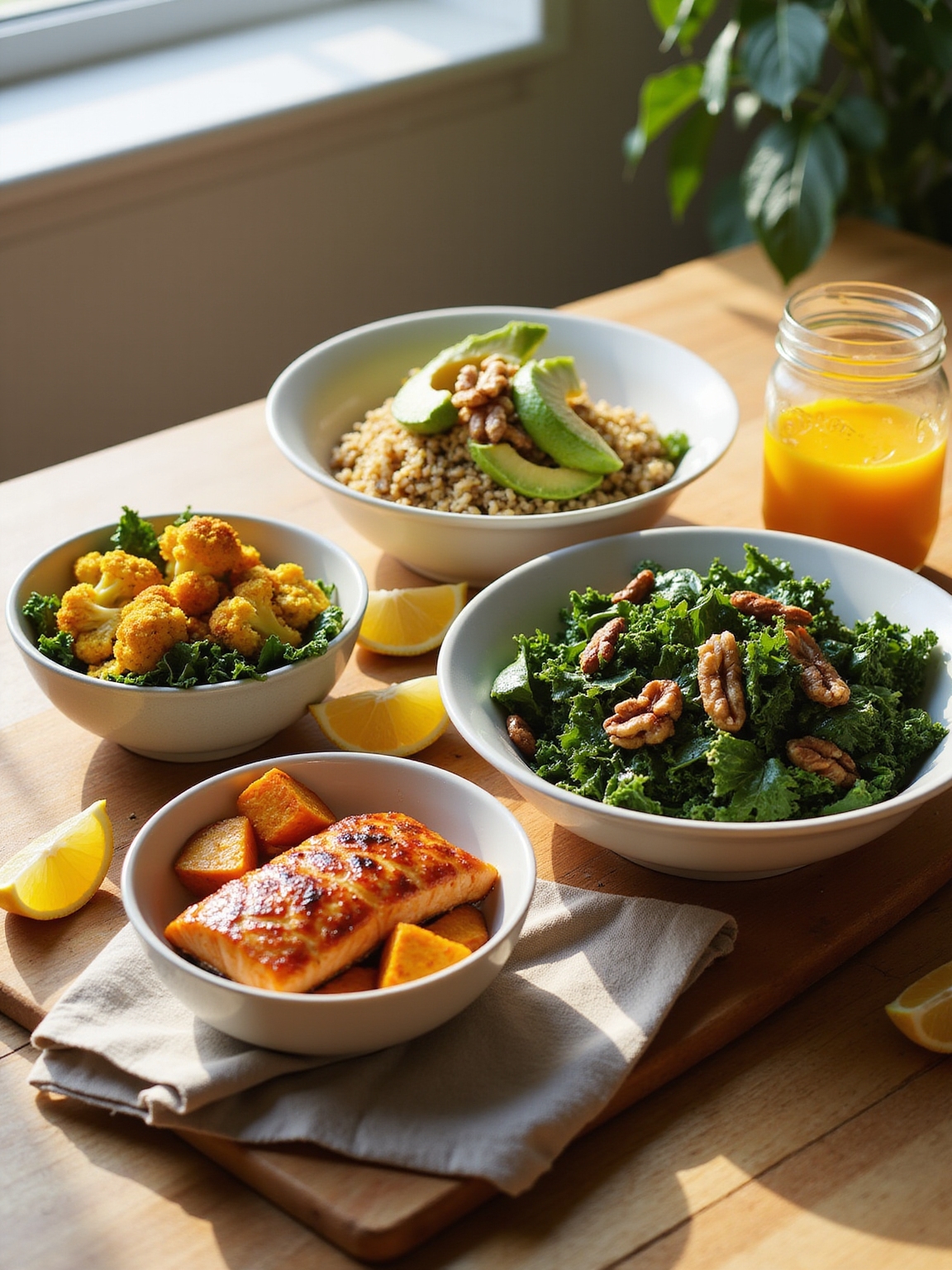
Breakfasts pair protein with fruit and seeds; lunches center on salads or grain bowls with lean protein; dinners emphasize vegetables and fish or beans; snacks include yogurt, apple with nut butter, or hummus with carrots.
Portions balance energy without strict restriction.
This plan follows a gentle, repeatable daily structure to make anti-inflammatory eating sustainable and easy to follow, emphasizing simple routine elements.
Grocery List & Pantry Essentials for Five Days

If you stock your kitchen with a focused set of whole foods and staples, you’ll streamline meal prep and stay aligned with the anti‑inflammatory plan for five days.
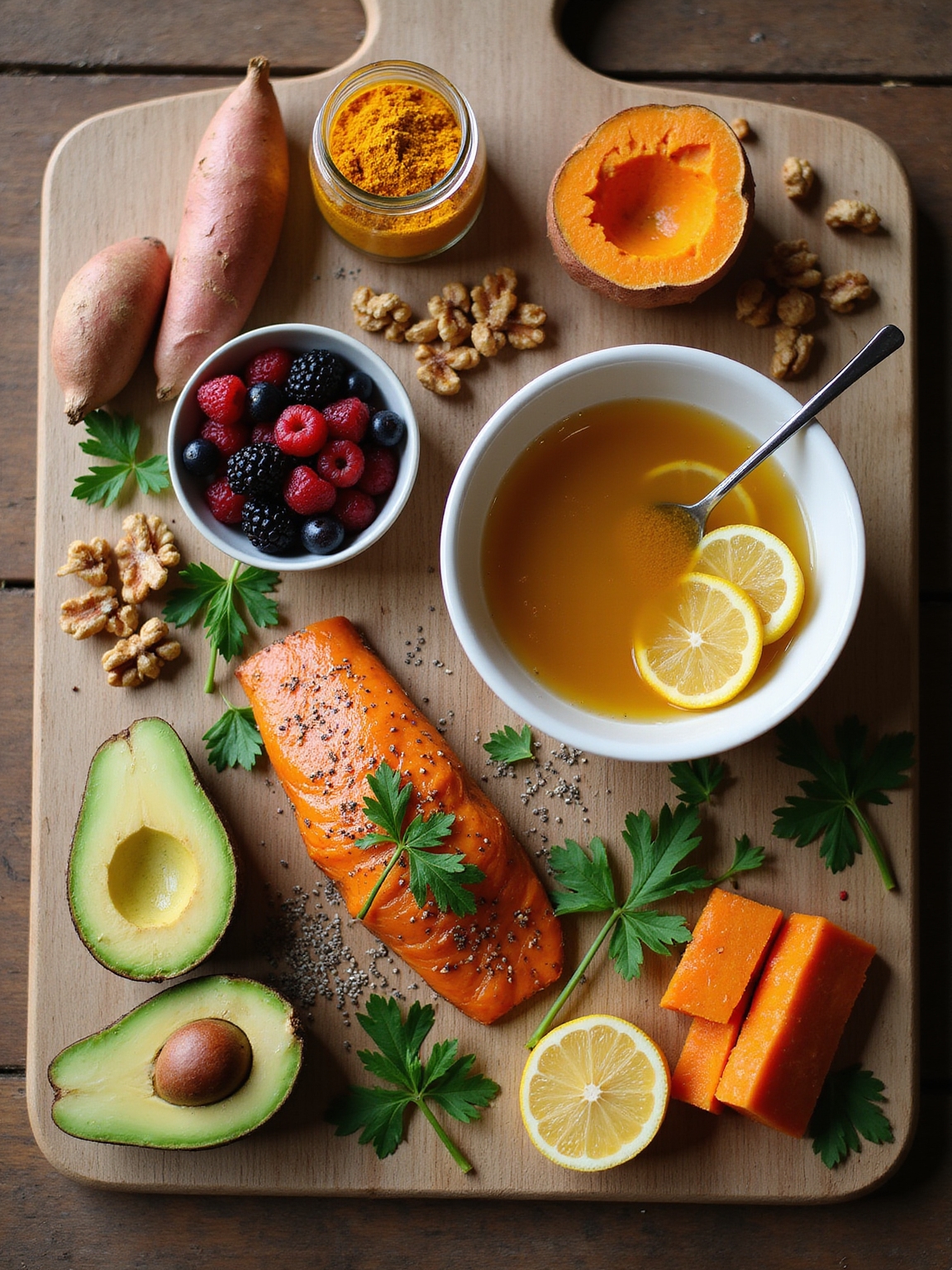
Start with fresh produce (leafy greens, berries, crucifers), fatty fish or canned salmon, and a variety of colorful vegetables.
Add legumes, quinoa, steel‑cut oats, and minimal‑processing whole grains.
Keep nuts, seeds, extra‑virgin olive oil, and turmeric/ginger for inflammation‑modulating compounds.
Stock low‑sodium broth, plain yogurt, and citrus for vitamin C.
Limit processed items; read labels for added sugars and seed oils.
Plan portions, make a simple list, and shop once.
Including shelf-stable staples like canned tomatoes and frozen vegetables can help maintain variety and reduce food waste when following an anti‑inflammatory plan, especially if you choose minimally processed options.
Anti‑Inflammatory Staples to Eat Every Day

Make leafy greens a daily habit — spinach, kale, and Swiss chard provide vitamins, fiber, and polyphenols that studies link to lower inflammation.
Pair those greens with omega-3 rich foods like fatty fish, walnuts, or chia seeds to help modulate inflammatory pathways.
I know changing routines can be hard, so start with one extra serving a day and build from there.
Include other essentials from an anti-inflammatory diet, like colorful fruits, whole grains, and healthy fats to maximize benefits.
Leafy Greens Daily
Regularly including leafy greens—like spinach, kale, Swiss chard, and arugula—in your meals gives you a concentrated source of vitamins, minerals, fiber, and plant compounds (e.g., lutein, beta‑carotene, and flavonoids) that research links to reduced markers of chronic inflammation.
You can eat them raw in salads, lightly sautéed, or blended into smoothies to retain nutrients.
Aim for a variety and a daily serving to support antioxidant defenses, gut health, and vascular function.
If you’re managing medication or a condition, check with your clinician about interactions (for example, vitamin K effects) so you stay safe while benefiting.
Including these greens on your shopping list helps ensure you always have anti‑inflammatory staples available for quick, nutrient‑dense meals.
Omega‑3 Rich Foods
Leafy greens give you antioxidants and fiber; pairing them with omega‑3 rich foods amplifies anti‑inflammatory effects by addressing different pathways of inflammation. You’ll reduce pro‑inflammatory cytokines when you choose fatty fish, walnuts, chia, flaxseed, and algae sources regularly. Aim for two servings of fatty fish weekly or plant omega‑3 daily if you’re vegetarian. Evidence shows EPA/DHA lower systemic inflammation; ALA converts poorly, so combine plant sources and consider supplements after talking with your clinician. Be consistent, not perfect, and monitor symptoms. Research supports including omega‑3 foods as staples to help manage inflammation over time.
| Food | Benefit |
|---|---|
| Salmon | EPA/DHA |
| Walnuts | ALA, polyphenols |
| Chia | Fiber, ALA |
| Flaxseed | Lignans, ALA |
| Algae oil | Vegan EPA/DHA |
Foods and Ingredients to Avoid During the Five Days
To get the most anti‑inflammatory benefit over these five days, you’ll want to cut out obvious triggers like processed sugars and sweets that spike blood sugar and promote inflammation. Also avoid refined grains and flours, which lack fiber and can have similar effects, plus trans fats and fried foods that are consistently linked to higher inflammatory markers.
I’ll outline practical swaps and evidence-based reasons so you can make simple, sustainable changes.
Processed Sugar And Sweets
Often you’ll find that cutting processed sugars and sweets is one of the fastest ways to reduce inflammation markers and improve energy, so during these five days avoid candies, baked goods, sugary drinks, and obvious ingredients like high-fructose corn syrup, cane sugar, and glucose syrups.
You’ll notice less blood sugar swinging and fewer pro-inflammatory responses when you favor whole foods. If you crave sweetness, pick fresh fruit, plain yogurt with berries, or a small piece of dark chocolate (70%+).
Read labels, watch hidden sugars (sauces, cereals), and be kind to yourself—gradual changes sustain inflammation reduction and better energy.
Refined Grains And Flours
Because refined grains strip away fiber, vitamins, and beneficial phytochemicals, they tend to spike blood sugar and promote inflammatory pathways more than whole grains do.
During your five-day plan, skip white bread, regular pasta, pastries, and most store-bought baked goods made with bleached flour. These items digest quickly, raise insulin, and can worsen markers linked to inflammation.
Choose intact grains like steel-cut oats, brown rice, quinoa, or products labeled “whole grain” with the whole kernel listed first.
If you need convenience, look for minimally processed whole-grain wraps or sprouted-grain breads to keep inflammation risk lower.
Trans Fats And Fried Foods
While swapping refined grains for whole kernels helps steady blood sugar and lower inflammation, you should also cut back on trans fats and fried foods, which have a more direct and well-documented pro-inflammatory effect. You’ll reduce markers like CRP and improve endothelial function by avoiding partially hydrogenated oils and repeatedly heated frying oils. Choose baked, steamed, or air-fried preparations and read labels for “hydrogenated.” Small swaps help adherence without deprivation.
| Food to avoid | Typical source | Health impact |
|---|---|---|
| Trans fats | Packaged snacks | Raises LDL, inflammation |
| Deep-fried | Fast food | Oxidized lipids, vascular stress |
Three Quick Breakfasts to Rotate
Start your day with breakfasts that calm inflammation instead of sparking it, and rotate three simple options so you get a range of anti-inflammatory nutrients without added prep stress.
Option one: Greek yogurt with berries and a sprinkle of walnuts provides probiotics, anthocyanins, and omega-3 precursors—eat within research-backed portions to limit sugar.
Option two: Overnight oats made with rolled oats, chia seeds, cinnamon, and unsweetened almond milk deliver fiber and plant-based omega-3s that modulate inflammatory markers.
Option three: Scrambled eggs with sautéed spinach and turmeric offer bioavailable protein, lutein, and curcumin when paired with black pepper for absorption.
Three Easy Lunches to Rotate
After calming inflammation at breakfast, you’ll want lunches that keep inflammation low while fitting into your day—choose meals that combine lean protein, colorful vegetables, whole grains, and anti-inflammatory fats to sustain blood sugar and limit pro-inflammatory triggers.
Try:
1) Salmon salad with mixed greens, cherry tomatoes, quinoa, and a lemon-olive oil dressing — omega-3s and fiber reduce cytokine activity.
2) Turkey and avocado whole-grain wrap with spinach and grated carrots — lean protein plus monounsaturated fat stabilizes glucose.
3) Lentil and roasted-vegetable bowl with turmeric-yogurt drizzle — plant protein, polyphenols, and curcumin support resolution of inflammation.
Three Simple Dinners to Rotate
Because dinner is when your body begins overnight repair, choose simple meals that keep inflammation down and support recovery: aim for a balance of lean or plant protein, colorful vegetables rich in antioxidants, whole grains or starchy vegetables for steady glucose, and an anti-inflammatory fat like olive oil or avocado.
Try: 1) Grilled salmon, roasted Brussels sprouts, and quinoa — omega‑3s and fiber reduce inflammatory markers.
2) Lentil stew with spinach and sweet potato — polyphenols and resistant starch aid gut health.
3) Turkey and vegetable stir‑fry over brown rice with sesame oil — lean protein plus phytonutrients promote repair.
Adapting the Plan: Vegetarian, Vegan, and Gluten‑Free Options
If you need to modify the 5‑day anti‑inflammation plan for vegetarian, vegan, or gluten‑free needs, you can still meet anti‑inflammatory goals by swapping ingredients and focusing on nutrient-dense equivalents backed by research.
Choose legumes, tofu, tempeh, and oily seeds for plant protein and omega‑3s; use fortified plant milks for vitamin D and B12 where needed.
Replace wheat with quinoa, buckwheat, or certified gluten‑free oats to maintain fiber and polyphenols.
Prioritize colorful vegetables, berries, nuts, and extra‑virgin olive oil.
Monitor iron and B12 in plant-based variants, and consider a registered dietitian if you have restrictive needs.
Timing and Portions for Hunger and Steady Blood Sugar
When you space meals and portions thoughtfully, you’re more likely to prevent extreme hunger and keep blood sugar stable throughout the day. Aim for balanced meals every 3–4 hours containing protein, fiber, healthy fats, and low‑GI carbs; this slows glucose absorption and reduces inflammatory spikes.
Portion control matters: use palm‑sized protein servings, cupped handfuls of carbs, and thumb‑sized fats to match your energy needs. If you feel shaky, choose a small mixed snack (yogurt with berries, hummus and veg). Monitor responses—sleep, activity, medications—and adjust timing and amounts to sustain energy and reduce metabolic stress.
Evidence‑Backed Supplements & Beverages That May Help
If you’re looking for targeted ways to lower inflammation alongside food, a few supplements and beverages have consistent clinical support. Omega-3 fish oil, standardized curcumin/turmeric extracts, and green tea catechins each show anti‑inflammatory effects in trials when used at appropriate doses.
I’ll summarize the evidence, typical doses, and safety considerations so you can decide what might fit your plan.
Omega-3 Fish Oil
Frequently, people turn to omega-3 fish oil because its EPA and DHA have well‑documented anti‑inflammatory effects you can leverage for symptom relief and long‑term health. You’ll find trials showing reduced joint pain, lower CRP, and modulation of cytokine production with adequate doses.
Aim for products specifying EPA/DHA amounts—often 1,000–3,000 mg combined daily for therapeutic effects—after checking with your clinician. Choose third‑party‑tested supplements to avoid contaminants and consider triglyceride-form or re-esterified preparations for better absorption.
Expect gradual benefits over weeks; monitor symptoms and inflammatory markers. Don’t replace prescribed treatments without medical guidance.
Curcumin/Turmeric Extract
Consider curcumin—the chief bioactive in turmeric—a well‑studied anti‑inflammatory compound you can add as a supplement or in beverages to help reduce pain and inflammatory markers.
Clinical trials show curcumin can lower C‑reactive protein and improve symptoms in osteoarthritis and metabolic inflammation when formulated for better absorption.
You should choose standardized extracts (often with piperine or lipid carriers) to increase bioavailability and follow dosing supported by studies, typically 500–2,000 mg daily of standardized curcuminoids.
Check for interactions (especially with blood thinners) and consult your clinician if you’re pregnant, nursing, or on multiple medications.
Green Tea Catechins
Curcumin’s anti-inflammatory effects share a common goal with another well-researched plant compound: green tea catechins, especially epigallocatechin gallate (EGCG), which you can consume as tea or in concentrated supplements.
You’ll find clinical trials showing EGCG reduces markers like CRP and cytokine activity, supporting reduced low-grade inflammation.
Drink brewed green tea daily or choose standardized supplements if you need higher, consistent dosing, but watch caffeine and liver-risk warnings at very high doses.
Pairing EGCG with a balanced diet, sufficient sleep, and activity boosts benefits.
Talk with your clinician before starting supplements, especially if you take meds or have liver concerns.
Pairing the Diet With Movement and Sleep for Better Results
When you pair an anti-inflammatory diet with regular movement and good sleep, you amplify its benefits: exercise reduces inflammatory markers like CRP and IL-6, while restorative sleep supports immune regulation and tissue repair.
You’ll get more from foods when you move and rest well. Aim for consistent moderate activity, prioritize sleep timing, and reduce late-night screens.
- Walk 30 minutes most days to lower inflammation.
- Include strength twice weekly to preserve metabolic health.
- Target 7–9 hours of consistent sleep for cytokine balance.
- Use relaxation rituals to improve sleep quality and recovery.
These steps are evidence-based and doable.
Troubleshooting: Cravings, Digestion Changes, and Low Energy
Pairing diet, movement, and sleep sets you up for success, but you may still run into common hurdles like cravings, digestive shifts, or low energy — and that’s normal.
Cravings often reflect caloric gaps, low protein or rapid carb drops; add protein, fiber, and healthy fats at meals to stabilize blood sugar.
Digestive changes can follow increased fiber or fermented foods; increase fiber gradually, hydrate, and consider probiotics if bloating persists.
Low energy may signal inadequate calories, iron, or sleep quality; track intake, prioritize nutrient-dense meals, and time light activity to boost mitochondria.
Monitor symptoms and adjust thoughtfully.
Transitioning From Five Days to Longer‑Term Anti‑Inflammatory Habits and When to Seek Medical Advice
As you finish the five-day plan, think about sustainable meal patterns—regular vegetables, whole grains, lean proteins, and anti-inflammatory fats—that fit your schedule and preferences so you’ll stick with them. Track symptoms and energy as you adjust portions and variety, since gradual changes are more sustainable and backed by nutrition research.
If you have persistent pain, unexplained weight change, new digestive problems, or chronic fatigue, contact your physician to rule out underlying conditions or to tailor a longer-term plan.
Long‑Term Meal Strategies
Although five days can jumpstart inflammation control, you’ll get the best long-term benefits by shifting to sustainable, evidence-based meal patterns that you can maintain without feeling deprived. Focus on whole foods, varied plant colors, healthy fats, and lean proteins to keep inflammatory markers lower over months. Plan simple routines that fit your life and preferences.
- Emphasize vegetables, legumes, whole grains.
- Include omega-3 sources (fatty fish, flax).
- Limit processed foods and refined sugars.
- Rotate foods to avoid monotony and nutrient gaps.
Track symptoms and progress; adjust portions and variety based on objective responses and lab trends.
When To See Physician
If you start feeling new or worsening symptoms while shifting from the five‑day plan to a longer‑term anti‑inflammatory approach, contact your clinician so they can help determine whether diet changes, medication adjustments, or further testing are needed.
You should also see a physician if pain, fever, unexplained weight loss, persistent fatigue, or new gastrointestinal or allergic reactions occur.
Bring a food and symptom diary, recent labs, and medication lists to help clinicians identify patterns or interactions.
Your doctor can order targeted tests, rule out inflammatory or autoimmune disease, and guide safe medication tapering or escalation while you adopt sustainable dietary strategies.
Conclusion
You’ve taken a practical, evidence‑based step toward feeling better—think of this five‑day reset as a gentle nudge, not a miracle cure. You’ll likely notice steadier energy and less stiffness if you stick with leafy greens, whole grains, fatty fish, olive oil, and fewer refined carbs and sugars. Pair the plan with sleep and movement, listen to your body, and treat this as a launchpad for longer‑term change; seek medical advice for persistent inflammation or new symptoms.